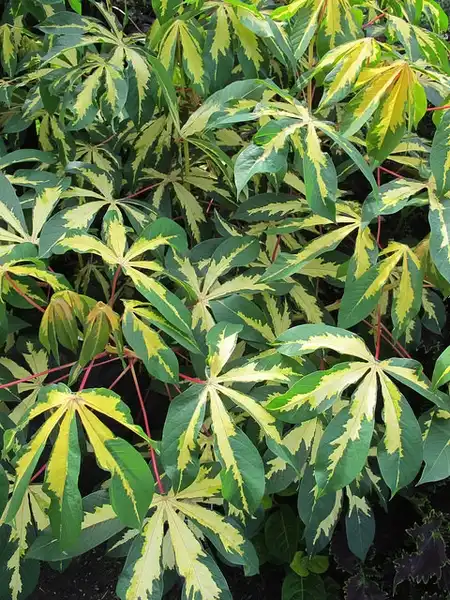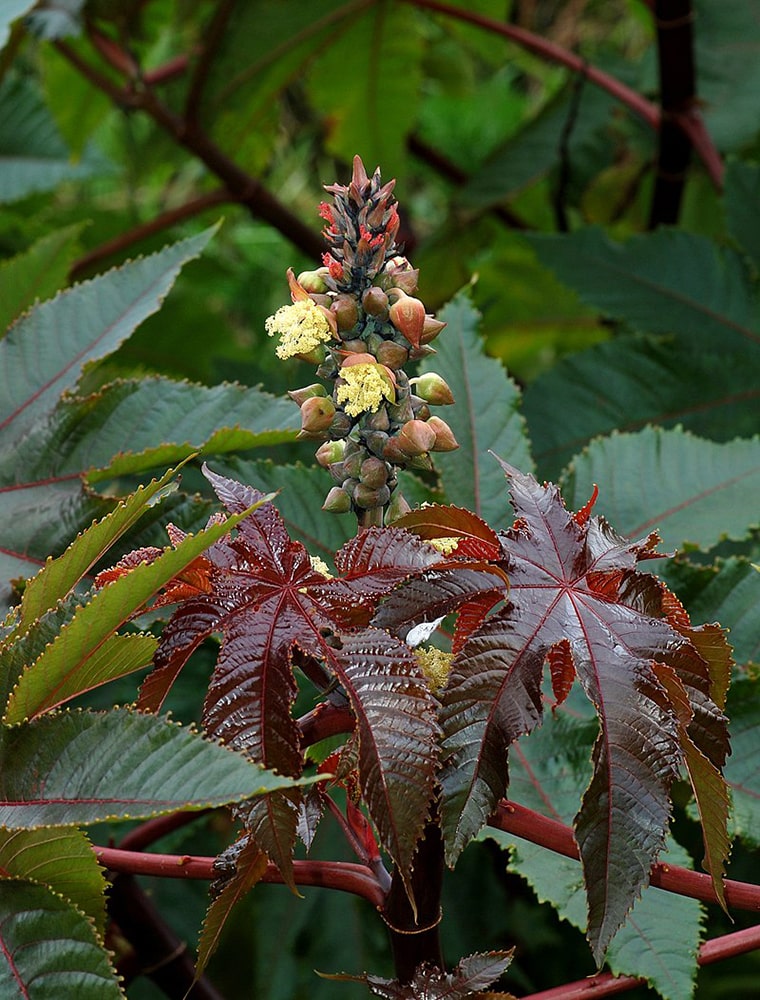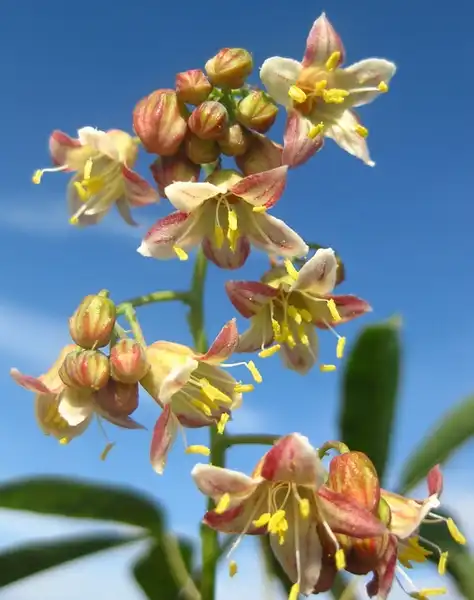
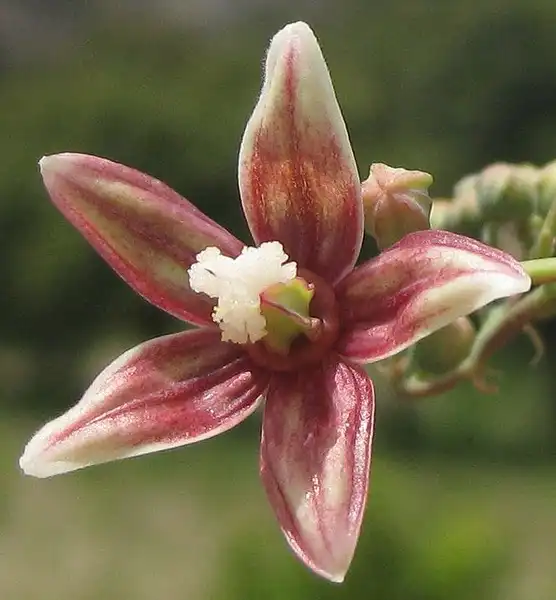
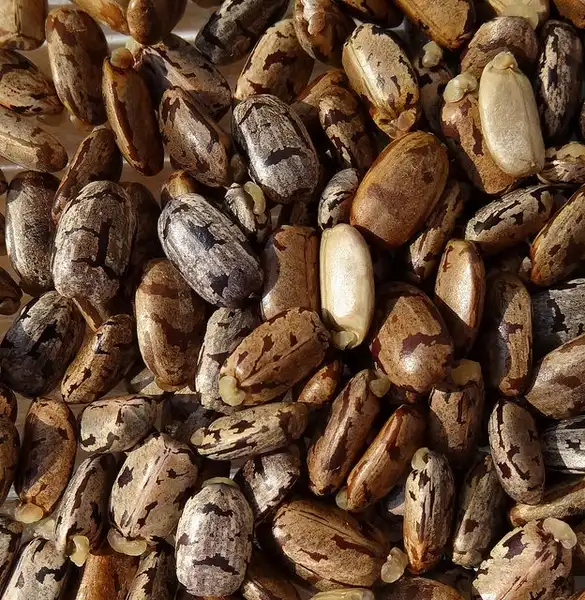
• Photo of Manihot esculenta (Manihot esculentas)

Plant Profile: Manihot esculenta

Taxonomy: Manihot esculenta

Names

Cassava, Manioc, Tapioca, Yuca

  • Photo of Manihot esculenta (Manihot esculentas)

Phonetic Spelling:MAN-ee-hoat es-kew-LEN-tah

Genus:Manihot

Species:esculenta

Family:Euphorbiaceae

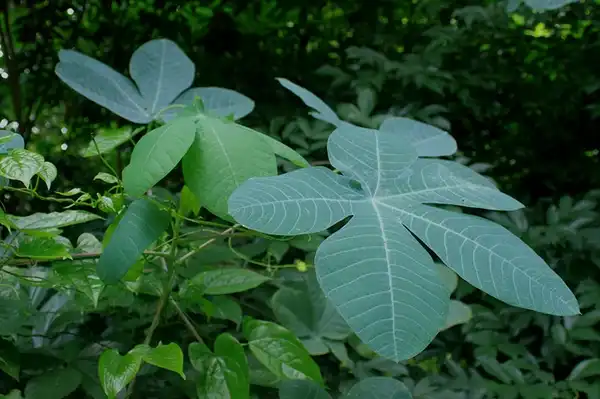
A dense herb or shrub featuring elongated tubers; its leaves are arranged alternately, simple, and deeply lobed. The flowers are not particularly noticeable, and the fruit takes the form of a six-angled, round capsule. While the raw tuberous roots are extremely poisonous, they can be safely consumed when adequately prepared and cooked. This plant is not widely cultivated in North Carolina.

Manihot esculenta Feature Summary

Manihot esculenta Image Gallery

Tags

#poisonous
#showy leaves
#tuberous
#food source
#edible garden

Similar Plants

Manihot esculenta Feature Summary

Attributes
Extensively cultivated root crop in tropical and subtropical regions
EDIBLE PARTS: Tubers boiled and eaten or made into tapioca
Perennial
Fruit
6-angled globose capsule; seeds are brown to grey with black patches
Flowers
Inconspicuous; separate male and female plants
Pink
White
Gold/Yellow
Insignificant
4-5 petals/rays
< 1 inch
Leaves
Deeply lobed; some variegated cultivars exist.
Green
Variegated
Poisonous to Humans
HIGHLY TOXIC, MAY BE FATAL IF EATEN! Raw tubers and root peelings cause weak and irregular breathing, weakness, excitement, depression, staggering, pupil dilation, spasms, convulsions, and coma of short duration.
Cyanogenic glycosides linamarin and lotaustralin
Whole Plant Traits
Edible
Poisonous
Landscape
Edible Garden
Poisonous to Humans

Manihot esculenta Attributes

Manihot esculenta: Uses (Ethnobotany)

Extensively cultivated root crop in tropical and subtropical regions
Manihot esculenta: Country Or Region Of Origin

Brazil

Manihot esculenta: Edibility

EDIBLE PARTS: Tubers boiled and eaten or made into tapioca

Manihot esculenta: Life Cycle

Annual
Biennial
Bulb
Perennial
Woody

Manihot esculenta Fruit

Manihot esculenta: Fruit Description

6-angled globose capsule; seeds are brown to grey with black patches

Manihot esculenta: Fruit Type

Achene
Aggregate
Berry
Capsule
Caryopsis
Drupe
Follicle
Legume
Nut
Pome
Samara
Schizocarp
Siliqua

Manihot esculenta Flowers

Manihot esculenta: Flower Description

Inconspicuous; separate male and female plants

Manihot esculenta: Flower Color

filter_vintage
Gold/Yellow
filter_vintage
Insignificant
filter_vintage
Pink
filter_vintage
White

Manihot esculenta: Flower Petals

2-3 rays/petals
4-5 petals/rays
6 petals/rays
7 - 20 petals/rays
asymmetrical petals
Bracts
Colored Sepals
fused petals
more than 20 petals/rays
Tepals

Manihot esculenta: Flower Size

1-3 inches
3-6 inches
< 1 inch
> 6 inches

Manihot esculenta Leaves

Manihot esculenta: Leaf Description

Deeply lobed; some variegated cultivars exist.

Manihot esculenta: Leaf Color

spa
Green
spa
Variegated

Manihot esculenta: Leaf Type

Compound (Pinnately , Bipinnately, Palmately)
Fronds
Needles
Sheath
Simple

Manihot esculenta: Leaf Arrangement

Alternate
Opposite
Other/more complex
Rosulate
Whorled

Manihot esculenta: Leaf Margin

Crenate
Crenulate
Dentate
Denticulate
Doubly Crenate
Doubly Dentate
Doubly Serrate
Entire
Lobed
Serrate
Sinuate
Undulate

Manihot esculenta: Hairs Present

No
Yes

Manihot esculenta: Leaf Value To Gardener

Edible
Fragrant
Good Cut
Good Dried
Long-lasting
Showy

Manihot esculenta Poisonous to Humans

Manihot esculenta: Poison Symptoms

HIGHLY TOXIC, MAY BE FATAL IF EATEN! Raw tubers and root peelings cause weak and irregular breathing, weakness, excitement, depression, staggering, pupil dilation, spasms, convulsions, and coma of short duration.

Manihot esculenta: Poison Toxic Principle

Cyanogenic glycosides linamarin and lotaustralin

Manihot esculenta: Poison Severity

High
Low
Medium

Manihot esculenta: Causes Contact Dermatitis

No
Yes

Manihot esculenta: Poison Part

Bark
Flowers
Fruits
Leaves
Roots
Sap/Juice
Seeds
Stems

Manihot esculenta Whole Plant Traits

Manihot esculenta: Plant Type

Annual
Bulb
Carnivorous
Edible
Epiphyte
Fern
Ground Cover
Herb
Herbaceous Perennial
Houseplant
Mushroom
Native Plant
Ornamental Grasses and Sedges
Perennial
Poisonous
Rose
Shrub
Succulent
Tree
Turfgrass
Vegetable
Vine
Water Plant
Weed
Wildflower

Manihot esculenta Stem

Manihot esculenta: Stem Is Aromatic

No
Yes

Manihot esculenta Landscape

Manihot esculenta: Landscape Theme

Asian Garden
Butterfly Garden
Children's Garden
Cottage Garden
Cutting Garden
Drought Tolerant Garden
Edible Garden
English Garden
Fairy Garden
Garden for the Blind
Native Garden
Nighttime Garden
Pollinator Garden
Rain Garden
Rock Garden
Shade Garden
Water Garden
Winter Garden

Manihot esculenta: Problems

Allelopathic
Contact Dermatitis
Frequent Disease Problems
Frequent Insect Problems
Invasive Species
Malodorous
Messy
Poisonous to Humans
Problem for Cats
Problem for Children
Problem for Dogs
Problem for Horses
Short-lived
Spines/Thorns
Weak Wood
Weedy