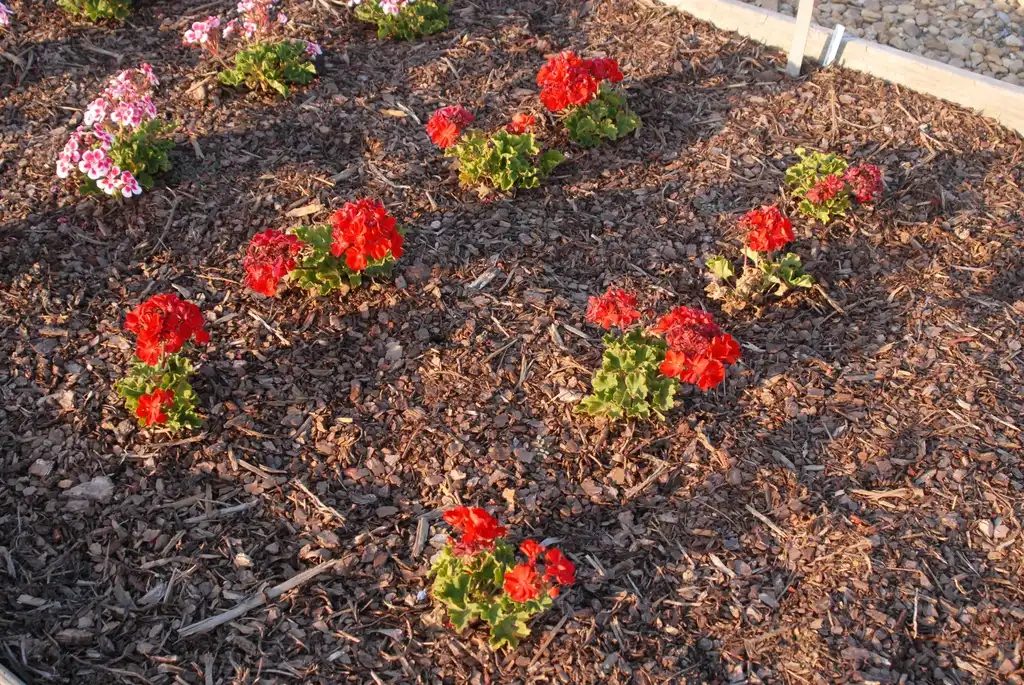
• Photo of Pelargonium x hybridum (Pelargonium x hybridums)

Plant Profile: Pelargonium x hybridum

Names

Geranium

  • Photo of Pelargonium x hybridum (Pelargonium x hybridums)

Phonetic Spelling:pe-lar-GO-nee-um hy-BRID-um

Genus:Pelargonium

Species:

Family:Geraniaceae

Geraniums are short-lived perennials that typically reach a height of up to 2 feet and grow in tufted clusters. Their leaves can be either simple or divided, showcasing a variety of colors. This plant has a low tolerance for drought and blooms throughout the summer, continuing until the first frost. When wet, the leaves emit a strong, unpleasant fishy smell. Geraniums belong to a diverse group of hybrids, easily identifiable in garden beds by their characteristic umbels and reniform leaves adorned with large stipules. With numerous cultivars available, they are commonly used in hanging baskets, planters, containers, and as bedding plants. Geraniums thrive in full sunlight and prefer cool, well-drained, moist soils. For propagation, seeds should be sown in January or February at temperatures between 70-75 degrees Fahrenheit, with planting occurring in late May. Stem cuttings can be taken in July or August and should be grown under glass until the risk of frost has passed. However, these plants are vulnerable to pests such as caterpillars, mites, and mealybugs, as well as various fungal and bacterial diseases.

**Poison Delivery Mode:** Dermatitis.

**Severity:** Minor skin irritation, typically lasting only a few minutes.

**Habitat:** Commonly found as houseplants or in interior landscapes, and used in flower gardens as herbaceous annuals.

**Quick Identification Tips:**

Pelargonium x hybridum Feature Summary

Pelargonium x hybridum Image Gallery

Tags

#fragrant
#red
#white
#poisonous
#full sun tolerant
#fragrant flowers
#annual
#pink flowers
#apvg
#fall interest
#moist soil
#cpp
#well-drained soil
#summer flowers
#spring interest
#fantz
#apvg-a
#problem for cats
#problem for dogs
#problem for horses

Similar Plants

Pelargonium x hybridum is often confused with:

Pelargonium x hybridum Feature Summary

Fruit
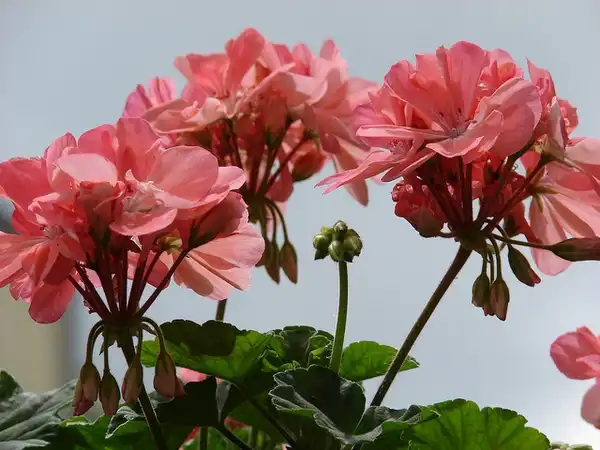
Fruits are rare, but when they do bloom, they are elongated capsules with a beak, dehiscing from beak downwards, and coiling.
Flowers
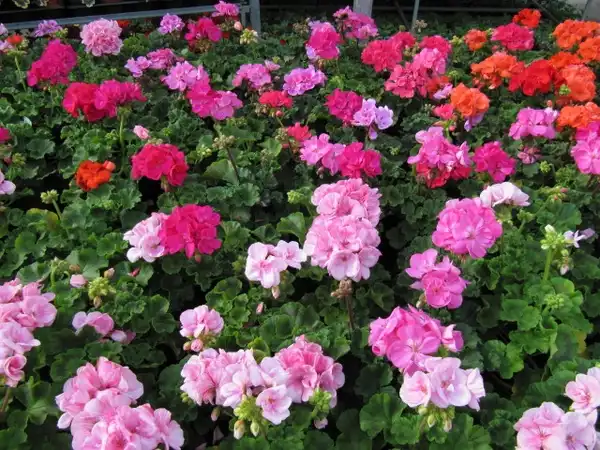
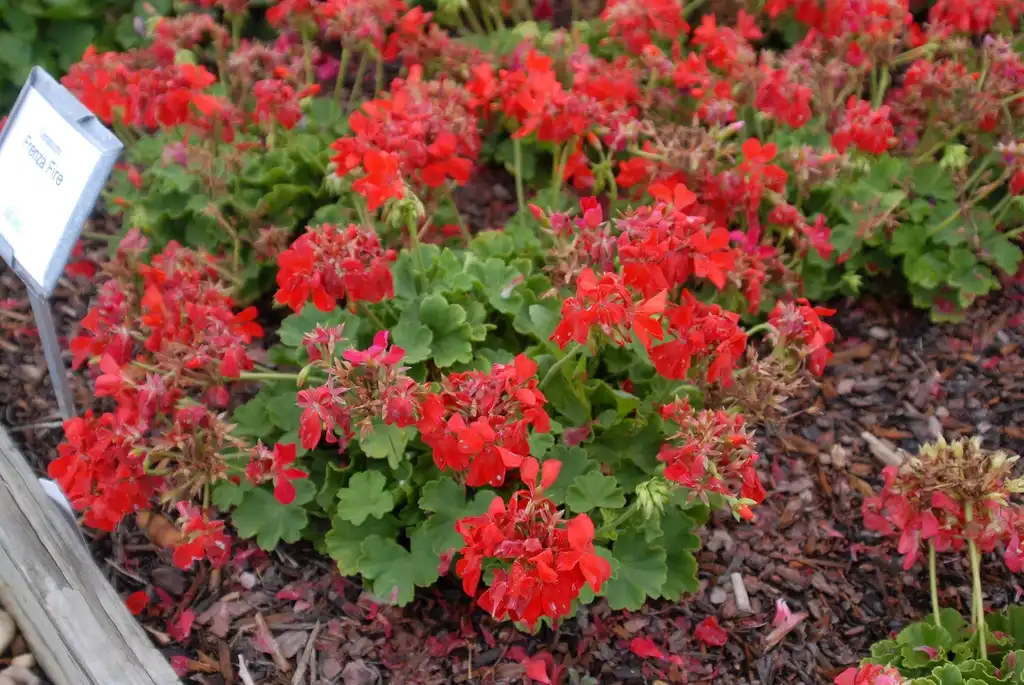
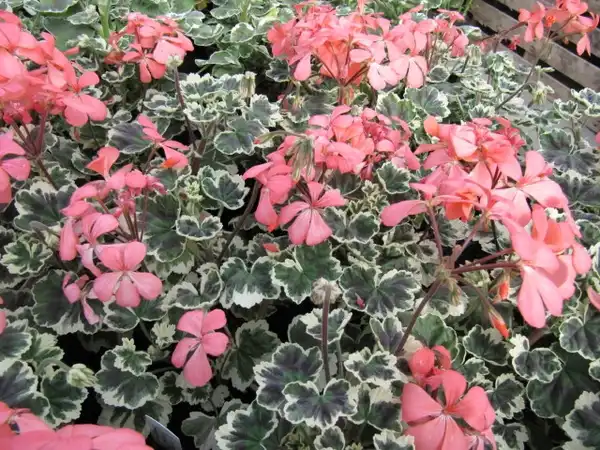
Flowers are single, semidouble to double, uniform in color of red, pink, or salmon, and occasionally peppermint. Flowers have 5 petals and appear subrotate. Inflorescence is an erect umbel on a long peduncle with involucral bracts hidden.
Pink
White
Red/Burgundy
Green
4-5 petals/rays
Leaves
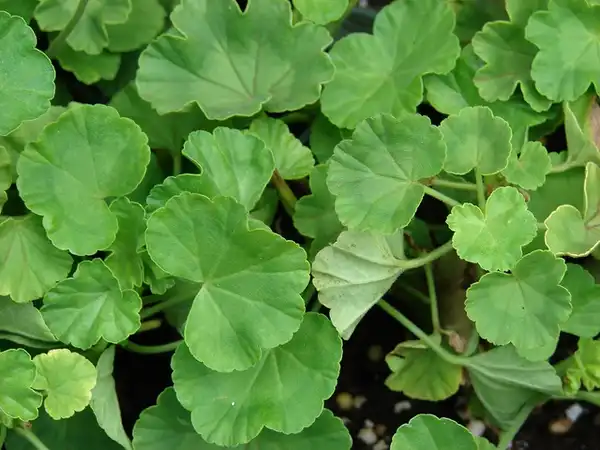
Leaves are simple, alternate to subopposite, orbicular to reniform, peltate, crenate, undulate to sinuate, cordate, and pubescent. Bruised leaves are aromatic. Leaves are green, often variegated green with a dark green zone in from the margin. Stipules are large, persistent.
Cordate
Orbicular
Reniform
Peltate
Stem
Stems are erect, succulent, and glabrescent.
Smooth (glabrous)
Poisonous to Humans
Vomiting, anorexia, dermatitis Primarily GI upset. Could also see ataxia, muscle weakness, depression or hypothermia in larger exposures, cats are most sensitive.
Geraniol, linalool
Attributes
Whole Plant Traits
Annual
Poisonous
Cultural Conditions
Full sun (6 or more hours of direct sunlight a day)
Good Drainage
Moist
Less than 12 inches
Landscape
Container
Houseplants
Hanging Baskets
Butterflies
Poisonous to Humans
Problem for Cats
Problem for Dogs
Problem for Horses
Malodorous

Pelargonium x hybridum Fruit

Pelargonium x hybridum: Fruit Description

Fruits are rare, but when they do bloom, they are elongated capsules with a beak, dehiscing from beak downwards, and coiling.

Pelargonium x hybridum: Fruit Type

Achene
Aggregate
Berry
Capsule
Caryopsis
Drupe
Follicle
Legume
Nut
Pome
Samara
Schizocarp
Siliqua

Pelargonium x hybridum Flowers

Pelargonium x hybridum: Flower Description

Flowers are single, semidouble to double, uniform in color of red, pink, or salmon, and occasionally peppermint. Flowers have 5 petals and appear subrotate. Inflorescence is an erect umbel on a long peduncle with involucral bracts hidden.

Pelargonium x hybridum: Flower Color

filter_vintage
Green
filter_vintage
Pink
filter_vintage
Red/Burgundy
filter_vintage
White

Pelargonium x hybridum: Flower Inflorescence

Catkin
Corymb
Cyme
Head
Insignificant
Panicle
Raceme
Solitary
Spadix
Spike
Umbel

Pelargonium x hybridum: Flower Value To Gardener

Edible
Fragrant
Good Cut
Good Dried
Long Bloom Season
Long-lasting
Showy

Pelargonium x hybridum: Flower Bloom Time

Winter
Spring
Summer
Fall

Pelargonium x hybridum: Flower Petals

2-3 rays/petals
4-5 petals/rays
6 petals/rays
7 - 20 petals/rays
asymmetrical petals
Bracts
Colored Sepals
fused petals
more than 20 petals/rays
Tepals

Pelargonium x hybridum Leaves

Pelargonium x hybridum: Leaf Description

Leaves are simple, alternate to subopposite, orbicular to reniform, peltate, crenate, undulate to sinuate, cordate, and pubescent. Bruised leaves are aromatic. Leaves are green, often variegated green with a dark green zone in from the margin. Stipules are large, persistent.

Pelargonium x hybridum: Leaf Color

spa
Green

Pelargonium x hybridum: Leaf Type

Compound (Pinnately , Bipinnately, Palmately)
Fronds
Needles
Sheath
Simple

Pelargonium x hybridum: Leaf Arrangement

Alternate
Opposite
Other/more complex
Rosulate
Whorled

Pelargonium x hybridum: Leaf Shape

Acicular
Auriculate
Cordate
Cuneate
Deltoid
Elliptical
Filiform
Lanceolate
Linear
Oblanceolate
Oblong
Obovate
Obtuse
Orbicular
Ovate
Palmasect
Palmatifid
Peltate
Pinnatifid
Pinnatisect
Reniform
Rhomboidal
Spatulate
Subcordate
Subulate

Pelargonium x hybridum: Hairs Present

No
Yes

Pelargonium x hybridum Stem

Pelargonium x hybridum: Stem Description

Stems are erect, succulent, and glabrescent.

Pelargonium x hybridum: Stem Is Aromatic

No
Yes

Pelargonium x hybridum: Stem Surface

Corky Ridges
Covered with a powdery bloom (glaucous)
Dull
Hairy (pubescent)
Polished
Smooth (glabrous)

Pelargonium x hybridum Poisonous to Humans

Pelargonium x hybridum: Poison Symptoms

Vomiting, anorexia, dermatitis Primarily GI upset. Could also see ataxia, muscle weakness, depression or hypothermia in larger exposures, cats are most sensitive.

Pelargonium x hybridum: Poison Toxic Principle

Geraniol, linalool

Pelargonium x hybridum: Poison Severity

High
Low
Medium

Pelargonium x hybridum: Causes Contact Dermatitis

No
Yes

Pelargonium x hybridum: Poison Part

Bark
Flowers
Fruits
Leaves
Roots
Sap/Juice
Seeds
Stems

Pelargonium x hybridum Attributes

Pelargonium x hybridum: Life Cycle

Annual
Biennial
Bulb
Perennial
Woody

Pelargonium x hybridum Whole Plant Traits

Pelargonium x hybridum: Plant Type

Annual
Bulb
Carnivorous
Edible
Epiphyte
Fern
Ground Cover
Herb
Herbaceous Perennial
Houseplant
Mushroom
Native Plant
Ornamental Grasses and Sedges
Perennial
Poisonous
Rose
Shrub
Succulent
Tree
Turfgrass
Vegetable
Vine
Water Plant
Weed
Wildflower

Pelargonium x hybridum Cultural Conditions

Pelargonium x hybridum: Light

Dappled Sunlight (Shade through upper canopy all day)
Deep shade (Less than 2 hours to no direct sunlight)
Full sun (6 or more hours of direct sunlight a day)
Partial Shade (Direct sunlight only part of the day, 2-6 hours)

Pelargonium x hybridum: Soil Drainage

Frequent Standing Water
Good Drainage
Moist
Occasional Flooding
Occasionally Dry
Occasionally Wet
Very Dry

Pelargonium x hybridum: Available Space To Plant

12 inches-3 feet
12-24 feet
24-60 feet
3 feet-6 feet
6-feet-12 feet
Less than 12 inches
more than 60 feet

Pelargonium x hybridum Landscape

Pelargonium x hybridum: Landscape Location

Coastal
Container
Hanging Baskets
Houseplants
Lawn
Meadow
Naturalized Area
Near Septic
Patio
Pond
Pool/Hardscape
Recreational Play Area
Riparian
Rock Wall
Slope/Bank
Small Space
Vertical Spaces
Walkways
Woodland

Pelargonium x hybridum: Attracts

Bats
Bees
Butterflies
Frogs
Hummingbirds
Moths
Pollinators
Predatory Insects
Reptiles
Small Mammals
Songbirds
Specialized Bees

Pelargonium x hybridum: Problems

Allelopathic
Contact Dermatitis
Frequent Disease Problems
Frequent Insect Problems
Invasive Species
Malodorous
Messy
Poisonous to Humans
Problem for Cats
Problem for Children
Problem for Dogs
Problem for Horses
Short-lived
Spines/Thorns
Weak Wood
Weedy