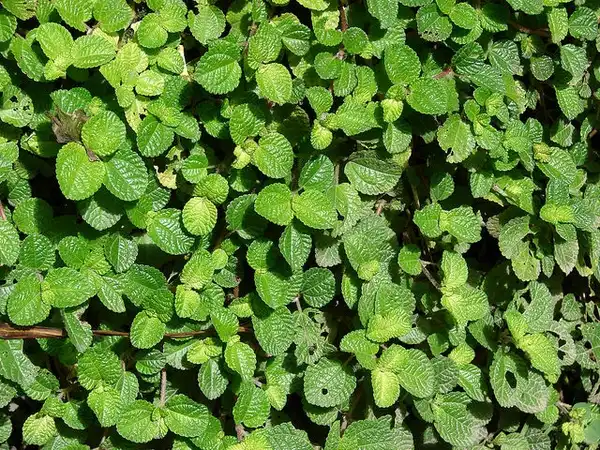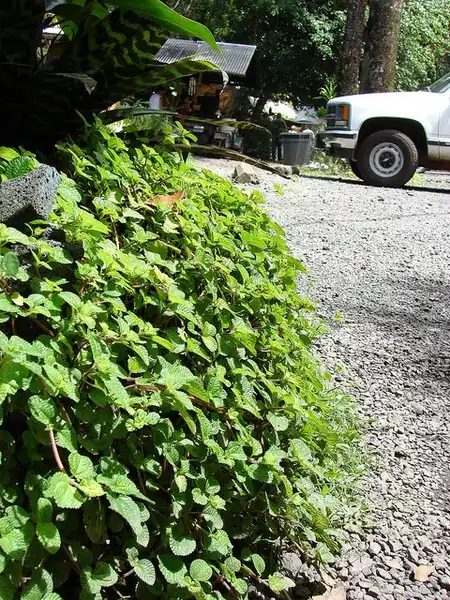
• Photo of Pilea nummulariifolia (Pilea nummulariifolias)

Plant Profile: Pilea nummulariifolia

Taxonomy: Pilea nummulariifolia

Names

Creeping Charlie, Creeping Pilea, Swedish Ivy (Plectranthus)

  • Photo of Pilea nummulariifolia (Pilea nummulariifolias)

Phonetic Spelling:py-LEE-uh num-yoo-lay-ree-ih-FOH-lee-uh

Genus:pilea

Species:nummaularifolia

Family:Urticaceae

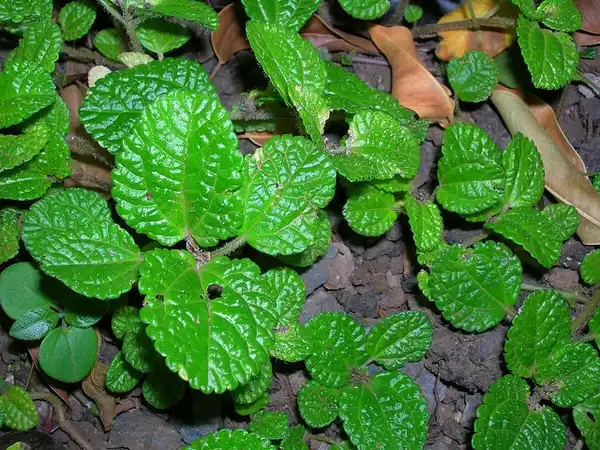
Creeping Charlie, a perennial groundcover belonging to the Urticaceae family, is commonly cultivated as a houseplant. However, when grown outdoors, it tends to behave like a weed. The plant features oval leaves that are a vibrant, glossy medium green, adorned with small scalloped edges. Its veins are recessed, creating a puffy, crinkled appearance in the spaces between them. Although the flowers are a pale greenish-white, they are not particularly noteworthy. The plant's sprawling, fleshy stems can take root at the nodes where they touch the soil, contributing to its weedy nature. If you choose to plant it outside, select frost-free, sheltered areas, or consider using it as an annual in bedding or containers. Additionally, the leaves are edible and can be incorporated into teas.

Pilea nummulariifolia Feature Summary

Pilea nummulariifolia Image Gallery

Tags

#invasive
#houseplant
#edible plant
#perennial
#green
#weed
#partial sun
#hanging baskets
#rock gardens
#garden walls
#partial shade tolerant
#non-toxic for horses
#non-toxic for dogs
#non-toxic for cats
#tropical feel
#heavy shade tolerant

Similar Plants

Pilea nummulariifolia Feature Summary

Attributes
Edible leaves
Perennial
Flowers
Insignificant
White
Green
Leaves
Bright green oval leaf with small scalloped edges. Veins appear to be sunken giving the interveinal sections a puffy, crinkly look.
Whole Plant Traits
Perennial
Edible
Vine
Houseplant
Creeping
Cultural Conditions
Dappled Sunlight (Shade through upper canopy all day)
Deep shade (Less than 2 hours to no direct sunlight)
Good Drainage
Loam (Silt)
Sand
Landscape
Container
Slope/Bank
Invasive Species

Pilea nummulariifolia Attributes

Pilea nummulariifolia: Edibility

Edible leaves
Pilea nummulariifolia: Life Cycle

Annual
Biennial
Bulb
Perennial
Woody

Pilea nummulariifolia: Recommended Propagation Strategy

Division
Grafting
Layering
Leaf Cutting
Root Cutting
Seed
Stem Cutting

Pilea nummulariifolia Flowers

Pilea nummulariifolia: Flower Description

Insignificant

Pilea nummulariifolia: Flower Color

filter_vintage
Green
filter_vintage
White

Pilea nummulariifolia Leaves

Pilea nummulariifolia: Leaf Description

Bright green oval leaf with small scalloped edges. Veins appear to be sunken giving the interveinal sections a puffy, crinkly look.

Pilea nummulariifolia: Leaf Color

spa
Green

Pilea nummulariifolia: Leaf Shape

Acicular
Auriculate
Cordate
Cuneate
Deltoid
Elliptical
Filiform
Lanceolate
Linear
Oblanceolate
Oblong
Obovate
Obtuse
Orbicular
Ovate
Palmasect
Palmatifid
Peltate
Pinnatifid
Pinnatisect
Reniform
Rhomboidal
Spatulate
Subcordate
Subulate

Pilea nummulariifolia: Hairs Present

No
Yes

Pilea nummulariifolia: Leaf Value To Gardener

Edible
Fragrant
Good Cut
Good Dried
Long-lasting
Showy

Pilea nummulariifolia Whole Plant Traits

Pilea nummulariifolia: Plant Type

Annual
Bulb
Carnivorous
Edible
Epiphyte
Fern
Ground Cover
Herb
Herbaceous Perennial
Houseplant
Mushroom
Native Plant
Ornamental Grasses and Sedges
Perennial
Poisonous
Rose
Shrub
Succulent
Tree
Turfgrass
Vegetable
Vine
Water Plant
Weed
Wildflower

Pilea nummulariifolia: Habit/Form

Arching
Ascending
Broad
Cascading
Climbing
Clumping
Columnar
Conical
Creeping
Dense
Erect
Horizontal
Irregular
Mounding
Multi-stemmed
Multi-trunked
Open
Oval
Prostrate
Pyramidal
Rounded
Spreading
Vase
Weeping

Pilea nummulariifolia Cultural Conditions

Pilea nummulariifolia: Light

Dappled Sunlight (Shade through upper canopy all day)
Deep shade (Less than 2 hours to no direct sunlight)
Full sun (6 or more hours of direct sunlight a day)
Partial Shade (Direct sunlight only part of the day, 2-6 hours)

Pilea nummulariifolia: Soil Drainage

Frequent Standing Water
Good Drainage
Moist
Occasional Flooding
Occasionally Dry
Occasionally Wet
Very Dry

Pilea nummulariifolia: USDA Plant Hardiness Zone

thermostat
10a
thermostat
11a
thermostat
11b

Pilea nummulariifolia: Soil Texture

Clay
High Organic Matter
Loam (Silt)
Sand
Shallow Rocky

Pilea nummulariifolia Stem

Pilea nummulariifolia: Stem Is Aromatic

No
Yes

Pilea nummulariifolia Landscape

Pilea nummulariifolia: Landscape Location

Coastal
Container
Hanging Baskets
Houseplants
Lawn
Meadow
Naturalized Area
Near Septic
Patio
Pond
Pool/Hardscape
Recreational Play Area
Riparian
Rock Wall
Slope/Bank
Small Space
Vertical Spaces
Walkways
Woodland

Pilea nummulariifolia: Problems

Allelopathic
Contact Dermatitis
Frequent Disease Problems
Frequent Insect Problems
Invasive Species
Malodorous
Messy
Poisonous to Humans
Problem for Cats
Problem for Children
Problem for Dogs
Problem for Horses
Short-lived
Spines/Thorns
Weak Wood
Weedy