Polygonatum biflorum: Country Or Region Of Origin
Eastern North America, North Carolina
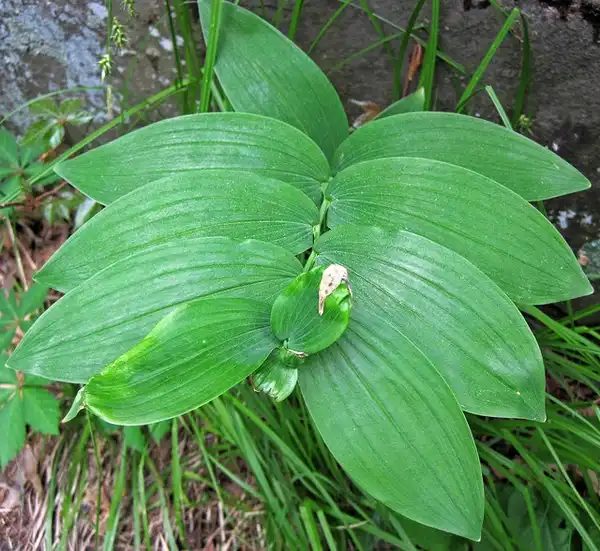
Phonetic Spelling:po-lig-oh-NAY-tum by-FLOR-um
Genus:Polygonatum
Species:biflorum
Family:Asparagaceae
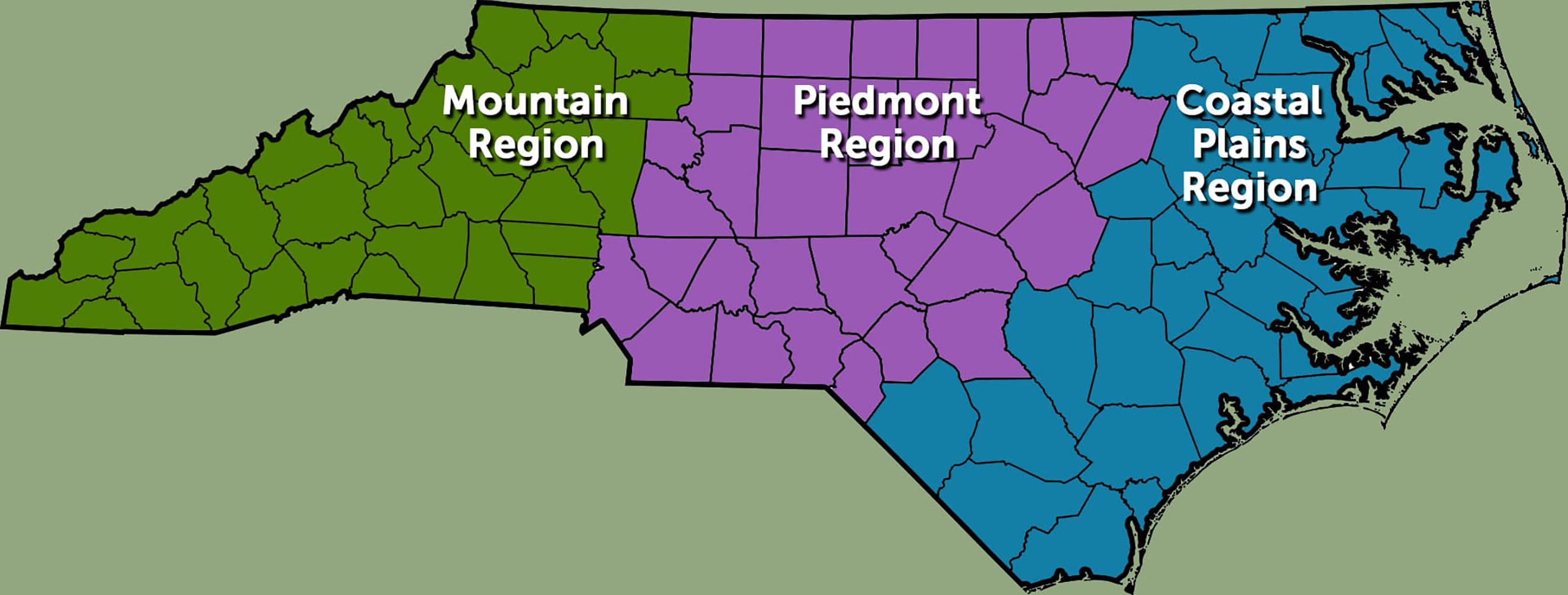
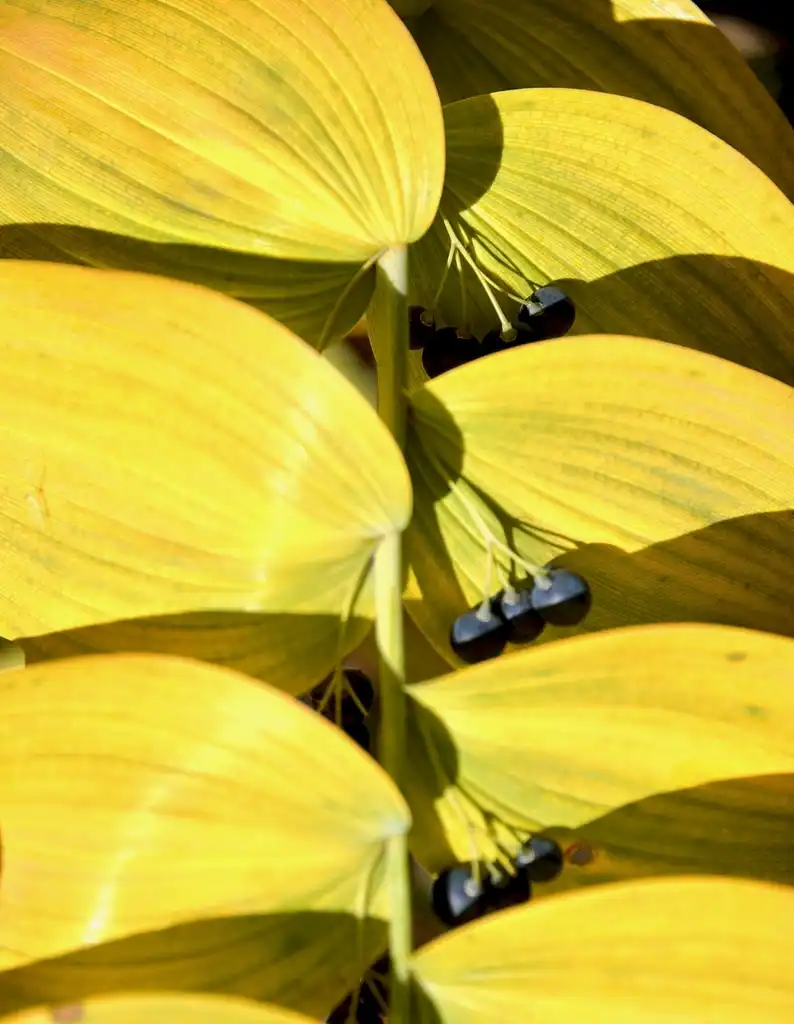
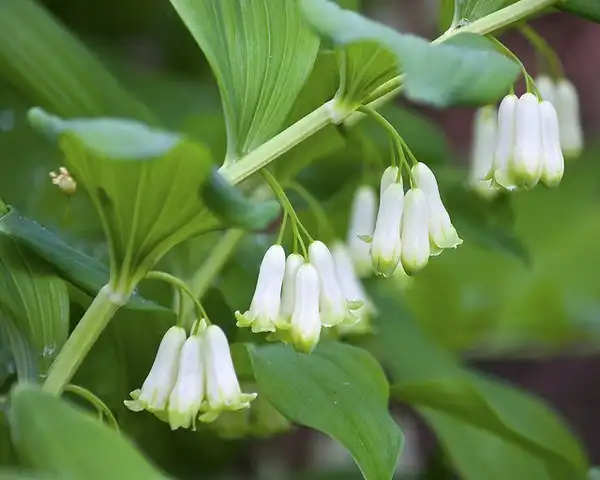
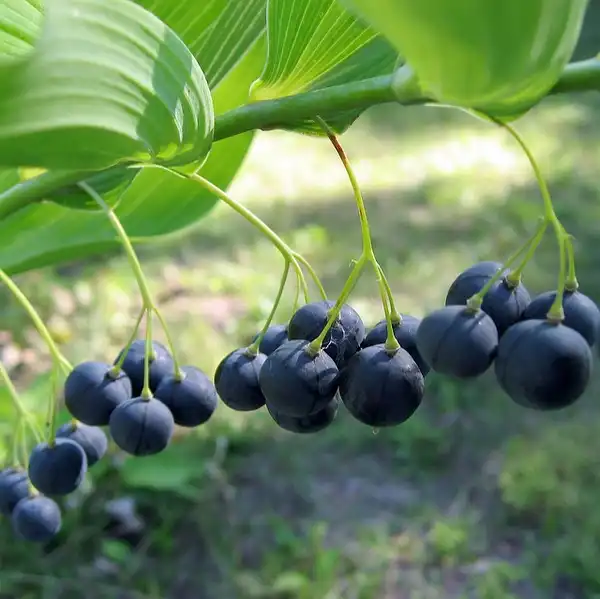
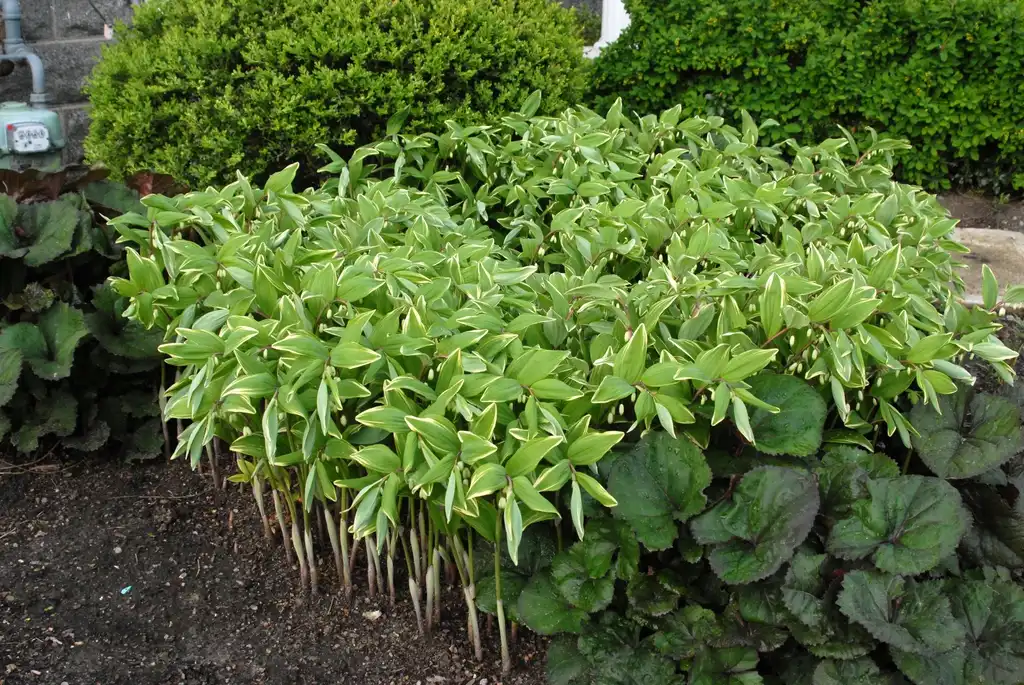
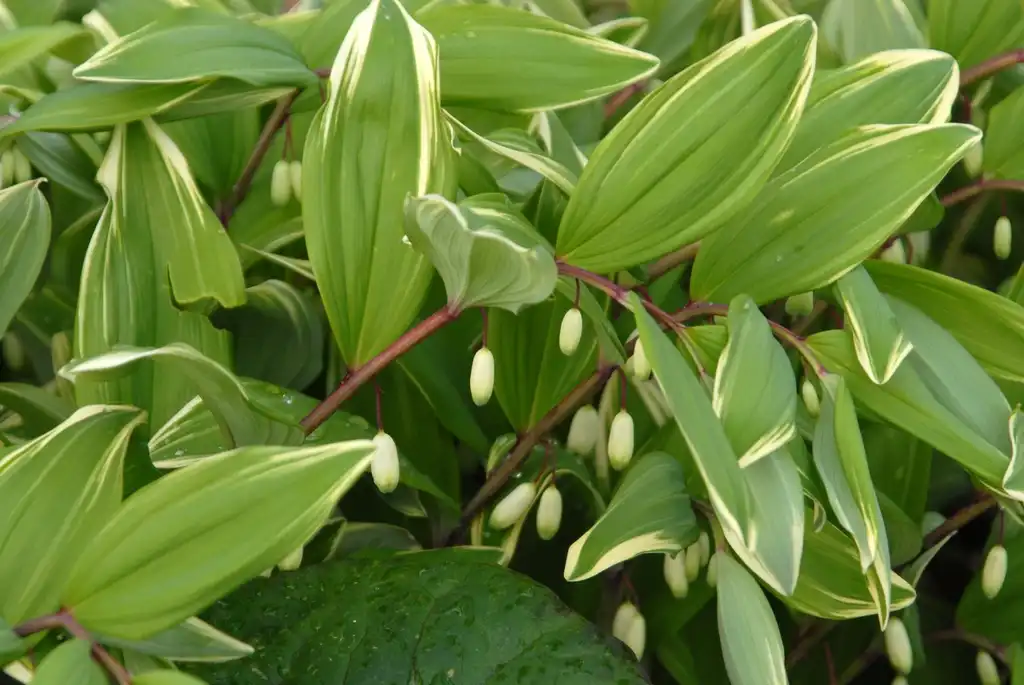
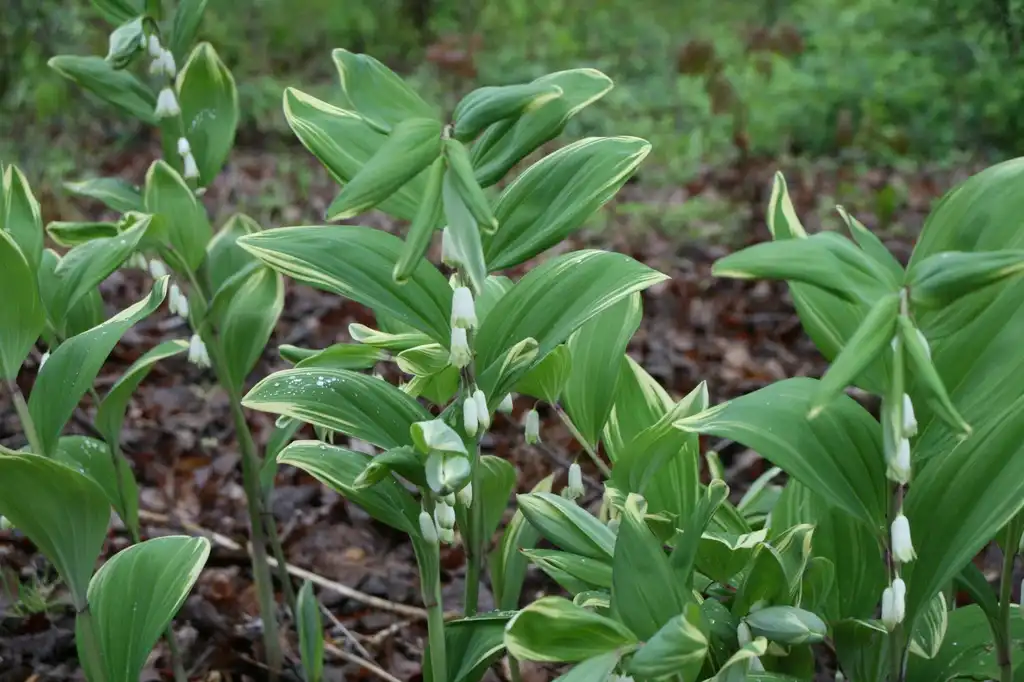
Solomon's seal is a wildflower indigenous to North Carolina, thriving in every region except the southeastern coast. It is cherished for its gracefully arching stems adorned with perfectly aligned leaves. The delicate cream-hued flowers appear in pairs, accompanied by bluish-black, fleshy berries.
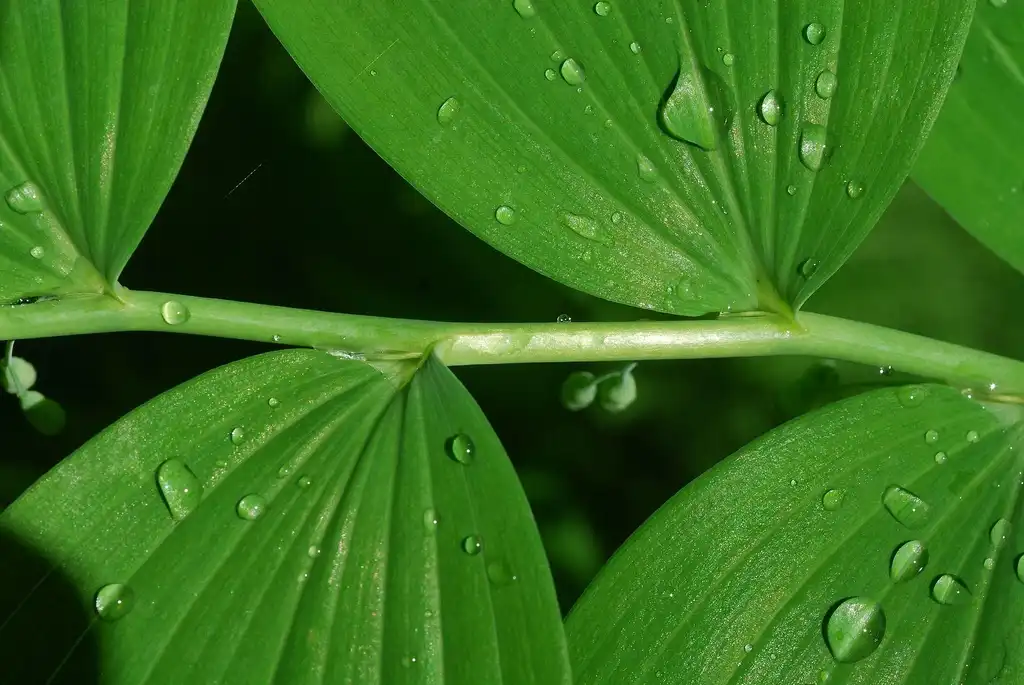
This perennial herb features upright or gracefully bending, unbranched stems, with leaves arranged in a single plane. The flowers are white, bell-shaped, and consist of six parts, typically with one or two hanging from the leaf axils. Following the flowering stage, the plant produces berries that range in color from blue to black.
Solomon's seal prefers environments that vary from dry to moist, often found in rocky woodlands and thickets. In garden settings, it is cultivated as an ornamental herbaceous perennial. While it flourishes in rich woodland soil, it is adaptable and can thrive in various natural habitats.
The young shoots can be boiled for about ten minutes and enjoyed similarly to asparagus, or they can be chopped and added to salads. However, caution is advised, as the berries are toxic if consumed.
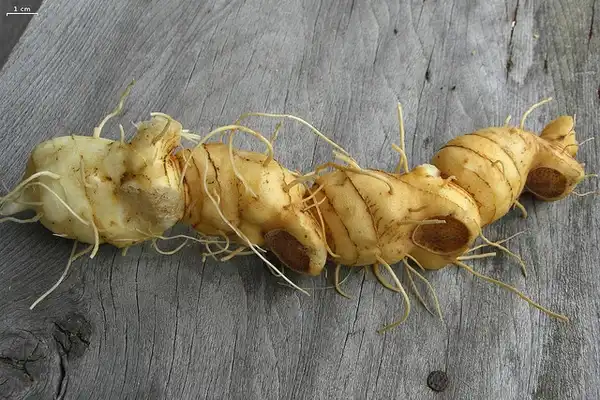
The plant has a rhizomatous root system, though it does not spread aggressively.
For propagation, seeds should be collected and sown in September. If not sown immediately, they will require cold-moist stratification. Rhizome cuttings can remain dormant for up to a year, and division of the plant is best performed in spring or fall during its dormant phase.
For further details on Polygonatum, additional resources are available.
Polygonatum biflorum Feature Summary
Polygonatum biflorum Image Gallery