Sporobolus airoides: Country Or Region Of Origin
Western and Central United States
Phonetic Spelling:spor-OB-oh-lus air-OY-deez
Genus:Sporobolus
Species:airoides
Family:Poaceae
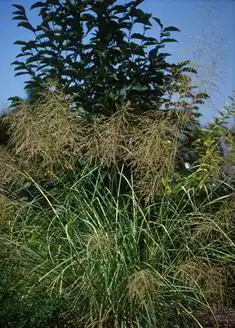
Sporobolus airoides, commonly referred to as Alkali dropseed, is a perennial bunchgrass that thrives in warm seasons. It is indigenous to the western and central regions of the United States, typically found in saline flats, prairies, sandy areas, and meadows with moderately saline soils, which is reflected in its common name. This resilient grass can adapt to various soil types, including saline conditions, and it favors both dry and moist environments. However, it requires full sun and is wind-pollinated. Alkali dropseed is remarkably tolerant of flooding, drought, and saline-alkaline environments, making it an excellent choice for dust control and soil stabilization in areas with limited moisture.
The plant can grow in robust clumps, reaching heights of up to 6 feet, and features slender gray-green leaves that transition to yellow in the fall and light tan during winter. It produces a profusion of seeds, and its elegant, airy seedheads consist of small reddish spikelets. The seeds are edible, whether consumed raw or cooked, and can be toasted, ground into flour, or prepared as a mush. Historically, the Hopi Indians utilized these seeds as a last-resort food source during times of famine. The base of the stem is notably thick and woody.
Alkali dropseed is particularly beneficial for restoration efforts in disturbed ecosystems, especially across the western United States.
In terms of pests and diseases, there are no known issues associated with this grass.
Sporobolus airoides Feature Summary
Sporobolus airoides Image Gallery