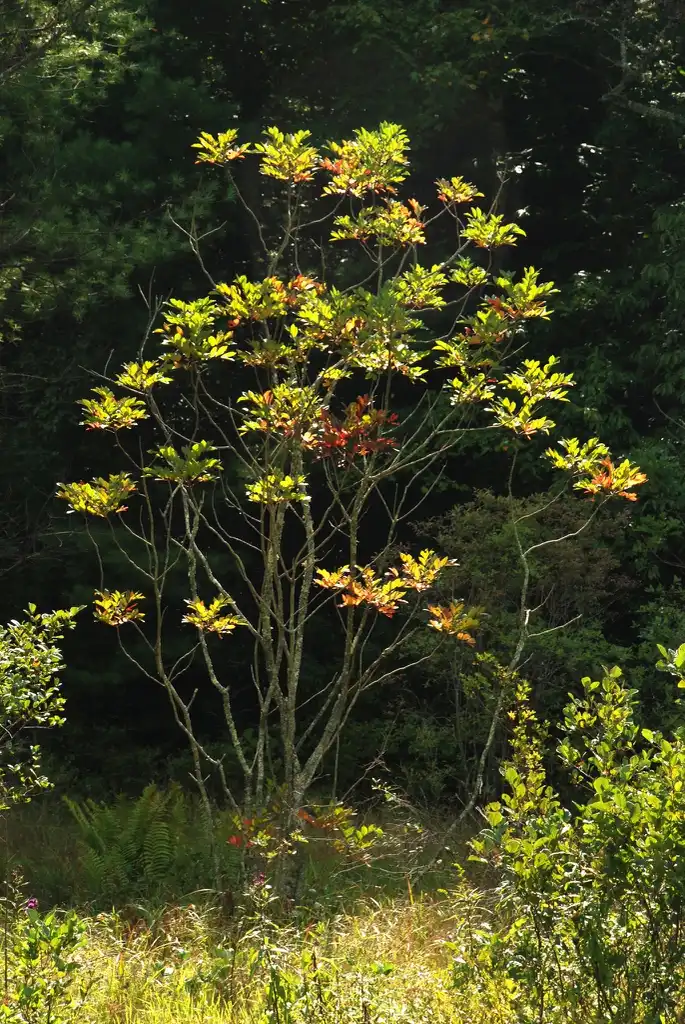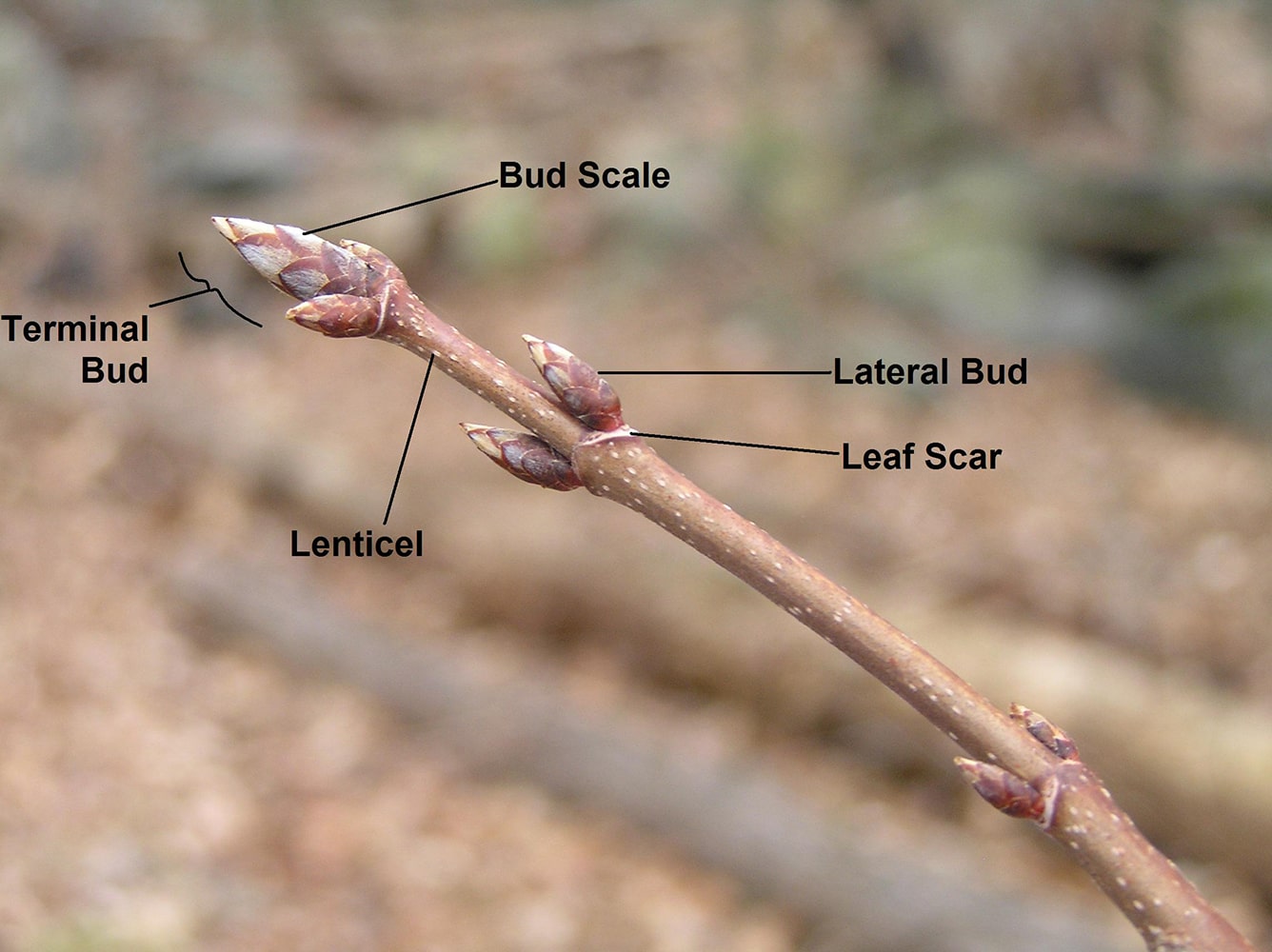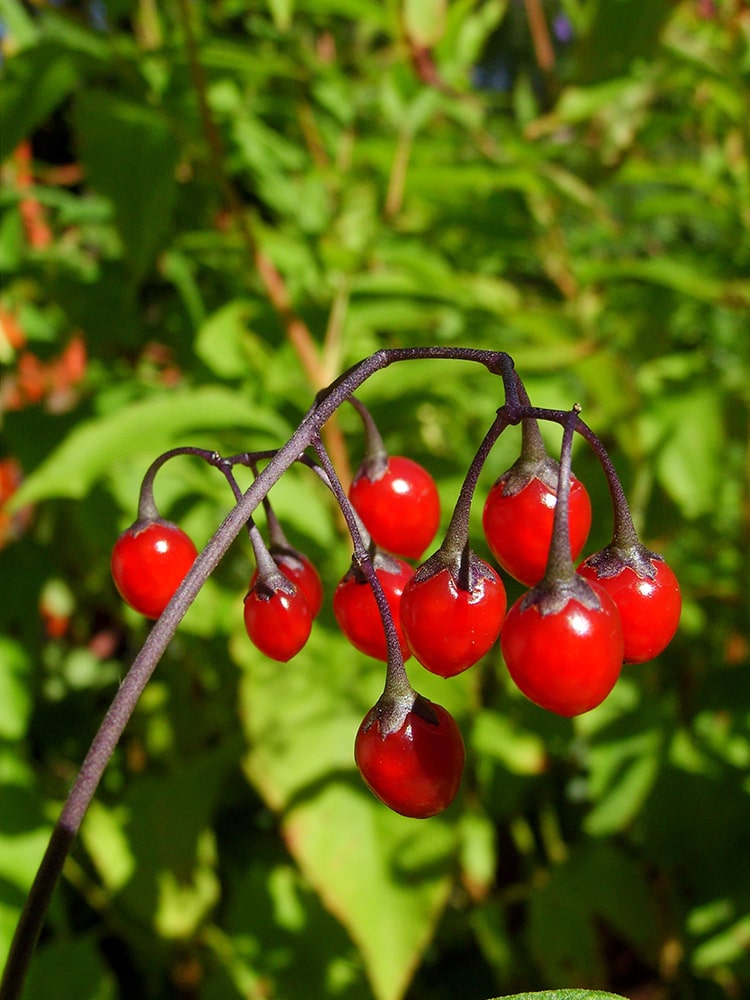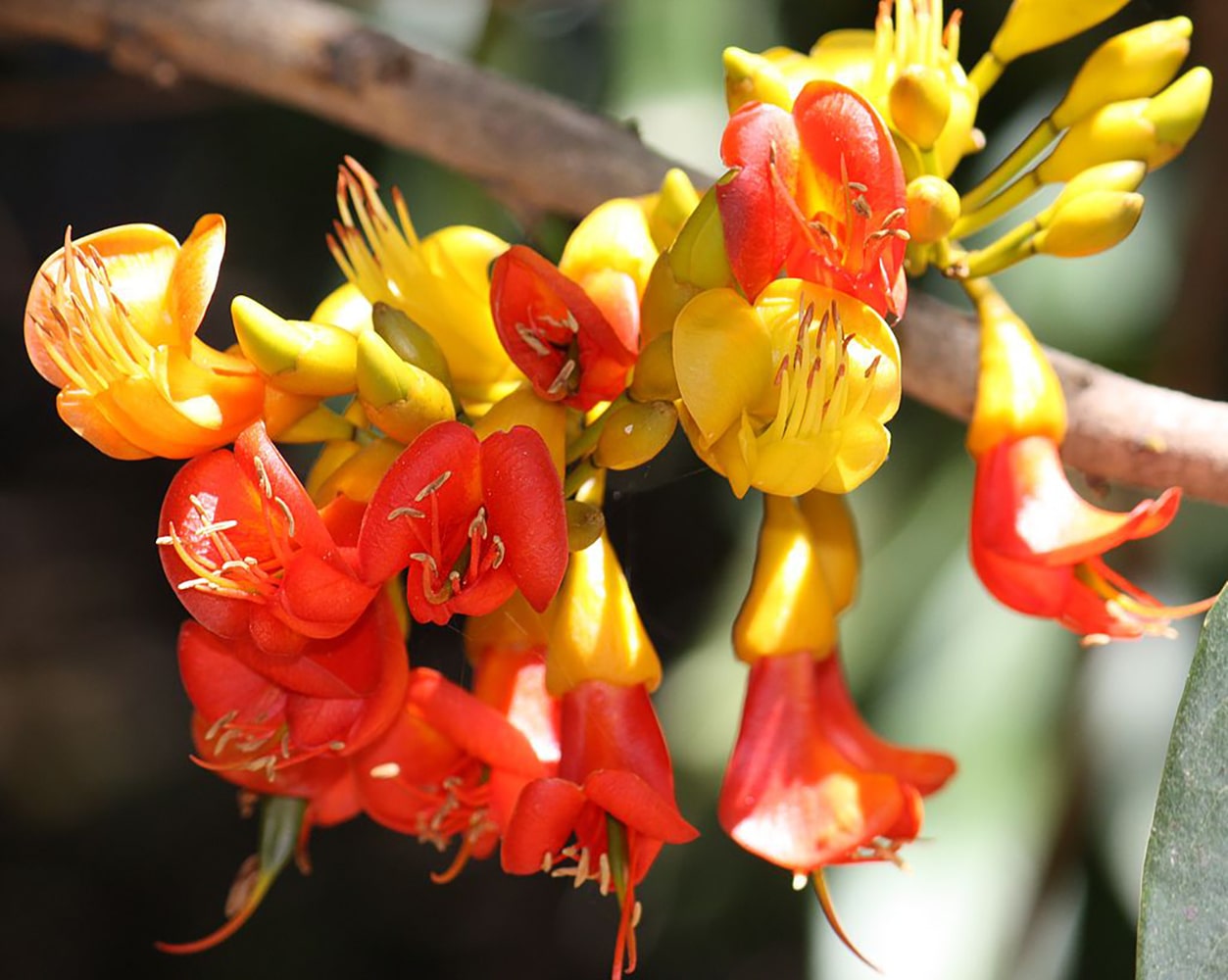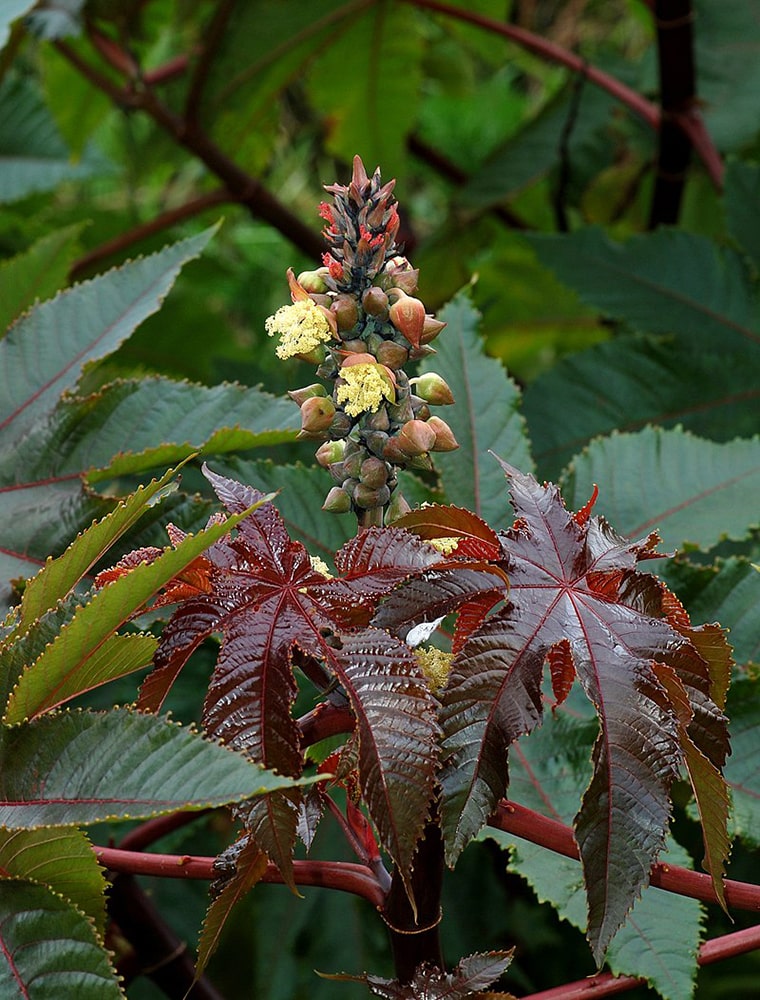
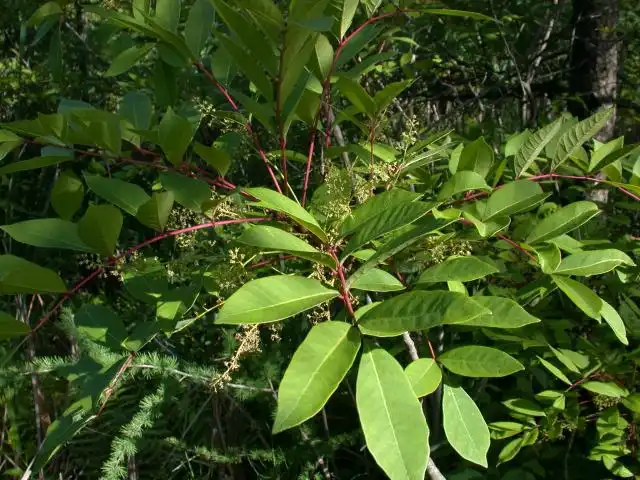
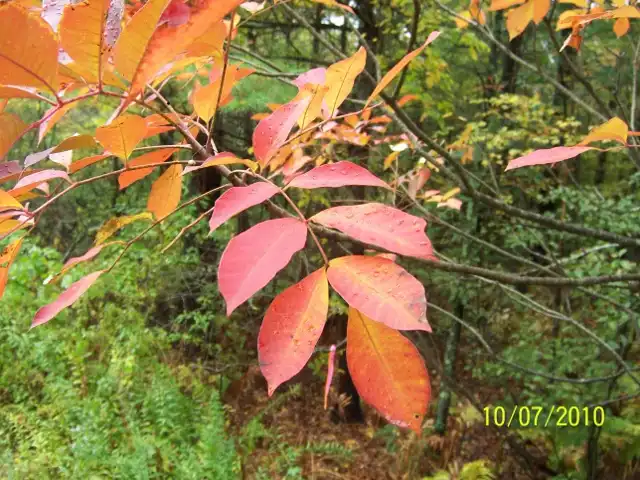
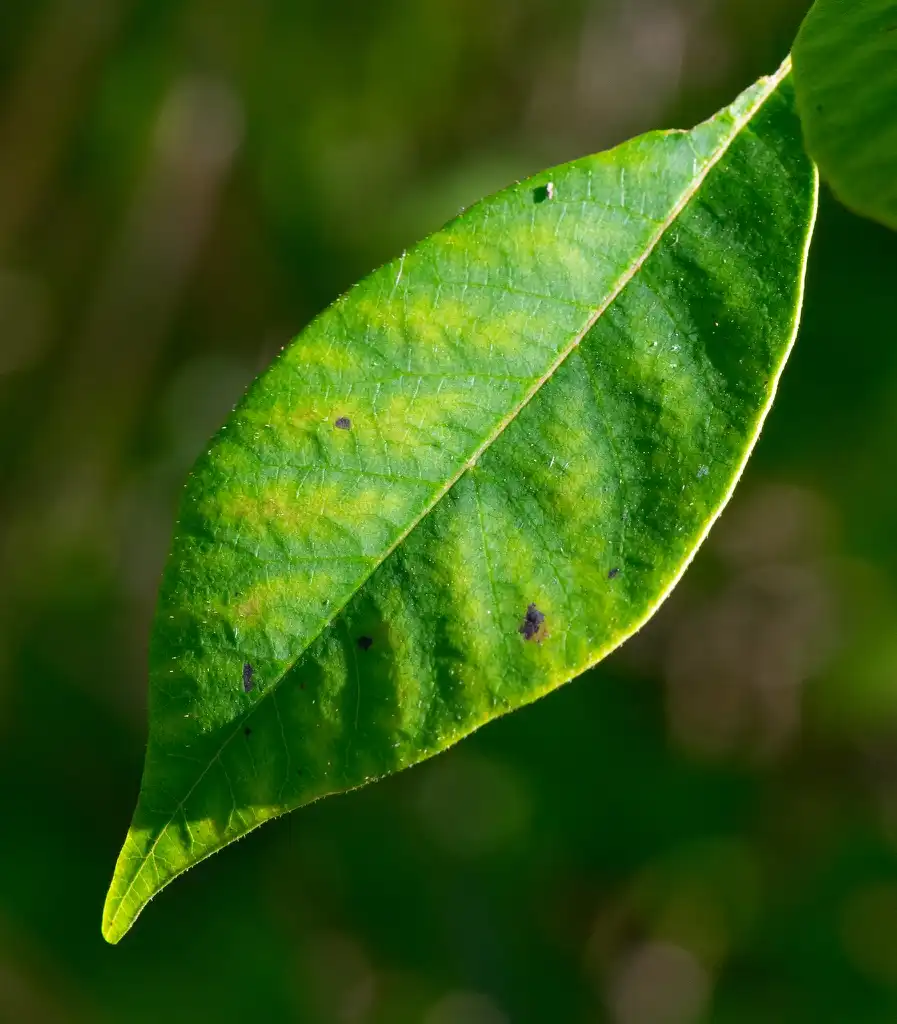
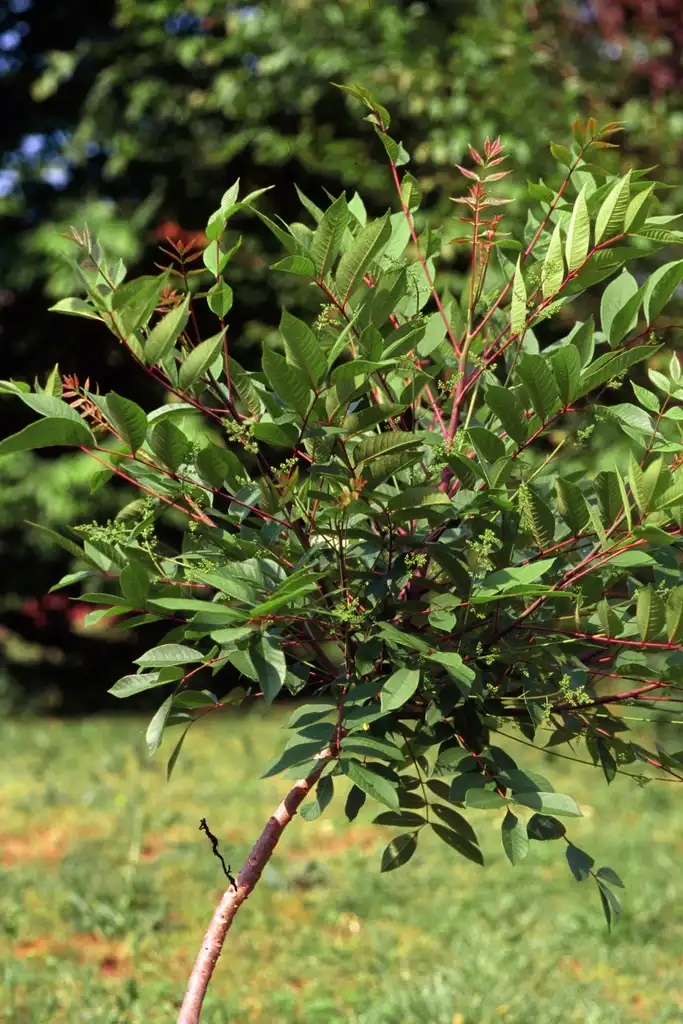
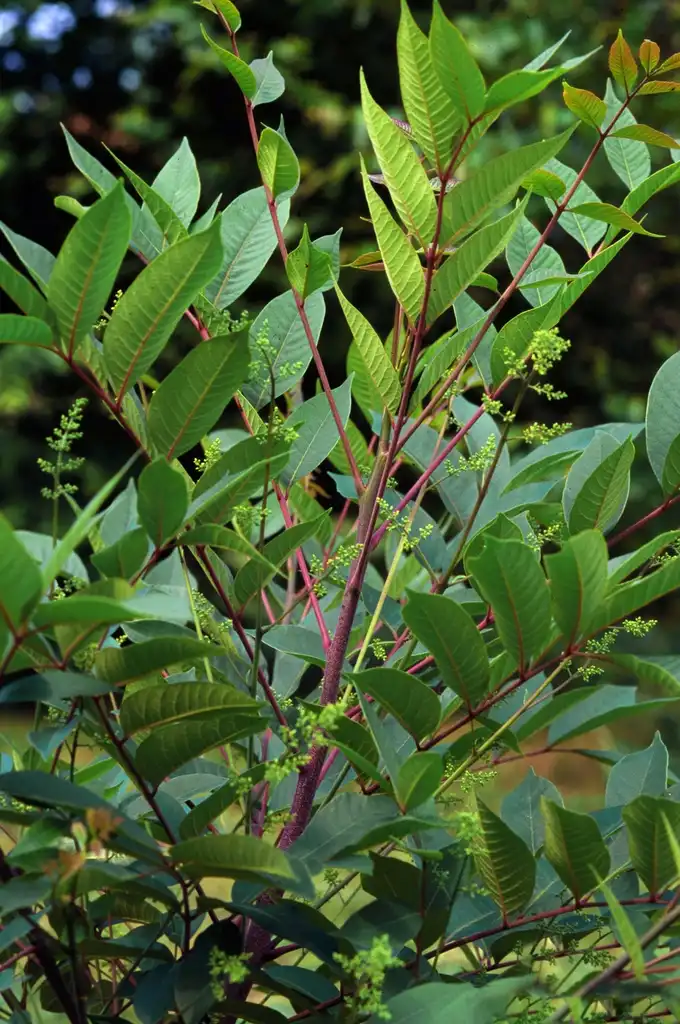
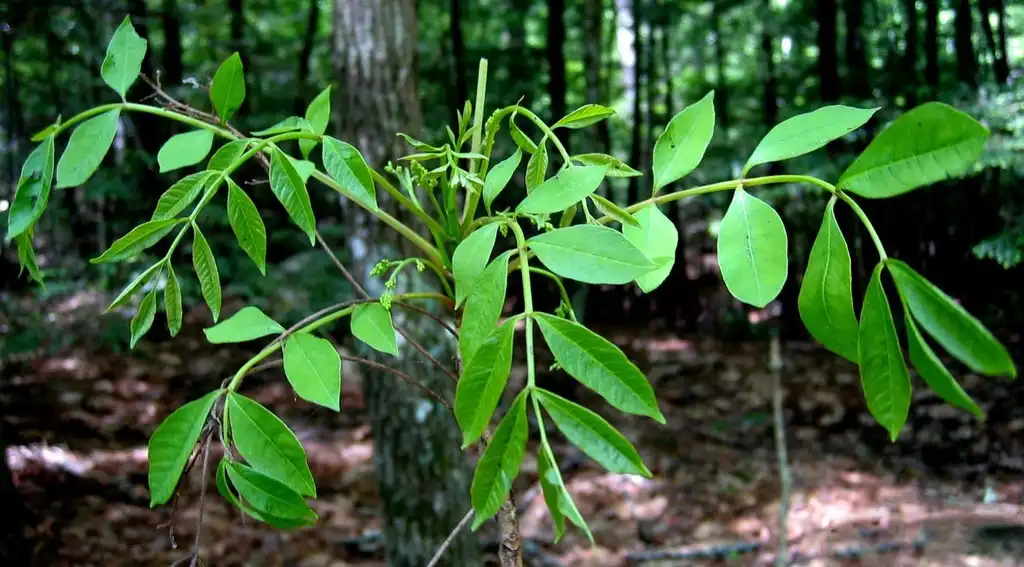
• Photo of Toxicodendron vernix (Toxicodendron vernixs)

Plant Profile: Toxicodendron vernix

Taxonomy: Toxicodendron vernix

Names

Poison Sumac, Swamp Sumac, Thunderwood

  • Photo of Toxicodendron vernix (Toxicodendron vernixs)

Phonetic Spelling:toks-ee-ko-DEN-dron VER-niks

Genus:Toxicodendron

Species:vernix

Family:Anacardiaceae

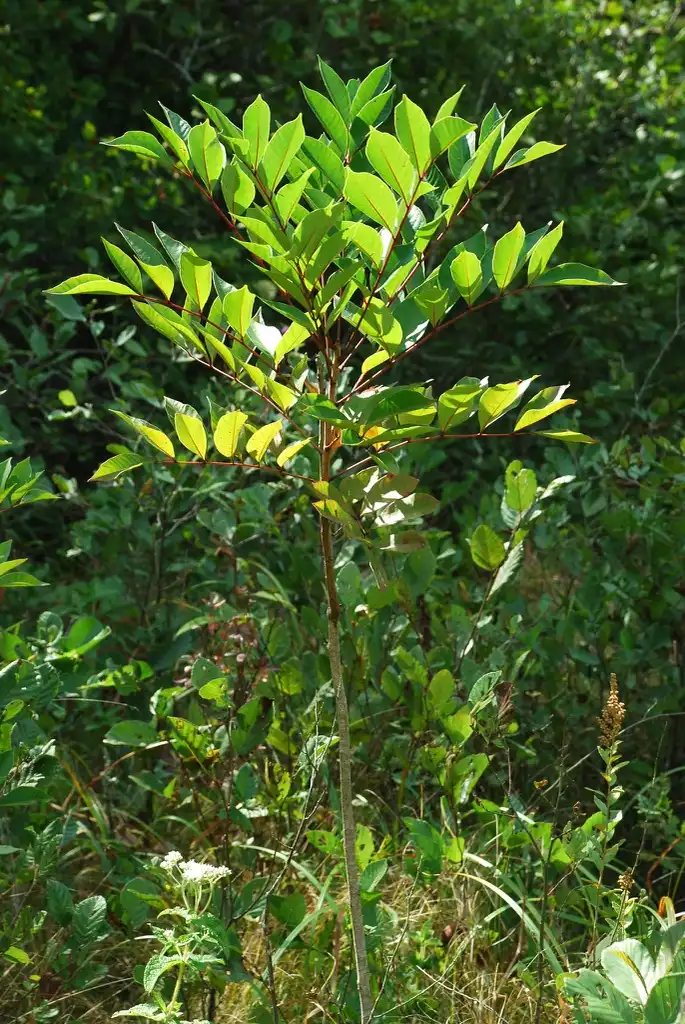
Poison Sumac is a native deciduous shrub or small tree that belongs to the Anacardiaceae family, commonly known as the Sumac family. This plant typically reaches heights of up to 25 feet and has a trunk diameter of about 6 inches, often sprouting from its base. It is also referred to by other names such as Thunderwood and Swamp Sumac.

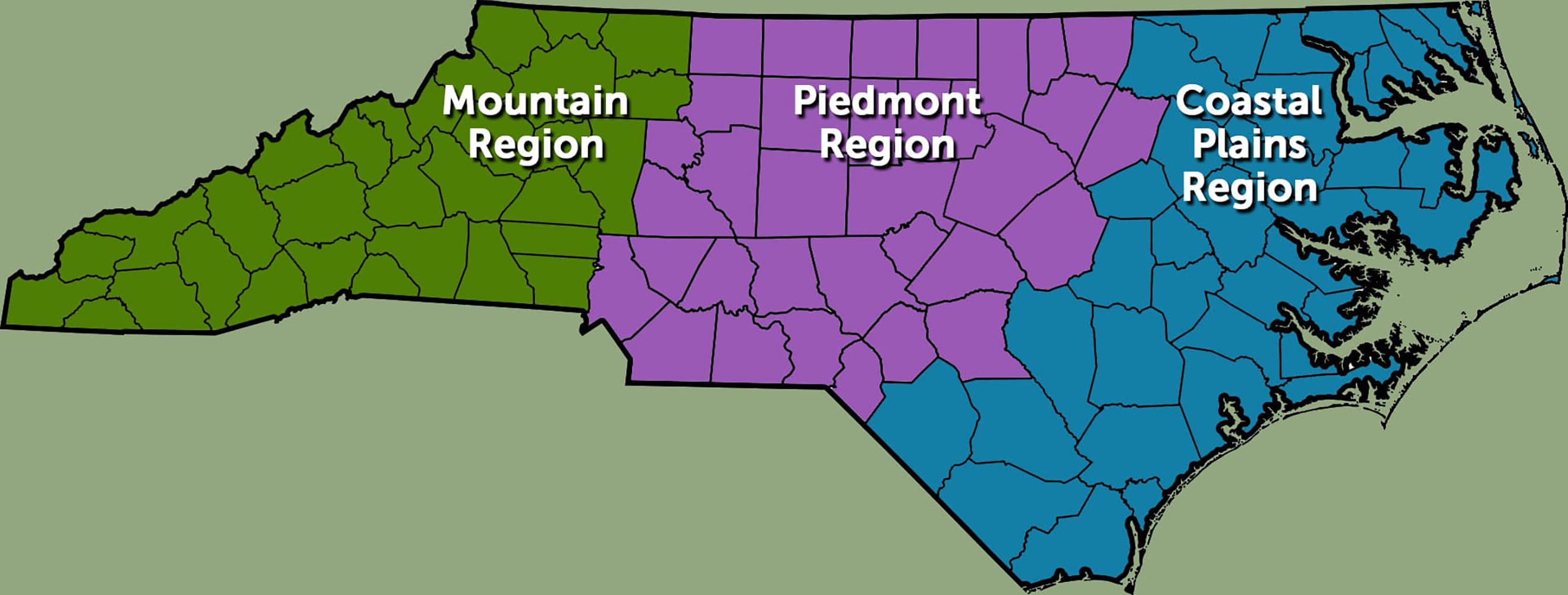
This species is predominantly found in the coastal plains of North Carolina, with rare sightings in the piedmont and mountainous regions of the state. Its native range extends across eastern Canada and the eastern-central and eastern parts of the United States.

The genus name, Toxicodendron, derives from Greek, combining "toxikos," meaning "poison," and "dendron," meaning "tree." The species name, vernix, comes from Latin and translates to "varnish."

Poison Sumac typically thrives in bogs, marshes, swamps, and thickets along riverbanks, favoring acidic soils and areas with full to partial sunlight.

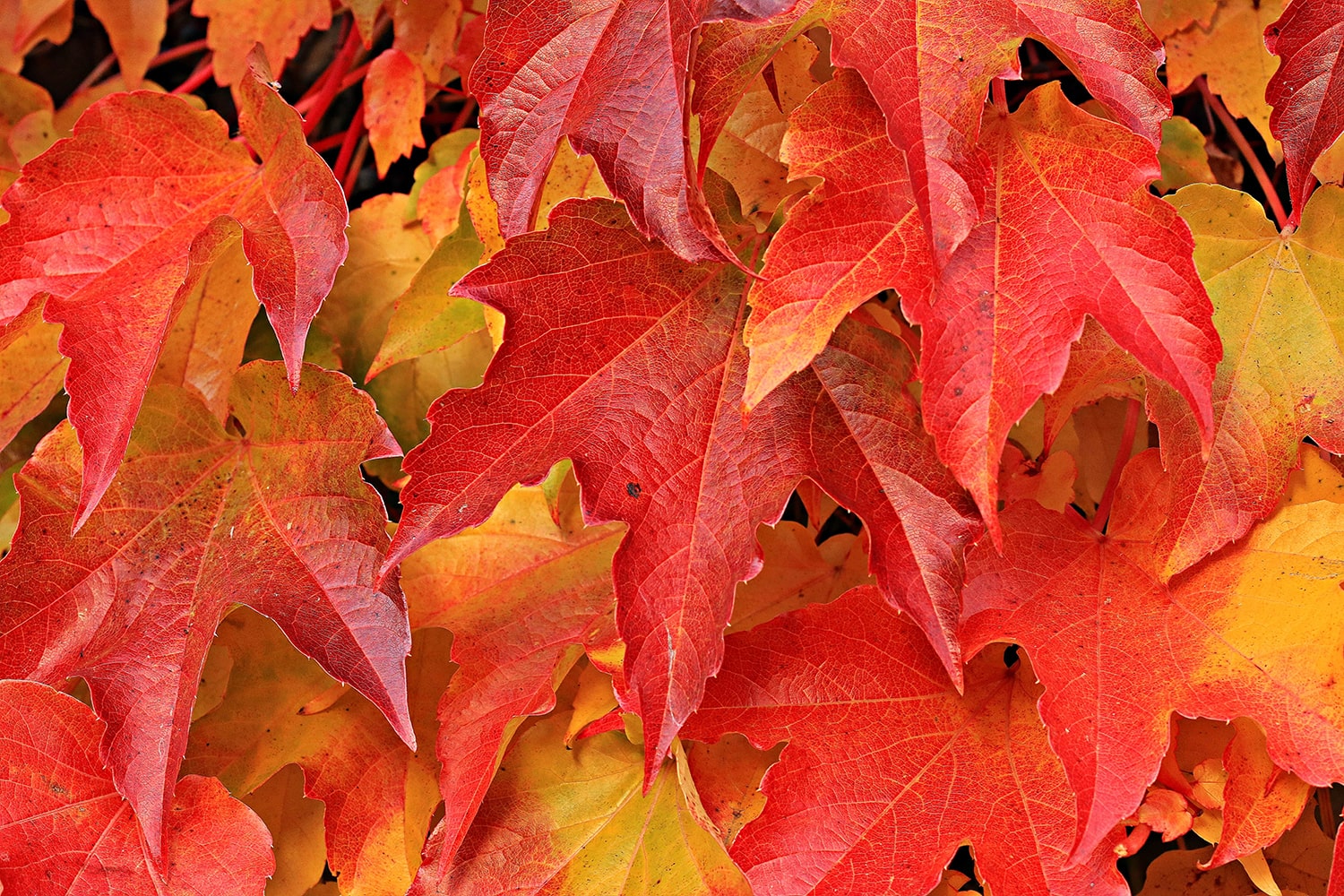
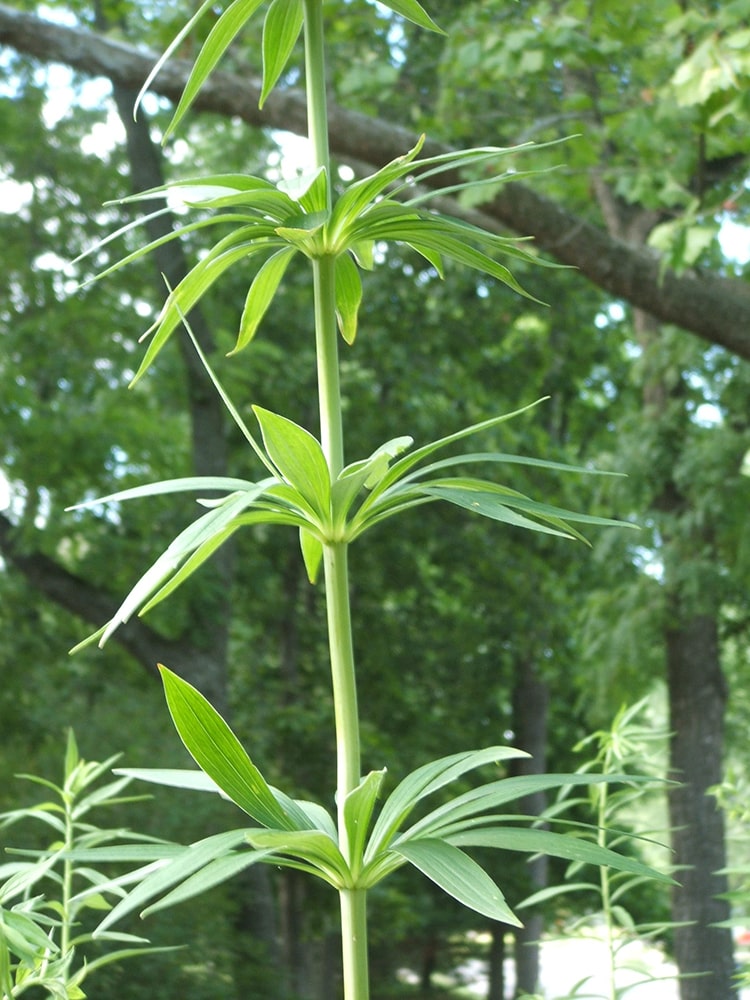
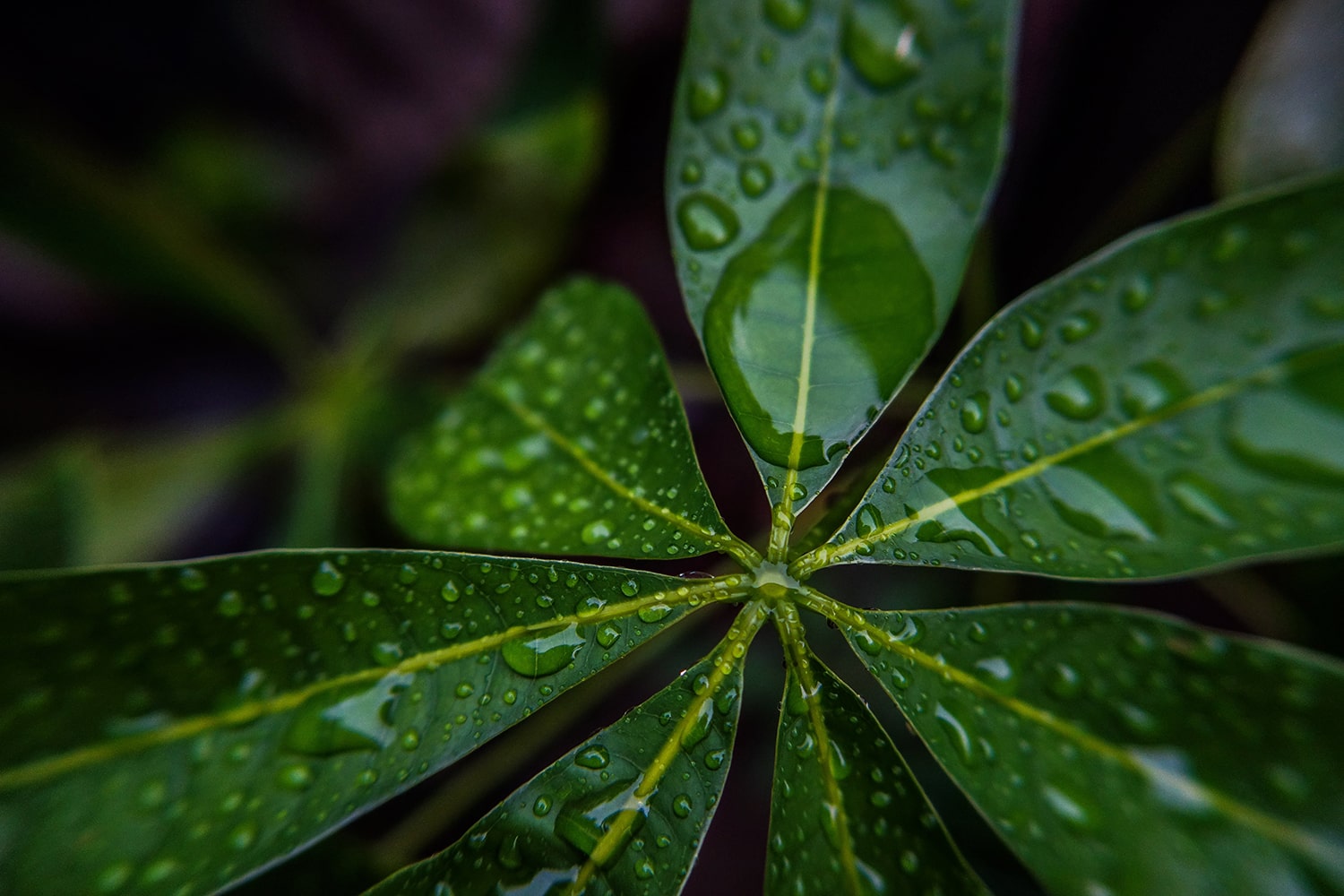
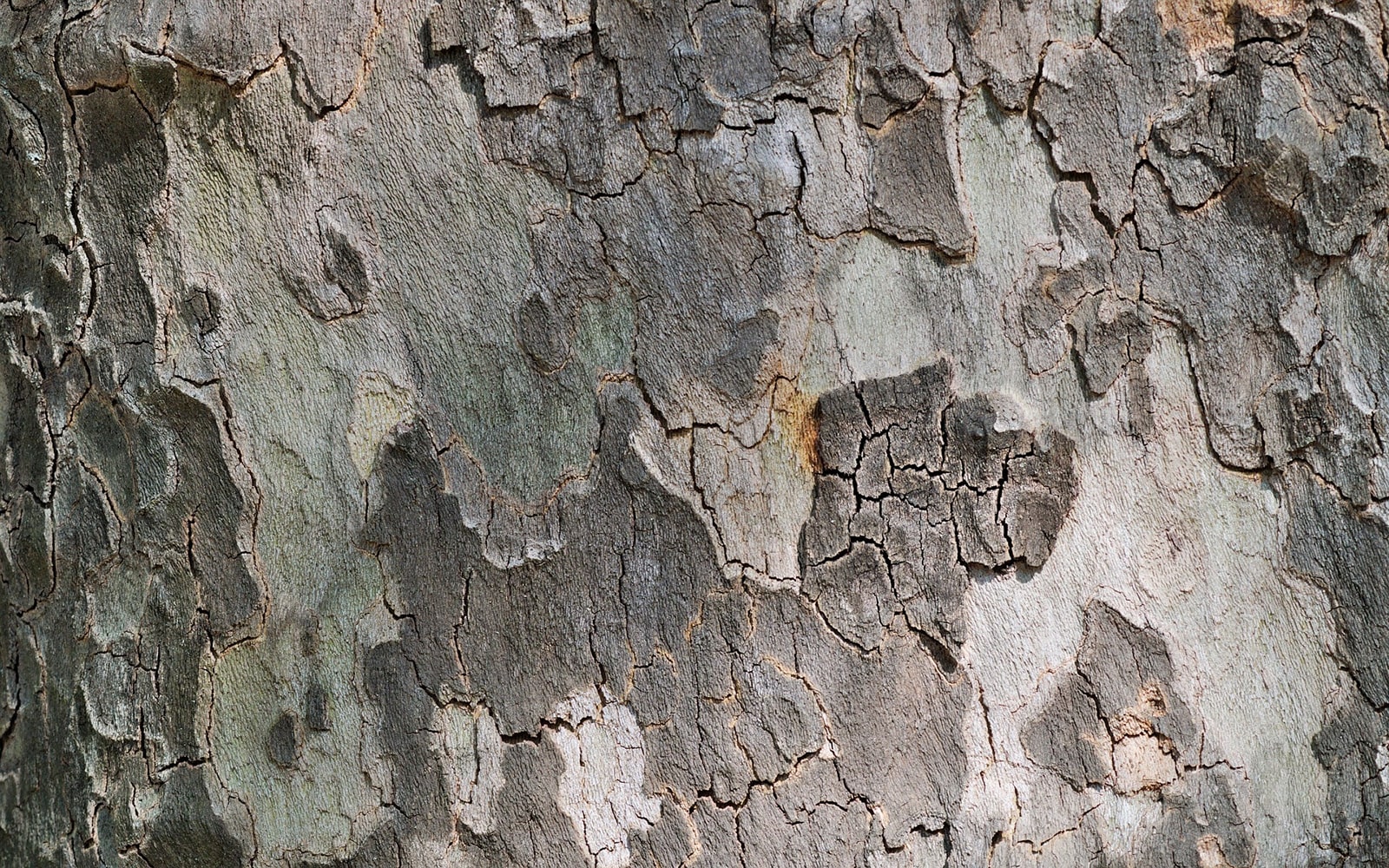
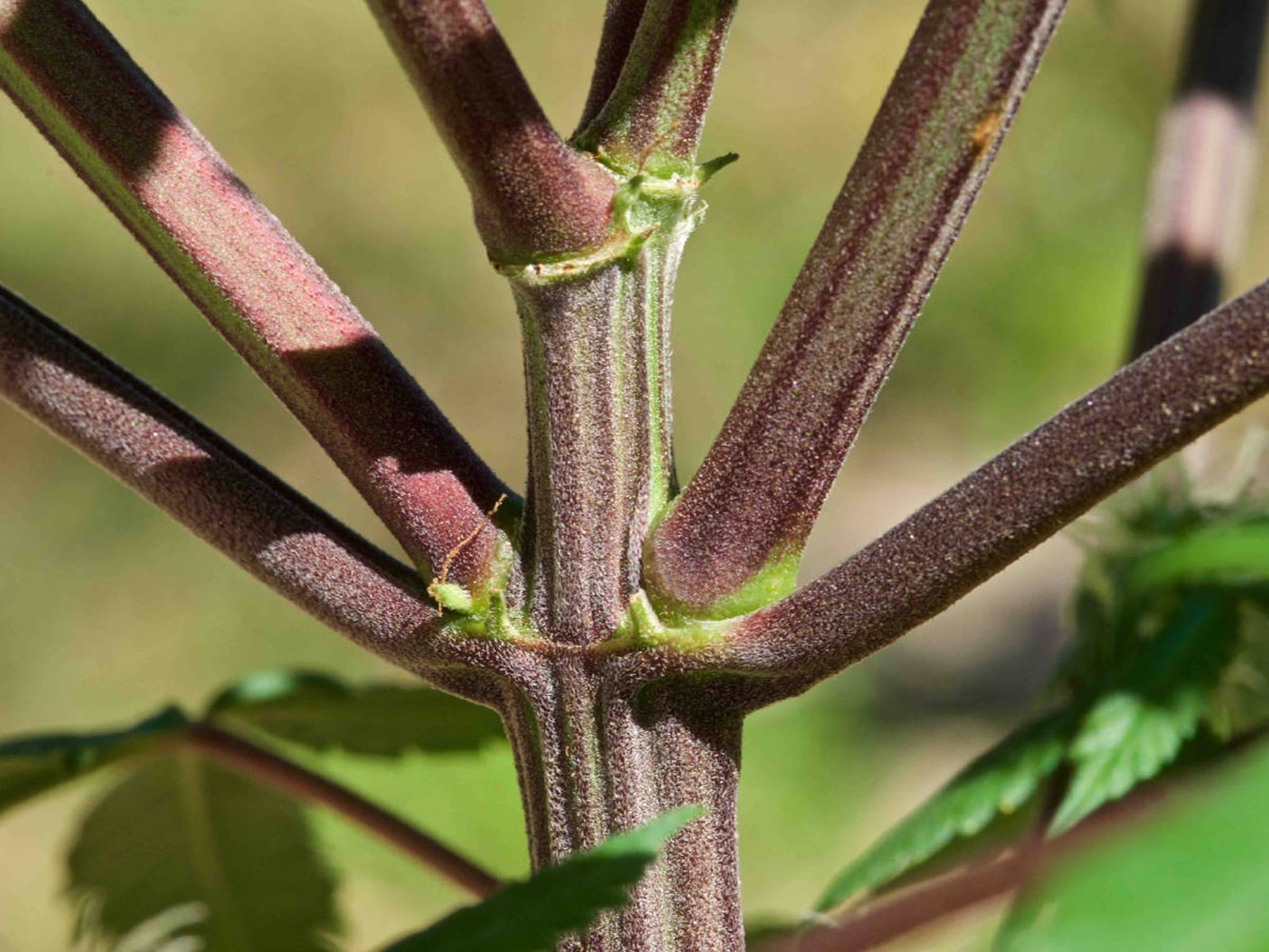
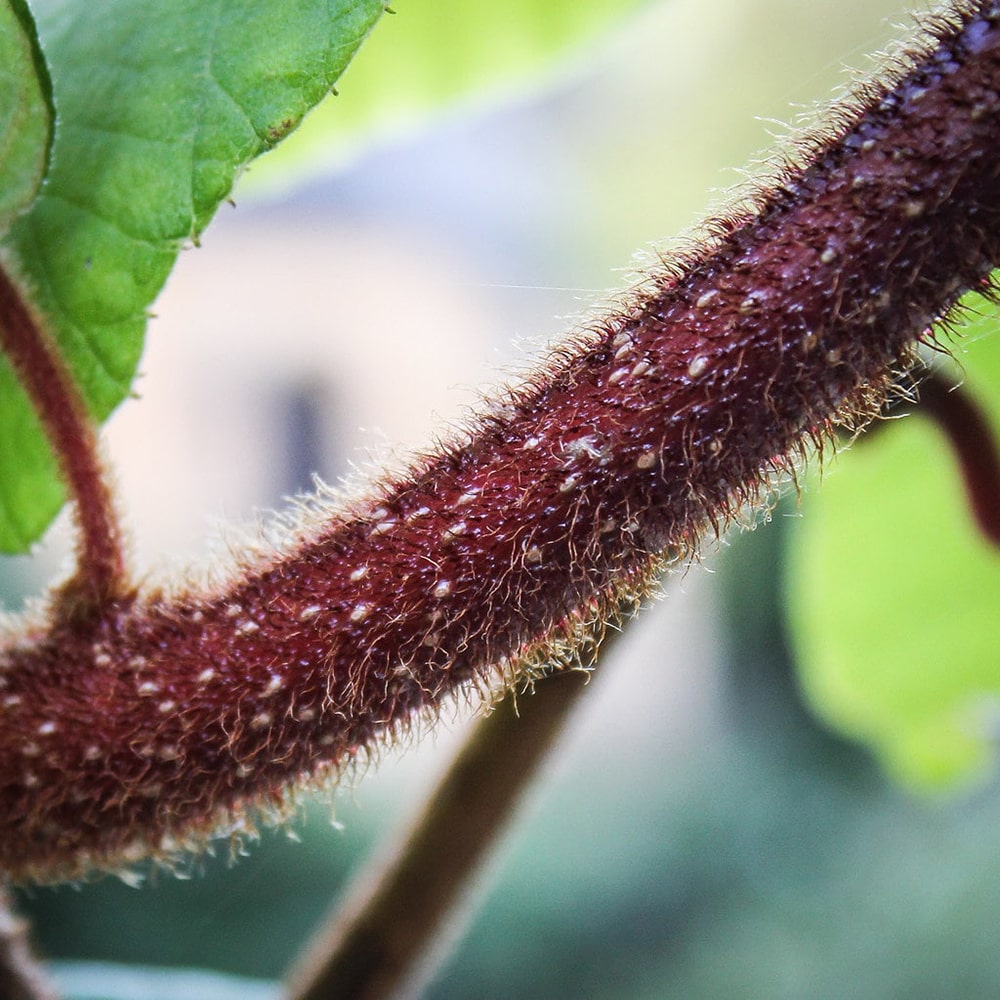
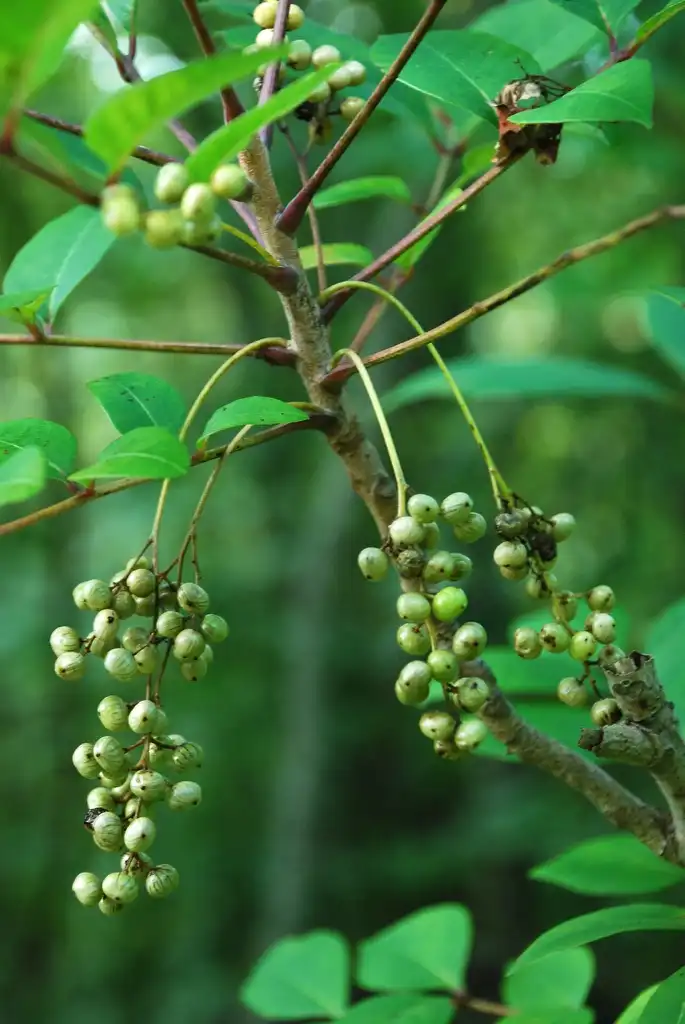
The leaves of Poison Sumac are dark green, arranged alternately, and are compound, consisting of 7 to 13 leaflets. In autumn, these leaves transform into a striking orangish-red hue. The flowers, which are greenish-yellow and have five petals, grow in hanging clusters. The ripening yellowish-white drupes attract birds and rabbits. The stems are reddish, while the bark is smooth and grayish-brown, featuring lenticels. Poison Sumac can be mistaken for a young Ash tree; however, Ash trees have alternate leaves and produce winged samaras instead of drupes.

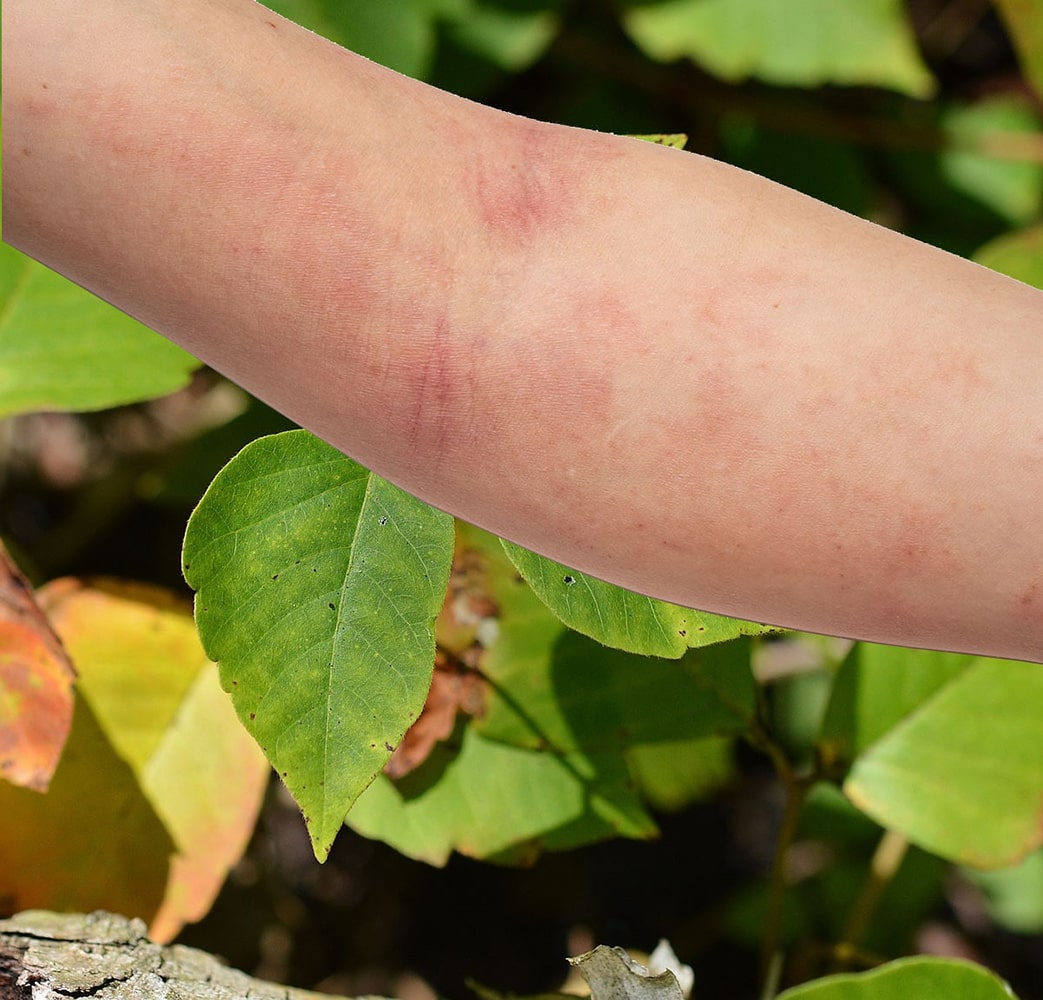
This plant contains Urushiol, a toxic compound also found in Poison Ivy and Poison Oak. Every part of Poison Sumac is poisonous, leading to skin reactions such as redness, itching, blistering, and swelling. Inhaling smoke from burning Poison Sumac can cause inflammation and fluid accumulation in the lungs, potentially resulting in fatal consequences. Urushiol is particularly concentrated in Poison Sumac, which may intensify some allergic reactions. Some experts even regard Poison Sumac as the most toxic plant in the United States. It is crucial to wear protective clothing to avoid contact with this plant and to thoroughly wash hands, clothing, and tools with soap and water after any exposure.

Key characteristics of Poison Sumac include:

Toxicodendron vernix Feature Summary

Toxicodendron vernix Image Gallery

Tags

#poisonous
#non-toxic for horses
#non-toxic for dogs
#non-toxic for cats
#toxic to humans

Similar Plants

Toxicodendron vernix is often confused with:

Toxicodendron vernix Feature Summary

Attributes
Eastern Canada and East Central and Eastern United States
Canada: Nova Scotia, Ontario, and Quebec USA: AL, CT, DE, FL, GA, KY, IL, IN, LA, ME, MD, MA, MI, MN, MS, NH, NJ, NY, NC, OH, PA, RI, TN, TX, VT. VA, WV, WI
Small bees and flies are attracted to the flowers for nectar and pollen. Caterpillars of moths such as Eutelia pulcherrima (Beautiful Eutelia), Marathyssa inficita ( Dark Marathyssa), and Paectes oculatrix (Eyed Paectes) feed on the leaves. The adult and larvae of the Sumac Flea Beetle also eat the leaves. Bobwhites, Ring-necked pheasants, and Ruffled Grouse consume the fruits in winter. The Cottontail Rabbit gnaws on the bark and twigs of young shrubs.
Perennial
Woody
Fruit
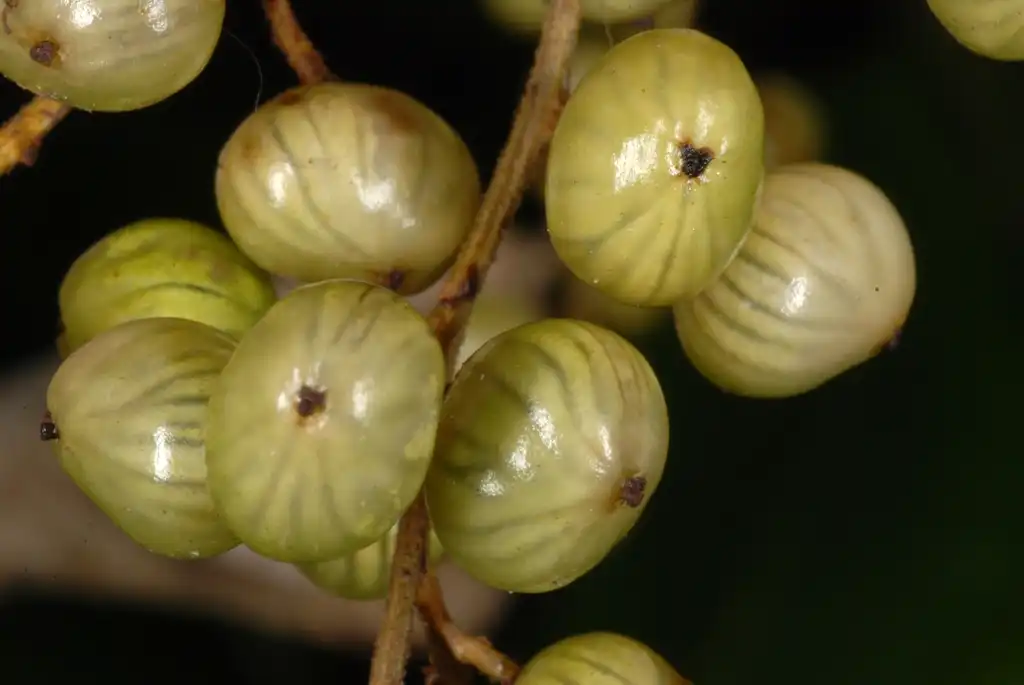
The female flowers form clusters of dangling, smooth, round, berry-like drupes. They measure less than 1/4 inch in diameter and contain one seed. The drupes ripen from green to a dull yellowish-white in the late summer. The berries may persist through the winter and provide food for birds and rabbits. The fruit is toxic to humans.
Green
Gray/Silver
White
Summer
Fall
Winter
< 1 inch
Flowers
The flowers appear as drooping panicles up to eight inches long and four inches wide. Each flower has five greenish-yellow petals that appear early to mid-summer. The flower is less than 1/4 inch in diameter. Male and female flowers are usually on separate plants. The male flower has five white stamens with yellow anthers. The female flower has a pistil and one style. If it is a perfect flower, there are both a pistil and five stamens. The calyx cupping the flower has five pointed lobes. The flower is toxic to humans.
Gold/Yellow
Green
Spring
Summer
4-5 petals/rays
< 1 inch
Leaves
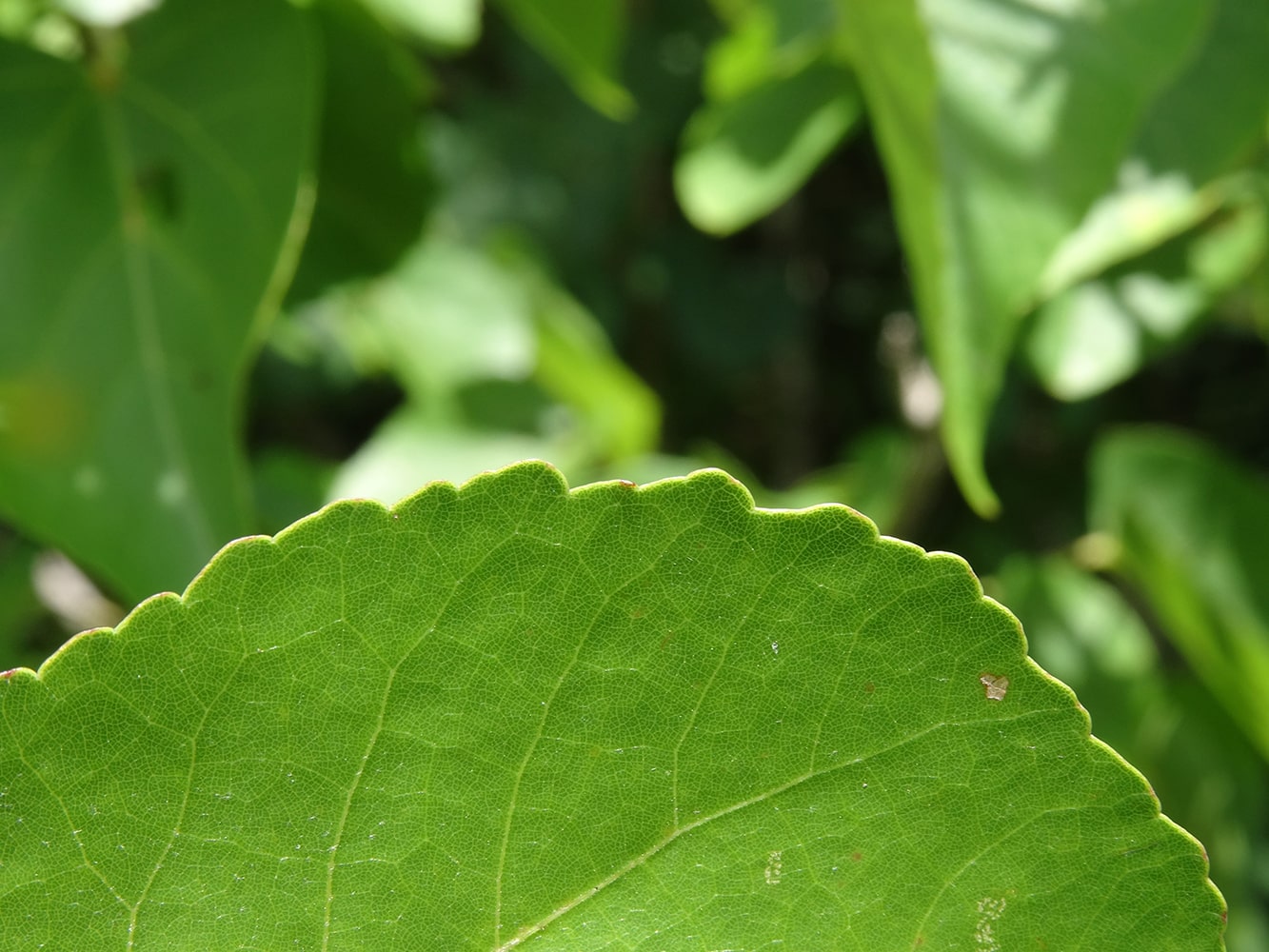
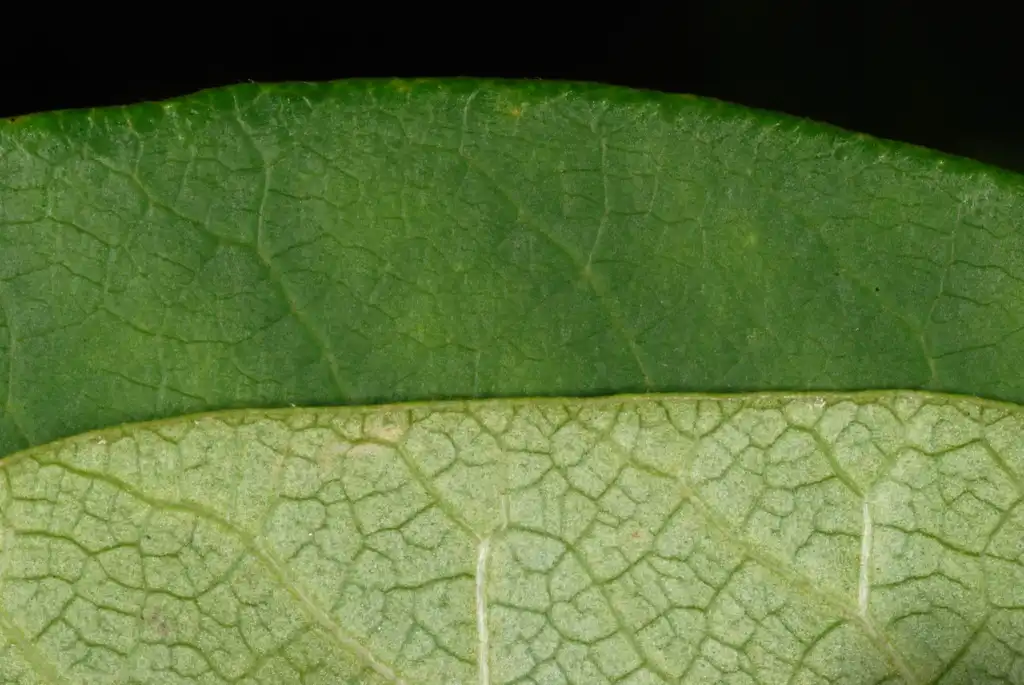
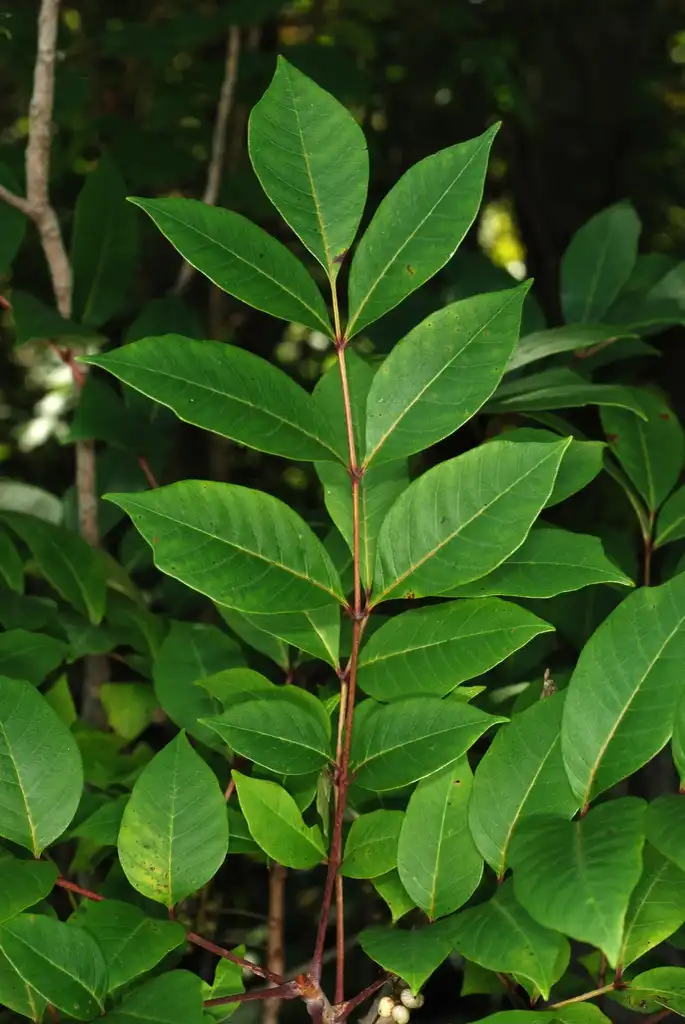
The leaves are alternate, compound, and measure 8-13 inches long. New growth may be reddish. There are 7 to 13 shiny dark green leaflets. The leaflets measure 2 to 4 inches long and 1-1.5 inches wide. They are elliptic to ovate in shape with entire margins. The undersides of the leaflets are a dull green. The rachis or stems are pale to bright red and smooth. The leaves turn bright orange to red in the fall. The leaves are toxic to humans.
Orange
Red/Burgundy
Compound (Pinnately , Bipinnately, Palmately)
Elliptical
Ovate
Oblong
Entire
Undulate
3-6 inches
Glossy
Smooth
1-3 inches
Bark
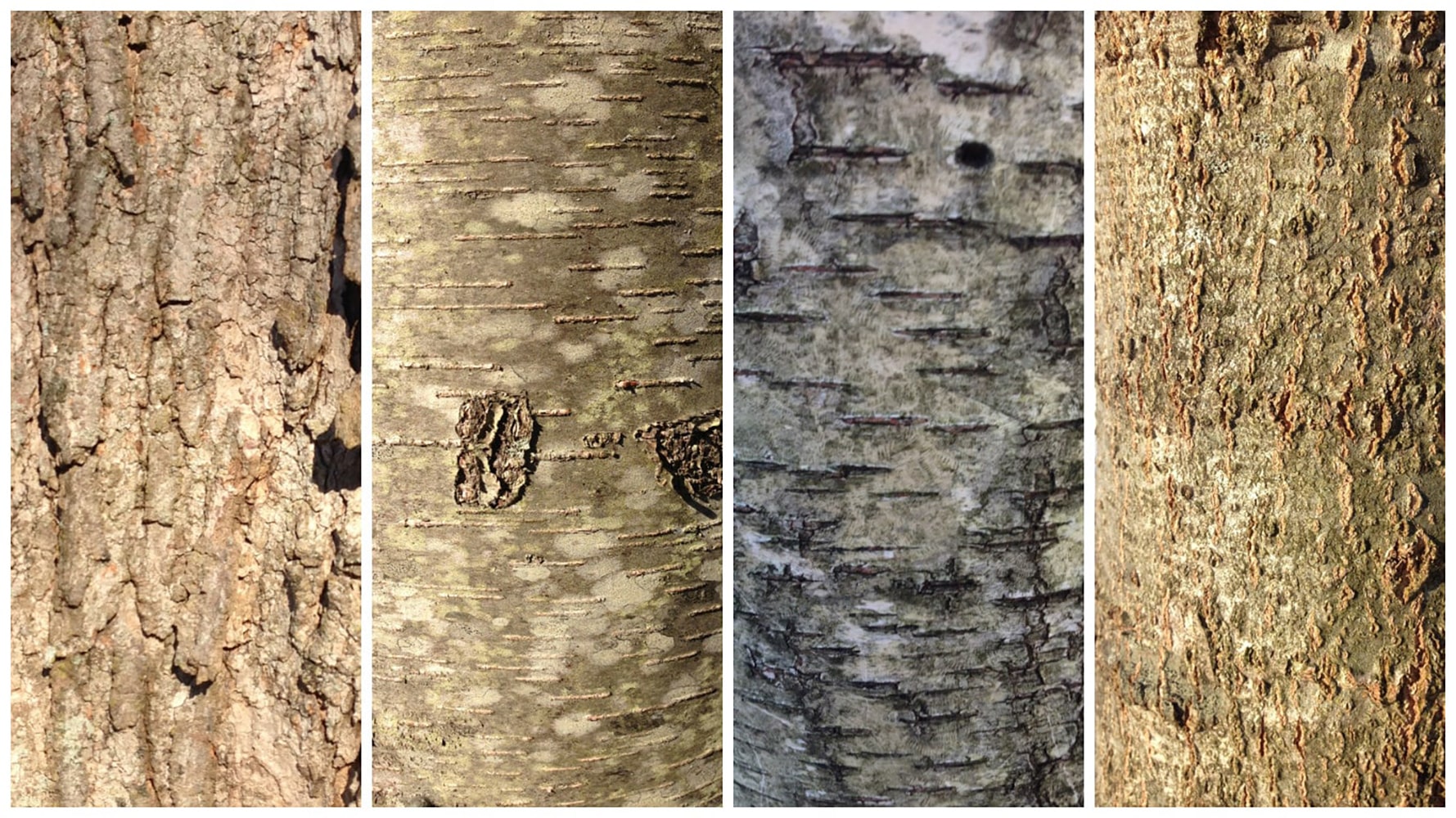
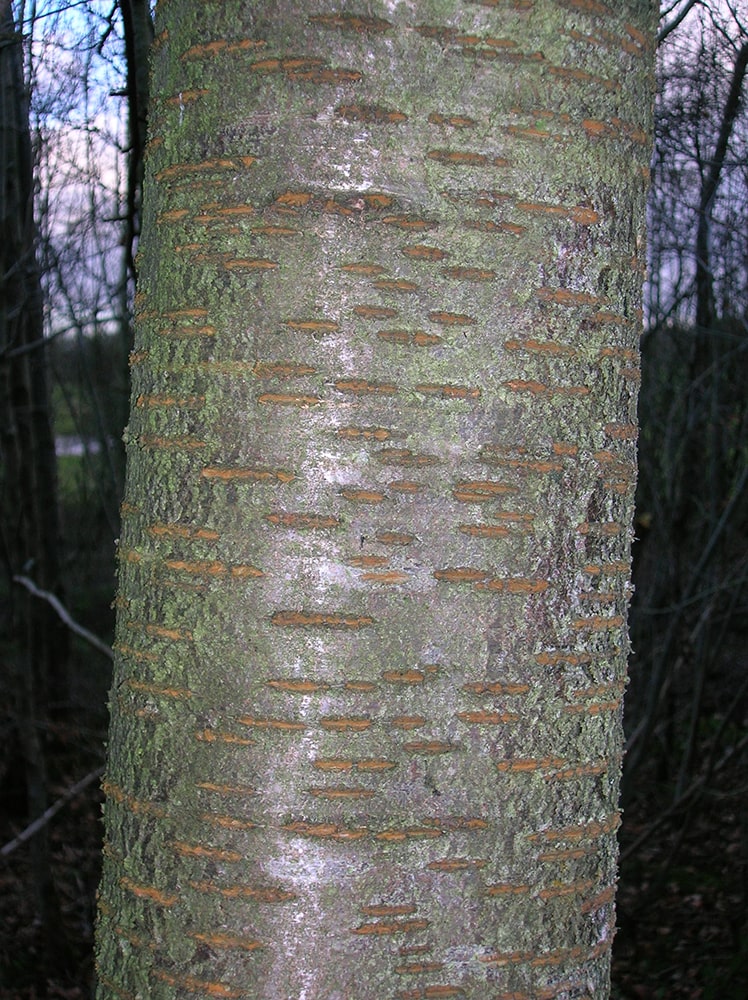
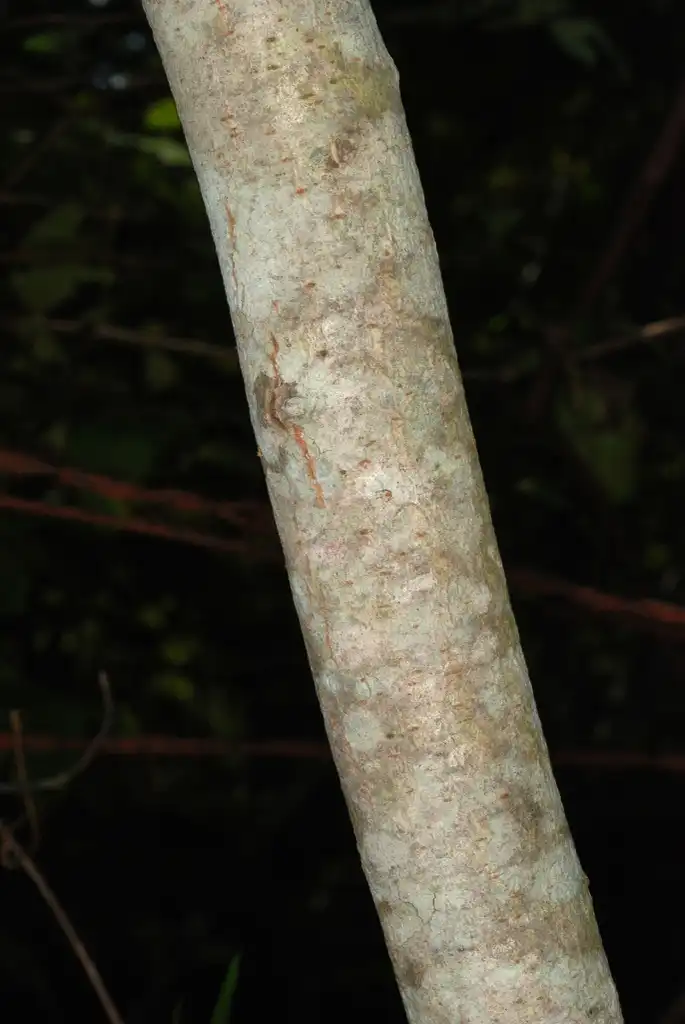
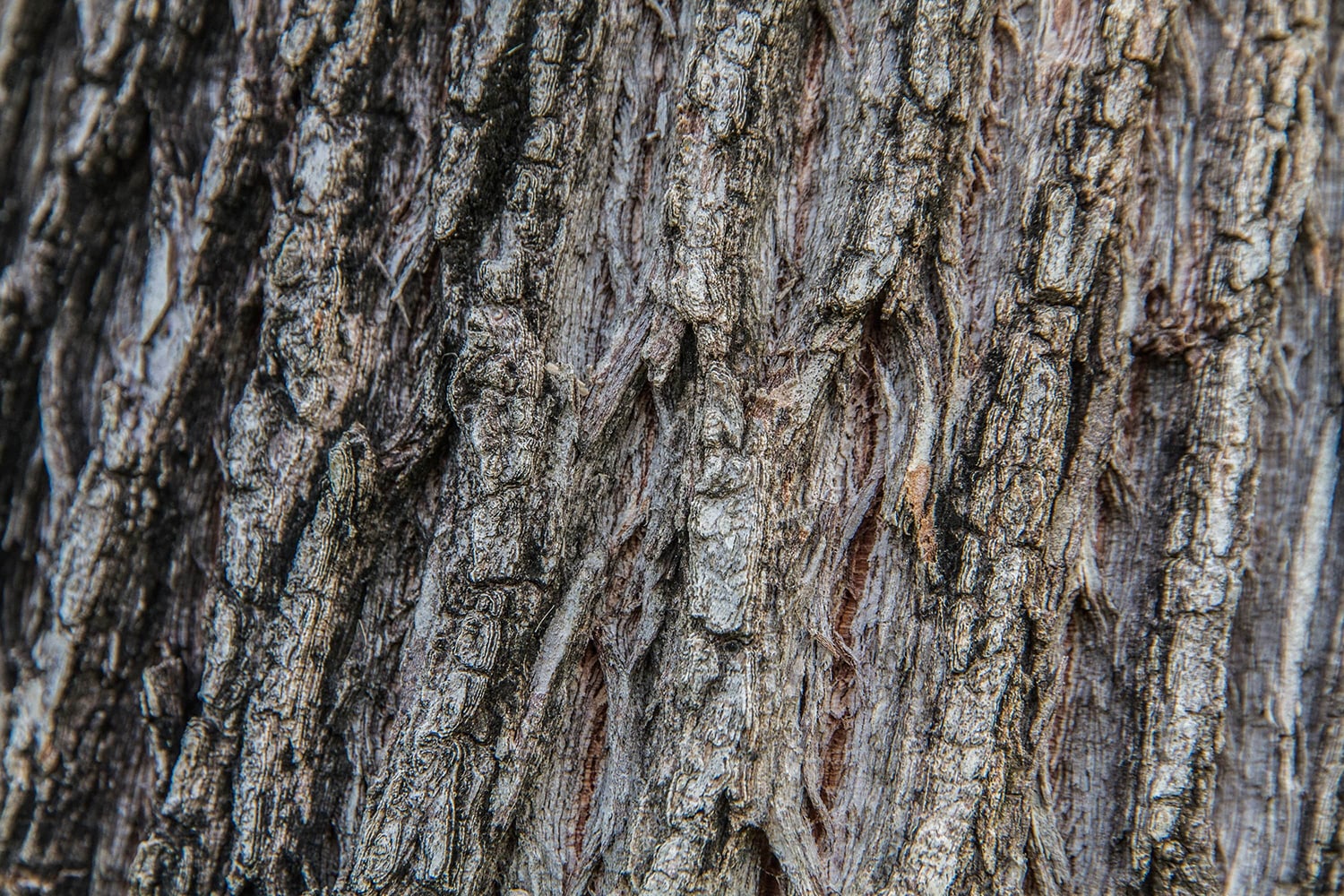
The bark is smooth and grayish-brown with dark horizontal lenticels. The sap turns black when exposed to air. The bark is toxic to humans.
Light Gray
Fissured
Lenticels
Stem
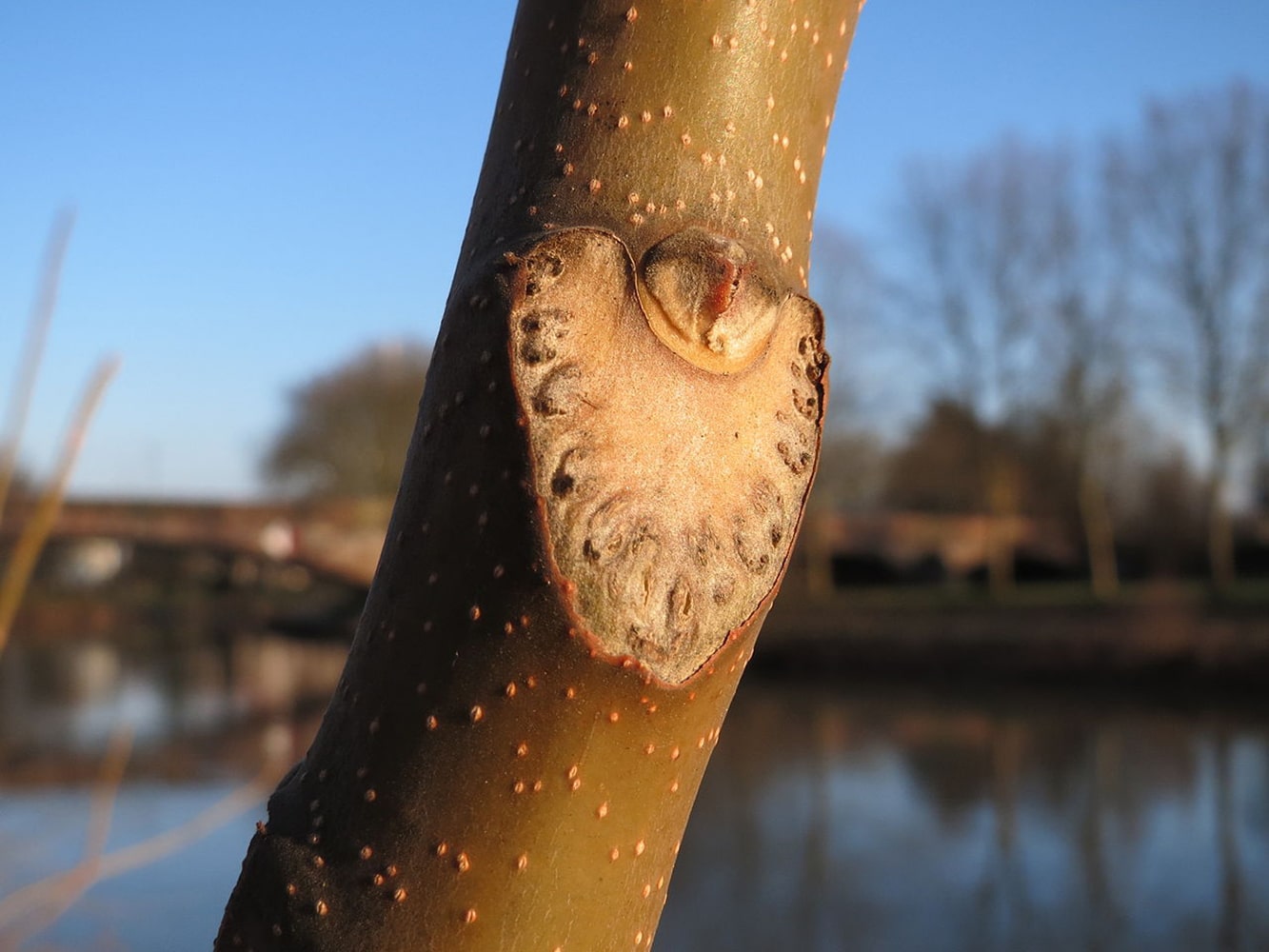
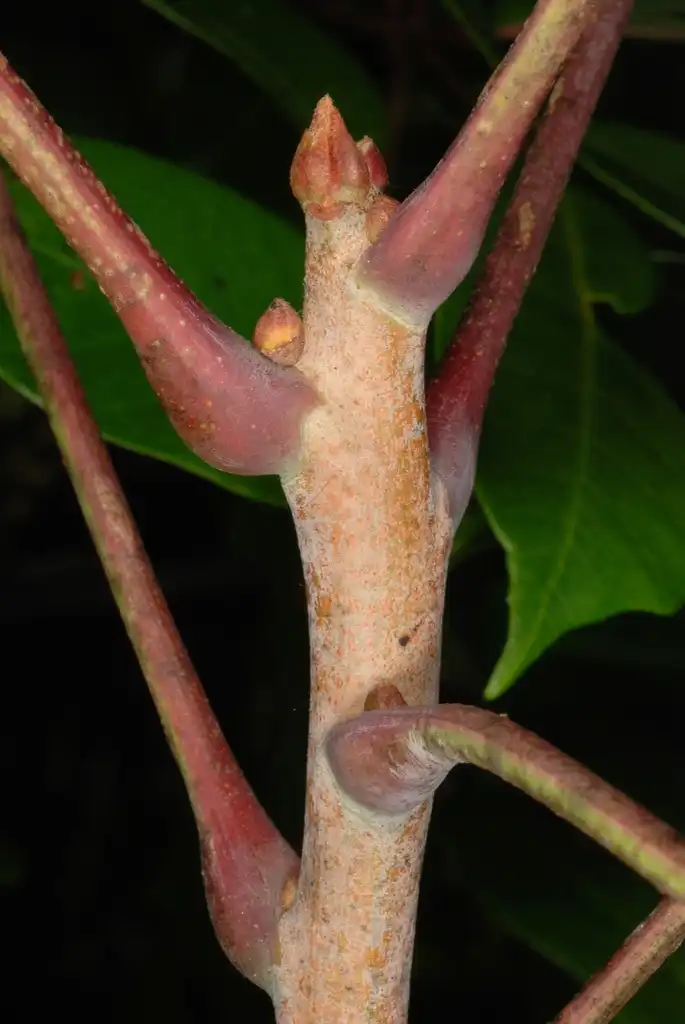
The stems appear pale to bright red and smooth. The twigs are stout, smooth, and orangish-brown in color. They have numerous dark lenticels. The leaf scar is large and shield-shaped. The buds have downy scales. Dark-colored sap oozes from the stem if it is broken or cut. The stems and sap of the plant are toxic to humans.
Brown/Copper
Red/Burgundy
Orange
Smooth (glabrous)
Conspicuous
Heart or shield shaped
Enclosed in more than 2 scales
Poisonous to Humans
The possible symptoms include an itchy rash, redness, swelling, blisters, sores, fever, coughing, wheezing, and difficulty breathing. Inhaling burning poison sumac can potentially be fatal because it causes lung inflammation and fluid build-up in the lungs. Ingestion may cause gastrointestinal inflammation.
Seeds
Leaves
Stems
Sap/Juice
Flowers
Bark
Fruits
Roots
Whole Plant Traits
Cultural Conditions
Full sun (6 or more hours of direct sunlight a day)
Partial Shade (Direct sunlight only part of the day, 2-6 hours)
Acid (<6.0)
Moist
Occasionally Wet
Occasional Flooding
Coastal
4a
4b
5b
5a
6a
6b
7a
7b
8b
8a
3a
3b
High Organic Matter
Loam (Silt)
Sand
Landscape
Bees
Moths
Small Mammals
Contact Dermatitis

Toxicodendron vernix Attributes

Toxicodendron vernix: Country Or Region Of Origin

Eastern Canada and East Central and Eastern United States
Toxicodendron vernix: Distribution

Canada: Nova Scotia, Ontario, and Quebec USA: AL, CT, DE, FL, GA, KY, IL, IN, LA, ME, MD, MA, MI, MN, MS, NH, NJ, NY, NC, OH, PA, RI, TN, TX, VT. VA, WV, WI

Toxicodendron vernix: Wildlife Value

Small bees and flies are attracted to the flowers for nectar and pollen. Caterpillars of moths such as Eutelia pulcherrima (Beautiful Eutelia), Marathyssa inficita ( Dark Marathyssa), and Paectes oculatrix (Eyed Paectes) feed on the leaves. The adult and larvae of the Sumac Flea Beetle also eat the leaves. Bobwhites, Ring-necked pheasants, and Ruffled Grouse consume the fruits in winter. The Cottontail Rabbit gnaws on the bark and twigs of young shrubs.

Toxicodendron vernix: Life Cycle

Annual
Biennial
Bulb
Perennial
Woody

Toxicodendron vernix: Recommended Propagation Strategy

Division
Grafting
Layering
Leaf Cutting
Root Cutting
Seed
Stem Cutting

Toxicodendron vernix Fruit

Toxicodendron vernix: Fruit Description

The female flowers form clusters of dangling, smooth, round, berry-like drupes. They measure less than 1/4 inch in diameter and contain one seed. The drupes ripen from green to a dull yellowish-white in the late summer. The berries may persist through the winter and provide food for birds and rabbits. The fruit is toxic to humans.

Toxicodendron vernix: Fruit Type

Achene
Aggregate
Berry
Capsule
Caryopsis
Drupe
Follicle
Legume
Nut
Pome
Samara
Schizocarp
Siliqua

Toxicodendron vernix: Fruit Color

grass
Gray/Silver
grass
Green
grass
White

Toxicodendron vernix: Fruit Value To Gardener

Edible
Fragrant
Good Cut
Good Dried
Long Bloom Season
Long-lasting
Showy

Toxicodendron vernix: Display/Harvest Time

Fall
Spring
Summer
Winter

Toxicodendron vernix: Fruit Length

< 1 inch
1-3 inches
> 3 inches

Toxicodendron vernix: Fruit Width

< 1 inch
1-3 inches
> 3 inches

Toxicodendron vernix Flowers

Toxicodendron vernix: Flower Description

The flowers appear as drooping panicles up to eight inches long and four inches wide. Each flower has five greenish-yellow petals that appear early to mid-summer. The flower is less than 1/4 inch in diameter. Male and female flowers are usually on separate plants. The male flower has five white stamens with yellow anthers. The female flower has a pistil and one style. If it is a perfect flower, there are both a pistil and five stamens. The calyx cupping the flower has five pointed lobes. The flower is toxic to humans.

Toxicodendron vernix: Flower Color

filter_vintage
Gold/Yellow
filter_vintage
Green

Toxicodendron vernix: Flower Inflorescence

Catkin
Corymb
Cyme
Head
Insignificant
Panicle
Raceme
Solitary
Spadix
Spike
Umbel

Toxicodendron vernix: Flower Bloom Time

Winter
Spring
Summer
Fall

Toxicodendron vernix: Flower Petals

2-3 rays/petals
4-5 petals/rays
6 petals/rays
7 - 20 petals/rays
asymmetrical petals
Bracts
Colored Sepals
fused petals
more than 20 petals/rays
Tepals

Toxicodendron vernix: Flower Shape

Bell
Cross
Crown
Cup
Dome
Funnel
Irregular
Lipped
Radial
Saucer
Star
Trumpet
Tubular
Urn
Wheel

Toxicodendron vernix: Flower Size

1-3 inches
3-6 inches
< 1 inch
> 6 inches

Toxicodendron vernix Leaves

Toxicodendron vernix: Leaf Description

The leaves are alternate, compound, and measure 8-13 inches long. New growth may be reddish. There are 7 to 13 shiny dark green leaflets. The leaflets measure 2 to 4 inches long and 1-1.5 inches wide. They are elliptic to ovate in shape with entire margins. The undersides of the leaflets are a dull green. The rachis or stems are pale to bright red and smooth. The leaves turn bright orange to red in the fall. The leaves are toxic to humans.

Toxicodendron vernix: Woody Plant Leaf Characteristics

Broadleaf Evergreen
Deciduous
Needled Evergreen
Semi-evergreen

Toxicodendron vernix: Leaf Color

spa
Green

Toxicodendron vernix: Deciduous Leaf Fall Color

spa
Orange
spa
Red/Burgundy

Toxicodendron vernix: Leaf Type

Compound (Pinnately , Bipinnately, Palmately)
Fronds
Needles
Sheath
Simple

Toxicodendron vernix: Leaf Arrangement

Alternate
Opposite
Other/more complex
Rosulate
Whorled

Toxicodendron vernix: Leaf Shape

Acicular
Auriculate
Cordate
Cuneate
Deltoid
Elliptical
Filiform
Lanceolate
Linear
Oblanceolate
Oblong
Obovate
Obtuse
Orbicular
Ovate
Palmasect
Palmatifid
Peltate
Pinnatifid
Pinnatisect
Reniform
Rhomboidal
Spatulate
Subcordate
Subulate

Toxicodendron vernix: Leaf Margin

Crenate
Crenulate
Dentate
Denticulate
Doubly Crenate
Doubly Dentate
Doubly Serrate
Entire
Lobed
Serrate
Sinuate
Undulate

Toxicodendron vernix: Hairs Present

No
Yes

Toxicodendron vernix: Leaf Length

< 1 inch
1-3 inches
3-6 inches
> 6 inches

Toxicodendron vernix: Leaf Feel

Fleshy
Glossy
Leathery

Papery
Prickly
Rough
Rubbery
Slippery
Smooth
Soft
Velvety
Waxy

Toxicodendron vernix: Leaf Width

< 1 inch
1-3 inches
3-6 inches
> 6 inches

Toxicodendron vernix Bark

Toxicodendron vernix: Bark Description

The bark is smooth and grayish-brown with dark horizontal lenticels. The sap turns black when exposed to air. The bark is toxic to humans.

Toxicodendron vernix: Bark Color

grass
Light Gray

Toxicodendron vernix: Surface/Attachment

Bumpy
Exfoliating
Fissured
Furrowed
Lenticels
Papery
Patchy
Peeling
Ridges
Scaly
Shaggy
Shiny
Shredding
Smooth
Spongy

Toxicodendron vernix Stem

Toxicodendron vernix: Stem Description

The stems appear pale to bright red and smooth. The twigs are stout, smooth, and orangish-brown in color. They have numerous dark lenticels. The leaf scar is large and shield-shaped. The buds have downy scales. Dark-colored sap oozes from the stem if it is broken or cut. The stems and sap of the plant are toxic to humans.

Toxicodendron vernix: Stem Color

grass
Brown/Copper
grass
Orange
grass
Red/Burgundy

Toxicodendron vernix: Stem Is Aromatic

No
Yes

Toxicodendron vernix: Stem Surface

Corky Ridges
Covered with a powdery bloom (glaucous)
Dull
Hairy (pubescent)
Polished
Smooth (glabrous)

Toxicodendron vernix: Stem Buds

Hairy
Hairy tips
Scaly
Smooth/Hairless

Toxicodendron vernix: Stem Lenticels

Conspicuous
Not Conspicuous

Toxicodendron vernix: Stem Leaf Scar Shape

C-shaped, Cresent shaped
Encircles a bud
Heart or shield shaped
Round

Toxicodendron vernix: Stem Bud Scales

Enclosed in 2 scales
Enclosed in a single cap like scale
Enclosed in more than 2 scales
No scales, covered in hair

Toxicodendron vernix Poisonous to Humans

Toxicodendron vernix: Poison Symptoms

The possible symptoms include an itchy rash, redness, swelling, blisters, sores, fever, coughing, wheezing, and difficulty breathing. Inhaling burning poison sumac can potentially be fatal because it causes lung inflammation and fluid build-up in the lungs. Ingestion may cause gastrointestinal inflammation.

Toxicodendron vernix: Poison Toxic Principle

Urushiol

Toxicodendron vernix: Poison Severity

High
Low
Medium

Toxicodendron vernix: Causes Contact Dermatitis

No
Yes

Toxicodendron vernix: Poison Part

Bark
Flowers
Fruits
Leaves
Roots
Sap/Juice
Seeds
Stems

Toxicodendron vernix Whole Plant Traits

Toxicodendron vernix: Plant Type

Annual
Bulb
Carnivorous
Edible
Epiphyte
Fern
Ground Cover
Herb
Herbaceous Perennial
Houseplant
Mushroom
Native Plant
Ornamental Grasses and Sedges
Perennial
Poisonous
Rose
Shrub
Succulent
Tree
Turfgrass
Vegetable
Vine
Water Plant
Weed
Wildflower

Toxicodendron vernix: Woody Plant Leaf Characteristics

Broadleaf Evergreen
Deciduous
Needled Evergreen
Semi-evergreen

Toxicodendron vernix: Habit/Form

Arching
Ascending
Broad
Cascading
Climbing
Clumping
Columnar
Conical
Creeping
Dense
Erect
Horizontal
Irregular
Mounding
Multi-stemmed
Multi-trunked
Open
Oval
Prostrate
Pyramidal
Rounded
Spreading
Vase
Weeping

Toxicodendron vernix: Growth Rate

Slow
Medium
Rapid

Toxicodendron vernix: Maintenance

Low
Medium
High

Toxicodendron vernix Cultural Conditions

Toxicodendron vernix: Light

Dappled Sunlight (Shade through upper canopy all day)
Deep shade (Less than 2 hours to no direct sunlight)
Full sun (6 or more hours of direct sunlight a day)
Partial Shade (Direct sunlight only part of the day, 2-6 hours)

Toxicodendron vernix: Soil pH

Acid (<6.0)
Alkaline (>8.0)
Neutral (6.0-8.0)

Toxicodendron vernix: Soil Drainage

Frequent Standing Water
Good Drainage
Moist
Occasional Flooding
Occasionally Dry
Occasionally Wet
Very Dry

Toxicodendron vernix: NC Region

Coastal
Mountains
Piedmont

Toxicodendron vernix: USDA Plant Hardiness Zone

thermostat
3a
thermostat
3b
thermostat
4a
thermostat
4b
thermostat
5a
thermostat
5b
thermostat
6a
thermostat
6b
thermostat
7a
thermostat
7b
thermostat
8a
thermostat
8b

Toxicodendron vernix: Soil Texture

Clay
High Organic Matter
Loam (Silt)
Sand
Shallow Rocky

Toxicodendron vernix Landscape

Toxicodendron vernix: Attracts

Bats
Bees
Butterflies
Frogs
Hummingbirds
Moths
Pollinators
Predatory Insects
Reptiles
Small Mammals
Songbirds
Specialized Bees

Toxicodendron vernix: Problems

Allelopathic
Contact Dermatitis
Frequent Disease Problems
Frequent Insect Problems
Invasive Species
Malodorous
Messy
Poisonous to Humans
Problem for Cats
Problem for Children
Problem for Dogs
Problem for Horses
Short-lived
Spines/Thorns
Weak Wood
Weedy