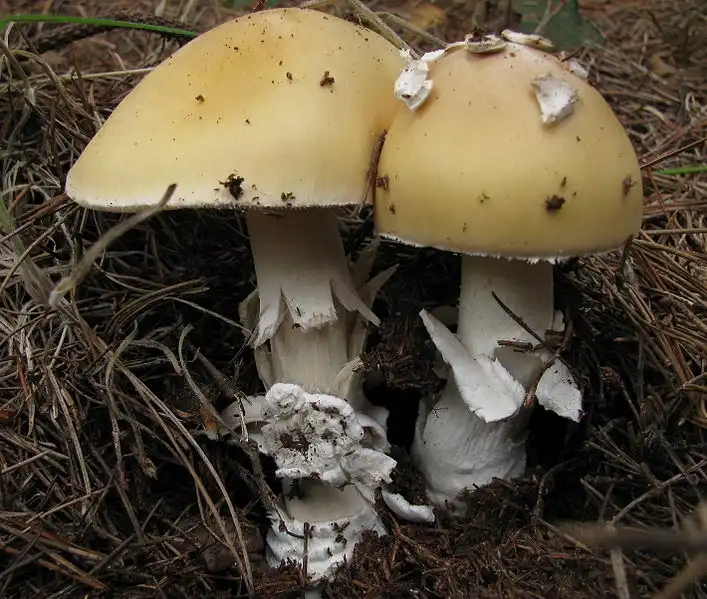
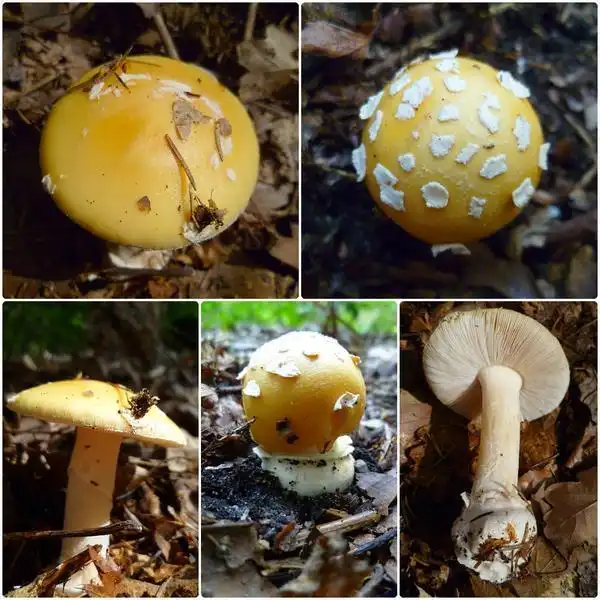
• Photo of Amanita gemmata (Amanita gemmatas)

Plant Profile: Amanita gemmata

Names

Gemmed Amanita, Jeweled Deathcap, jonquil Amanita

  • Photo of Amanita gemmata (Amanita gemmatas)

Phonetic Spelling:am-ah-NEE-tah gem-MAY-tah

Genus:Amanita

Species:gemmata

Family:Amanitaceae

This species bears resemblance to Amanita muscaria, A. pantherina, and A. cothurnata, and it seems to hybridize with them. While these species can be found in North Carolina, they appear to be less prevalent than A. gemmata and A. muscaria.

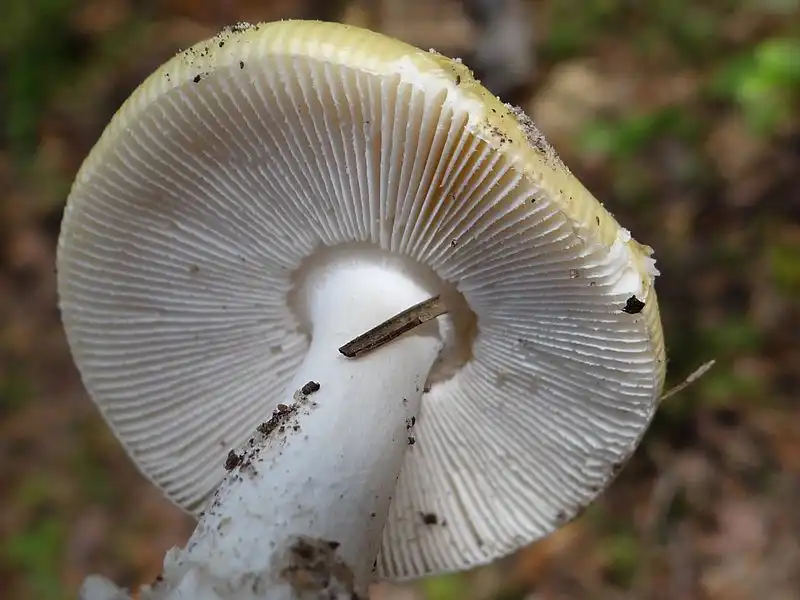
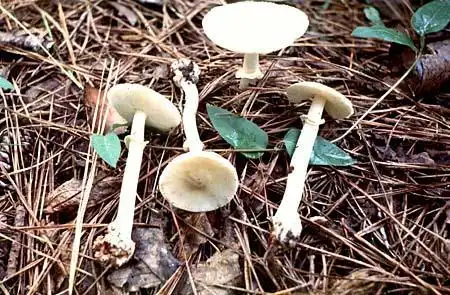
The cap exhibits a dull yellow to pinkish-yellow hue, adorned with small to medium-sized white scales or warts. It may be flat or feature a slight depression at the center, where the color tends to be a bit darker.

The gills are white, closely spaced, and slightly attached to the stem.

The stalk is white, characterized by a bulbous base and a prominent collar. It gradually narrows, initially being solid before becoming hollow, and is marked by cracked, scaly bands.

The annulus is white and delicate, often fading with age, positioned near the top of the stalk.

The spore print is white.

These mushrooms typically thrive in forests or other natural settings, and can also be found in landscaped areas. They may grow individually or in small clusters within mixed hardwood-conifer forests or in pure pine stands. Their growth season begins in late spring or early summer and continues into the fall.

Amanita gemmata Feature Summary

Amanita gemmata Image Gallery

Tags

#white
#poisonous
#forest mushroom
#non-edible mushrooms
#poisonous mushrooms
#sticky
#native

Similar Plants

Amanita gemmata is often confused with:

Amanita gemmata Feature Summary

Attributes
Poisonous to Humans
HIGHLY TOXIC, MAY BE FATAL IF EATEN! Poisonous through ingestion. (Poison part: mushroom). Symptoms: Person may appear intoxicated or have visual hallucinations 3 minutes to 3 hours after eating; other reactions include nausea, vomiting, stomach pain, diarrhea, irregular and slow heart beat, agitation, and in exceptionally rare cases of severe poisoning, coma, convulsions, and death.
Seeds
Leaves
Stems
Flowers
Bark
Fruits
Roots
Whole Plant Traits
Poisonous
Landscape
Poisonous to Humans

Amanita gemmata Attributes

Amanita gemmata: Country Or Region Of Origin

USA, NC
Amanita gemmata: Distribution

Throughout NC

Amanita gemmata: Edibility

NOT EDIBLE!

Amanita gemmata Poisonous to Humans

Amanita gemmata: Poison Symptoms

HIGHLY TOXIC, MAY BE FATAL IF EATEN! Poisonous through ingestion. (Poison part: mushroom). Symptoms: Person may appear intoxicated or have visual hallucinations 3 minutes to 3 hours after eating; other reactions include nausea, vomiting, stomach pain, diarrhea, irregular and slow heart beat, agitation, and in exceptionally rare cases of severe poisoning, coma, convulsions, and death.

Amanita gemmata: Poison Toxic Principle

unknown

Amanita gemmata: Poison Severity

High
Low
Medium

Amanita gemmata: Causes Contact Dermatitis

No
Yes

Amanita gemmata: Poison Part

Bark
Flowers
Fruits
Leaves
Roots
Sap/Juice
Seeds
Stems

Amanita gemmata Whole Plant Traits

Amanita gemmata: Plant Type

Annual
Bulb
Carnivorous
Edible
Epiphyte
Fern
Ground Cover
Herb
Herbaceous Perennial
Houseplant
Mushroom
Native Plant
Ornamental Grasses and Sedges
Perennial
Poisonous
Rose
Shrub
Succulent
Tree
Turfgrass
Vegetable
Vine
Water Plant
Weed
Wildflower

Amanita gemmata Leaves

Amanita gemmata: Hairs Present

No
Yes

Amanita gemmata Stem

Amanita gemmata: Stem Is Aromatic

No
Yes

Amanita gemmata Landscape

Amanita gemmata: Problems

Allelopathic
Contact Dermatitis
Frequent Disease Problems
Frequent Insect Problems
Invasive Species
Malodorous
Messy
Poisonous to Humans
Problem for Cats
Problem for Children
Problem for Dogs
Problem for Horses
Short-lived
Spines/Thorns
Weak Wood
Weedy