Amanita muscaria: Country Or Region Of Origin
USA, NC

Phonetic Spelling:am-ah-NEE-tah mus-KAR-ee-ah
Genus:Amanita
Species:muscaria
Family:Amanitaceae
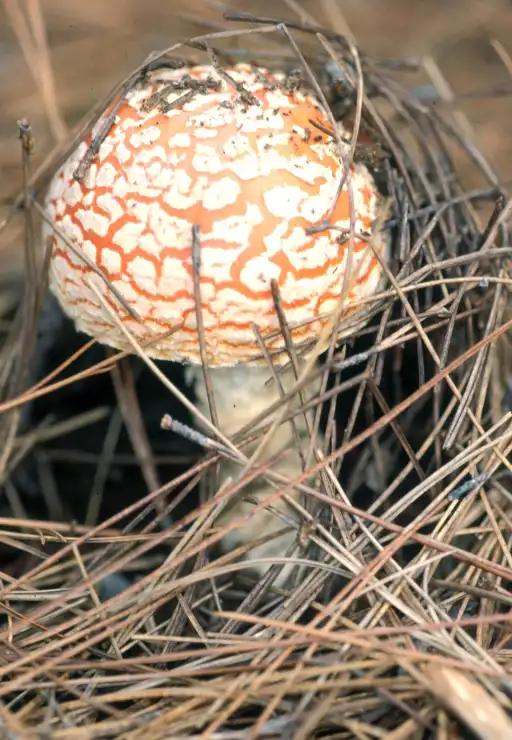
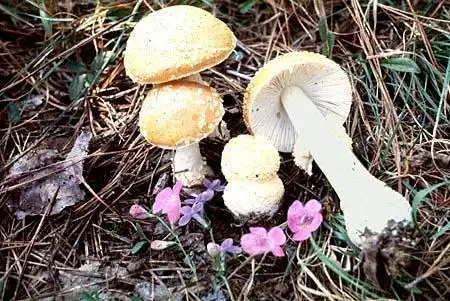
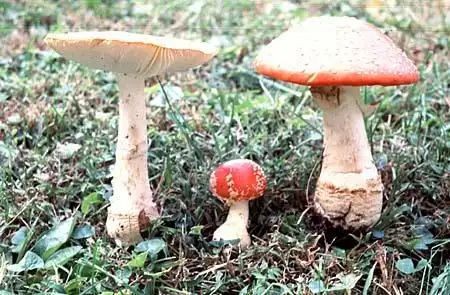
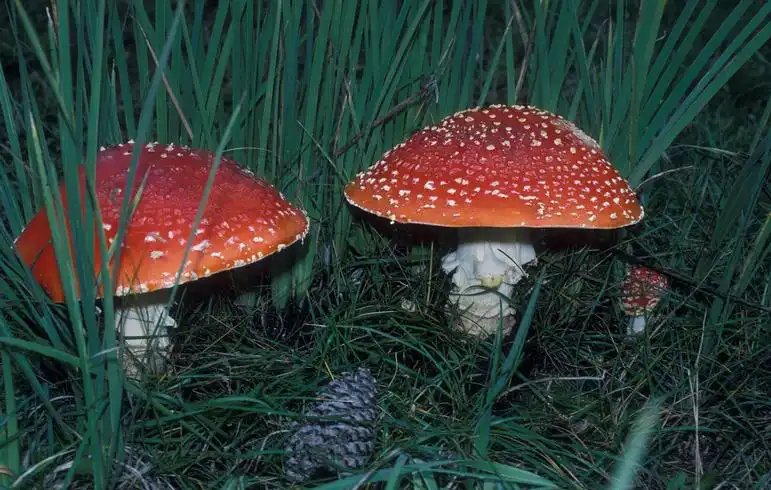
The Fly Amanita, a common name for this mushroom, derives from its historical use as an insecticide. Traditionally, the caps were crushed and placed in a dish of milk to lure flies. This species exhibits considerable variability, with several recognized color variations including red, salmon-red, orange, and yellow. Notably, the cherry-red variant is rarely encountered in North Carolina.
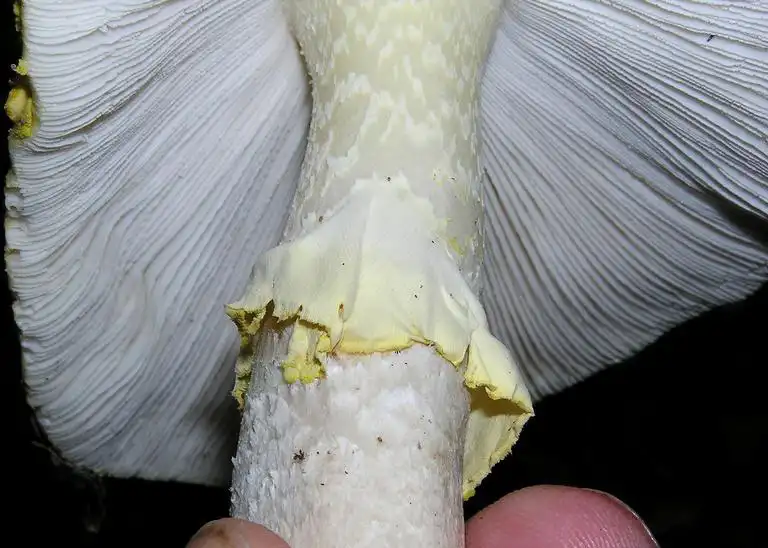
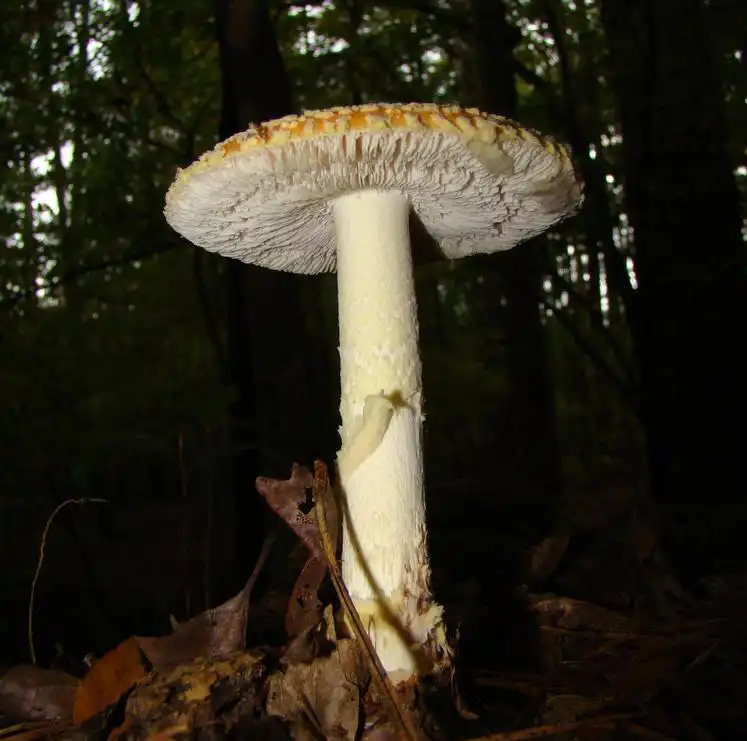
The fruiting bodies can grow to nearly 12 inches in diameter and stand 6 to 8 inches tall, emerging from the ground adorned with pointed white or yellow warts, often referred to as "scales." As the mushroom matures, these warts become more dispersed, allowing the cap's color to become visible. The cap's edge is striated, and the closely spaced white gills do not attach to the stalk. The stalk itself is white to off-white, featuring a slightly bulbous base. A thin annulus, which may have some yellow patches, encircles the stalk. Below this annulus, the stalk is covered in scales, typically arranged in concentric rings. The spore print is white.
Fly Amanitas are commonly found in forests and other natural habitats, appearing either alone, scattered, in dense clusters, or even forming "fairy rings" within mixed hardwood-pine forests. They can also be spotted in landscaped areas.
Amanita muscaria Feature Summary
Amanita muscaria Image Gallery