Caltha palustris: Country Or Region Of Origin
North America
Phonetic Spelling:KAL-tha pal-US-triss
Genus:Caltha
Species:palustris
Family:Ranunculaceae
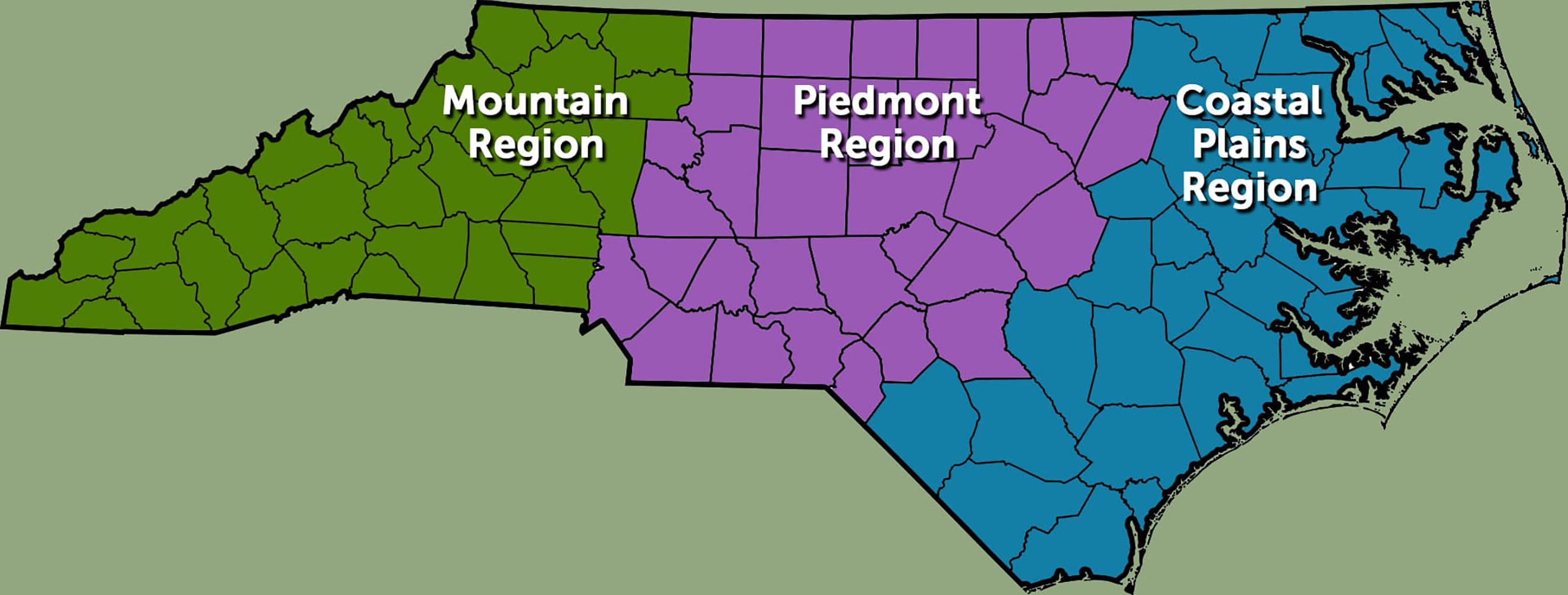
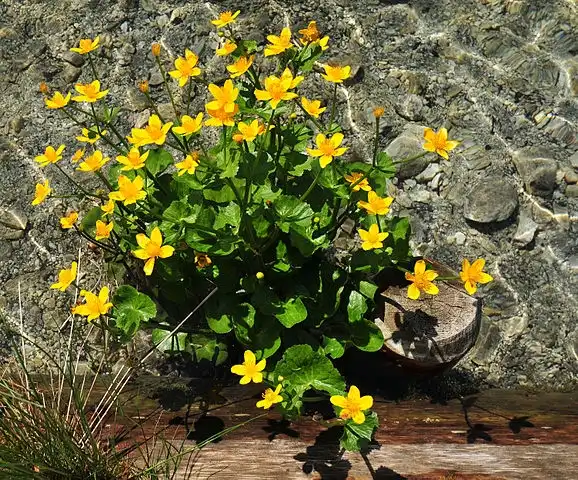
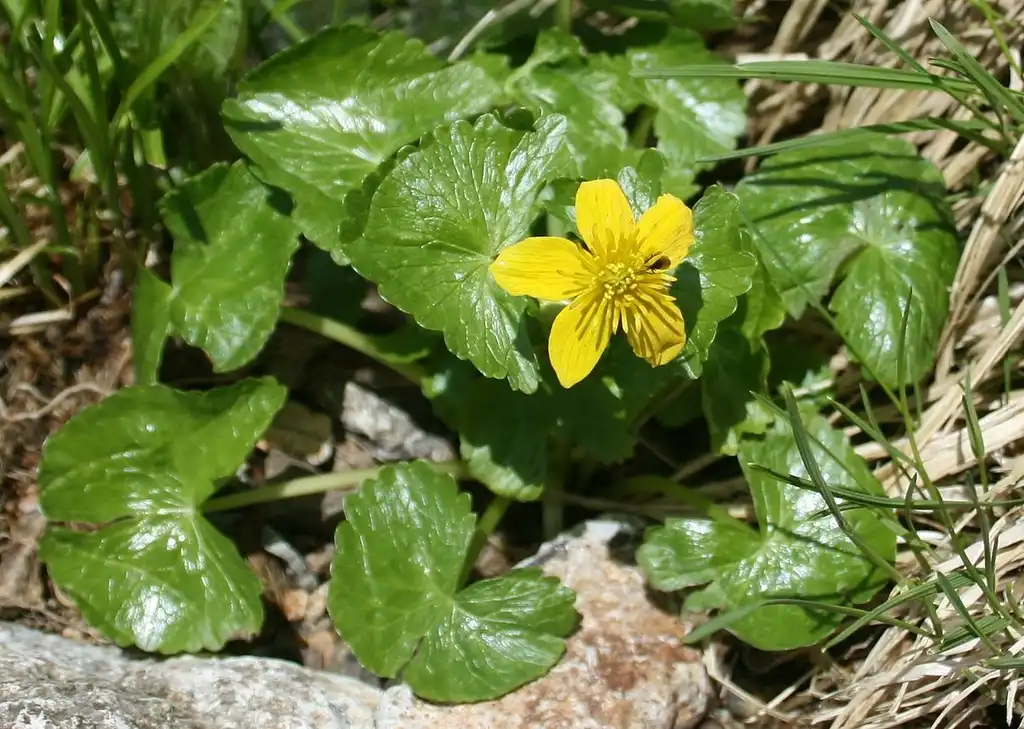
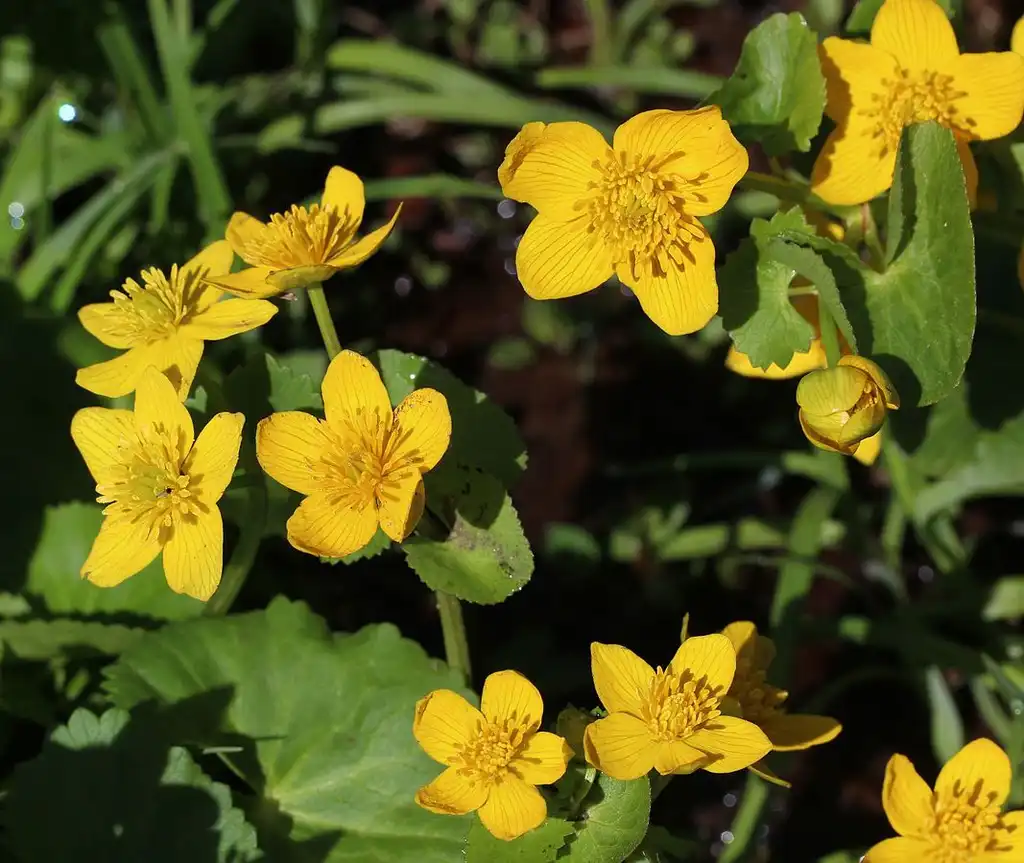
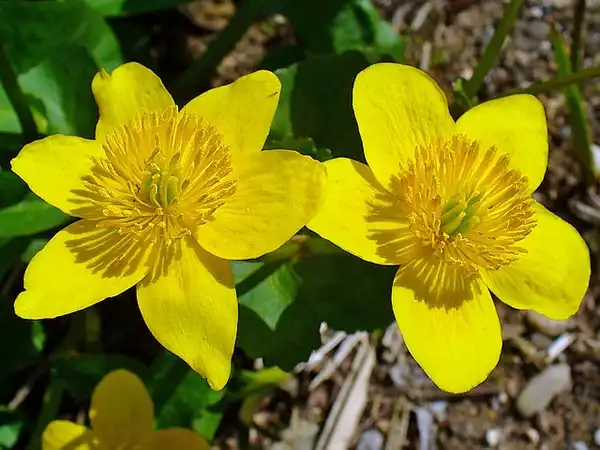
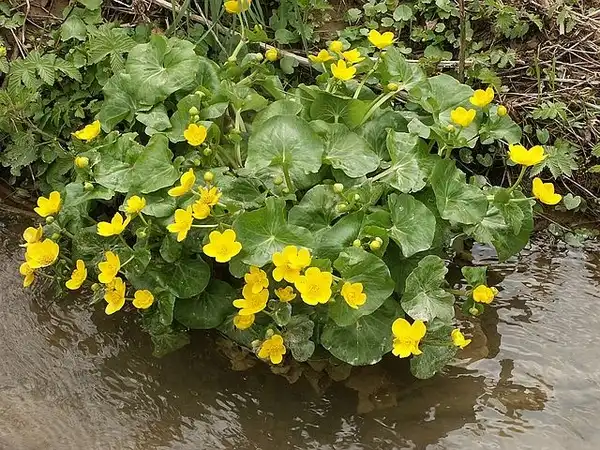
Caltha palustris, commonly known as Marsh marigold, is a perennial herb with rhizomes that belongs to the buttercup family (Ranunculaceae). This plant is indigenous to regions ranging from Newfoundland to Alaska, extending southward to Nebraska, Tennessee, and North Carolina. The name "Marsh marigold" can be somewhat misleading, as it bears no resemblance to true marigolds and is not closely related to them.
Ideal for water gardens, pond peripheries, rain gardens, and other moist, bog-like environments, Marsh marigold thrives in consistently wet soil. It is one of the first plants to bloom in spring, showcasing vibrant yellow flowers atop tall, hollow, branching stems that reach heights of 12 to 18 inches. For optimal flowering, it is best to plant it in full sunlight; however, prolonged exposure to summer sun may cause the plant to enter dormancy. This issue can be mitigated by choosing a location that offers some shade during the afternoon in the warmer months. Marsh marigold is low-maintenance and easy to cultivate, spreading through seeds or by dividing its rhizomes in the fall and replanting them in early spring.
In North Carolina, it is classified as an endangered species on the Protected Plant list.
This plant is resistant to deer, but it can be quite aggressive, potentially hindering the growth of nearby plants, particularly legumes. Caltha palustris may be mistaken for Ficaria verna or Geum radiatum; while Ficaria is considered weedy, Geum radiatum could serve as a suitable alternative.
Under the right conditions, the young greens of Marsh marigold are edible. To prepare them, blanch the leaves by covering them with boiling water two to three times until they are just tender. Then, chop them into bite-sized pieces, season lightly with salt, and dress with butter and a splash of vinegar. Additionally, the tightly closed flower buds can be pickled in vinegar after being blanched, serving as a substitute for capers.
Regarding plant health, there are no significant insect or disease threats; however, Marsh marigold can be vulnerable to powdery mildew and rust.
Caltha palustris Feature Summary
Caltha palustris Image Gallery