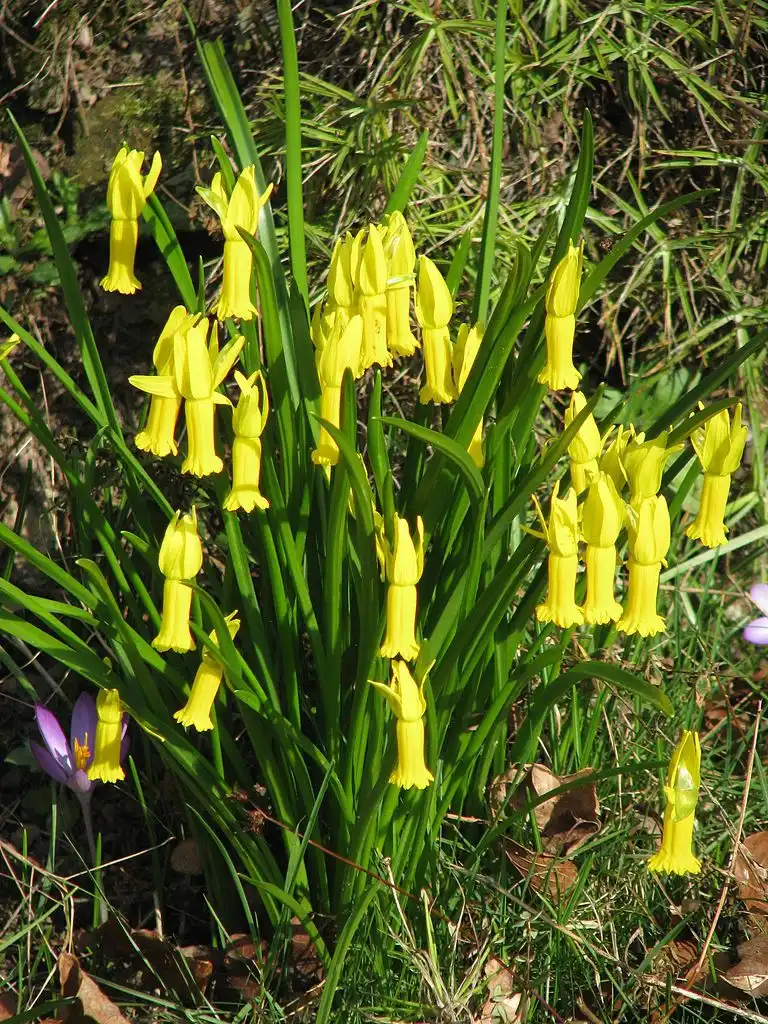
• Photo of Narcissus cyclamineus (Narcissus cyclamineuss)

Plant Profile: Narcissus cyclamineus

Names

Cyclamen Daffodil, Cyclamineus Daffodils, Miniature Daffodil

  • Photo of Narcissus cyclamineus (Narcissus cyclamineuss)

Phonetic Spelling:nar-SIS-us SIGH-kluh-min-ee-us

Genus:Narcissus

Species:cyclamineus

Family:Amaryllidaceae

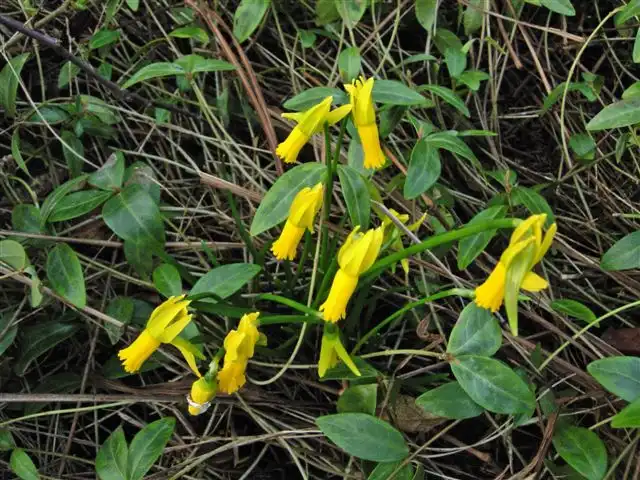
Cyclamen Daffodil is a perennial bulbous herb that can reach heights of up to 10 inches. These charming miniature daffodils should be planted in the fall to showcase their vibrant yellow blooms in early spring. Characterized by their distinctively strong reflexed petals and elongated, slender corona, these single yellow flowers stand out in any garden.

For optimal display, consider mass planting them in flower beds, at the front of borders, within rock gardens, beneath trees, in lawns, or in containers. They are known for their ability to naturalize, spreading and multiplying over time. Additionally, they are resilient against deer and rabbits, making them a low-maintenance choice. This plant thrives in heat and drought conditions but does not fare well in overly wet environments.

To enhance growth, incorporating bone meal or superphosphate into the planting hole is beneficial. Plant them about 6 weeks prior to the first frost, ensuring they are positioned 4 to 5 inches below the soil surface. Once the foliage has naturally browned, it can be cut back. Thanks to their toxic alkaloid content, these plants are also resistant to pests and diseases.

**Quick Identification Tips:**

For further details on Narcissus, please refer to additional resources.

Narcissus cyclamineus Feature Summary

Narcissus cyclamineus Image Gallery

Tags

#yellow
#small spaces
#yellow flowers
#rabbit resistant
#deer resistant
#naturalizes
#rock gardens
#borders
#bedding plants
#fantz
#early spring flowers
#mid-spring flowers
#border front
#under tree planting
#spring flowering bulbs
#HS302
#problem for cats
#problem for dogs
#problem for horses
#lawns
#container plants

Similar Plants

Narcissus cyclamineus is often confused with:

Narcissus cyclamineus Feature Summary

Attributes
Flowers
Flowers are scapose, dropping to pendent, 2-3" in diameter, and are subtended by a one-valved membranous spathe. Flowers have a perianth tubular base with 6 segments. The perianth segments are yellow, sharply reflexed, elliptic, and entire. The corona is yellow, conspicuous, in the form of a long and slender tube, 12-lobed fimbriate, and slightly constricted just below the flared margin. Flowers bloom in early spring.
Gold/Yellow
1-3 inches
Leaves
Leaves are basal, strap-like, entire, erect, bright green, and less than an inch wide.
< 1 inch
Poisonous to Humans
Vomiting, salvation, diarrhea; large ingestions cause convulsions, low blood pressure, tremors, and cardiac arrhythmias. Bulbs are the most poisonous part
Lycorine and other alkaloids
Whole Plant Traits
Cultural Conditions
Full sun (6 or more hours of direct sunlight a day)
Partial Shade (Direct sunlight only part of the day, 2-6 hours)
Good Drainage
Moist
Landscape
Rock Garden
Border
Mass Planting
Drought
Insect Pests
Heat
Diseases
Container
Lawn
Naturalized Area
Small Space
Problem for Cats
Problem for Dogs
Problem for Horses

Narcissus cyclamineus Attributes

Narcissus cyclamineus: Country Or Region Of Origin

Spain, Portugal
Narcissus cyclamineus: Particularly Resistant To (Insects/Diseases/Other Problems)

Resistant to pest and disease problems

Narcissus cyclamineus: Life Cycle

Annual
Biennial
Bulb
Perennial
Woody

Narcissus cyclamineus Flowers

Narcissus cyclamineus: Flower Description

Flowers are scapose, dropping to pendent, 2-3" in diameter, and are subtended by a one-valved membranous spathe. Flowers have a perianth tubular base with 6 segments. The perianth segments are yellow, sharply reflexed, elliptic, and entire. The corona is yellow, conspicuous, in the form of a long and slender tube, 12-lobed fimbriate, and slightly constricted just below the flared margin. Flowers bloom in early spring.

Narcissus cyclamineus: Flower Color

filter_vintage
Gold/Yellow

Narcissus cyclamineus: Flower Inflorescence

Catkin
Corymb
Cyme
Head
Insignificant
Panicle
Raceme
Solitary
Spadix
Spike
Umbel

Narcissus cyclamineus: Flower Bloom Time

Winter
Spring
Summer
Fall

Narcissus cyclamineus: Flower Shape

Bell
Cross
Crown
Cup
Dome
Funnel
Irregular
Lipped
Radial
Saucer
Star
Trumpet
Tubular
Urn
Wheel

Narcissus cyclamineus: Flower Size

1-3 inches
3-6 inches
< 1 inch
> 6 inches

Narcissus cyclamineus Leaves

Narcissus cyclamineus: Leaf Description

Leaves are basal, strap-like, entire, erect, bright green, and less than an inch wide.

Narcissus cyclamineus: Leaf Color

spa
Green

Narcissus cyclamineus: Leaf Margin

Crenate
Crenulate
Dentate
Denticulate
Doubly Crenate
Doubly Dentate
Doubly Serrate
Entire
Lobed
Serrate
Sinuate
Undulate

Narcissus cyclamineus: Hairs Present

No
Yes

Narcissus cyclamineus: Leaf Width

< 1 inch
1-3 inches
3-6 inches
> 6 inches

Narcissus cyclamineus Poisonous to Humans

Narcissus cyclamineus: Poison Symptoms

Vomiting, salvation, diarrhea; large ingestions cause convulsions, low blood pressure, tremors, and cardiac arrhythmias. Bulbs are the most poisonous part

Narcissus cyclamineus: Poison Toxic Principle

Lycorine and other alkaloids

Narcissus cyclamineus: Poison Severity

High
Low
Medium

Narcissus cyclamineus: Causes Contact Dermatitis

No
Yes

Narcissus cyclamineus Whole Plant Traits

Narcissus cyclamineus: Plant Type

Annual
Bulb
Carnivorous
Edible
Epiphyte
Fern
Ground Cover
Herb
Herbaceous Perennial
Houseplant
Mushroom
Native Plant
Ornamental Grasses and Sedges
Perennial
Poisonous
Rose
Shrub
Succulent
Tree
Turfgrass
Vegetable
Vine
Water Plant
Weed
Wildflower

Narcissus cyclamineus: Habit/Form

Arching
Ascending
Broad
Cascading
Climbing
Clumping
Columnar
Conical
Creeping
Dense
Erect
Horizontal
Irregular
Mounding
Multi-stemmed
Multi-trunked
Open
Oval
Prostrate
Pyramidal
Rounded
Spreading
Vase
Weeping

Narcissus cyclamineus Cultural Conditions

Narcissus cyclamineus: Light

Dappled Sunlight (Shade through upper canopy all day)
Deep shade (Less than 2 hours to no direct sunlight)
Full sun (6 or more hours of direct sunlight a day)
Partial Shade (Direct sunlight only part of the day, 2-6 hours)

Narcissus cyclamineus: Soil Drainage

Frequent Standing Water
Good Drainage
Moist
Occasional Flooding
Occasionally Dry
Occasionally Wet
Very Dry

Narcissus cyclamineus Stem

Narcissus cyclamineus: Stem Is Aromatic

No
Yes

Narcissus cyclamineus Landscape

Narcissus cyclamineus: Landscape Theme

Asian Garden
Butterfly Garden
Children's Garden
Cottage Garden
Cutting Garden
Drought Tolerant Garden
Edible Garden
English Garden
Fairy Garden
Garden for the Blind
Native Garden
Nighttime Garden
Pollinator Garden
Rain Garden
Rock Garden
Shade Garden
Water Garden
Winter Garden

Narcissus cyclamineus: Design Feature

Accent
Barrier
Border
Flowering Tree
Foundation Planting
Hedge
Mass Planting
Screen/Privacy
Security
Shade Tree
Small groups
Small Tree
Specimen
Street Tree
Understory Tree

Narcissus cyclamineus: Resistance To Challenges

Black Walnut
Compaction
Deer
Diseases
Drought
Dry Soil
Erosion
Fire
Foot Traffic
Heat
Heavy Shade
Humidity
Insect Pests
Pollution
Poor Soil
Rabbits
Salt
Slugs
Squirrels
Storm damage
Urban Conditions
Voles
Wet Soil
Wind

Narcissus cyclamineus: Landscape Location

Coastal
Container
Hanging Baskets
Houseplants
Lawn
Meadow
Naturalized Area
Near Septic
Patio
Pond
Pool/Hardscape
Recreational Play Area
Riparian
Rock Wall
Slope/Bank
Small Space
Vertical Spaces
Walkways
Woodland

Narcissus cyclamineus: Problems

Allelopathic
Contact Dermatitis
Frequent Disease Problems
Frequent Insect Problems
Invasive Species
Malodorous
Messy
Poisonous to Humans
Problem for Cats
Problem for Children
Problem for Dogs
Problem for Horses
Short-lived
Spines/Thorns
Weak Wood
Weedy