Plant Profile: Narcissus x incomparabilis

Taxonomy: Narcissus x incomparabilis

Names

Large-Cup Daffodil, Small-Cup Daffodil

  • Photo of Narcissus x incomparabilis (Narcissus x incomparabiliss)

Phonetic Spelling:nar-SIS-us in-kom-par-RAY-bil-liss

Genus:Narcissus

Species:

Family:Amaryllidaceae

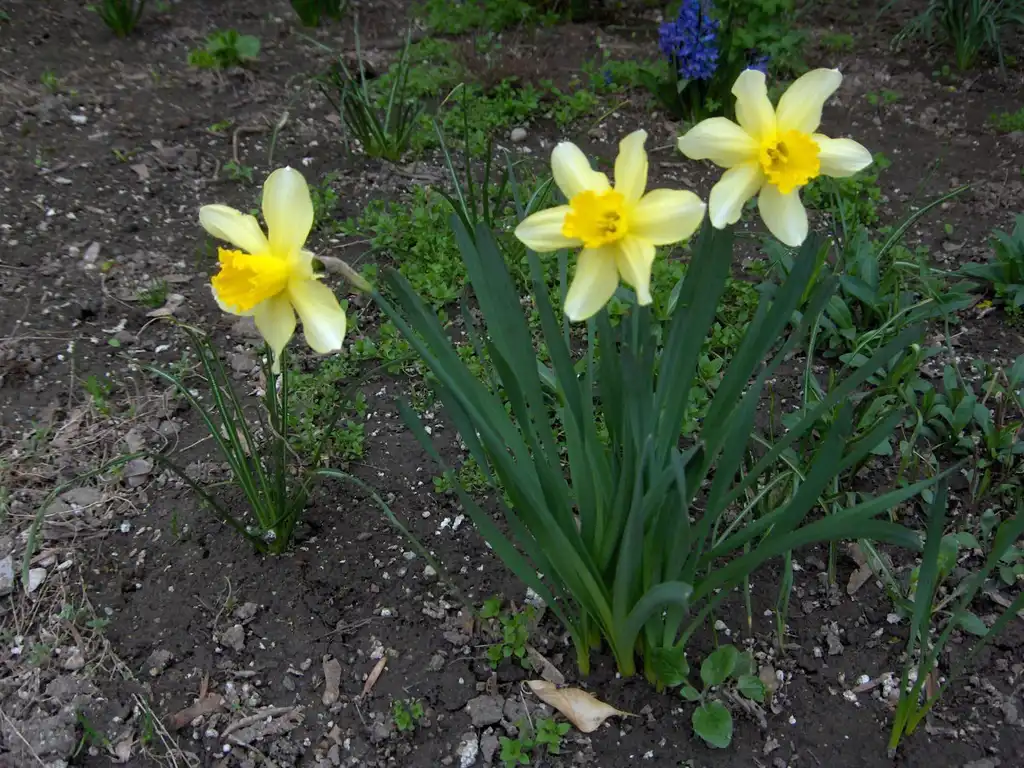
The Large-Cup Daffodil is a perennial bulbous herb that can reach heights of up to 1 foot 4 inches. It features striking flowers that bloom in early spring. Characterized by its single, non-concolorous flowers, this plant has a corona that is shorter than the petals and flat leaves, which are key identifying traits. With a spreading growth habit, it is well-suited for naturalizing in gardens. The plant is resilient to heat and drought conditions but does not thrive in overly wet environments. To enhance growth, incorporating bone meal or superphosphate into the planting hole is recommended. It should be planted six weeks prior to the first frost, at a depth of 4 to 5 inches below the soil surface. After the foliage has naturally browned, it can be cut back. Thanks to its toxic alkaloid content, this plant is resistant to pests and diseases.

**Quick Identification Tips:**

For additional information on Narcissus, please refer to the provided resources.

Narcissus x incomparabilis Feature Summary

Narcissus x incomparabilis Image Gallery

Tags

#white
#showy flowers
#yellow
#heat tolerant
#drought tolerant
#orange
#white flowers
#yellow flowers
#orange flowers
#disease resistant
#pest resistant
#fantz
#HS302
#problem for cats
#problem for dogs
#problem for horses

Similar Plants

Narcissus x incomparabilis is often confused with:

Narcissus x incomparabilis Feature Summary

Flowers
Flowers are scapose, up to 3" in diameter, and are subtended by a one-valved, membranous spathe. Flowers have a perianth tubular at the base with 6 segments. Perianth segments are yellow or white, narrow-obovate, and enitre. Corona is yellow, orange-yellow or white, conspicuous, regularly lobed or undulate.
White
Gold/Yellow
Orange
Leaves
Leaves are basal, linear, entire, erect, glaucous, flat, and less than an inch wide.
Green
Blue
< 1 inch
Poisonous to Humans
Vomiting, salvation, diarrhea; large ingestions cause convulsions, low blood pressure, tremors, and cardiac arrhythmias. Bulbs are the most poisonous part
Lycorine and other alkaloids
Whole Plant Traits
Landscape
Drought
Insect Pests
Heat
Diseases
Problem for Cats
Problem for Dogs
Problem for Horses

Narcissus x incomparabilis Attributes

Narcissus x incomparabilis: Country Or Region Of Origin

France
Narcissus x incomparabilis: Particularly Resistant To (Insects/Diseases/Other Problems)

Resistant to pests and disease.

Narcissus x incomparabilis: Life Cycle

Annual
Biennial
Bulb
Perennial
Woody

Narcissus x incomparabilis Flowers

Narcissus x incomparabilis: Flower Description

Flowers are scapose, up to 3" in diameter, and are subtended by a one-valved, membranous spathe. Flowers have a perianth tubular at the base with 6 segments. Perianth segments are yellow or white, narrow-obovate, and enitre. Corona is yellow, orange-yellow or white, conspicuous, regularly lobed or undulate.

Narcissus x incomparabilis: Flower Color

filter_vintage
Gold/Yellow
filter_vintage
Orange
filter_vintage
White

Narcissus x incomparabilis: Flower Bloom Time

Winter
Spring
Summer
Fall

Narcissus x incomparabilis Leaves

Narcissus x incomparabilis: Leaf Description

Leaves are basal, linear, entire, erect, glaucous, flat, and less than an inch wide.

Narcissus x incomparabilis: Leaf Color

spa
Blue
spa
Green

Narcissus x incomparabilis: Leaf Shape

Acicular
Auriculate
Cordate
Cuneate
Deltoid
Elliptical
Filiform
Lanceolate
Linear
Oblanceolate
Oblong
Obovate
Obtuse
Orbicular
Ovate
Palmasect
Palmatifid
Peltate
Pinnatifid
Pinnatisect
Reniform
Rhomboidal
Spatulate
Subcordate
Subulate

Narcissus x incomparabilis: Leaf Margin

Crenate
Crenulate
Dentate
Denticulate
Doubly Crenate
Doubly Dentate
Doubly Serrate
Entire
Lobed
Serrate
Sinuate
Undulate

Narcissus x incomparabilis: Hairs Present

No
Yes

Narcissus x incomparabilis: Leaf Width

< 1 inch
1-3 inches
3-6 inches
> 6 inches

Narcissus x incomparabilis Poisonous to Humans

Narcissus x incomparabilis: Poison Symptoms

Vomiting, salvation, diarrhea; large ingestions cause convulsions, low blood pressure, tremors, and cardiac arrhythmias. Bulbs are the most poisonous part

Narcissus x incomparabilis: Poison Toxic Principle

Lycorine and other alkaloids

Narcissus x incomparabilis: Poison Severity

High
Low
Medium

Narcissus x incomparabilis: Causes Contact Dermatitis

No
Yes

Narcissus x incomparabilis Whole Plant Traits

Narcissus x incomparabilis: Plant Type

Annual
Bulb
Carnivorous
Edible
Epiphyte
Fern
Ground Cover
Herb
Herbaceous Perennial
Houseplant
Mushroom
Native Plant
Ornamental Grasses and Sedges
Perennial
Poisonous
Rose
Shrub
Succulent
Tree
Turfgrass
Vegetable
Vine
Water Plant
Weed
Wildflower

Narcissus x incomparabilis: Habit/Form

Arching
Ascending
Broad
Cascading
Climbing
Clumping
Columnar
Conical
Creeping
Dense
Erect
Horizontal
Irregular
Mounding
Multi-stemmed
Multi-trunked
Open
Oval
Prostrate
Pyramidal
Rounded
Spreading
Vase
Weeping

Narcissus x incomparabilis Stem

Narcissus x incomparabilis: Stem Is Aromatic

No
Yes

Narcissus x incomparabilis Landscape

Narcissus x incomparabilis: Resistance To Challenges

Black Walnut
Compaction
Deer
Diseases
Drought
Dry Soil
Erosion
Fire
Foot Traffic
Heat
Heavy Shade
Humidity
Insect Pests
Pollution
Poor Soil
Rabbits
Salt
Slugs
Squirrels
Storm damage
Urban Conditions
Voles
Wet Soil
Wind

Narcissus x incomparabilis: Problems

Allelopathic
Contact Dermatitis
Frequent Disease Problems
Frequent Insect Problems
Invasive Species
Malodorous
Messy
Poisonous to Humans
Problem for Cats
Problem for Children
Problem for Dogs
Problem for Horses
Short-lived
Spines/Thorns
Weak Wood
Weedy