Plant Profile: Narcissus x odorus

Taxonomy: Narcissus x odorus

Names

Campernelle Jonquil

  • Photo of Narcissus x odorus (Narcissus x odoruss)

Phonetic Spelling:nar-SIS-us oh-DOR-us

Genus:Narcissus

Species:

Family:Amaryllidaceae

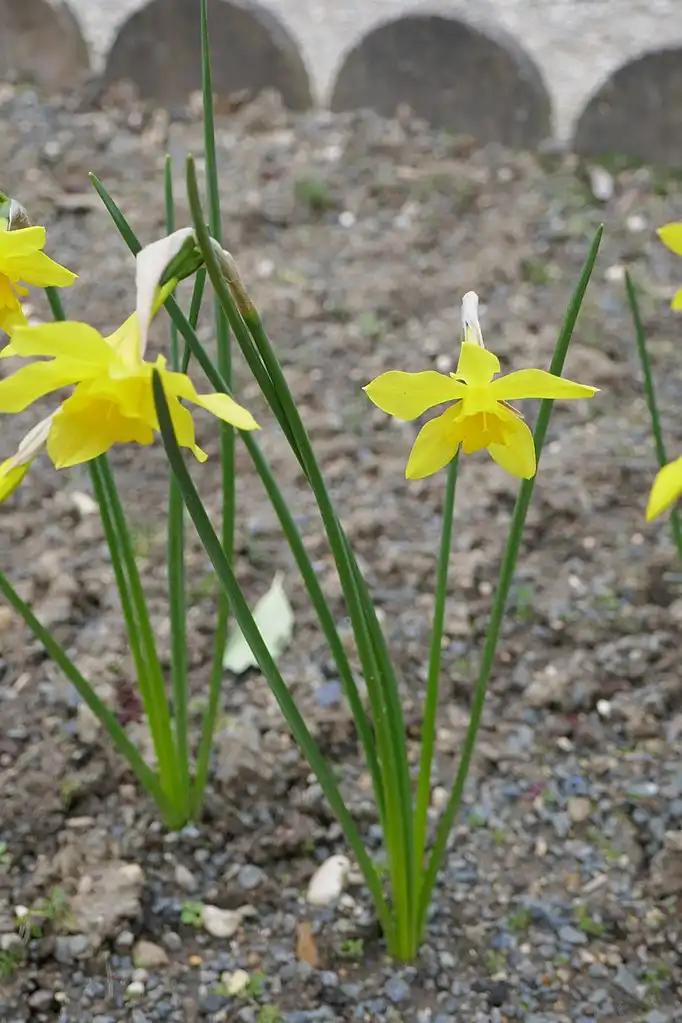
Narcissus x odorus, a hybrid of N. jonquilla and the Lent Lily N. pseudonarcissus, is a perennial bulbous herb that reaches a height of up to 1 foot 4 inches. This plant typically flowers in mid-spring and is characterized by its distinctive ridged leaves that curl inward to form a semi-circular shape. With a spreading growth habit, it is well-suited for naturalizing in gardens. It demonstrates resilience to heat and drought but does not thrive in overly wet conditions. For optimal growth, incorporating bone meal or superphosphate into the planting hole is recommended. Plant the bulbs six weeks prior to the first frost, burying them 4 to 5 inches deep. After the foliage has naturally browned, it should be cut back. Thanks to its toxic alkaloid content, this plant is largely free from pests and diseases.

**Quick Identification Tips:**

For further details on Narcissus, please refer to additional resources.

Narcissus x odorus Feature Summary

Narcissus x odorus Image Gallery

Tags

#showy flowers
#yellow
#heat tolerant
#drought tolerant
#yellow flowers
#disease resistant
#pest resistant
#spreading
#fantz
#HS302
#problem for cats
#problem for dogs
#problem for horses

Similar Plants

Narcissus x odorus is often confused with:

Narcissus x odorus Feature Summary

Attributes
Flowers
Flowers are scapose, ascending, fragrant, up to 2" in diameter, and are subtended by a one-valved, membranous spathe. They are perianth tubular at the base with 6 segments. Perianth segments are yellow, elliptic, entire, and cuneate. Corona's are yellow, conspicuous, and are regularly lobed to nearly entire.
Gold/Yellow
1-3 inches
Leaves
Leaves are basal, strap-like, entire, erect, strongly keeled, bright green, and less than an inch wide.
< 1 inch
Poisonous to Humans
Vomiting, salvation, diarrhea; large ingestions cause convulsions, low blood pressure, tremors, and cardiac arrhythmias. Bulbs are the most poisonous part
Lycorine and other alkaloids
Whole Plant Traits
Landscape
Drought
Insect Pests
Heat
Diseases
Problem for Cats
Problem for Dogs
Problem for Horses

Narcissus x odorus Attributes

Narcissus x odorus: Country Or Region Of Origin

Spain
Narcissus x odorus: Life Cycle

Annual
Biennial
Bulb
Perennial
Woody

Narcissus x odorus Flowers

Narcissus x odorus: Flower Description

Flowers are scapose, ascending, fragrant, up to 2" in diameter, and are subtended by a one-valved, membranous spathe. They are perianth tubular at the base with 6 segments. Perianth segments are yellow, elliptic, entire, and cuneate. Corona's are yellow, conspicuous, and are regularly lobed to nearly entire.

Narcissus x odorus: Flower Color

filter_vintage
Gold/Yellow

Narcissus x odorus: Flower Value To Gardener

Edible
Fragrant
Good Cut
Good Dried
Long Bloom Season
Long-lasting
Showy

Narcissus x odorus: Flower Bloom Time

Winter
Spring
Summer
Fall

Narcissus x odorus: Flower Size

1-3 inches
3-6 inches
< 1 inch
> 6 inches

Narcissus x odorus Leaves

Narcissus x odorus: Leaf Description

Leaves are basal, strap-like, entire, erect, strongly keeled, bright green, and less than an inch wide.

Narcissus x odorus: Leaf Color

spa
Green

Narcissus x odorus: Leaf Margin

Crenate
Crenulate
Dentate
Denticulate
Doubly Crenate
Doubly Dentate
Doubly Serrate
Entire
Lobed
Serrate
Sinuate
Undulate

Narcissus x odorus: Hairs Present

No
Yes

Narcissus x odorus: Leaf Width

< 1 inch
1-3 inches
3-6 inches
> 6 inches

Narcissus x odorus Poisonous to Humans

Narcissus x odorus: Poison Symptoms

Vomiting, salvation, diarrhea; large ingestions cause convulsions, low blood pressure, tremors, and cardiac arrhythmias. Bulbs are the most poisonous part

Narcissus x odorus: Poison Toxic Principle

Lycorine and other alkaloids

Narcissus x odorus: Poison Severity

High
Low
Medium

Narcissus x odorus: Causes Contact Dermatitis

No
Yes

Narcissus x odorus Whole Plant Traits

Narcissus x odorus: Plant Type

Annual
Bulb
Carnivorous
Edible
Epiphyte
Fern
Ground Cover
Herb
Herbaceous Perennial
Houseplant
Mushroom
Native Plant
Ornamental Grasses and Sedges
Perennial
Poisonous
Rose
Shrub
Succulent
Tree
Turfgrass
Vegetable
Vine
Water Plant
Weed
Wildflower

Narcissus x odorus: Habit/Form

Arching
Ascending
Broad
Cascading
Climbing
Clumping
Columnar
Conical
Creeping
Dense
Erect
Horizontal
Irregular
Mounding
Multi-stemmed
Multi-trunked
Open
Oval
Prostrate
Pyramidal
Rounded
Spreading
Vase
Weeping

Narcissus x odorus Stem

Narcissus x odorus: Stem Is Aromatic

No
Yes

Narcissus x odorus Landscape

Narcissus x odorus: Resistance To Challenges

Black Walnut
Compaction
Deer
Diseases
Drought
Dry Soil
Erosion
Fire
Foot Traffic
Heat
Heavy Shade
Humidity
Insect Pests
Pollution
Poor Soil
Rabbits
Salt
Slugs
Squirrels
Storm damage
Urban Conditions
Voles
Wet Soil
Wind

Narcissus x odorus: Problems

Allelopathic
Contact Dermatitis
Frequent Disease Problems
Frequent Insect Problems
Invasive Species
Malodorous
Messy
Poisonous to Humans
Problem for Cats
Problem for Children
Problem for Dogs
Problem for Horses
Short-lived
Spines/Thorns
Weak Wood
Weedy