Raphanus raphanistrum subsp. sativus: Country Or Region Of Origin
Mediterranean
Phonetic Spelling:RAF-an-us raf-an-IS-trum sa-TEE-vus
Genus:Raphanus
Species:raphanistrum
Family:Brassicaceae
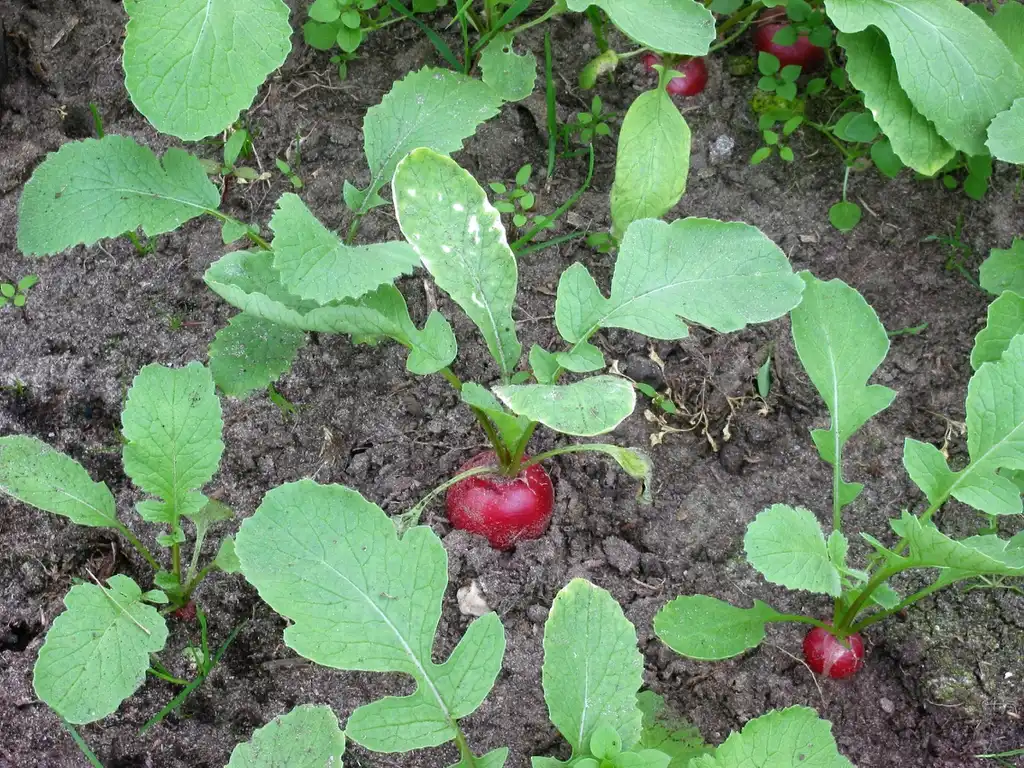
Radishes have been cultivated for millennia and are found across the globe. Their fleshy taproots can vary significantly in length, ranging from 1 inch to 3 feet, depending on the variety, and they come in a spectrum of colors, including white, pink, red, purple, and black. These vegetables grow rapidly, typically ready for harvest within 3 to 6 weeks, making them an excellent choice for children's gardens. The edible flowers, which can be white or pink, possess a spicy flavor and are frequently added to salads. Additionally, the leafy tops are also consumable, though cooking them enhances their texture. While radishes are primarily grown for culinary purposes, they also serve as forage for livestock and as cover crops to aerate compacted soil.
For optimal growth, radishes thrive in full sun to partial shade and prefer well-drained loamy or sandy soils. Although they can tolerate some shade, they require at least 4 to 5 hours of sunlight daily; otherwise, the roots will take longer to reach a harvestable size. Softer, looser soils tend to produce smoother, rounder, and more tender roots. However, lighter soils necessitate more frequent watering, as consistent moisture is crucial for developing good flavor. Roots may become woody due to age, high temperatures, or if the plant bolts; in such cases, the flowers can still be harvested and utilized.
Radishes are classified as a cool-season crop, flourishing best in the spring and fall. In North Carolina, seeds should be sown from mid-February to early April for a spring harvest and from August to mid-September for a fall crop. Smaller cultivars should be planted 1/4 to 1/2 inch deep, while larger ones can be sown up to 1 inch deep. Thinning is essential, with small varieties spaced 1-3 inches apart and larger ones 4-6 inches apart. Longer varieties require deep soil, ideally provided by raised beds that are at least 2-3 feet deep, while smaller varieties can thrive in containers of at least 2 quarts in size and 4-6 inches deep. To prolong the harvest, sow new seeds every two weeks.
Radishes can be harvested as soon as 3-6 weeks after planting, once they reach a usable size. They are ready for picking when the tops begin to emerge from the soil. Small varieties can be easily pulled by hand, while larger ones may require a spade or fork to extract the roots from the ground. Smaller roots typically last 1-2 weeks in the refrigerator, whereas larger varieties, such as Daikon, can remain fresh for up to 2 months.
In terms of pests and diseases, while issues are relatively rare, it’s important to monitor for insects that can damage the roots, such as flea beetles and root maggots. Additionally, the swede midge may affect the leaves, leading to crinkling and distortion.
Raphanus raphanistrum subsp. sativus Feature Summary
Raphanus raphanistrum subsp. sativus Image Gallery