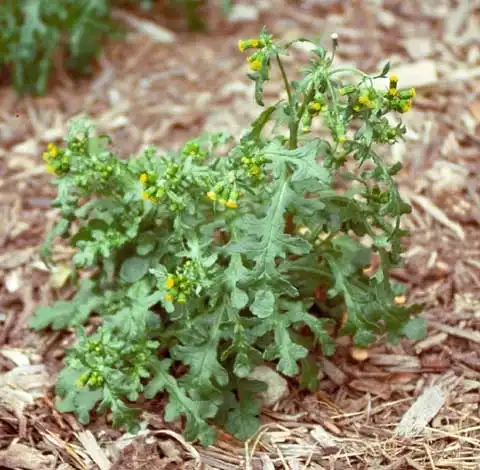
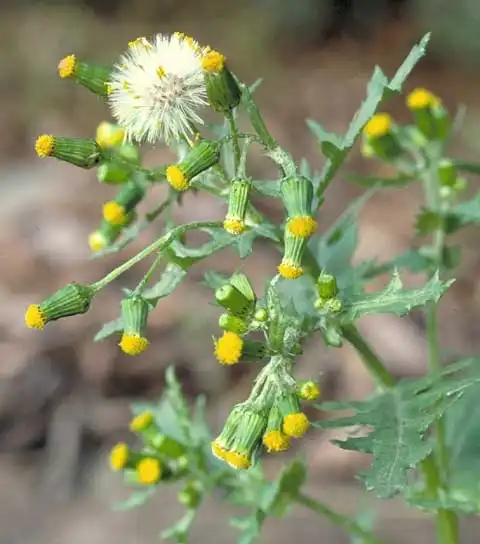
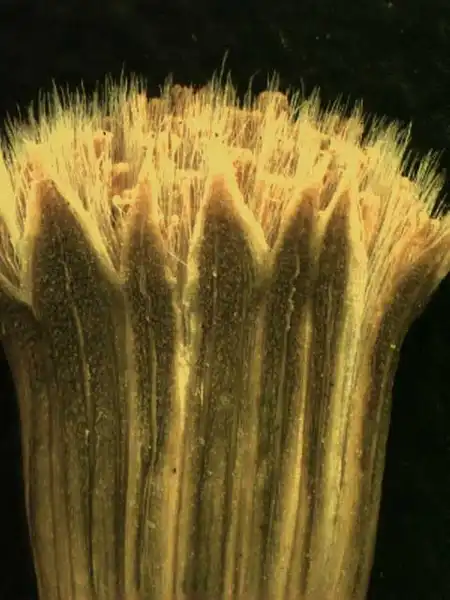
• Photo of Senecio vulgaris (Senecio vulgariss)

Plant Profile: Senecio vulgaris

Taxonomy: Senecio vulgaris

Names

Birdseed, Chickenweed, Common Butterweed, Common Groundsel, Grimsel, Grinsel, Ground Gutton, Groundsel, Grundsel, Grundy Swallow, Old Man In the Spring, Old-Man-In-the-Spring, Ragwort, Simon

  • Photo of Senecio vulgaris (Senecio vulgariss)

Phonetic Spelling:sen-NEESH-shee-oh vul-GAIR-iss

Genus:Senecio

Species:vulgaris L.

Family:Asteraceae

Common groundsel, a winter annual weed belonging to the Asteraceae family (commonly known as daisies), is often classified as a summer annual. However, this plant is capable of germinating in spring, summer, or fall. It thrives in cool, moist environments and can endure winter outdoors in milder climates or sheltered areas. Characterized by its lobed leaves and yellow flowers, common groundsel can produce flowers even when the plants are as short as 2 inches, with the potential to reach heights of 18 inches. Its seeds are dispersed by the wind and exhibit minimal dormancy, allowing for multiple generations to emerge within a single year. Notably, flowers can still mature and produce seeds even after manual weeding. To prevent seed production, it is advisable to avoid allowing the plants to flower. When introducing new transplants, it is essential to check liners and pots for any signs of infestation and eliminate them promptly to prevent further spread. Effective control of common groundsel can be achieved using preemergence broadleaf herbicides that are approved for use.

In terms of pests and diseases, a rust disease that originated in Europe has been unintentionally introduced and may pose a threat to local populations.

Senecio vulgaris Feature Summary

Senecio vulgaris Image Gallery

Tags

#weed
#weedy
#winter annual weed
#wind dispersed seeds
#cool season weed
#problem for cats
#problem for dogs
#problem for horses

Similar Plants

Senecio vulgaris is often confused with:

Senecio vulgaris Feature Summary

Attributes
Macronesia, Europe, China, Arabian Peninsula, North Africa
Senecio vulgaris is found in roadsides, cracks in pavement or edges of walls, in cultivated fields and in sunny gardens, lawns and along edges of yards and other unmanaged places.
Flowers
Senscio vulgaris has small, dandelion-like flower heads.
Gold/Yellow
Head
Corymb
Panicle
Spring
Summer
Fall
< 1 inch
Leaves
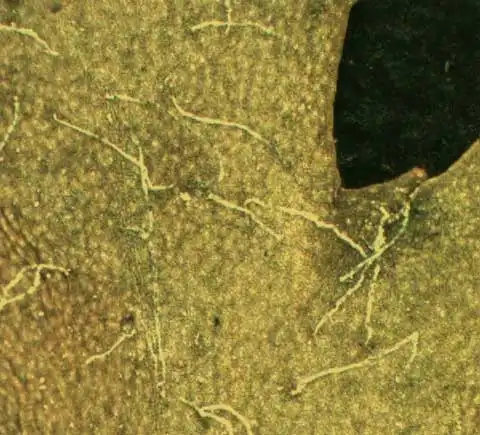
The alternately arranged leaves have deeply lobed margins, and are irregularly toothed. They may be sparsely hairy, although most are hairless. The upper leaves are directly attached to the stem while the lower leaves have a short petiole. Seedlings have long, narrow cotyledons with smooth margins
Green
Black
Lanceolate
3-6 inches
1-3 inches
Poisonous to Humans
Chronically delayed toxicity. Some include lethargy, vomiting, central nervous system signs of hepatic failure.
.5% up to 1.25% of dry weight of plant.
Leaves
Stems
Flowers
Roots
Whole Plant Traits
Cultural Conditions
Full sun (6 or more hours of direct sunlight a day)
Acid (<6.0)
Alkaline (>8.0)
Neutral (6.0-8.0)
Occasionally Wet
Occasionally Dry
Coastal
Mountains
Piedmont
Clay
Loam (Silt)
Sand
Landscape
Problem for Cats
Problem for Dogs
Problem for Horses
Weedy

Senecio vulgaris Attributes

Senecio vulgaris: Country Or Region Of Origin

Macronesia, Europe, China, Arabian Peninsula, North Africa
Senecio vulgaris: Distribution

Senecio vulgaris is found in roadsides, cracks in pavement or edges of walls, in cultivated fields and in sunny gardens, lawns and along edges of yards and other unmanaged places.

Senecio vulgaris: Life Cycle

Annual
Biennial
Bulb
Perennial
Woody

Senecio vulgaris: Recommended Propagation Strategy

Division
Grafting
Layering
Leaf Cutting
Root Cutting
Seed
Stem Cutting

Senecio vulgaris Flowers

Senecio vulgaris: Flower Description

Senscio vulgaris has small, dandelion-like flower heads.

Senecio vulgaris: Flower Color

filter_vintage
Gold/Yellow

Senecio vulgaris: Flower Inflorescence

Catkin
Corymb
Cyme
Head
Insignificant
Panicle
Raceme
Solitary
Spadix
Spike
Umbel

Senecio vulgaris: Flower Bloom Time

Winter
Spring
Summer
Fall

Senecio vulgaris: Flower Size

1-3 inches
3-6 inches
< 1 inch
> 6 inches

Senecio vulgaris Leaves

Senecio vulgaris: Leaf Description

The alternately arranged leaves have deeply lobed margins, and are irregularly toothed. They may be sparsely hairy, although most are hairless. The upper leaves are directly attached to the stem while the lower leaves have a short petiole. Seedlings have long, narrow cotyledons with smooth margins

Senecio vulgaris: Leaf Color

spa
Black
spa
Green

Senecio vulgaris: Leaf Arrangement

Alternate
Opposite
Other/more complex
Rosulate
Whorled

Senecio vulgaris: Leaf Shape

Acicular
Auriculate
Cordate
Cuneate
Deltoid
Elliptical
Filiform
Lanceolate
Linear
Oblanceolate
Oblong
Obovate
Obtuse
Orbicular
Ovate
Palmasect
Palmatifid
Peltate
Pinnatifid
Pinnatisect
Reniform
Rhomboidal
Spatulate
Subcordate
Subulate

Senecio vulgaris: Leaf Margin

Crenate
Crenulate
Dentate
Denticulate
Doubly Crenate
Doubly Dentate
Doubly Serrate
Entire
Lobed
Serrate
Sinuate
Undulate

Senecio vulgaris: Hairs Present

No
Yes

Senecio vulgaris: Leaf Length

< 1 inch
1-3 inches
3-6 inches
> 6 inches

Senecio vulgaris: Leaf Feel

Fleshy
Glossy
Leathery
Papery
Prickly
Rough
Rubbery
Slippery
Smooth
Soft
Velvety
Waxy

Senecio vulgaris: Leaf Width

< 1 inch
1-3 inches
3-6 inches
> 6 inches

Senecio vulgaris Poisonous to Humans

Senecio vulgaris: Poison Symptoms

Chronically delayed toxicity. Some include lethargy, vomiting, central nervous system signs of hepatic failure.

Senecio vulgaris: Poison Toxic Principle

.5% up to 1.25% of dry weight of plant.

Senecio vulgaris: Poison Severity

High
Low
Medium

Senecio vulgaris: Causes Contact Dermatitis

No
Yes

Senecio vulgaris: Poison Part

Bark
Flowers
Fruits
Leaves
Roots
Sap/Juice
Seeds
Stems

Senecio vulgaris Whole Plant Traits

Senecio vulgaris: Plant Type

Annual
Bulb
Carnivorous
Edible
Epiphyte
Fern
Ground Cover
Herb
Herbaceous Perennial
Houseplant
Mushroom
Native Plant
Ornamental Grasses and Sedges
Perennial
Poisonous
Rose
Shrub
Succulent
Tree
Turfgrass
Vegetable
Vine
Water Plant
Weed
Wildflower

Senecio vulgaris: Growth Rate

Slow
Medium
Rapid

Senecio vulgaris: Texture

Fine
Medium
Coarse

Senecio vulgaris Cultural Conditions

Senecio vulgaris: Light

Dappled Sunlight (Shade through upper canopy all day)
Deep shade (Less than 2 hours to no direct sunlight)
Full sun (6 or more hours of direct sunlight a day)
Partial Shade (Direct sunlight only part of the day, 2-6 hours)

Senecio vulgaris: Soil pH

Acid (<6.0)
Alkaline (>8.0)
Neutral (6.0-8.0)

Senecio vulgaris: Soil Drainage

Frequent Standing Water
Good Drainage
Moist
Occasional Flooding
Occasionally Dry
Occasionally Wet
Very Dry

Senecio vulgaris: NC Region

Coastal
Mountains
Piedmont

Senecio vulgaris: Soil Texture

Clay
High Organic Matter
Loam (Silt)
Sand
Shallow Rocky

Senecio vulgaris Stem

Senecio vulgaris: Stem Is Aromatic

No
Yes

Senecio vulgaris Landscape

Senecio vulgaris: Problems

Allelopathic
Contact Dermatitis
Frequent Disease Problems
Frequent Insect Problems
Invasive Species
Malodorous
Messy
Poisonous to Humans
Problem for Cats
Problem for Children
Problem for Dogs
Problem for Horses
Short-lived
Spines/Thorns
Weak Wood
Weedy