Plant Profile: Spartina pectinata

Taxonomy: Spartina pectinata

Names

Cord Grass Prairie, Prairie Cord Grass, Rip Gut, Slough Grass

  • Photo of Spartina pectinata (Spartina pectinatas)

Phonetic Spelling:SPAR-tin-ah pek-tin-AY-tah

Genus:Spartina

Species:pectinata

Family:Poaceae

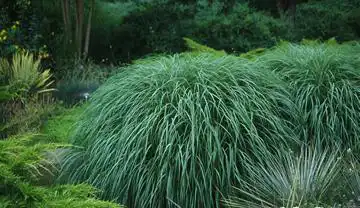
Spartina pectinata, commonly known as Prairie Cord Grass, is a robust, perennial grass that thrives in warm seasons. It features a growth pattern that is as broad as it is tall, typically forming dense, arching clumps that reach heights of 4 to 7 feet during flowering. This species is predominantly found in freshwater marshes, swampy valleys, the edges of ponds, and low-lying areas along roads and railways, as well as in both wet and dry prairie regions. Recognized as one of the tallest grasses in the United States, it likely inspired the accounts of early Midwestern settlers who described grass towering above a horse's back. The dark green, glossy leaves possess sharp edges, necessitating the use of gloves for safe handling. Due to these sharp leaves, it is sometimes referred to as "ripgut." The seeds have a tendency to attach to the fur of animals or the clothing of people, facilitating their dispersal to new areas.

Prairie Cord Grass flourishes in fertile, moist to wet loamy soils and prefers full sun to partial shade, although it can adapt to sandy or rocky soils if sufficient moisture is available. While it can endure some dry conditions, its growth tends to be less vigorous in such environments. This grass is somewhat aggressive in its spread but does not fare well with regular mowing. The florets are self-incompatible and may face significant insect predation, making the collection of viable seeds challenging. However, new plants can be propagated by dividing the rhizomes, which can naturally spread to create extensive colonies. Most of its growth occurs during the summer months, and it is particularly effective in preventing erosion on slopes and along waterways.

In terms of pests and diseases, Prairie Cord Grass can be invasive due to its aggressive spreading nature. Additionally, the larvae of various moth species are known to feed on this grass.

Spartina pectinata Feature Summary

Spartina pectinata Image Gallery

Tags

#wildlife plant
#salt tolerant
#ducks
#ornamental grass
#playground
#grass
#small mammals
#children's garden
#nesting sites
#food source summer
#food source winter
#food source fall
#food source spring
#food source herbage
#bird friendly
#food source hard mast fruit

Similar Plants

Spartina pectinata Feature Summary

Attributes
Erosion control. This plant was used by both pioneers and Native Americans for thatching lodges.
The seedheads are occasionally eaten by ducks. Muskrats feed on the rootstocks and foliage. It is an important source of protective cover and nesting habitat for many wetland birds and other kinds of wildlife.
Perennial
Wildlife Cover/Habitat
Fruit
Seed is in the form of grain.
Achene
Caryopsis
Brown/Copper
Flowers
Stiff, open panicles bloom in July and August. Stems rise above the foliage clump bearing terminal clusters of straw-colored flowers arranged comb-like on cluster branches. The terminal raceme of floral spikes up to 1½ feet long with 10 to 30 alternating spikes per raceme. These spikes are widely spaced along the central stalk of the raceme and they are erect, ascending, or widely spreading.
Gold/Yellow
Brown/Copper
Raceme
Spike
Panicle
> 6 inches
Leaves
Glossy dark green leaves to 4 feet long and 5/8 of an inch wide have sharp edges. Leaves turn yellow in autumn. The alternate leaves are located primarily along the lower half of the stem. The leaf blades are linear, flat, and glabrous (smooth). The leaf blades have a rather thick succulent texture, fine parallel veins, and prominent midribs; they are typically arching (curving upward from their bases next to the culm and then curving downward toward their tips). The leaf sheaths are green, yellowish green, or light brown; they are glabrous with fine longitudinal veins. Each ligule at the junction of the blade and sheath consists of a ring of dense white hairs.
> 6 inches
Glossy
Fleshy
< 1 inch
Stem
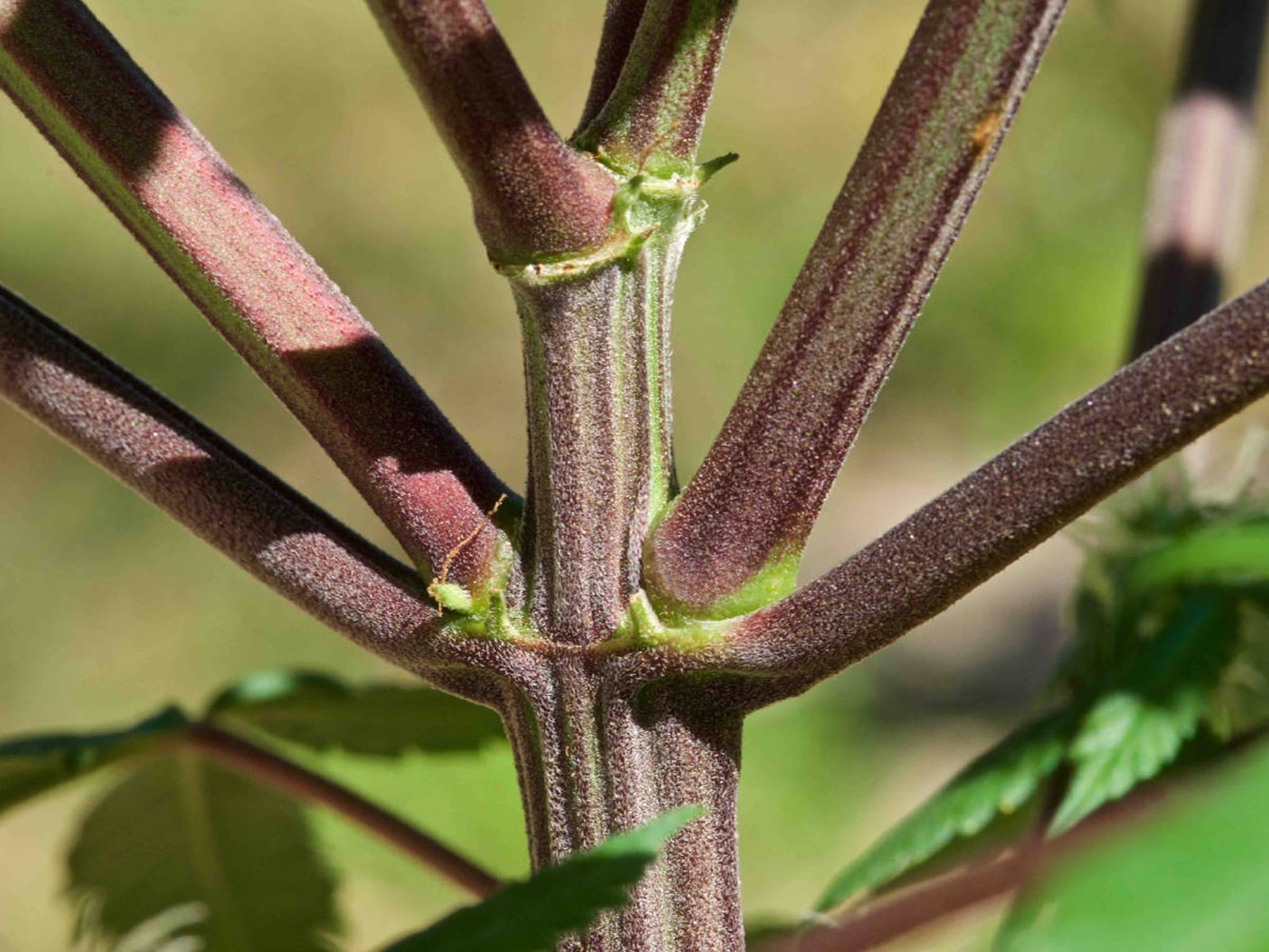
The central culm (stem) is light green, terete (round in cross-section), and glabrous. Strong upright to arching stems.
Smooth (glabrous)
Straight
Whole Plant Traits
Ornamental Grasses and Sedges
Arching
Erect
Coarse
Cultural Conditions
Full sun (6 or more hours of direct sunlight a day)
Partial Shade (Direct sunlight only part of the day, 2-6 hours)
Good Drainage
Moist
Occasionally Wet
Occasionally Dry
Coastal
Mountains
Piedmont
4a
4b
5b
5a
6a
6b
7a
7b
8b
8a
9a
9b
Clay
Loam (Silt)
Sand
Shallow Rocky
Landscape
Children's Garden
Rain Garden
Water Garden
Mass Planting
Recreational Play Area
Naturalized Area
Pond
Songbirds
Small Mammals

Spartina pectinata Attributes

Spartina pectinata: Uses (Ethnobotany)

Erosion control. This plant was used by both pioneers and Native Americans for thatching lodges.
Spartina pectinata: Country Or Region Of Origin

North America

Spartina pectinata: Wildlife Value

The seedheads are occasionally eaten by ducks. Muskrats feed on the rootstocks and foliage. It is an important source of protective cover and nesting habitat for many wetland birds and other kinds of wildlife.

Spartina pectinata: Particularly Resistant To (Insects/Diseases/Other Problems)

salt tolerant

Spartina pectinata: Life Cycle

Annual
Biennial
Bulb
Perennial
Woody

Spartina pectinata: Recommended Propagation Strategy

Division
Grafting
Layering
Leaf Cutting
Root Cutting
Seed
Stem Cutting

Spartina pectinata: Play Value

Attractive Flowers
Attracts Pollinators
Buffer
Colorful
Defines Paths
Easy to Grow
Edible fruit
Fragrance
Pieces Used in Games
Screening
Shade
Sound
Textural
Wildlife Cover/Habitat
Wildlife Food Source
Wildlife Larval Host
Wildlife Nesting
Wind Break
Wind Shimmer

Spartina pectinata Fruit

Spartina pectinata: Fruit Description

Seed is in the form of grain.

Spartina pectinata: Fruit Type

Achene
Aggregate
Berry
Capsule
Caryopsis
Drupe
Follicle
Legume
Nut
Pome
Samara
Schizocarp
Siliqua

Spartina pectinata: Fruit Color

grass
Brown/Copper

Spartina pectinata: Display/Harvest Time

Fall
Spring
Summer
Winter

Spartina pectinata Flowers

Spartina pectinata: Flower Description

Stiff, open panicles bloom in July and August. Stems rise above the foliage clump bearing terminal clusters of straw-colored flowers arranged comb-like on cluster branches. The terminal raceme of floral spikes up to 1½ feet long with 10 to 30 alternating spikes per raceme. These spikes are widely spaced along the central stalk of the raceme and they are erect, ascending, or widely spreading.

Spartina pectinata: Flower Color

filter_vintage
Brown/Copper
filter_vintage
Gold/Yellow

Spartina pectinata: Flower Inflorescence

Catkin
Corymb
Cyme
Head
Insignificant
Panicle
Raceme
Solitary
Spadix
Spike
Umbel

Spartina pectinata: Flower Value To Gardener

Edible
Fragrant
Good Cut
Good Dried
Long Bloom Season
Long-lasting
Showy

Spartina pectinata: Flower Bloom Time

Winter
Spring
Summer
Fall

Spartina pectinata: Flower Size

1-3 inches
3-6 inches
< 1 inch
> 6 inches

Spartina pectinata Leaves

Spartina pectinata: Leaf Description

Glossy dark green leaves to 4 feet long and 5/8 of an inch wide have sharp edges. Leaves turn yellow in autumn. The alternate leaves are located primarily along the lower half of the stem. The leaf blades are linear, flat, and glabrous (smooth). The leaf blades have a rather thick succulent texture, fine parallel veins, and prominent midribs; they are typically arching (curving upward from their bases next to the culm and then curving downward toward their tips). The leaf sheaths are green, yellowish green, or light brown; they are glabrous with fine longitudinal veins. Each ligule at the junction of the blade and sheath consists of a ring of dense white hairs.

Spartina pectinata: Leaf Color

spa
Green

Spartina pectinata: Deciduous Leaf Fall Color

spa
Gold/Yellow

Spartina pectinata: Leaf Type

Compound (Pinnately , Bipinnately, Palmately)
Fronds
Needles
Sheath
Simple

Spartina pectinata: Leaf Arrangement

Alternate
Opposite
Other/more complex
Rosulate
Whorled

Spartina pectinata: Leaf Margin

Crenate
Crenulate
Dentate
Denticulate
Doubly Crenate
Doubly Dentate
Doubly Serrate
Entire
Lobed
Serrate
Sinuate
Undulate

Spartina pectinata: Hairs Present

No
Yes

Spartina pectinata: Leaf Length

< 1 inch
1-3 inches
3-6 inches
> 6 inches

Spartina pectinata: Leaf Feel

Fleshy
Glossy
Leathery
Papery

Prickly

Rough
Rubbery
Slippery
Smooth
Soft
Velvety
Waxy

Spartina pectinata: Leaf Value To Gardener

Edible
Fragrant
Good Cut
Good Dried
Long-lasting
Showy

Spartina pectinata: Leaf Width

< 1 inch
1-3 inches
3-6 inches
> 6 inches

Spartina pectinata Stem

Spartina pectinata: Stem Description

The central culm (stem) is light green, terete (round in cross-section), and glabrous. Strong upright to arching stems.

Spartina pectinata: Stem Color

grass
Green

Spartina pectinata: Stem Is Aromatic

No
Yes

Spartina pectinata: Stem Cross Section

Angular
Oval
Round
Square

Spartina pectinata: Stem Surface

Corky Ridges
Covered with a powdery bloom (glaucous)
Dull
Hairy (pubescent)
Polished
Smooth (glabrous)

Spartina pectinata: Stem Form

Straight
Zig Zags

Spartina pectinata Whole Plant Traits

Spartina pectinata: Plant Type

Annual
Bulb
Carnivorous
Edible
Epiphyte
Fern
Ground Cover
Herb
Herbaceous Perennial
Houseplant
Mushroom
Native Plant
Ornamental Grasses and Sedges
Perennial
Poisonous
Rose
Shrub
Succulent
Tree
Turfgrass
Vegetable
Vine
Water Plant
Weed
Wildflower

Spartina pectinata: Habit/Form

Arching
Ascending
Broad
Cascading
Climbing
Clumping
Columnar
Conical
Creeping
Dense
Erect
Horizontal
Irregular
Mounding
Multi-stemmed
Multi-trunked
Open
Oval
Prostrate
Pyramidal
Rounded
Spreading
Vase
Weeping

Spartina pectinata: Growth Rate

Slow
Medium
Rapid

Spartina pectinata: Maintenance

Low
Medium
High

Spartina pectinata: Texture

Fine
Medium
Coarse

Spartina pectinata Cultural Conditions

Spartina pectinata: Light

Dappled Sunlight (Shade through upper canopy all day)
Deep shade (Less than 2 hours to no direct sunlight)
Full sun (6 or more hours of direct sunlight a day)
Partial Shade (Direct sunlight only part of the day, 2-6 hours)

Spartina pectinata: Soil Drainage

Frequent Standing Water
Good Drainage
Moist
Occasional Flooding
Occasionally Dry
Occasionally Wet
Very Dry

Spartina pectinata: NC Region

Coastal
Mountains
Piedmont

Spartina pectinata: USDA Plant Hardiness Zone

thermostat
4a
thermostat
4b
thermostat
5a
thermostat
5b
thermostat
6a
thermostat
6b
thermostat
7a
thermostat
7b
thermostat
8a
thermostat
8b
thermostat
9a
thermostat
9b

Spartina pectinata: Soil Texture

Clay
High Organic Matter
Loam (Silt)
Sand
Shallow Rocky

Spartina pectinata Landscape

Spartina pectinata: Landscape Theme

Asian Garden
Butterfly Garden
Children's Garden
Cottage Garden
Cutting Garden
Drought Tolerant Garden
Edible Garden
English Garden
Fairy Garden
Garden for the Blind
Native Garden
Nighttime Garden
Pollinator Garden
Rain Garden
Rock Garden
Shade Garden
Water Garden
Winter Garden

Spartina pectinata: Design Feature

Accent
Barrier
Border
Flowering Tree
Foundation Planting
Hedge
Mass Planting
Screen/Privacy
Security
Shade Tree
Small groups
Small Tree
Specimen
Street Tree
Understory Tree

Spartina pectinata: Resistance To Challenges

Black Walnut
Compaction
Deer
Diseases
Drought
Dry Soil
Erosion
Fire
Foot Traffic
Heat
Heavy Shade
Humidity
Insect Pests
Pollution
Poor Soil
Rabbits
Salt
Slugs
Squirrels
Storm damage
Urban Conditions
Voles
Wet Soil
Wind

Spartina pectinata: Landscape Location

Coastal
Container
Hanging Baskets
Houseplants
Lawn
Meadow
Naturalized Area
Near Septic
Patio
Pond
Pool/Hardscape
Recreational Play Area
Riparian
Rock Wall
Slope/Bank
Small Space
Vertical Spaces
Walkways
Woodland

Spartina pectinata: Attracts

Bats
Bees
Butterflies
Frogs
Hummingbirds
Moths
Pollinators
Predatory Insects
Reptiles
Small Mammals
Songbirds
Specialized Bees