Allium sativum var. ophioscorodon: Country Or Region Of Origin
Middle East Asia
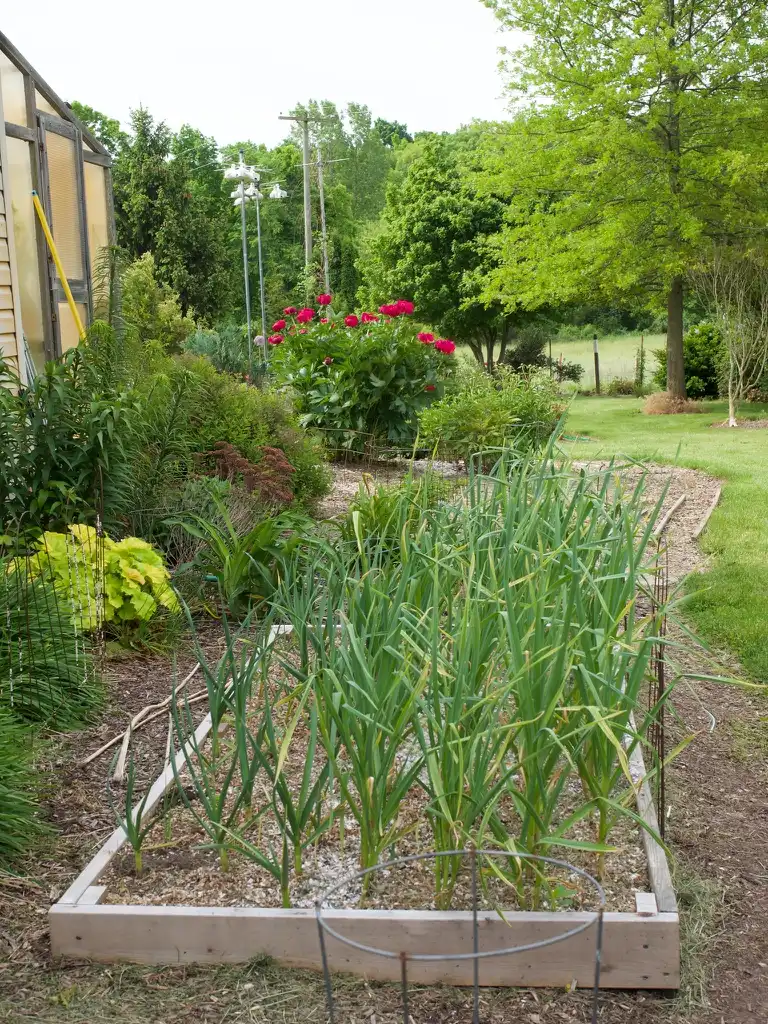
Phonetic Spelling:AL-ee-um sa-TEE-vum oh-fee-oh-SKOR-oh-don
Genus:Allium
Species:sativum
Family:Amaryllidaceae
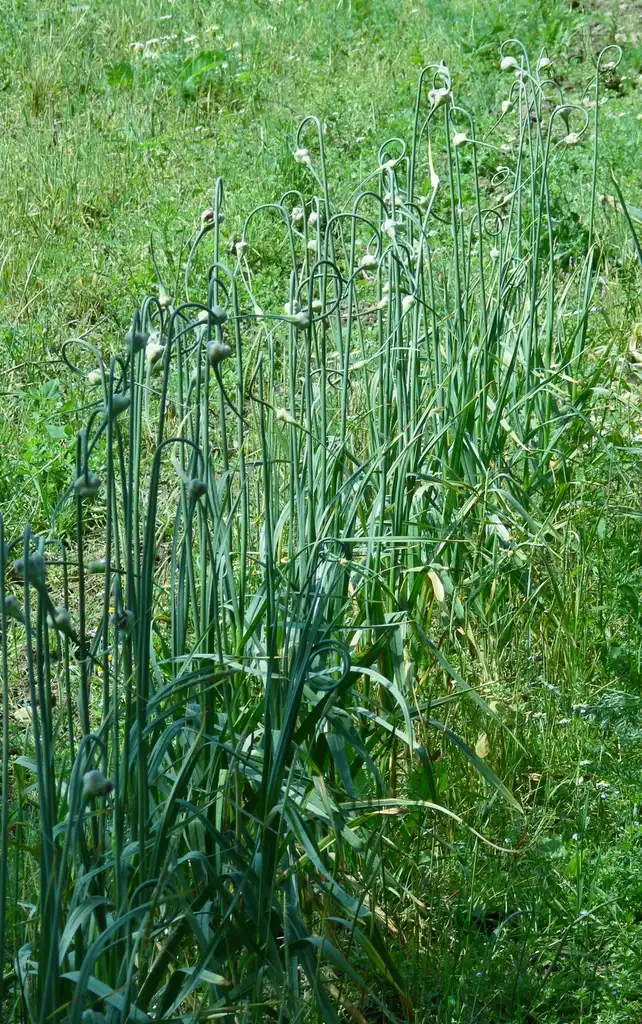
Hardeck Garlic belongs to the onion family and produces an edible bulb, making it a favored choice for vegetable gardens. This garlic can be utilized both raw and cooked to enhance the flavor of various dishes. Hardneck varieties require some winter chill to thrive, yet they generally perform well across most regions of North Carolina. In the spring, they produce a flower stalk known as a scape before harvest and are resistant to deer and black walnut trees.
Among the Hardneck types, there are ‘rocamboles,’ which feature cloves of varying sizes, and ‘continental’ varieties, characterized by their mostly uniform clove sizes. Rocamboles are generally easier to peel and offer a more intense garlic flavor, although they do not have the same storage longevity as continental types.
In North Carolina, cloves should be planted from late October to November, and possibly into December in the southern regions, aiming for a harvest between May and June. It is essential for the cloves to establish themselves for at least 4-6 weeks before the ground freezes. They should be spaced 6-8 inches apart and planted 2-3 inches deep in loose, fertile, well-drained soil with full sun exposure. Applying mulch can help suppress weed growth. To avoid bulb rot, reduce watering as harvest time approaches. The scape should be cut before it blooms and can be enjoyed raw or cooked.
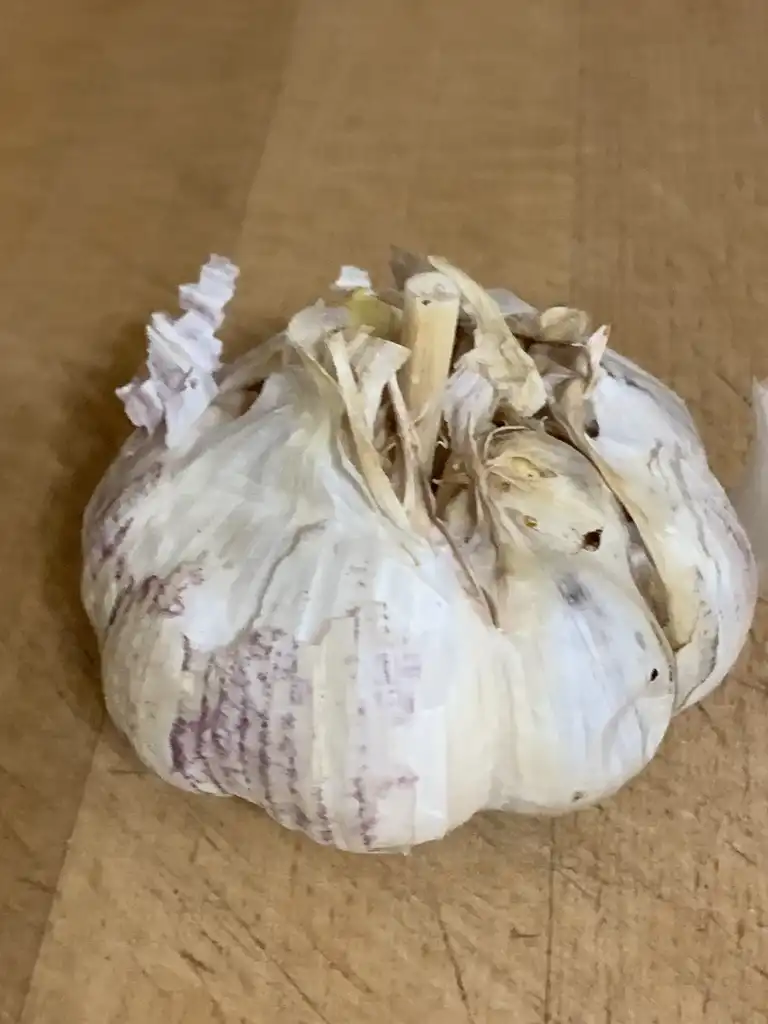
Garlic should be harvested when approximately half of the leaves have turned brown. After digging, it needs to cure in a warm, dry location away from direct sunlight. Once the leaves are fully dried, you can trim the leaves, roots, and outer layers, then store the garlic in a cool, dry place—refrigeration is not recommended.
Allium sativum var. ophioscorodon Feature Summary
Allium sativum var. ophioscorodon Image Gallery