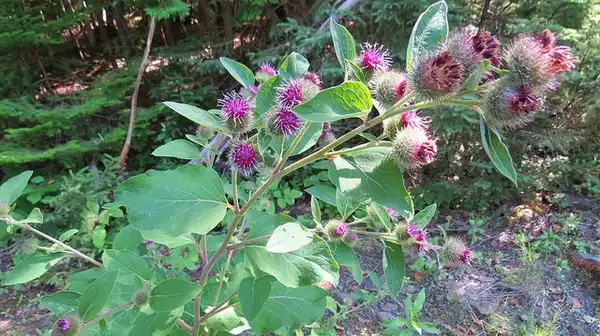
Great Burdock is a biennial wildflower from the Asteraceae family, often regarded as a weed. It originated in temperate regions of Eurasia centuries ago and has since spread to various parts of the globe. In North America, it thrives in disturbed environments such as vacant lots, parks, roadsides, fields, and pastures, where it can become invasive, outcompeting beneficial native species. Its deep taproots and abundant seeds, which remain viable for extended periods even after the plants are removed, make it particularly challenging to eliminate.
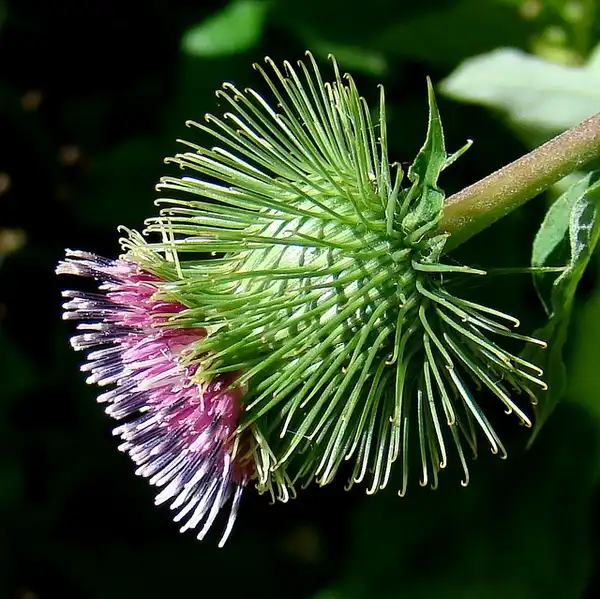
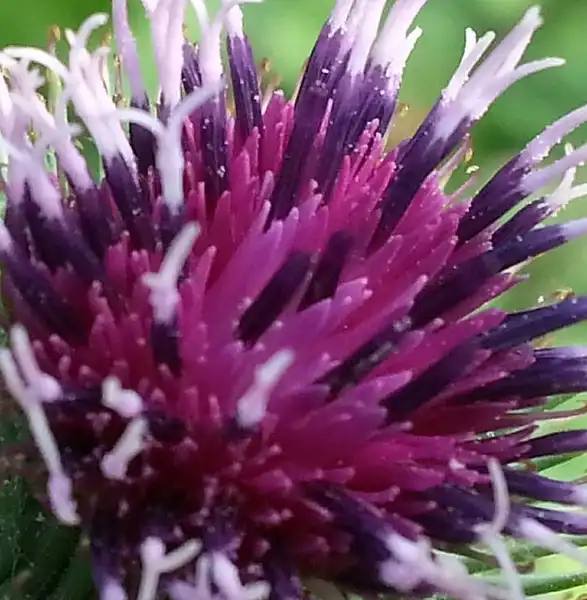
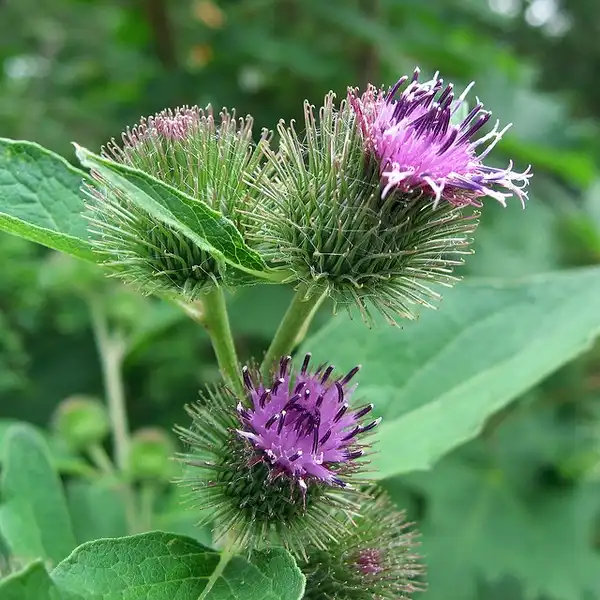
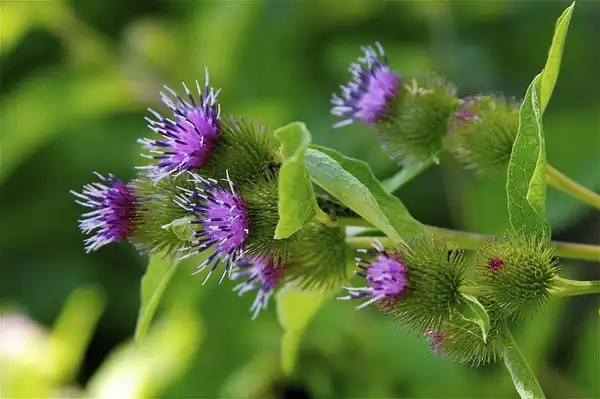
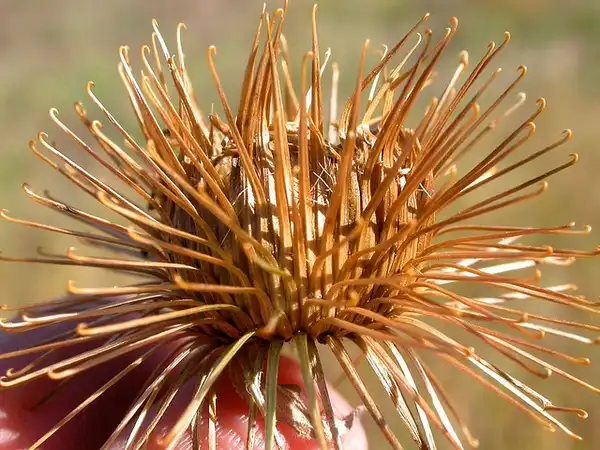
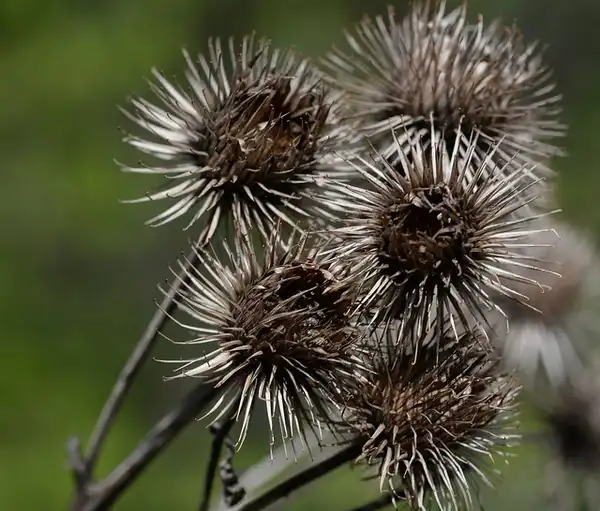
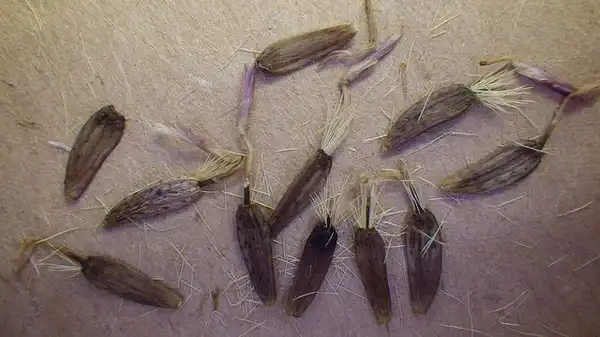
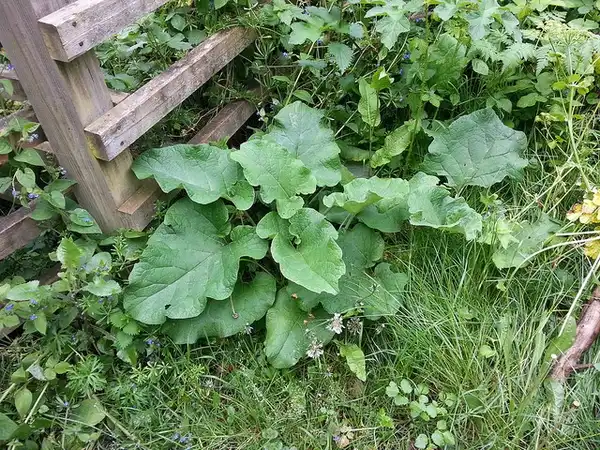
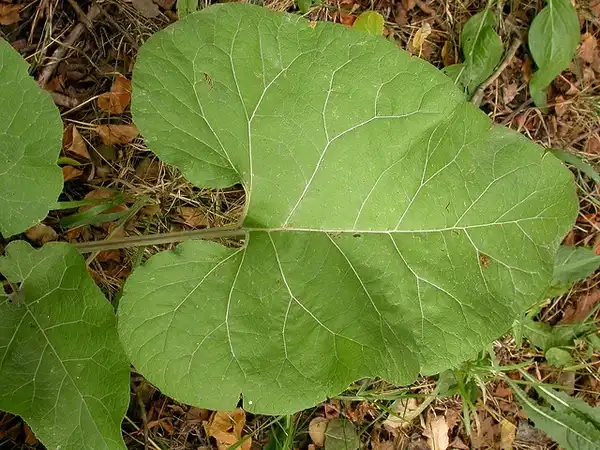
During its first year, Great Burdock produces a compact rosette of leaves. In its second year, it can grow between 2 to 10 feet tall, showcasing large, heart-shaped leaves and striking purple, thistle-like flowers. The plant's slender, fleshy, gray-brown taproots can reach depths of up to 3 feet. The purple flower clusters are arranged in flat-topped cymes, with globular bracts that end in fine, sharp hooks, forming burs that facilitate seed dispersal by attaching to animals, birds, or hay bales. These burs are notoriously difficult to remove and have been known to entangle and harm small birds and bats. The fruits, or achenes, within these burs are equipped with tiny, sharp bristles (pappus hairs) that can easily become airborne, posing risks of severe irritation or infection to the eyes, skin, and respiratory systems of humans, dogs, horses, and other livestock. Great Burdock thrives in sunny locations with moist, well-drained soil rich in organic matter and nitrogen. In various regions, including Asia, it has been cultivated for its edible roots and medicinal properties. Cultivators typically sow seeds in the summer and harvest the first-year roots by late autumn before they become too fibrous.
In terms of pests and diseases, Great Burdock is aggressive and challenging to control once it establishes itself. It is prone to issues like powdery mildew and root rot, which can adversely affect agricultural crops. Additionally, the burs and bristles can lead to significant eye, skin, or respiratory issues in humans and animals, and they are notoriously difficult to remove from clothing and fur.