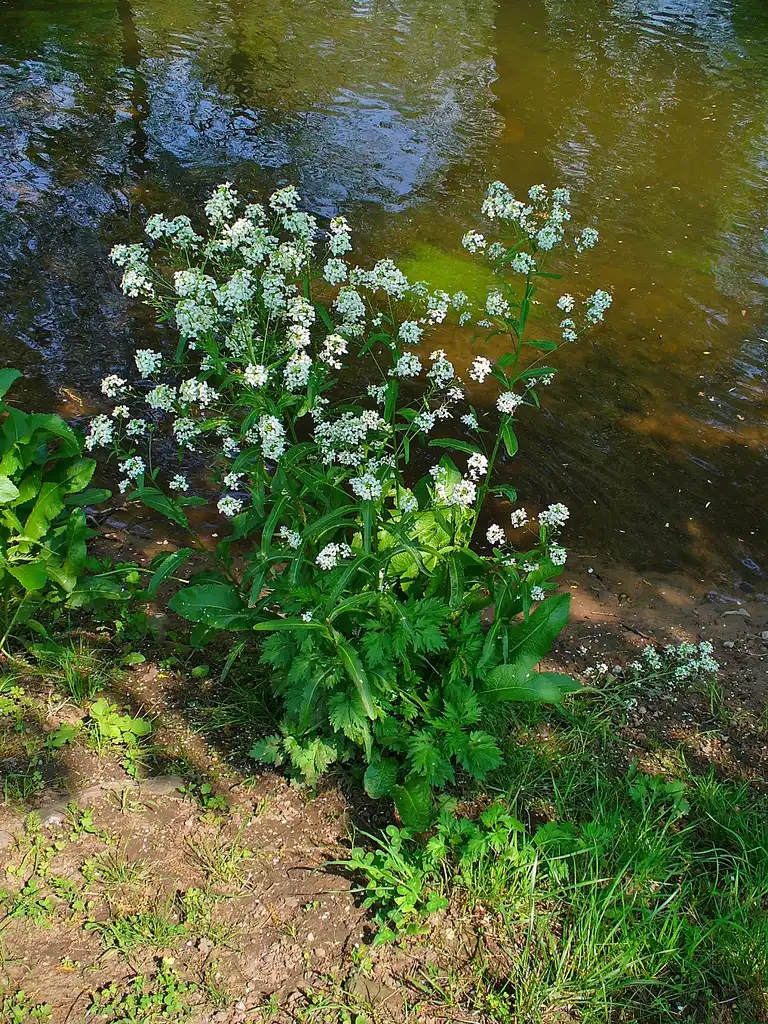
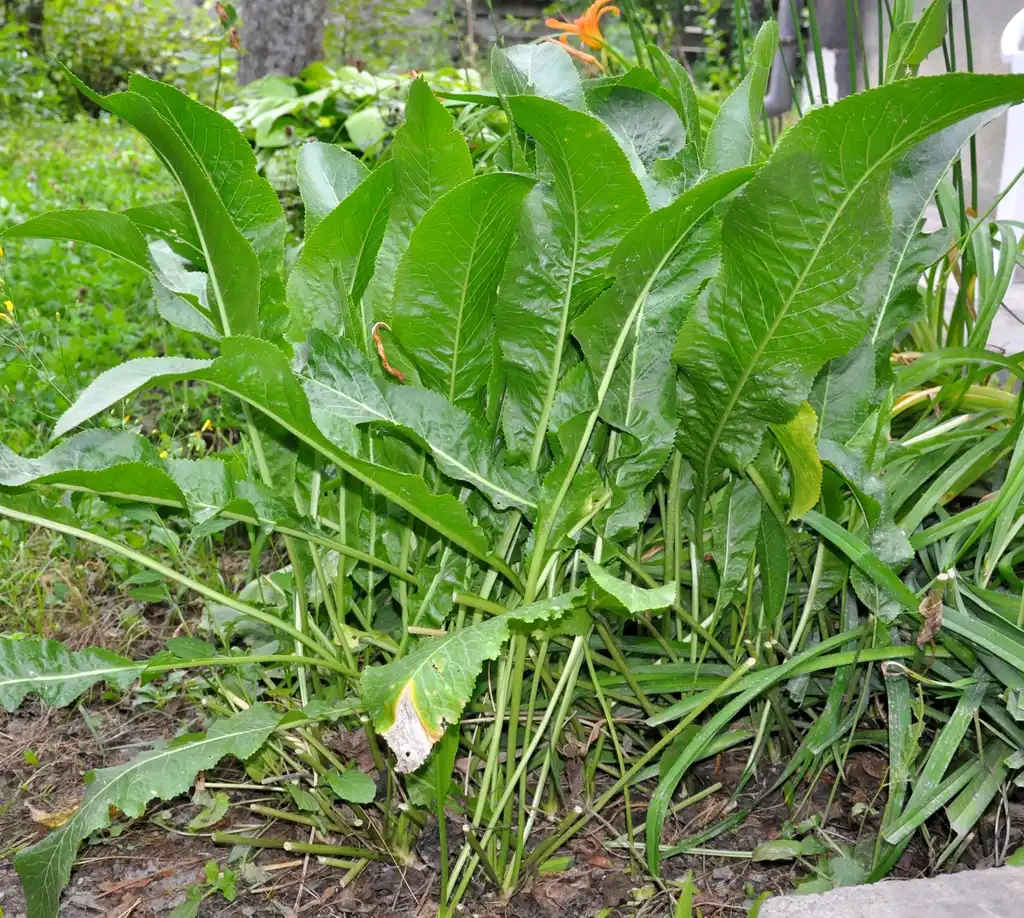
• Photo of Armoracia rusticana (Armoracia rusticanas)

Plant Profile: Armoracia rusticana

Taxonomy: Armoracia rusticana

Names

Horseradish, Red Cole

  • Photo of Armoracia rusticana (Armoracia rusticanas)

Phonetic Spelling:ar-mor-AY-see-ah roo-stih-KAH-nah

Genus:Armoracia

Species:rusticana

Family:Brassicaceae

This plant is a herbaceous perennial characterized by a robust taproot. It can also be cultivated as an annual vegetable, primarily for its succulent roots, which are harvested and grated to create relishes and sauces.

Its vigorous growth enables it to outcompete surrounding vegetation, including weeds, especially if not harvested in the fall. If the roots are left in the soil instead of being collected, they will continue to thrive during the off-season.

Propagation occurs annually by extracting the roots and storing them for replanting the next year.

Due to its deep taproot, this plant can be challenging to eradicate when faced with pests, diseases, or other issues.

Armoracia rusticana Feature Summary

Armoracia rusticana Image Gallery

Tags

#white
#poisonous
#houseplant
#white flowers
#interiorscape
#herbaceous
#vegetable garden
#herbaceous perennial

Similar Plants

Armoracia rusticana Feature Summary

Attributes
S. Ukraine to European Russia
Edible parts: roots, used as a condiment, but only in small amounts (do not eat large amounts of the roots as eating large amounts may result in poisonous symptoms); leaves, as expand in the spring, may be boiled in salted water until tender, then eaten with butter or margarine
Perennial
Flowers
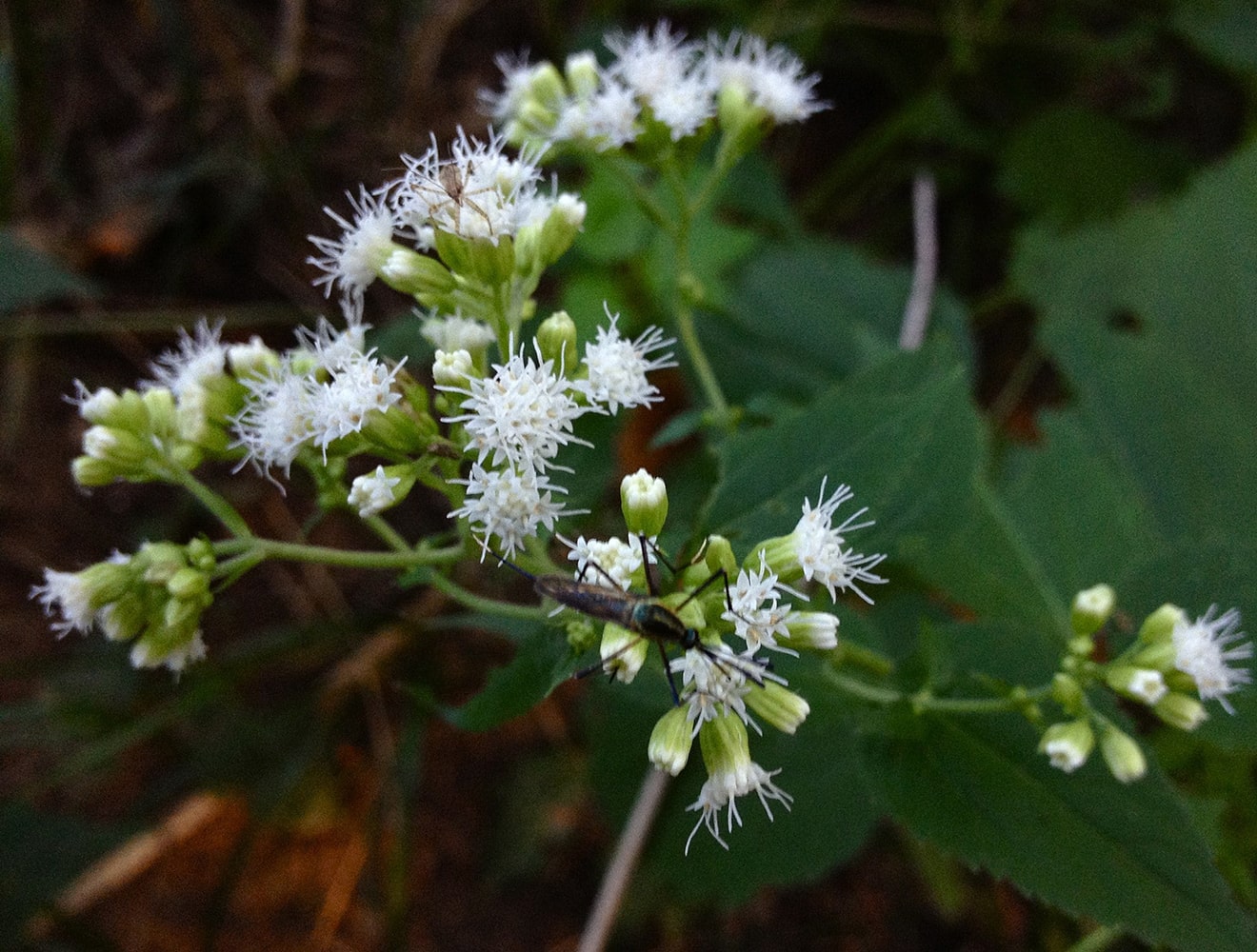
Flowers are small, white, and 4-parted.
Leaves
Leaves are alternate, simple, and the margin is toothed.
Poisonous to Humans
TOXIC ONLY IF LARGE QUANTITIES EATEN. (Poisonous through ingestion of more than small amount of ground root; Poisonous parts are roots). Symptoms may include: Profuse sweating, irritation of the stomach and intestines, loss of strength, disorientation.
Whole Plant Traits
Perennial
Annual
Herbaceous Perennial
Poisonous
Houseplant
Herb
Cultural Conditions
Full sun (6 or more hours of direct sunlight a day)
Good Drainage
Coastal
Mountains
Piedmont
4a
4b
5b
5a
6a
6b
7a
7b
8b
8a
High Organic Matter
Landscape
Poisonous to Humans

Armoracia rusticana Attributes

Armoracia rusticana: Country Or Region Of Origin

S. Ukraine to European Russia
Armoracia rusticana: Edibility

Edible parts: roots, used as a condiment, but only in small amounts (do not eat large amounts of the roots as eating large amounts may result in poisonous symptoms); leaves, as expand in the spring, may be boiled in salted water until tender, then eaten with butter or margarine

Armoracia rusticana: Life Cycle

Annual
Biennial
Bulb
Perennial
Woody

Armoracia rusticana: Recommended Propagation Strategy

Division
Grafting
Layering
Leaf Cutting
Root Cutting
Seed
Stem Cutting

Armoracia rusticana Flowers

Armoracia rusticana: Flower Description

Flowers are small, white, and 4-parted.

Armoracia rusticana: Flower Color

filter_vintage
White

Armoracia rusticana: Flower Inflorescence

Catkin
Corymb
Cyme
Head
Insignificant
Panicle
Raceme
Solitary
Spadix
Spike
Umbel

Armoracia rusticana Leaves

Armoracia rusticana: Leaf Description

Leaves are alternate, simple, and the margin is toothed.

Armoracia rusticana: Leaf Type

Compound (Pinnately , Bipinnately, Palmately)
Fronds
Needles
Sheath
Simple

Armoracia rusticana: Leaf Arrangement

Alternate
Opposite
Other/more complex
Rosulate
Whorled

Armoracia rusticana: Leaf Margin

Crenate
Crenulate
Dentate
Denticulate
Doubly Crenate
Doubly Dentate
Doubly Serrate
Entire
Lobed
Serrate
Sinuate
Undulate

Armoracia rusticana: Hairs Present

No
Yes

Armoracia rusticana: Leaf Value To Gardener

Edible
Fragrant
Good Cut
Good Dried
Long-lasting
Showy

Armoracia rusticana Poisonous to Humans

Armoracia rusticana: Poison Symptoms

TOXIC ONLY IF LARGE QUANTITIES EATEN. (Poisonous through ingestion of more than small amount of ground root; Poisonous parts are roots). Symptoms may include: Profuse sweating, irritation of the stomach and intestines, loss of strength, disorientation.

Armoracia rusticana: Poison Toxic Principle

Glucosinolates

Armoracia rusticana: Poison Severity

High
Low
Medium

Armoracia rusticana: Causes Contact Dermatitis

No
Yes

Armoracia rusticana: Poison Part

Bark
Flowers
Fruits
Leaves
Roots
Sap/Juice
Seeds
Stems

Armoracia rusticana Whole Plant Traits

Armoracia rusticana: Plant Type

Annual
Bulb
Carnivorous
Edible
Epiphyte
Fern
Ground Cover
Herb
Herbaceous Perennial
Houseplant
Mushroom
Native Plant
Ornamental Grasses and Sedges
Perennial
Poisonous
Rose
Shrub
Succulent
Tree
Turfgrass
Vegetable
Vine
Water Plant
Weed
Wildflower

Armoracia rusticana: Maintenance

Low
Medium
High

Armoracia rusticana Cultural Conditions

Armoracia rusticana: Light

Dappled Sunlight (Shade through upper canopy all day)
Deep shade (Less than 2 hours to no direct sunlight)
Full sun (6 or more hours of direct sunlight a day)
Partial Shade (Direct sunlight only part of the day, 2-6 hours)

Armoracia rusticana: Soil Drainage

Frequent Standing Water
Good Drainage
Moist
Occasional Flooding
Occasionally Dry
Occasionally Wet
Very Dry

Armoracia rusticana: NC Region

Coastal
Mountains
Piedmont

Armoracia rusticana: USDA Plant Hardiness Zone

thermostat
4a
thermostat
4b
thermostat
5a
thermostat
5b
thermostat
6a
thermostat
6b
thermostat
7a
thermostat
7b
thermostat
8a
thermostat
8b

Armoracia rusticana: Soil Texture

Clay
High Organic Matter
Loam (Silt)
Sand
Shallow Rocky

Armoracia rusticana Stem

Armoracia rusticana: Stem Is Aromatic

No
Yes

Armoracia rusticana Landscape

Armoracia rusticana: Landscape Location

Coastal
Container
Hanging Baskets
Houseplants
Lawn
Meadow
Naturalized Area
Near Septic
Patio
Pond
Pool/Hardscape
Recreational Play Area
Riparian
Rock Wall
Slope/Bank
Small Space
Vertical Spaces
Walkways
Woodland

Armoracia rusticana: Problems

Allelopathic
Contact Dermatitis
Frequent Disease Problems
Frequent Insect Problems
Invasive Species
Malodorous
Messy
Poisonous to Humans
Problem for Cats
Problem for Children
Problem for Dogs
Problem for Horses
Short-lived
Spines/Thorns
Weak Wood
Weedy