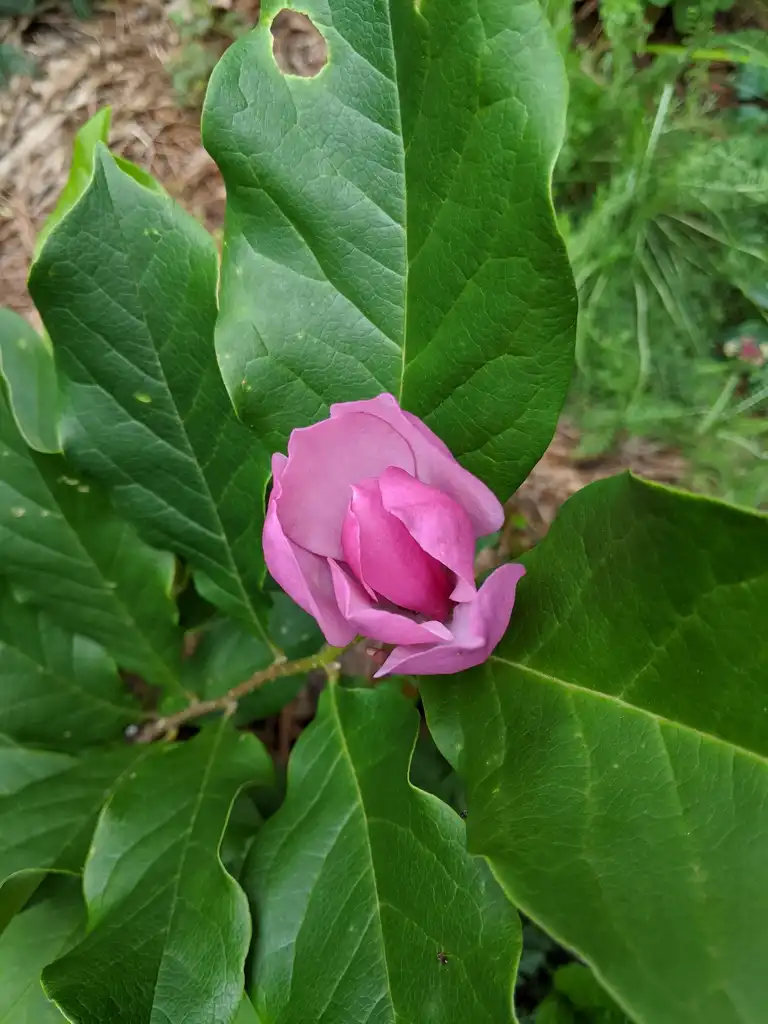
• Photo of Magnolia liliiflora (Magnolia liliifloras)

Plant Profile: Magnolia liliiflora

Names

Lily Magnolia

  • Photo of Magnolia liliiflora (Magnolia liliifloras)

Phonetic Spelling:mag-NO-lee-ah lil-lee-FLOR-uh

Genus:Magnolia

Species:liliiflora

Family:Magnoliaceae

The bark of this plant ranges from light gray to brown and is prone to powdery mildew.

For optimal growth, it thrives in soils that are organically rich, neutral to slightly acidic, and maintain medium moisture while being well-drained. It prefers full sun to partial shade and benefits from a layer of mulch around the root zone to help retain moisture. Additionally, a sheltered location that protects it from strong winds is ideal, but it’s best to avoid warm southern exposures, as these can lead to early bud opening in the spring. The fleshy root system is delicate and can be easily damaged during transplanting, so careful selection of the planting site is crucial, and once established, the magnolia should remain undisturbed. Pruning should be done as necessary right after flowering, with minimal intervention required aside from removing any dead or damaged branches.

The ‘Susan’ variety is a hybrid resulting from the cross between M. liliiflora ‘Nigra’ and M. stellata ‘Rosea’. It belongs to the Little Girl series, which includes other hybrids such as ‘Ann’, ‘Betty’, ‘Jane’, ‘Judy’, ‘Pinkie’, ‘Randy’, ‘Ricki’, and ‘Susan’. This series was developed at the National Arboretum in the mid-1950s by Francis DeVos and William Kosar. Plants in this series bloom approximately 2-4 weeks later than M. stellata and M. x soulangiana, thereby minimizing the risk of flower damage from late spring frosts.

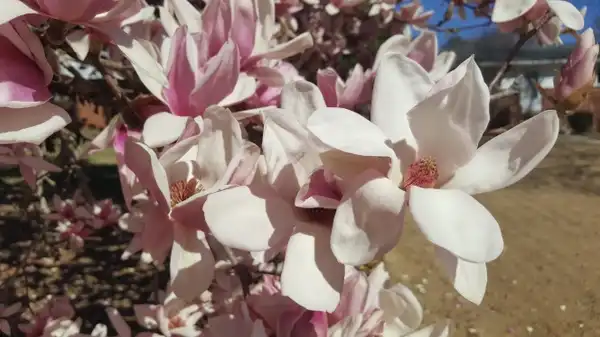
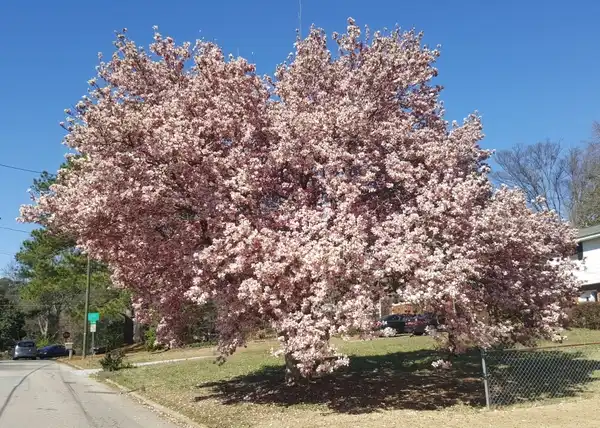
‘Susan’ is particularly recognized for its compact, shrubby form, fragrant fuchsia flowers, and late blooming period, which occurs from mid-April to early May. It is a slow-growing deciduous shrub or small tree that typically reaches heights of 8-12 feet over time. The goblet-shaped flowers, featuring six slightly twisted tepals, emerge just before the leaves appear. These flowers, which can reach up to 5 inches in width, display a purple-red or fuchsia hue with lighter shades on the inside. There may be occasional repeat blooming in mid-summer. The medium green leaves are ovate and can grow up to 6 inches long, turning a yellow-bronze color in the fall.
Magnolia liliiflora Feature Summary

Magnolia liliiflora Image Gallery

Tags

#deciduous

Similar Plants

Magnolia liliiflora is often confused with:

Magnolia liliiflora Feature Summary

Cultural Conditions
Full sun (6 or more hours of direct sunlight a day)
Partial Shade (Direct sunlight only part of the day, 2-6 hours)
Neutral (6.0-8.0)
Good Drainage
4a
4b
5b
5a
6a
6b
7a
7b
8b
8a
Flowers
Purple/Lavender
Gold/Yellow
Red/Burgundy
Brown/Copper
6 petals/rays
3-6 inches
Landscape

Magnolia liliiflora Whole Plant Traits

Magnolia liliiflora: Plant Type

Annual
Bulb
Carnivorous
Edible
Epiphyte
Fern
Ground Cover
Herb
Herbaceous Perennial
Houseplant
Mushroom
Native Plant
Ornamental Grasses and Sedges
Perennial
Poisonous
Rose
Shrub
Succulent
Tree
Turfgrass
Vegetable
Vine
Water Plant
Weed
Wildflower

Magnolia liliiflora: Woody Plant Leaf Characteristics

Broadleaf Evergreen
Deciduous
Needled Evergreen
Semi-evergreen

Magnolia liliiflora: Growth Rate

Slow
Medium
Rapid

Magnolia liliiflora: Maintenance

Low
Medium
High

Magnolia liliiflora Cultural Conditions

Magnolia liliiflora: Light

Dappled Sunlight (Shade through upper canopy all day)
Deep shade (Less than 2 hours to no direct sunlight)
Full sun (6 or more hours of direct sunlight a day)
Partial Shade (Direct sunlight only part of the day, 2-6 hours)

Magnolia liliiflora: Soil pH

Acid (<6.0)
Alkaline (>8.0)
Neutral (6.0-8.0)

Magnolia liliiflora: Soil Drainage

Frequent Standing Water
Good Drainage
Moist
Occasional Flooding
Occasionally Dry
Occasionally Wet
Very Dry

Magnolia liliiflora: USDA Plant Hardiness Zone

thermostat
4a
thermostat
4b
thermostat
5a
thermostat
5b
thermostat
6a
thermostat
6b
thermostat
7a
thermostat
7b
thermostat
8a
thermostat
8b

Magnolia liliiflora Flowers

Magnolia liliiflora: Flower Color

filter_vintage
Brown/Copper
filter_vintage
Gold/Yellow
filter_vintage
Purple/Lavender
filter_vintage
Red/Burgundy

Magnolia liliiflora: Flower Value To Gardener

Edible
Fragrant
Good Cut
Good Dried
Long Bloom Season
Long-lasting
Showy

Magnolia liliiflora: Flower Bloom Time

Winter
Spring
Summer
Fall

Magnolia liliiflora: Flower Petals

2-3 rays/petals
4-5 petals/rays
6 petals/rays
7 - 20 petals/rays
asymmetrical petals
Bracts
Colored Sepals
fused petals
more than 20 petals/rays
Tepals

Magnolia liliiflora: Flower Size

1-3 inches
3-6 inches
< 1 inch
> 6 inches

Magnolia liliiflora Leaves

Magnolia liliiflora: Woody Plant Leaf Characteristics

Broadleaf Evergreen
Deciduous
Needled Evergreen
Semi-evergreen

Magnolia liliiflora: Leaf Color

spa
Green

Magnolia liliiflora: Deciduous Leaf Fall Color

spa
Gold/Yellow

Magnolia liliiflora: Hairs Present

No
Yes

Magnolia liliiflora Stem

Magnolia liliiflora: Stem Is Aromatic

No
Yes

Magnolia liliiflora Landscape

Magnolia liliiflora: Design Feature

Accent
Barrier
Border
Flowering Tree
Foundation Planting
Hedge
Mass Planting
Screen/Privacy
Security
Shade Tree
Small groups
Small Tree
Specimen
Street Tree
Understory Tree