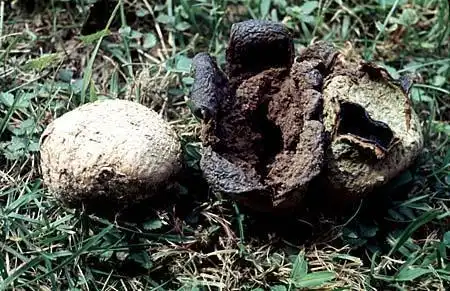
• Photo of Scleroderma geaster (Scleroderma geasters)

Plant Profile: Scleroderma geaster

Names

Dead Man's Hand, Devils Snuff Box, Earthstar Scleroderma

  • Photo of Scleroderma geaster (Scleroderma geasters)

Phonetic Spelling:sklayr-oh-DER-muh jee-AZ-ter

Genus:Scleroderma

Species:geaster

Family:Sclerodermataceae

The dimensions, density, and robustness of this fungus's fruiting body make it easily recognizable. Its thick rind, which encases the spore mass, often remains intact for months after the spores have dispersed. Notably, this fungus can even damage asphalt surfaces on driveways and tennis courts as the fruiting bodies mature.

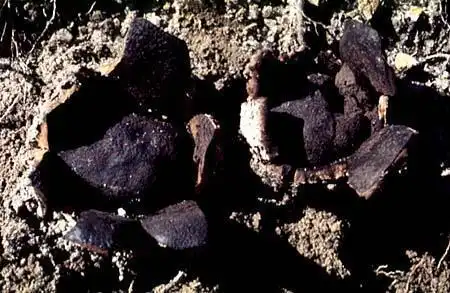
These fruiting bodies are substantial and somewhat rounded, measuring between 5 to 6 inches in diameter. They exhibit a tan to light brown coloration and tend to break apart into large, scale-like patches as they expand. As they grow, they can develop irregular, star-like lobes or rays, typically featuring four to six of these projections. The peridium, or outer layer, is notably thick and tan, while the gleba, or inner spore mass, displays a marbled purple-brown hue even in its early stages, transitioning to a blackish-brown and dusty appearance as the spores reach maturity.

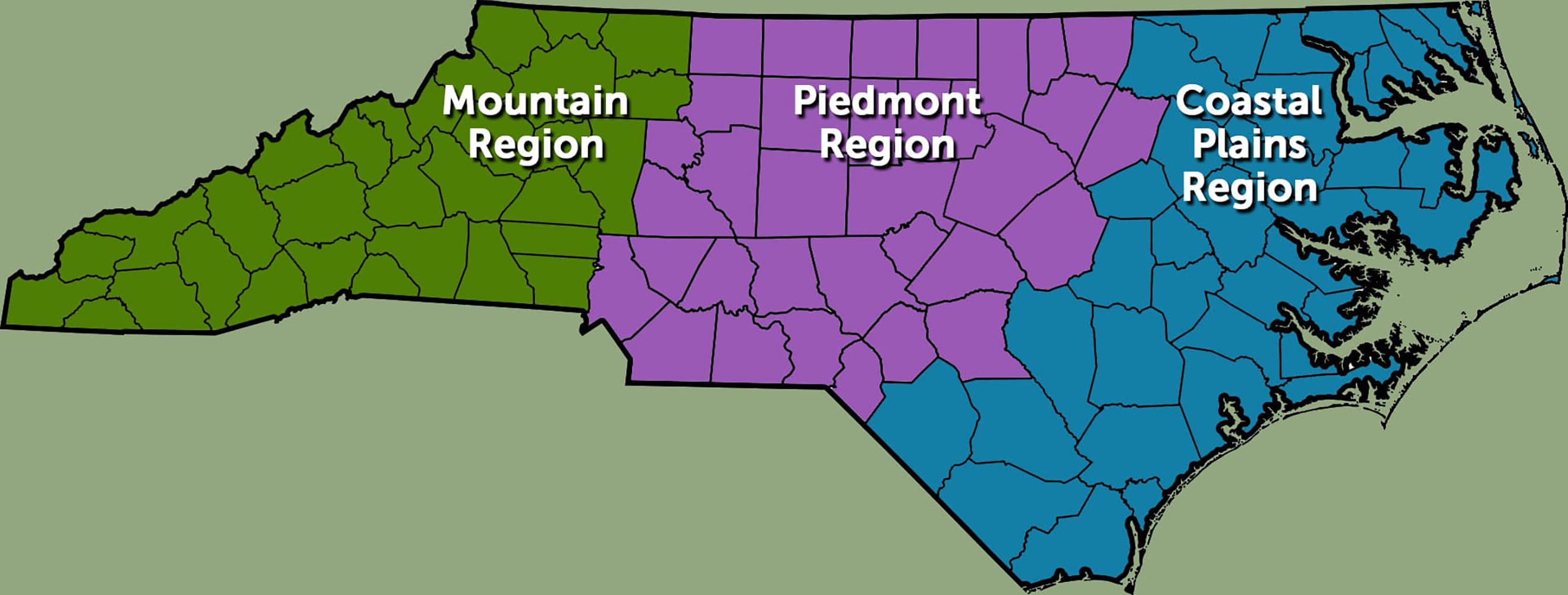
This species is prevalent across North Carolina, particularly in the Piedmont region, where it thrives in exposed clay soils, especially along road banks. It can be found in forested areas or natural landscapes, often appearing alone or in clusters of three to four fruiting bodies, with some occasionally fused together on exposed clay or sandy ground, and sometimes even in lawns.

It is important to note that this fungus is highly toxic and can be lethal if ingested. Its distinctive size, thickness, and firmness further contribute to its easy identification.

Scleroderma geaster Feature Summary

Scleroderma geaster Image Gallery

Tags

#mushrooms
#fungi

Similar Plants

Scleroderma geaster Feature Summary

Attributes
North Carolina, USA
Fruit
Large, tan-brown, roundish in shape, 5-6"
Brown/Copper
Cream/Tan
> 3 inches
Poisonous to Humans
The patient may experience gastrointestinal upset including nausea, vomiting, diarrhea, and cramps. Symptoms may appear within 30-45 minutes following ingestion.
Fruits
Roots
Whole Plant Traits
Poisonous
Mushroom
Cultural Conditions
Coastal
Mountains
Piedmont

Scleroderma geaster Attributes

Scleroderma geaster: Country Or Region Of Origin

North Carolina, USA
Scleroderma geaster Fruit

Scleroderma geaster: Fruit Description

Large, tan-brown, roundish in shape, 5-6"

Scleroderma geaster: Fruit Color

grass
Brown/Copper
grass
Cream/Tan

Scleroderma geaster: Fruit Length

< 1 inch
1-3 inches
> 3 inches

Scleroderma geaster Poisonous to Humans

Scleroderma geaster: Poison Symptoms

The patient may experience gastrointestinal upset including nausea, vomiting, diarrhea, and cramps. Symptoms may appear within 30-45 minutes following ingestion.

Scleroderma geaster: Poison Toxic Principle

Unknown

Scleroderma geaster: Poison Severity

High
Low
Medium

Scleroderma geaster: Causes Contact Dermatitis

No
Yes

Scleroderma geaster: Poison Part

Bark
Flowers
Fruits
Leaves
Roots
Sap/Juice
Seeds
Stems

Scleroderma geaster Whole Plant Traits

Scleroderma geaster: Plant Type

Annual
Bulb
Carnivorous
Edible
Epiphyte
Fern
Ground Cover
Herb
Herbaceous Perennial
Houseplant
Mushroom
Native Plant
Ornamental Grasses and Sedges
Perennial
Poisonous
Rose
Shrub
Succulent
Tree
Turfgrass
Vegetable
Vine
Water Plant
Weed
Wildflower

Scleroderma geaster Cultural Conditions

Scleroderma geaster: NC Region

Coastal
Mountains
Piedmont

Scleroderma geaster Leaves

Scleroderma geaster: Hairs Present

No
Yes

Scleroderma geaster Stem

Scleroderma geaster: Stem Is Aromatic

No
Yes