Cichorium endivia: Country Or Region Of Origin
Eastern Mediterranean, India
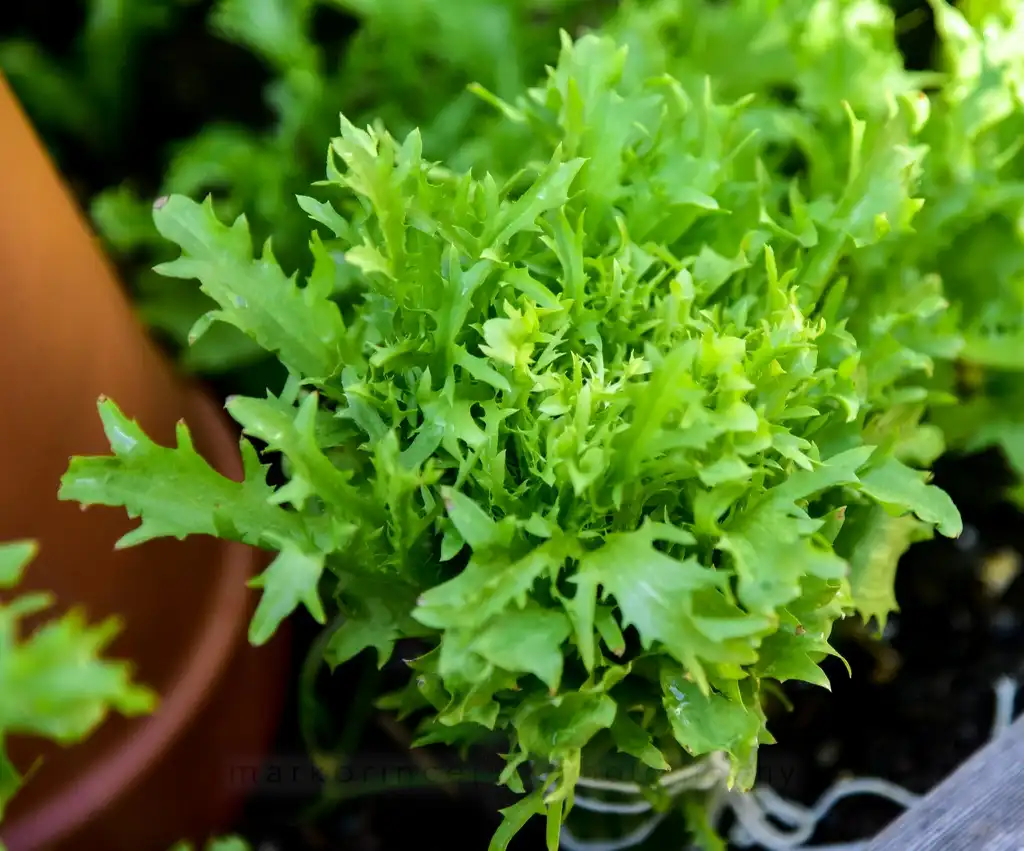
Phonetic Spelling:si-KOR-ee-um EN-daiv
Genus:Cichorium
Species:endivia
Family:Asteraceae
Endives are a significant bitter salad green in Europe, though they are not as widely recognized in the United States. There are two primary types of this plant: curly endive (var. crispum) and escarole (var. latifolium). Both belong to the chicory family and feature a rosette of leaves that form a loose head. Curly endive is characterized by its frilled, curled leaves, while escarole has smooth, broad leaves that are milder in flavor.
To cultivate endive and escarole, plant them after the risk of frost has passed, ensuring they receive full sunlight and are grown in well-drained soil with a pH between 5.5 and 8.3 that retains moisture. The plants typically take about 70 to 100 days to mature. Endives can withstand higher temperatures better than lettuce, although they thrive best in cooler conditions, ideally between 60 and 65 degrees Fahrenheit. Both varieties may bolt and flower when exposed to short days and cooler weather, and escarole can endure light frost once it is well-established.
To mitigate the natural bitterness of endives, blanching can be employed prior to harvest. This process slows down chlorophyll production, which contributes to the bitter taste. Blanching methods include pulling the outer leaves over the head and securing them during dry weather to prevent the inner leaves from rotting, or covering each plant with a container to block light for several weeks before harvesting. There are also some varieties that are somewhat self-blanching.
It’s important to note that endives can be mistaken for chicory, Belgian endive, or radicchio, which, while belonging to the same genus, is a different species characterized by a small, tightly packed, cylindrical head.
Cichorium endivia Feature Summary
Cichorium endivia Image Gallery