Santolina chamaecyparissus: Uses (Ethnobotany)
Has been used in potpourri.
Phonetic Spelling:san-toh-LY-nuh kam-ee-se-pur-ISS
Genus:Santolina
Species:chamaecyparissus
Family:Asteraceae
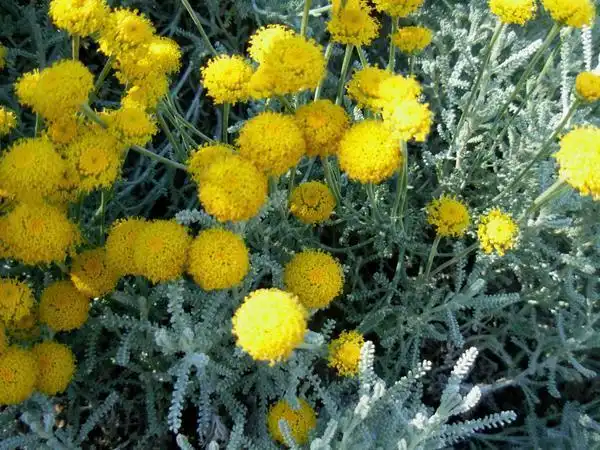
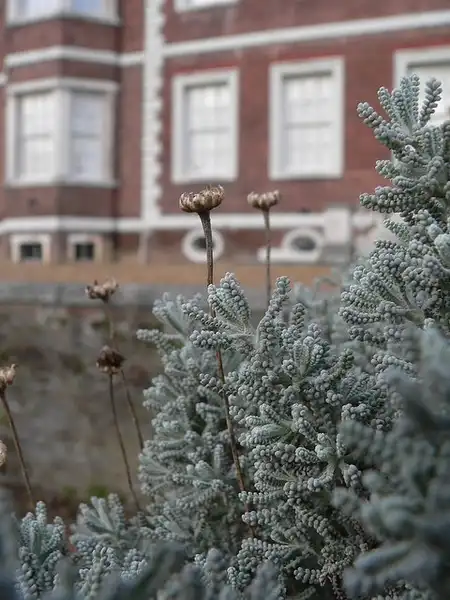
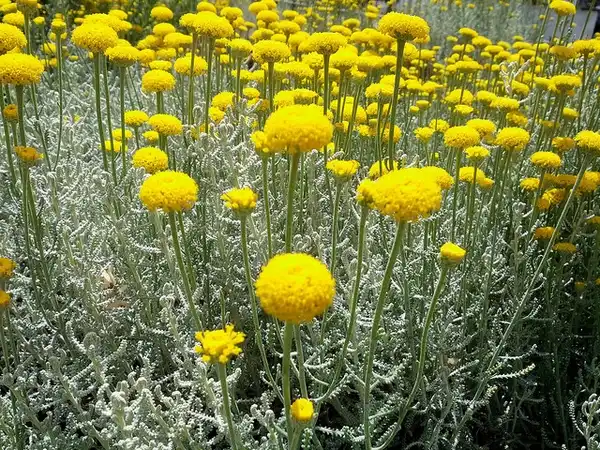
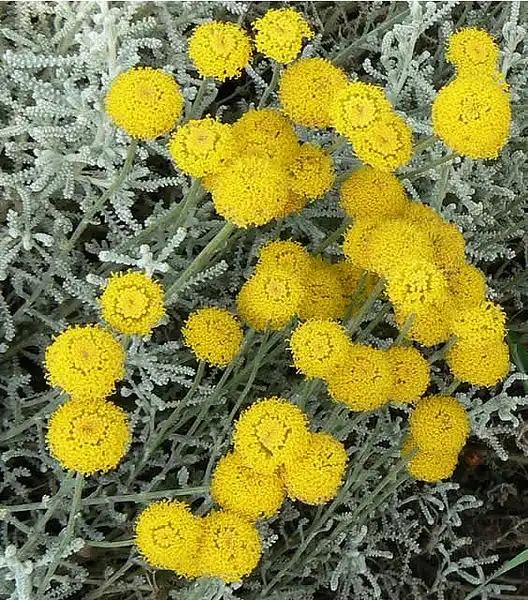
This plant thrives in compact spaces and exhibits excellent drought resistance. It is commonly used in dried floral arrangements, potpourris, and as an accent in gardens. Notably, it has a high tolerance for salt but should not be over-fertilized; pruning is recommended after the flowering period. The branches are upright or slightly ascending, displaying a gray-green to brown hue, and are initially covered in dense white hairs.
The leaves are tiny and have a three-dimensional appearance rather than being flat. It can be challenging to determine whether the leaves are simple or pinnatifid based solely on their appearance. The plant emits a strong and distinctive fragrance. Santolina chamaecyparissus flowers during the summer, and it is advisable to remove the flower stalks once blooming has finished. This species is suitable for short-term landscaping (approximately 10-15 years) as it tends to open up with age. In contrast, S. rosmarinifolia is similar but features green foliage and lighter-colored flowers. It is often used as ground cover in mass plantings, along edges of beds, in planters, and in rock gardens or walls, thriving even in pure sand. Additionally, it has applications in traditional medicine for digestive issues and as an antiseptic.
Quick Identification
Santolina chamaecyparissus Feature Summary
Santolina chamaecyparissus Image Gallery