Discover the incredible variety of life on Earth, from plants and animals to ecosystems and microorganisms. Learn about conservation, species protection, and the importance of maintaining balanced, healthy environments. Explore tips, research, and insights that highlight the richness and interconnection of our natural world.
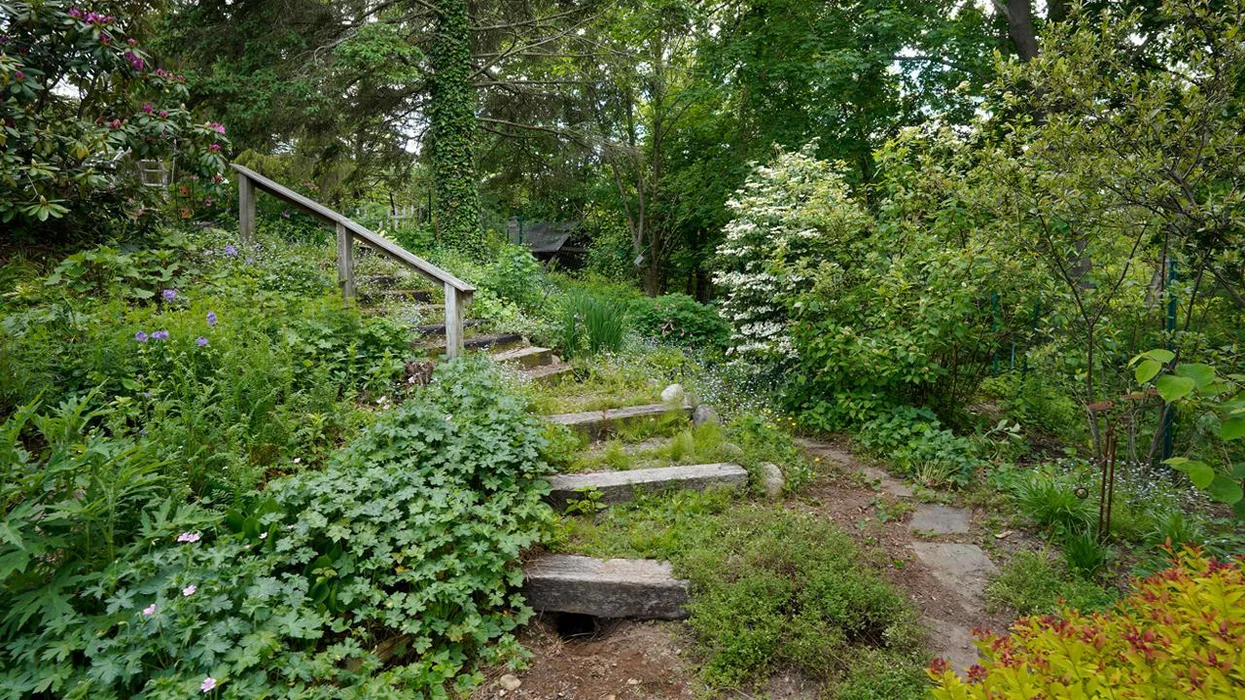
Without wanting to recreate wild nature, it is possible to approach it by welcoming a wide variety of flora. The little animals will soon follow! Combine plants and small animals well to welcome wildlife to the garden without being invaded: follow Rustica’s advice.
Did you know ? Plants have a social life. Some can only thrive with company! The plants bring mutual benefits: shade, support, protection against the wind, pests … The more species are numerous, the more the garden becomes welcoming for the fauna, which then finds refuge and food there (and the more the fauna is diversified). , the more pest attacks are controlled). However, many animal and plant species are now threatened. To promote biodiversity in the garden, nothing better than to introduce wild plants, ideally indigenous. You just have to “forget” to remove some alliaries and chelidoins in the beds; compose planters filled with cereals and flowers (poppy, cornflower, etc.); leave a fallow land at the foot of the hedge or at the bottom of the garden; build a pond; keep a low wall, dead trees. Ideas abound!
ZOOM: Another lawn
Spreading fertilizer, fighting against moss, passing the mower throughout the beautiful season, copious watering… So much effort, time spent and waste to obtain the green carpet of our dreams! Why not reduce the surface, this will be the opportunity to introduce a new diversity to the garden . So welcome ground covers (creeping bugle, dead knife, nummular lysimachus …) which will spread under the trees, where the lawn is struggling to grow. Create a gravel garden on which to wander: a number of plants (wallflower, saxifrage, mullein, valerian, verbena, etc.) can be dispersed there according to their spontaneous sowing.
In nature, all animals know how to adapt to winter conditions. But in the garden, some of them might need a little help.
Hedgehogs, snails, frogs … all warm!
Several animal species, including hedgehogs , prepare for winter by building up fruit reserves. In order to survive, they adjust their metabolism to the climate of the region. Other mammals hibernate with a body temperature that is higher than that of their environment. On the other hand, the body temperature of cold-blooded animals (amphibians, fish or even mollusks) varies according to that of the environment. Thus, in very cold weather, they go into lethargy, after having manufactured organic substances or partitions preventing them from freezing.
Earthworms
Although slower, earthworm activity continues into the winter. They feed on organic matter which they transform into humus. To do this, they descend lower, under the layer of frozen earth.
To help them: spread manure, plant debris or compost on the ground on your flowerbeds. It will freeze less quickly and the auxiliaries appreciate this food.
Goldfish in the basin
Snuggled up in algae or aquatic plants, goldfish reduce their activity and feed little. In a pool at least 80 cm deep, they fear neither low temperatures nor surface ice.
To help them: let a bundle of wood float; oxygen will pass through if ice forms. If the basin is shallow, put them in a sheltered basin, without feeding them.
Frog
The cold causes a decline in the vitality of the frog. Almost asleep, she buried herself in the mud to spend the winter there without expending energy and without eating. If ice forms, it will survive thanks to the glucose in its organs acting as antifreeze, but it will take several hours to come out of its torpor.
To help it: remember to leave mud on the edges of the water point.
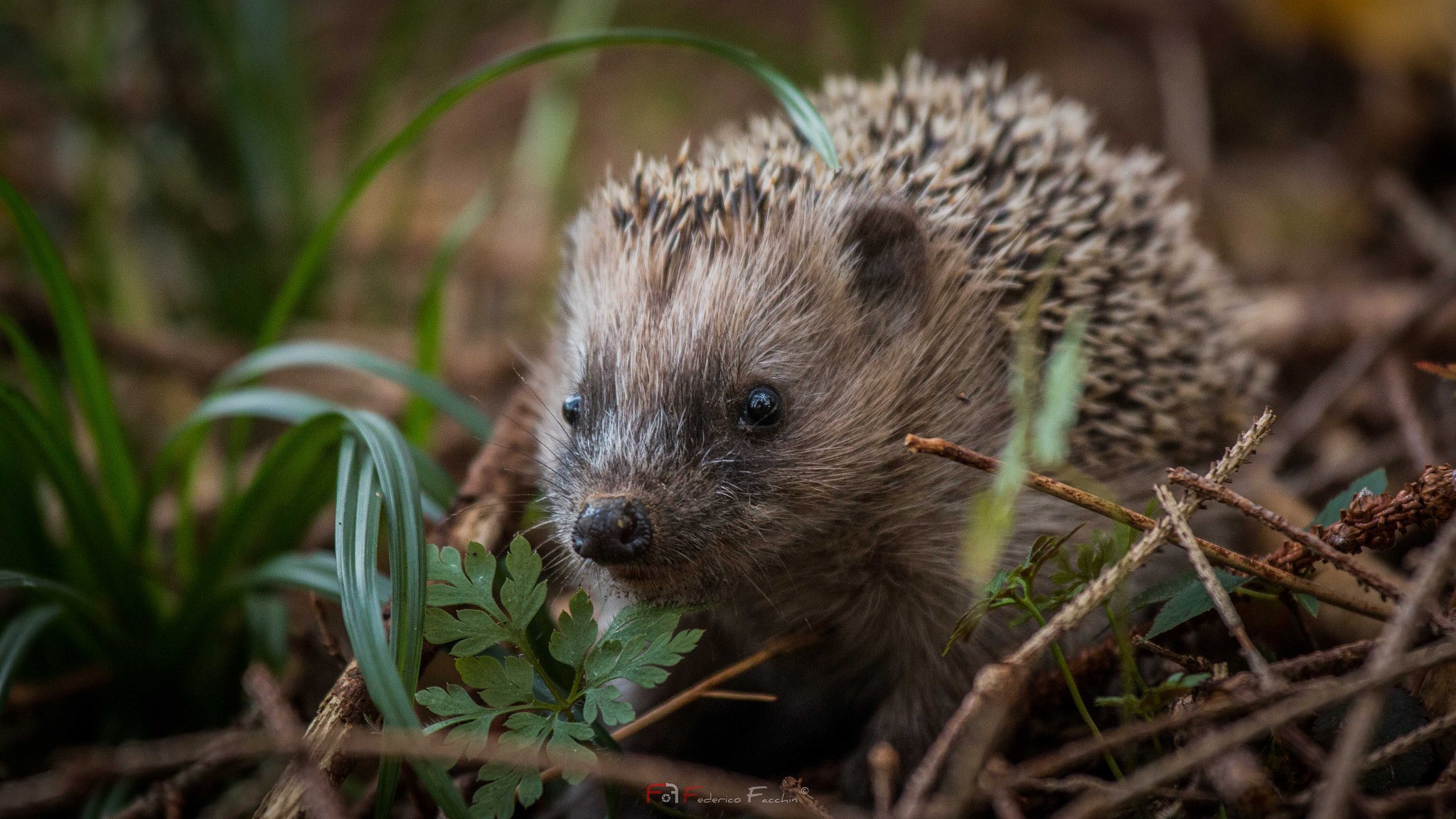
Hedgehog
It is under a pile of branches or leaves that the hedgehog arranges its shelter by padding it with moss. During hibernation, its temperature drops and its vital functions slow down. He wakes up periodically to feed on his reserves and stretch his muscles a little.
To help him: set up a nest filled with dead leaves . Don’t wake him up for any reason.
Snail
The snail overwinters in a hole which it closes with slime which, as it hardens, will protect it from the cold. In addition, it obstructs its shell with an operculum. It no longer feeds and decreases its vital functions. His oxygen consumption drops by half, and his heartbeat slows considerably. In case of momentary softening, it can then regain its activity.
Sow these plants which produce a juice or nectar which attracts pollinators. The latter, after having satiated and covered themselves with pollen, will fertilize other flowers in the garden.
Nectar for everyone! Pollinators are very useful in the garden. They carry pollen from one plant to another and thus ensure the fertilization of crops. You understood it well: without them, there is no abundance. To attract them, introduce honey species whose flowers produce a lot of nectar. There is a wide range of plants with varied smells. Some will rather bait the bee, the queen of the foragers. But others will turn the heads of pacifist bumblebees, butterflies or even aphid-eating hoverflies. By sowing different plants known for their melliferous quality, you promote biodiversity. By favoring plants with various flowering periods, pollinators forage in your garden for a long time. Aromatic, ornamental plants… there is a choice!
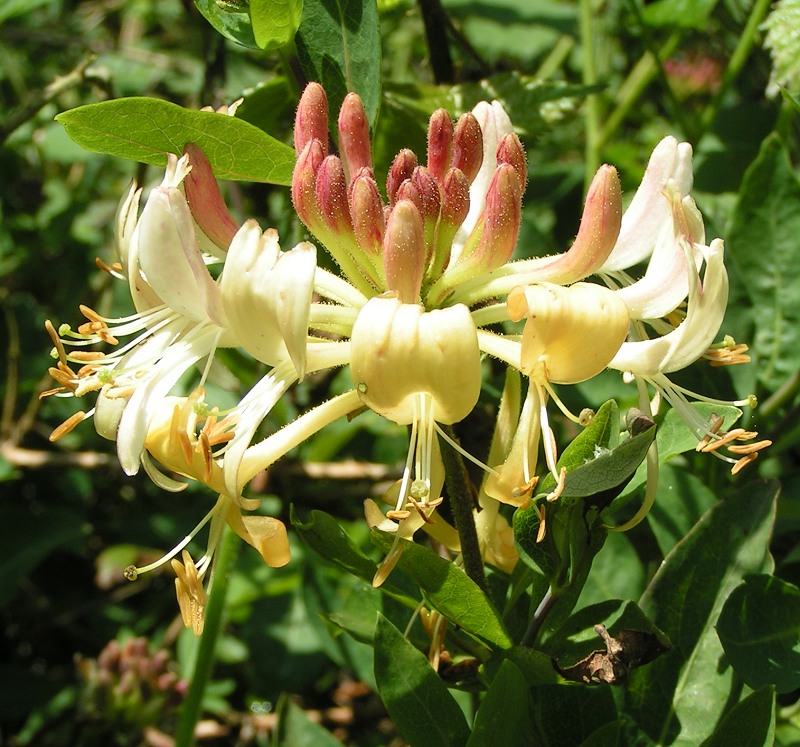
Honeysuckle
Latin name: Lonicera Caprifoliaceae Flowering: from June to September
In summer, butterflies bring honor to your garden if it hosts a honeysuckle. Indeed, its nectar, nestled in the hollow of deep-throated flowers, can only be foraged by insects with a long proboscis. Another peculiarity: the honeysuckle becomes more fragrant at nightfall and attracts moths such as the sphinx. Two varieties are particularly honeyed: Lonicera fragrantissima and L. tatarica. Honeysuckle is an evergreen shrub that appreciates dry, rather acidic soils and slightly shaded areas. In the garden, it is easy to find a place for it, it grows without problem on a structure (arbor or vault) or as a simple hedge.
Money basket
Latin name: Lobularia maritima Brassicaceae (anc. Cruciferae) Flowering: from April to October
The silver basket has the advantage of giving many small white flowers, fragrant, which last a long time. Its smell is differently appreciated, some find that it smells of urine and others that it exhales honey. Anyway, the bumblebees know how to appreciate it! Thanks to its highly branched shape, it is ideal for use in beds. It also forms a very good ground cover, perfect for controlling weeds. The silver basket likes the sun and drained soils. Supporting the wind and spray, it adapts perfectly to maritime situations. By eliminating the faded flowers, you promote a second flowering.
Wallflower
Latin name: Cheiranthus cheiri Brassicaceae (anc. Cruciferae) Flowering: spring
Here are small flowers which bees are very fond of. A biennial or perennial variety of the same family as cabbage, yellow wallflower or ravenella blooms in spring. With its upright habit, its many branches and its gold and orange colors, it blends in perfectly with flower beds. If the yellow wallflower is rather easy to grow, it is nevertheless better to plant it in areas protected from the wind, against a wall for example, as well as in dry soils. These conditions will allow it to flourish for several years, without special intervention. For long-lasting blooming, remove faded flowers as you go.
Large daisy
Latin name: Leucanthemum maximum Asteraceae (ancient Compositae) Flowering: June to September
These plants are perfect for small foragers such as hoverflies. Robust, measuring up to 90 cm in height, these large daisies bear flat white flowers (8 cm in diameter) with a yellow heart. They do well in many situations, but the ideal is to provide them with a rather cool and well-drained soil. Large daisies and daisies (L. vulgare) are non-perennial plants. You will find in the trade of varieties with single or double, giant, normal or dwarf shapes. In any case, pollinators love daisies a lot, passionately, madly… daisies.
Lavender
Latin name: Lavandula Lamiaceae (anc. Labiee) Flowering: from May to August This
is one of the best honey plants (25 known species). Bushy, it is rustic, ideal to withstand all situations: from the driest to the coldest temperatures. To grow successfully, it must receive enough light, be protected from the wind and have dry feet. You will find about twenty varieties on the market that produce a good amount of nectar. In addition to its use in cooking, here are plants that once dried will make excellent potpourris as well as sachets that will perfume your laundry. In short, a honey plant with multiple uses!
Rosemary
Latin name: Rosmarinus officinalis Lamiaceae (anc. Labiee) Flowering: from February to May
Rosemary has a powerful capacity for producing nectar. In trade, its honey is also very famous both for its taste and for its stimulating and digestive properties. In the garden, this shrub will make an excellent bait for bees at a time when few ornamental plants are blooming. Its flowers, lavender blue to deep blue, bell-shaped, persist for several months. Rosemary finds its place in a sunny area, but also sheltered from the wind. It makes perfect use of poor, dry and limestone soils. This essential aromatic herb in cooking is also a very useful honey plant.