Category: Flowers

Explore the beauty and diversity of flowers for your garden, balcony, or indoor spaces. Learn how to grow, care for, and arrange flowering plants, from vibrant annuals to perennial favorites. Discover tips on planting, seasonal care, and creating stunning floral displays that bring color and life to any environment.

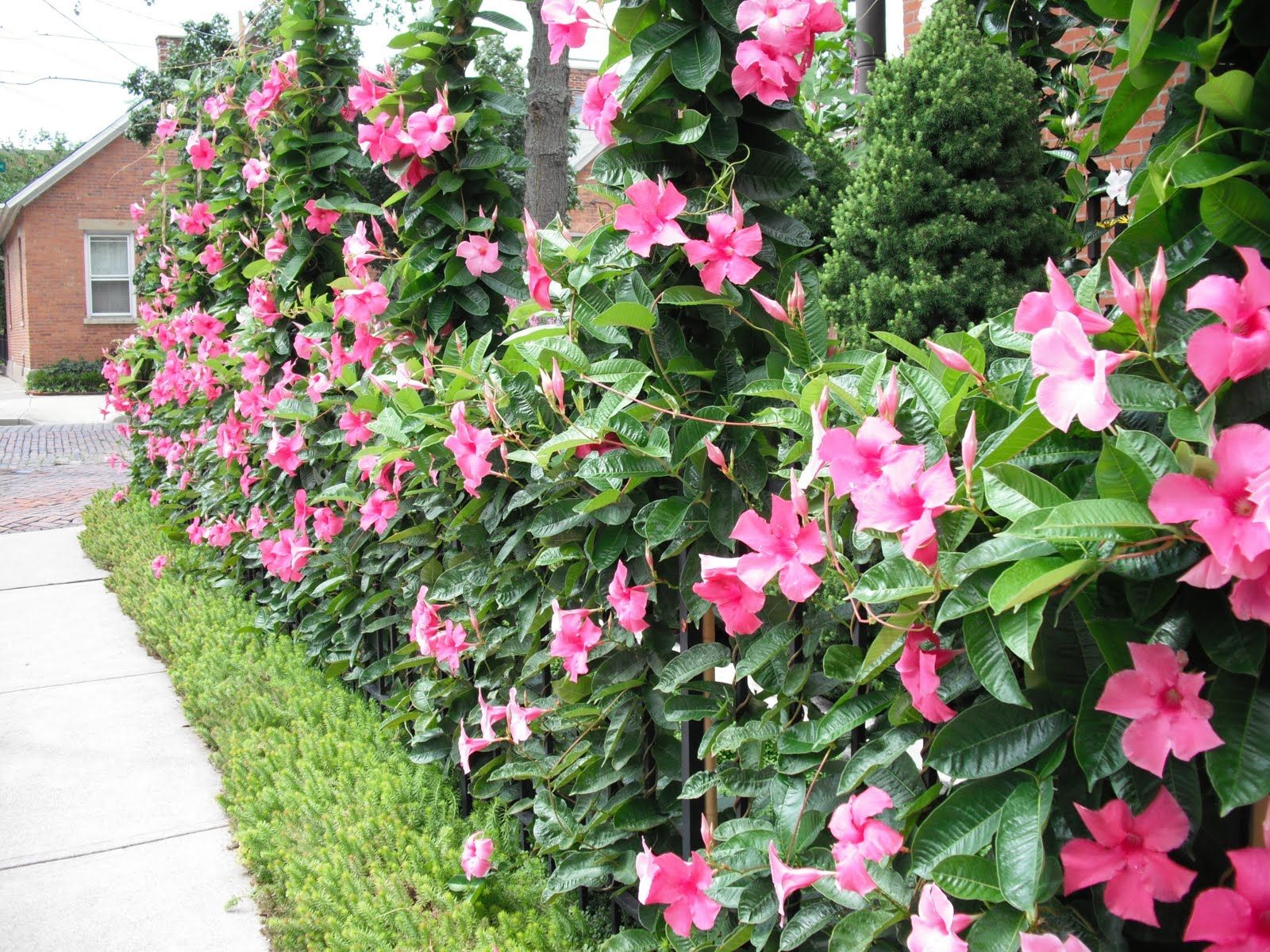
  • Dipladenia Bella (Mandevillea x sanderi): advice on growing

    Dipladenia Bella (Mandevillea x sanderi): advice on growing

    Easy to grow, requiring only limited maintenance, the cultivars of the ‘Bella’ series offer their exceptional blooms throughout the beautiful season. In a compact version to decorate a balcony, this plant also finds its place to decorate trellises and pergolas in its climbing version. Something to satisfy all gardeners!

    Characteristics

    Soil: drained, rather dry
    Spread: 50 cm
    Planting: in May
    Flowering: from May to October
    Exposure: sun
    Use: open ground and pot
    Height: 35 to 1.20 cm depending on the variety

    Culture

    The new dipladénias of the ‘Bella’ series have been selected for their extraordinary floridity. Covering themselves with star flowers, these new varieties, very appreciated for their generous development, are declined from white with ‘White’, to pink with ‘Pink’ and ‘Pink Star’ a little darker and marked by a pale pink star in its heart, passing through red with the sumptuous ‘Red Compact’. The latter presents an ideal bushy habit in pots, while the other cultivars are more talkative and can be trained along a wall on a trellis. Easy to grow, requiring only limited maintenance, the dipladénias of the ‘Bella’ series ensure the show from May to October without weakening!

    • Wait until all risks of frost have been ruled out in the spring to plant the dipladenia ‘Bella’ because it is cold. Moreover, it can only be grown in the ground in regions with very mild winters. In the ground, it appreciates a light, well-drained soil and full sun to flower well. In the southernmost regions, it tolerates partial shade at the hottest hours of the day, especially when grown along a south-facing facade.
    • For planting in the ground, soak the root ball in a basin of water for half an hour. Meanwhile, dig a hole twice the size of the root ball in all directions. Pour at the bottom a mixture of sand and decomposed compost then install the dipladénia so that its collar is flush with the surface of the soil. Fill the hole and tamp the base of the plant before watering copiously. In soil, the waterings will be regular the time to ensure the recovery, then let dry the soil on the surface between two waterings.
    • In pots, choose a container pierced at the bottom to ensure water drainage. Make a layer of clay balls, then fill the pot with a mixture of potting soil and river sand to which a handful of dried blood will have been added. Install the plant in the pot before filling the gaps with this substrate. Pack and water. This plant does not require very much water, however, in a pot, the substrate dries very quickly. During the beautiful season, water when the mixture dries on the surface on 3 cm and never leave water in the cup. Add liquid fertilizer ‘Special flowering plants’ every 15 days to support flowering.
    • Not very hardy, dipladenia can only be grown in the ground all year round in regions where frost does not prevail, elsewhere it is necessary to winter it in a frost-free room. In this case, it will only be watered when the substrate is almost completely dry.

    Use

    The dipladenia ‘Bella’ offers a multitude of possibilities both in the garden and on a terrace or balcony. The variety ‘Red compact’, very resistant to the scorching sun and presenting a stocky habit (35 cm in height) finds its place in a pot on a balcony or a terrace, or even in suspension in the company of annuals. The varieties ‘White’, ‘Pink’ and ‘Pink Star’, more talkative (1.50m), will be trained along a facade, a pergola, or a fence.

  • Flowery compositions

    Flowery compositions

    If the pots and planters composed in May always bloom in mid-August, they run out of steam. Do not neglect the few actions required which will ensure a beautiful flowering until the first frosts, or even more!

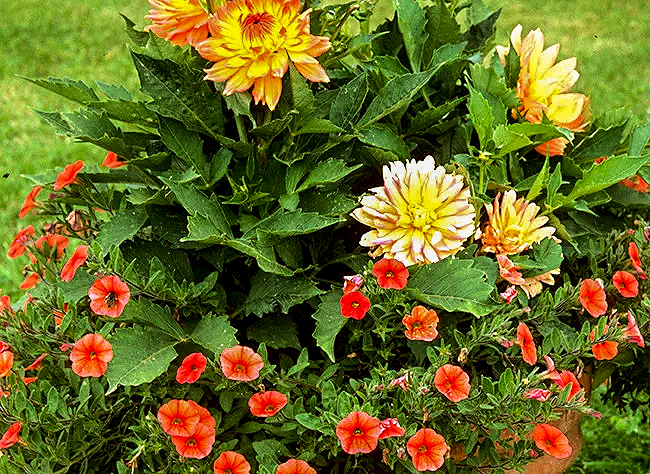
    Dahlia

    The dahlias dwarfs are perfectly adapted to growing in pots or planters. In mid-August, surface the pot over 1 cm, scraping the substrate with a fork, and fill with compost while continuing watering – the soil must remain cool – and add liquid fertilizer every day. 15 days.
    Remove faded flowers to cause new flower buds to appear and prolong flowering.

    Calibrachoa

    The calibrachoas, with their countless small flowers of petunias they are close to, will bloom until November if they receive a boost.
    No need for daily cleaning, with faded flowers falling off on their own. On the other hand, a small size, in the middle of summer, will help them to branch out and flower more beautifully. Bend off each stem by a third. Continue watering, without forgetting the fertilizer, every week, for these greedy ones.

    Diascia

    The diascias are covered with flowers from early summer, but they begin to tire. To continue flowering for the next three months, cut the clumps in half. In order not to thin out the pots all at once, stagger the cuts: one foot this week, another next week.
    Continue watering – the soil should stay cool, but not soggy – and add fertilizer every two weeks.

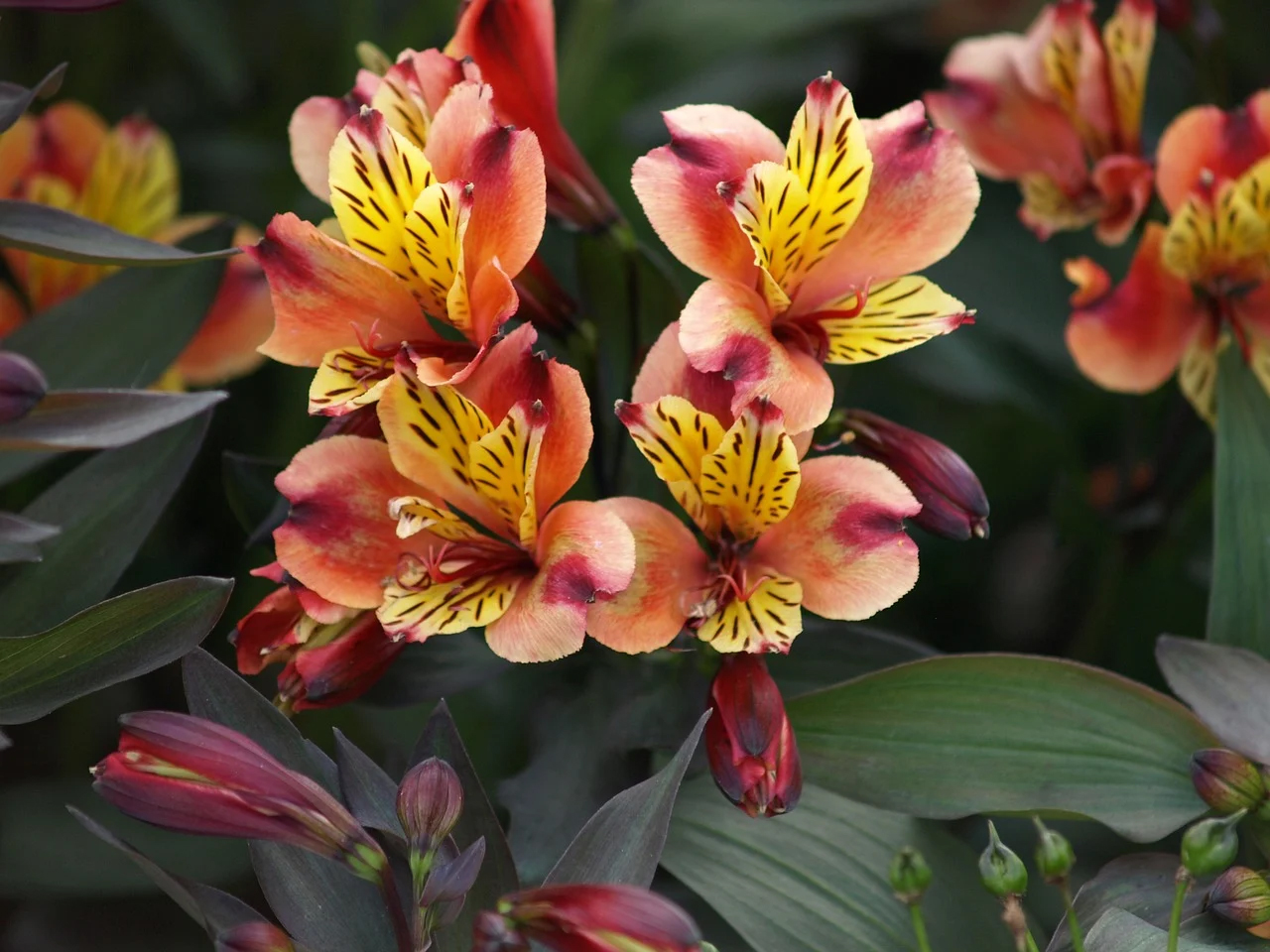
  • Alstroemeria Indian Summer (Alstroemeria): growing advice

    Alstroemeria Indian Summer (Alstroemeria): growing advice

    Purple foliage of an original beauty serves as a setting for many flowers in orange hues, here is a plant with generous flowering which will be ideal for decorating flower beds and pots! Easy to grow, requiring only minimal maintenance, Alstroemeria ‘Indian Summer’ (Alstroemeria) is simply irresistible!

    Characteristics

    Soil: drained and light
    Spacing: 70 cm between 2 plants
    Planting: in May
    Flowering: from June to October
    Exposure: sun – partial shade
    Use: full ground and pot
    Height: 50 to 60 cm

    Culture

    • Alstroemeria ‘Indian Summer’ is a new cultivar, very appreciated for its generous development, the original color of its foliage, and especially the “pep” of its flowering with flamboyant hues mixing orange, yellow and brown. Easy to grow, requiring only limited maintenance, it has all the qualities to find its place in a garden or even in a pot on a balcony or terrace.
    • Wait until all risk of frost has passed in the spring to plant this alstroemeria. In the ground, it appreciates a light, well-drained soil, even sandy or stony, or poor. It appreciates full sun or partial shade in the southernmost regions.
    • Soak the root ball in a basin of water and dig a hole twice the size of the root ball in all directions. Pour a mixture of sand and compost at the bottom before installing the plant. Recap with earth. Adjust the height so that the collar is flush with the surface of the ground. Water copiously. Regular watering is necessary for the time of recovery and in summer during hot weather. If it rains enough: no need to water. Once the plant is well established, it does little for watering and even tolerates drought.
    • In pots, choose a container pierced at the bottom. Line the bottom with a layer of clay balls, to ensure drainage. Fill the pot 1/3 full with a mixture of potting soil, garden soil, and river sand. Install the plant in the pot before filling the vacant gaps with the substrate. Water. Although this plant does not require much water, do not forget that in a pot, the substrate dries very quickly. In summer, water when the mixture dries on 3 cm and never leave water in the cup. Adding a ‘Special Flowering Plant’ liquid fertilizer every 3 weeks is sufficient to support flowering. Although hardy down to -10 ° C, the plant has deciduous foliage that disappears in winter. It is then sufficient to cut it 10 cm from the ground and then mulch the stump to protect it from the cold.
    • Overwinter the alstroemeria ‘Indian Summer’ in a pot in a frost-free location and water only when the substrate is almost completely dry. Repotting takes place in April-May at the first signs of recovery.

    use

    Alstroemeria ‘Indian Summer’ works wonder in beds or in mixed-border with the purple color of its foliage which can be admired at its true value. Orange flowers blend perfectly with bedding plants in bluish, lilac, or yellow hues to create contrast or stay in continuity. On the balcony or on the terrace, in a flared jar, it displays all its beauty!

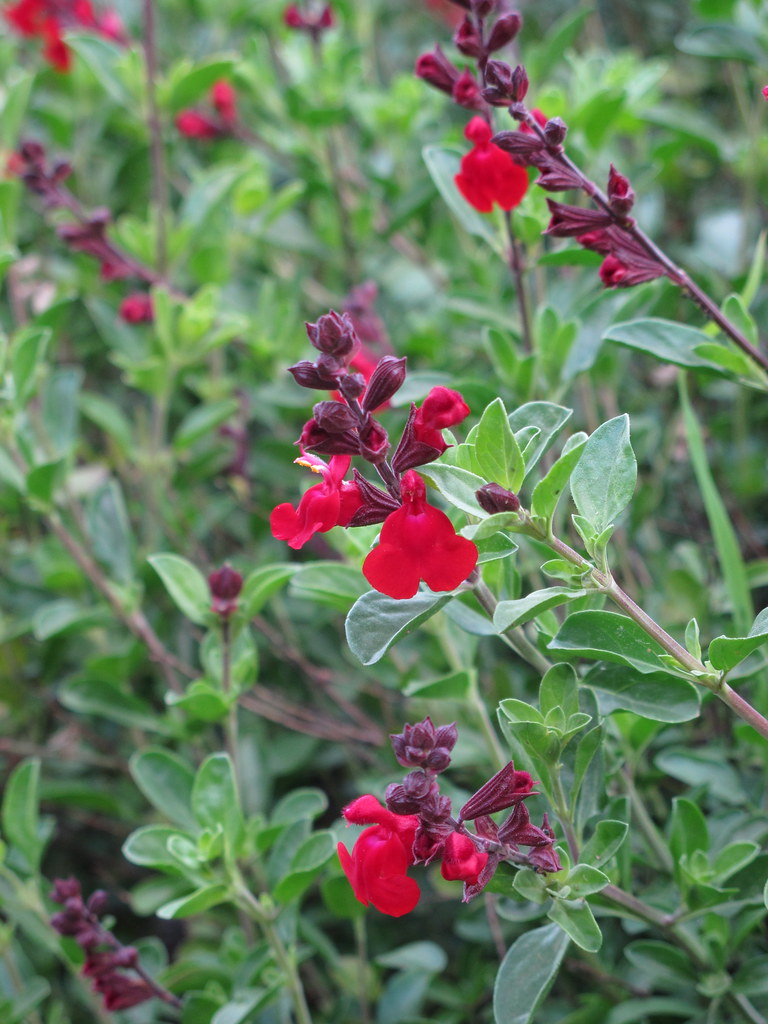
  • Mirage sage (Salvia greggii): growing tips

    Mirage sage (Salvia greggii): growing tips

    Blooming from June to October, without interruption, the Mirage sage series is available in many colors to adorn balconies, terraces, beds, and mixed borders at will. The compact and dense habit of these plants in no way detracts from the lightness they inspire. Honey-bearing, they attract pollinating insects to your garden and give off a sweet scent.

    Characteristics

    Soil: drained and humus-
    bearing Spacing: 30 cm between 2 plants
    Planting: in April / May
    Flowering: from June to October
    Exposure: sun
    Use: pot, planter, bed, border and mixed-border
    Height: 30 cm

    Culture

    The Mirage series is available from white to pink, including red and blue/purple. The compact and homogeneous habit of this perennial sage, in the mildest regions, ensures it has multiple uses in the garden as well as on a terrace or a balcony. Easy to grow, it only requires a sunny location to flower for long months, tolerating heat as long as it is watered occasionally.

    • Not very hardy, it is necessary to wait until May to plant it in the ground in the garden. Once the soil has been cleared of weeds and loosened with an organic fork, soak the root ball in the water at room temperature to hydrate it well.
    • Dig a hole twice the size of the root ball in all directions. Install the Mirage sage in the center of the hole, being careful not to bury its collar. Firm the base of the plant before watering copiously. Space the plants 30 cm apart.
    • When planting in a pot, choose a container pierced at the bottom so that the water can flow without constraint, because the plant fears constant humidity at the roots. Leave a layer of clay balls at the bottom of the pot to ensure good drainage for the same reason. Fill the pot with good commercial potting soil and place the plant in its center. Insert a dice or two of slow-release fertilizer into the potting soil. Tamp down and water copiously.
    • Level maintenance, this sage is not difficult, only a little watering will be necessary when the soil dries on 5 cm on the surface of the ground. In pots: be careful, because the substrate dries faster, especially in full sun and on windy days! Water then up to 2 to 3 times a week, without ever leaving water in the saucer. Add a liquid fertilizer ‘Special flowering plants’ every 15 days during the growth period.
    • Remove faded flowers to induce the appearance of new flowers.
    • Overwinter the frost-free pots in a bright room from the first frost to spare your sage from frost. In the softer regions, it can remain in the ground, it will then be pruned 10 cm from the ground before being mulched to protect the stump.

    use

    Compact and vaporous at the same time, Mirage sage is generous when it comes to blooming! In borders, it brings color and lightness just like in beds or mixed-border. In a pot, on a balcony or on a terrace, it gives a very natural, countryside and will attract all the butterflies of the surroundings!

  • Culture sheet: hyacinth (Abelia Chinensis)

    Culture sheet: hyacinth (Abelia Chinensis)

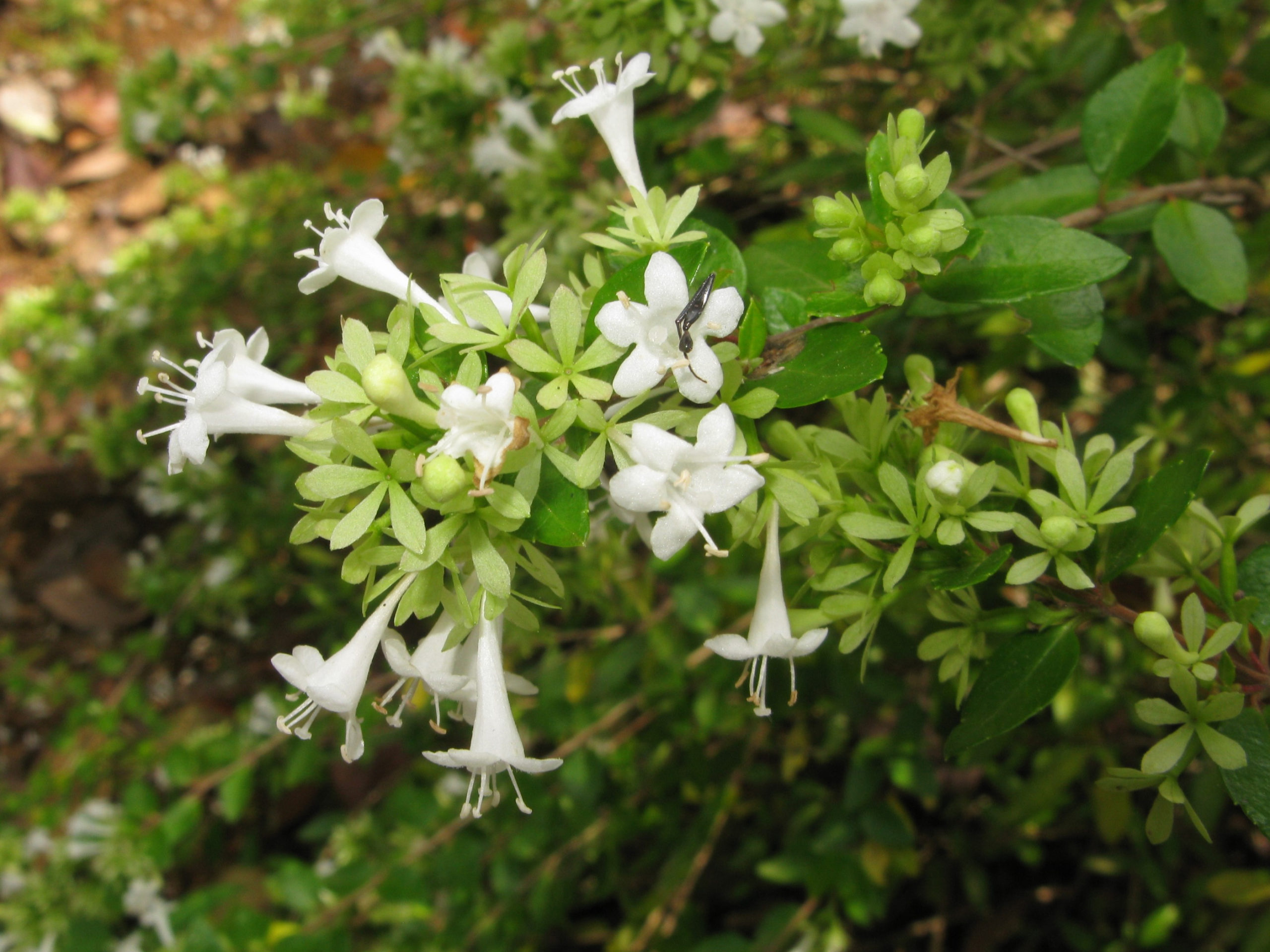
    With its pinkish white ears with a bewitching scent, Abelia chinensis accompanies the blossoms of asters and other autumn beauties.

    Few shrubs bloom at the end of the season, especially among those that attract bees and butterflies. Installed in my living hedge, Abelia chinensis goes unnoticed almost all year round, stuck between a choisya and a buddleia. But at the end of August, when his ears, composed of small panicles of tubular bells of flowers, form, we only see him, we only smell him! A scent of hyacinth. A wonder that I brush against each time I go out to the garden, making a systematic detour to touch it, smell it, and even get a small pinkish white flower. The buttons, as well as the calyces, sport a dapper old rose. These chalices are until November a charming asset, attractive even when the flowers have fallen. Because flowers have the good taste of falling, instead of withering ugly, when they have finished their life.

    I don’t understand why this shrub is so little used. It measures about 2m high and has its place as well in the natural hedge as isolated or at the bottom of a massif. If I am to believe the gardening literature, it grows well in a large container, but I have not tried … Rustic down to -10, even -12 °, it is perfect for gardens located in the south and on the coast. , especially since it supports spray well. In my corner of Brittany, its cute heart-shaped leaves, thick, shiny, and nicely ribbed, turn matt and bronze at the end of autumn.

    Easy to grow

    This abelia loves the sun but tolerates partial shade. All soils are suitable for it, with a preference for those that are drained. Plant it in the spring or fall, mixing compost with the original soil. Water the summer following planting. It hardly needs pruning, except to possibly help it branch out in the first year and to remove dead wood or disturbing branches. It perfectly tolerates drought and is not very sensitive to diseases or parasites.

  • How to flower a fence with annual climbing flowers

    How to flower a fence with annual climbing flowers

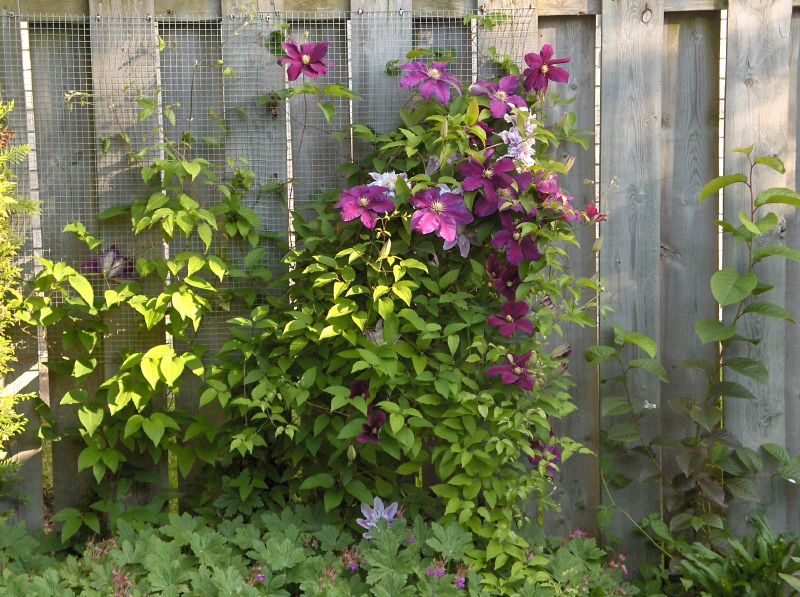
    How to quickly create a privacy screen with annual climbing plants? They are sown in the spring in the ground, develop in summer then die in autumn.

    How to set up a hedge in your gravel yard?

    In a yard stabilized with pebbles, the establishment of a hedge requires digging a deep trench. On the other hand, without damaging the ground, it is possible to create a barrier between the two spaces by unrolling a wire mesh maintained by posts.

    What soil does it take to make a seedbed?

    To sow a hedge, the earth must be composed of topsoil mixed with compost to a thickness of 20 cm. This will make it possible to cultivate ipomeas, nasturtiums, and sweet peas during one season, which are sown in pockets of 3 to 5 seeds from April.

    Flowered wire mesh: sow large-flowered ipomeas, volubilis

    The large, funnel-shaped, very bright flowers of the ipomea volubilis open in the morning and close in the afternoon. They can remain closed during the day in cloudy weather or when the nights are longer than the days (autumn equinox).
    Ipomes have very many thin, twining stems covered with heart-shaped, light green satin leaves. Its large, pure blue flowers are funnel-shaped.
    The many varieties display various colors: sky blue variegated with white, dark red …

    Flowered wire mesh: sow sweet peas

    Annual or perennial, the sweet pea presents twining lianas which are covered with butterfly-flowers in tender colors and some of which have an enchanting scent.
    The sweet peas can climb to over 2 meters. In this category, there is a perennial sweet pea ( Lathyrus latifolius ) which grows again every year in the same place. It blooms from May until July. Its carmine-pink flowers are not fragrant.
    The annual sweet pea ( Lathyrus odoratus ), has fragrant flowers which bloom from May until September, its flowering is longer. It displays various shades of mauve, purple pink, red, purple, blue …

    Flowered wire mesh: sow climbing nasturtium

    At the foot of a fence, prefer climbing nasturtiums ( Tropacolum majus ). Whether dwarf or climbing, nasturtiums always have the same types of flowers with 5 rounded yellow, orange or red petals. Nasturtiums are also used as ground cover.

    How to sow ipomeas under shelter?

    Ipomes, sweet peas and nasturtiums are grown directly in the ground but if you want to obtain an early flowering, the seeds must be sown under a shelter from March by placing as for the pockets, 3 seeds per pot.
    Then the young shoots are planted at the foot of the fence after any risk of frost.

  • How to grow Mauritanian mallow in the garden?

    How to grow Mauritanian mallow in the garden?

    Most mallows grow near farms, in vacant lots, or in landfills, wherever they find soils rich in nitrates.

    Description of mallow

    It is also called Mauritanian mauve, large mauve, woodland mauve, sylvestre mauve.
    Mallow can be confused with lavatera or hollyhocks. To recognize them, you must examine its flower: it has a pink corolla with 5 indented petals at the edge in the shape of a heart, a calyx with 5 lobes lined with a calicle with 3 leaflets, and numerous stamens united by their net in a mass prominent, 12 stigmas and later 12 carpels arranged in a crown in the fruit.

    Flower vocabulary:

    The corolladesignates the part of the flower formed by all of its petals,The chaliceconsists of all the sepals.Caliclerefers to the leaves, usually green and small in size, which lie between each sepal to form a double calyx to protect the flower.The stigmais the end of a carpel forming the pistil of a flower. The function of the stigma is to capture the pollen.The carpelencloses the eggs. It turns into fruit after fertilization.

    Characteristics of mallow (malva sylvestris)

    The purple of Mauritania, an annual, biennial, and perennial are considered. It can reach 2 meters in height with ivy-shaped leaves. It is often present in the seeds of field flowers.
    Its flowers are honeyed and very attractive to a multitude of insects. They appear from June to September.

    How to cultivate mallow?

    Mallow prefers partial shade at the edge of woods in limestone and clay soils provided they are not too compact.
    It is particularly sensitive to rust which makes its leaves unfit for consumption.
    Mallows are sown directly in place among other field plants from April and bloom in July. The first year the mauves hardly exceed 1 meter in height. It can then reappear in the second and third years as a perennial.
    Sowing in July-August, the mallows do not flower until the following year and present a greater development than the first year.

    Using mallow in cooking

    The dried flowers and leaves are used in medicinal preparations. In cooking, its leaves can be eaten cooked and raw in salads when they are very young. Flowers are decorative and can add color to dishes.

  • How to sow true lavender: the right actions

    How to sow true lavender: the right actions

    Lavandula angustifolia or more simply officinal lavender. Here we will find out how to easily sow it. It should not be confused with lavandin which is a hybrid between true lavender and asp lavender which is reproduced exclusively by cuttings.

    Harvesting lavender seeds in autumn

    The seeds were collected after winter, lodged in the dried inflorescences. In principle, the seeds are harvested in autumn. True lavender hardly exceeds 50 cm in height, while lavandin can climb much higher.

    Sowing in March

    After the harvest, that is, in March, the small black seeds were sown in a bucket filled with a mixture of universal potting soil, garden soil, and a little sand.
    The goal is to obtain a rather lean and light mixture. Never use rich potting soil for lavender seedlings. In March, the sowing was able to take advantage of the heat which favored the emergence of a small part of the seeds.

    Sowing in June

    If you do not have a heated greenhouse, wait until June to sow the lavender seeds, always according to the same principle.
    Emergence can be very long and some seeds can wait an additional year to germinate, which is often the case in nature.

    How to sow your lavender seeds?

    1. Distribute the seeds on the lightly packed substrate.
    2. Cover the seeds with a thin layer of soil.
    3. Pack the seedbed.
    4. Dip the cup to moisten it by capillary action.
    5. Place a small canvas on the seedling to prevent drying out (wintering veil).
    6. Lavenders can take several weeks to germinate so you have to be patient.
    7. Store lavenders in their pot in the heat for at least 1 month if they are not very dense.

    Transplant the lavender

    1. Transplant the young lavenders in pots with a light soil and slightly richer than the soil for seedlings.
    2. Keep the soil moist until the next repotting in a larger pot 12 cm in diameter or plant directly in the ground in full sun. Keep a space of 50 cm between each plant. The ideal is to wait until the following spring before considering a permanent planting.

    True lavender grows above 800 meters in elevation in dry, stony areas and in limestone soil. It tolerates the cold very well when the soil is well-drained. It is the ideal plant to install in a rather dry slope. On the other hand in wet and clayey soil, it will disappear in the first year of culture. True officinal lavender is particularly popular in a raised vegetable patch.

  • How to easily cut hyssop in a smothered way?

    How to easily cut hyssop in a smothered way?

    If the hyssop is often cited in holy books, it is sorely lacking in gardens, and yet this small shrub with multiple properties is very decorative with its blue flowers. Presentation of this Mediterranean plant and its multiplication by cuttings.

    The hyssop ‘ Hyssopus officinalis ‘ also called “sacred herb” is an aromatic perennial plant which grows in the rockery of the poor soils of Haute Provence. It is part of the same family as lavender hence its resemblance. She appreciates the limestone and the heat. It is the opposite of heather earth plants. In short, it is a rock garden plant and full sun.

    Flowers and flowering of hyssop

    Smaller than lavender, it could be confused with its spikes of blue-purple flowers that bloom from June to September. Very melliferous, it attracts many useful insects in the garden. Smaller than lavender, it hardly exceeds 30 cm.

    Recognize the leaves and foliage of hyssop

    Hyssop, from the labiate family, has square stems with shiny, lanceolate green leaves whose strong smell is very pleasant. In small quantities, its leaves can flavor salads. Hyssop is used as an infusion to clear the airways.

    How to cut hyssop: step by step

    In the spring I attempted a seedling which turned out to be unsuccessful due to damping-off, a microscopic fungus that decimated the young seedlings. The failure may also be due to too acidic seed soil.
    This time, to make my cuttings I will not fail to use my own substrate with a mixture of sand and a pinch of wood ash.
    Cutting the hyssop:

    1. Fill 10 or 12 cm pots with the substrate.
    2. Water the pots.
    3. Detach the cuttings at the level of a stem.
    4. Gently remove the leaves from the bottom.
    5. Prick the cutting into the wet substrate.
    6. Cover with a clear bottle.
    7. Keep moist until rooting.

    Transplanting the cutting in the garden

    Place the cuttings before the end of summer in well-drained soil, ideally in a raised garden patch. Health
    tip: In infusion, hyssop leaves are beneficial for the bronchi

  • Install straight and drooping geraniums on a balcony

    Install straight and drooping geraniums on a balcony

    It is possible to flower a balcony with a multitude of flowers more or less resistant to shade, sun or drought. Know that to create a blooming and resistant balcony, the sure value remains the geranium.

    The different varieties of geraniums

    Geraniums were for a time wrongly classified as obsolete plants. In geraniums or rather pelargoniums, there is an incredible amount of decorative and solid varieties to adorn planters.
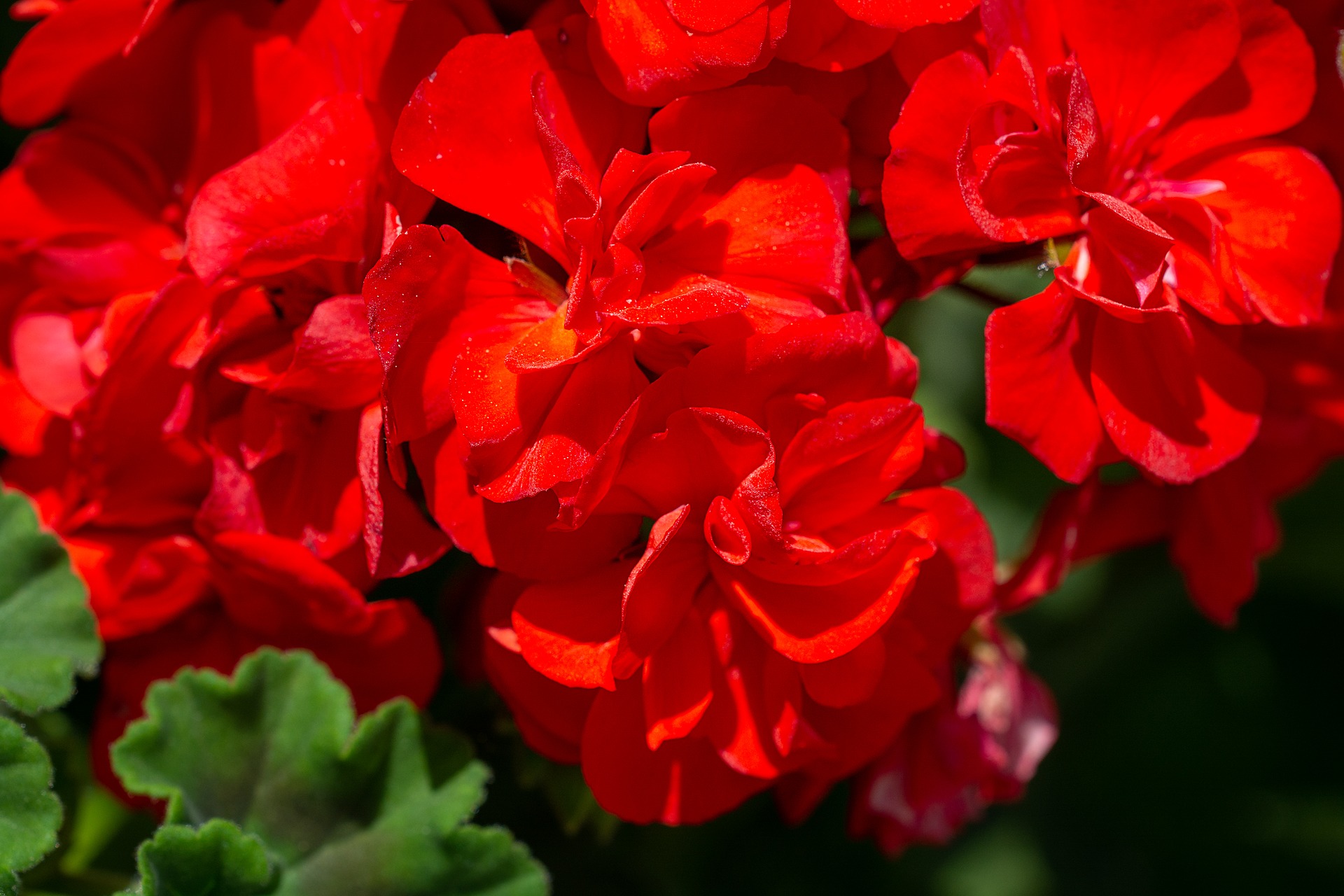
    It is no coincidence that certain species bear the popular name of “king of the balconies” . Although this is the simple red ivy geranium, one could easily call all geraniums “king of the balconies”.

    When to plant geraniums on the balcony?

    Unlike in the open or in a bed, geraniums in planters installed on a balcony are easier to shelter from the cold. In case of frost, they can be sheltered from the cold.
    They can take place on a balcony from April.

    What exposure for geranium?

    Geraniums love the sun , however, they can also be placed in partial shade. We avoid the northern exposure not that they will not develop but the flowers will be less abundant . Instead, reserve the shade for fuchsias or impatiens.

    Which planter to choose?

    If terracotta planters are more aesthetic, they have the disadvantage of increasing the weight on a railing. In addition, in the event of a fall they will be more dangerous for passers-by.
    Plastic planters are fine as long as they are strong enough not to warp. It will also be necessary that the volume of potting soil is sufficient for the geraniums to take root properly .
    Planters should be drilled with drainage at the bottom. Drainage can be done with clay balls or chippings placed on the drainage holes.

    Choose the right land

    You can make your own geranium soil with a mixture of universal soil, compost and garden soil. The recipe for geranium soil can vary depending on the nature of your garden soil. Although clay retains water, in excess it can be harmful to geraniums .
    Otherwise, you can find geranium soil everywhere, which is used pure, without adding soil or compost.

    Planting geraniums in planters

    Before planting, remove all advanced inflorescences and keep only the flower buds at the start of coloring. Remove all yellow leaves. Soak the pot for a few seconds in water then delicately remove the geranium. The white roots should go around the pot.
    The geraniums or zonal rights are placed at the back of the planter and ivy geraniums in front. No need to break up any clods or unravel the roots. This operation is even harmful for the recovery of geraniums. Pack around the geraniums then water copiously the first time.

    Install saucers under your planters

    The saucers allow you to conserve the irrigation water and avoid watering too regularly.
    Then wait a week before watering so that the roots go in search of moisture and occupy the entire space of the planter.
    If the temperatures are cool, water preferably in the morning and vice versa if it is hot, water the planters in the evening.

    What to do with geraniums in the event of a rainy spring?

    Despite rainy, stormy and very watered periods, a balcony of geraniums can very quickly become flowering again, provided that all the faded flowers or not are removed. During spring and summer, a balcony can suffer from meteorological hazards, starting with a hail storm, wind or more simply a long rainy period. The weather is gray and the temperatures are cool … in short, the weather is not there for the geraniums.

    What to do in the rainy season?

    Start by removing all the faded flowers as well as those barely blooming. The best technique is to remove them with the petiole up to the stem. If the weather forecast is still gloomy for several days or if you are away for a week, you can also remove the buttons at the start of coloring. This method makes it possible to avoid diseases and especially to strengthen the geranium plants. A removed button is immediately replaced by three new inflorescences which will emerge from the geranium.

    Remove the yellow leaves

    As long as they are located at the foot, there is nothing to worry about: it is the old leaves lacking in light that are disappearing in favor of a new generation. Only in wet periods can they rot and devalue the geranium. With the sun, the problem does not arise.

    Empty the saucers

    Geraniums are drought tolerant very well , but excess water prevents the roots from developing and can even cause them to rot. As a result, the geranium turns yellow and no longer blooms.

    Wait for good weather to give them fertilizer

    If the geraniums are not spent because of bad weather, it is useless to add fertilizer which could also cause a “liver crisis”. As soon as the weather is more favorable, add half-dose fertilizer the first time, then increase as soon as the geraniums regain their vigor.

    What if her geranium has broken?

    On a balcony, we are not immune to a gust of wind, an unfortunate gesture or a thunderstorm …
    Above all, don’t panic, a branch broken by a gust of wind can be cuttings to give birth to several geraniums which from the first year can overflow a small planter.

    1. Fill a planter 2/3 full with a cutting soil or a universal soil extended with sand and a little garden soil.
    2. Soak the planter.
    3. Prepare the cuttings by detaching them from the main branch, removing the flowers, buds and leaves from the bottom.
    4. Prick each cutting without pushing them too far in 1 to 2 cm.
    5. Cover the cuttings with a wintering veil for at least a week.
    6. Place a saucer under the planter and put it in partial shade.
    7. Water under the saucer once or twice a week depending on the temperature.
    8. Rooting begins about two weeks after transplanting.
    9. no fertilizer.

    Result of geranium cuttings

    Three weeks after planting

    The king geraniums of the balconies are in bloom which proves the success of the rooting of the cuttings. It is still too early to save the first flowers. They must be removed as well as the buds so that the young cuttings can gain strength.

    Remove weeds

    During these 3 weeks, weed seeds have also germinated in the middle of the rooted cuttings, this is the sign that the substrate is suitable for reproduction. It only remains to do a little weeding to prevent the competition from taking hold.

    Remove the yellow leaves

    In humid periods, it is important to remove the leaves, which turn yellow as they go, as they can cause rotting. The first yellow leaves are not a sign of disease, it is only a reaction to the cuttings.

    Blow the cuttings of geraniums

    This operation is called “blowing” by horticulturalists, it is in fact a pinching of the end of the cutting between the thumb and the index finger to allow the cutting to emit several stems and to be more strong thereafter.
    Make a watering sparingly as sunshine and heat. Young cuttings should not lack moisture at this stage, otherwise the first roots will be lost. Be careful, excess water is even more harmful than lack of water.

    Do not give fertilizer

    After three weeks, it is still a little early to fertilize the cuttings. At this stage, there are still fertilizer residues in the substrate for the young ivy geraniums (Pelargoniums peltatum) to use. Wait 1 additional month to start adding diluted fertilizers.

    How to fertilize geraniums?

    When to fertilize a geranium?

    A geranium gardener is a marathon runner who must cross the finish line in great shape and without incident. Before starting, the rider must be in good health. The plants chosen must first be healthy and vigorous .

    Moderate fertilization during repotting

    At the start, the athlete takes care of himself without forcing too much. He runs while saving his strength. When repotting, the geraniums are planted in a suitable substrate that is neither too rich nor too poor.

    Balanced watering

    The first waterings are to be given sparingly, we do not water a plant that is bathed in water with yellow leaves. It is drowning assured.

    Little cravings at the start of summer

    After several weeks, our geraniums start crying out for famine. No need to wait for the first signs of fatigue. You must add a granulated or liquid fertilizer.
    But be careful without excess, the marathon runner does not yell at the end of 10 KM, he only takes a small snack. Geranium also prefers a fertilizer diluted by half so as not to burn its roots. Small snacks and water on a hot day is the recipe for finishing the race in great shape.

    Fertilize little but regularly

    You can add fertilizer to each watering with solutions divided by 4 for the first fertilization and then by two for the following ones.

    Prune the first flowers

    In order to facilitate new growth of buds and consolidate the plant, we will remove the faded and open flowers from the geraniums at the beginning of the season or just after their cuttings.