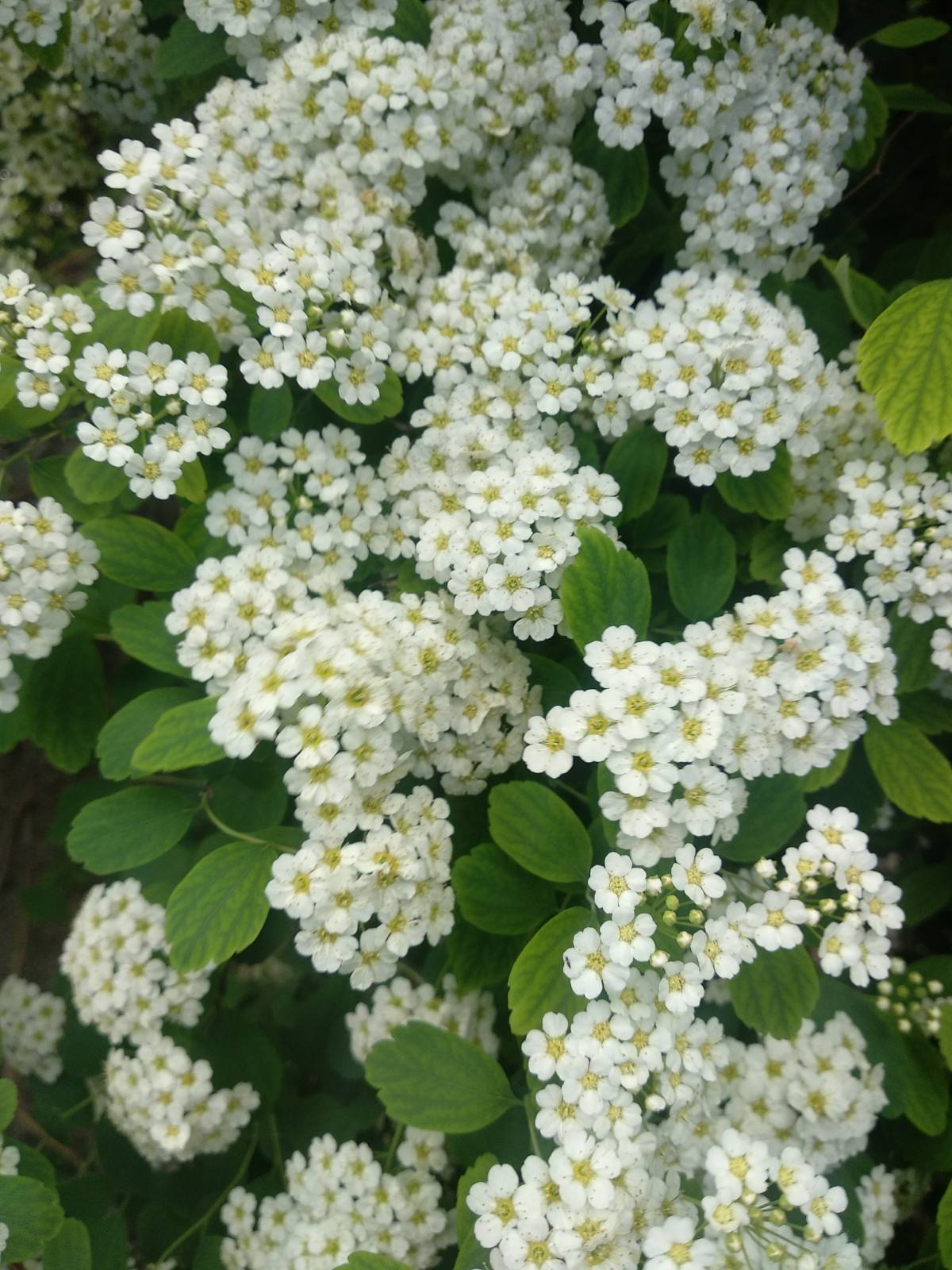
Japanese spirea (Spiraea japonica):
Botanical name:
Spiraea japonica (syn. Spiraea x bumalda)
All common names:
Japanese spirea
Family (English):
Rosaceae
Family (Botanic):
Rose
Tree or Plant Type:
- Shrub
Native Locale:
- Non-native
Landscape Uses:
- Container,
- Foundation,
- Hedge,
- Massing,
- Mixed border,
- Patio/sidewalk,
- Specimen
Size Range:
- Medium shrub (5-8 feet),
- Small shrub (3-5 feet),
- Low-growing shrub (under 3 feet)
Light Exposure:
- Full sun (6 hrs direct light daily),
- Partial sun/shade (4-6 hrs light daily)
Hardiness Zones:
- Zone 4,
- Zone 5 (Chicago),
- Zone 6,
- Zone 7
Soil Preference:
- Moist, well-drained soil
Tolerances:
- Occasional drought,
- Alkaline soil,
- Clay soil
Seasons of Interest:
- mid spring,
- late spring,
- early summer,
- midsummer,
- late summer,
- early fall
Flower Color & Fragrance:
- Pink,
- White
Shape or Form:
- Mounded,
- Multi-stemmed,
- Round
Growth Rate:
- Fast
More Information:
Size & Form
Spirea comes in variable sizes , depending upon cultivar
Typically 2 to 3 feet high and 3 to 5 feet wide, but some cultivars can go up to 5 to 6 feet high and wide.
Falls into two categories, spring-blooming and summer-blooming with white or carmine-pink flowers
Tree & Plant Care
Compact, mounded shrubs
Requires well drained soil, intolerant of wet sites.
Best in full sun, but many will grow in light shade.
All spirea benefit with a periodic pruning to to keep plants in shape and initiate new growth.
Can be cut to the ground and will grow back from the roots.
Flowers on new wood, prune in early spring; pruning after flowering often will promote a second sporadic flush of flowers.
Tolerant of aerial salt spray
Disease, pests, and problems
Wet soils promote root rots, powdery mildew, leaf spots
Native geographic location and habitat
Japan, Korea, China
Attracts birds, pollinators, or wildlife
Butterflies are attracted to the summer flowers
Bark color and texture
Multiple, brown, thin and twiggy stems
Leaf or needle arrangement, size, shape, and texture
Alternate, simple leaf, 1 to 3 inches long and 1 to 2 inches wide, serrated or toothed leaf margins.
Depending upon cultivar, new leaves emerge reddish-orange or with a pink tinge, changing to medium green for summer and back to a orange-red fall color.
Flower arrangement, shape, and size
Flowers on new wood. Most are summer blooming, but a few cultivars bloom in spring.
Flowers are 3 to 4 inch, flat clusters (corymbs) of white to deep pink in June through August.
Fruit, cone, nut, and seed descriptions
A dry, brown follicles, persistent through winter, not ornamentally significant.

Available in a wide array of cultivars, Japanese spirea offers the most variety in terms of size, flower color, and leaf color. It produces abundant clusters of white, light pink, rosy red or purple flowers that adorn the branches in late spring and summer. Sizes range from dwarf types, such as ‘Little Princess’, to larger shrubs that grow to 5 feet or taller. Most varieties have finely textured green or blue-green leaves, but some cultivars have yellow or chartreuse foliage that changes color throughout the season.
When to plant:
Spring or fall
Where to plant:
Make sure you have chosen a site that drains well and receives at least 6 hours of sun each day.
How to plant:
Dig a hole that is twice as wide as the container and just as deep. Remove the plant from its container and gently loosen any tightly wound roots. Place the plant in the hole and backfill with the excavated soil. Water thoroughly to settle the soil. Cover with a 2-3” layer of mulch, keeping it away from the stems.
Spacing:
Space spirea plants 2 to 15 feet apart, depending on the expected mature width of the plant and the application. To create dense, full spirea hedges, you can space your plants more closely together as long as you give them some elbow room.
SPIREA CARE
Fertilizing:
Spireas are not heavy feeders, so they’ll do fine with an application of controlled-release fertilizer in early spring, which should provide enough sustenance for the entire growing season.
Watering:
Keep newly planted spireas well-watered until they become established. Mature spireas are drought tolerant and only need watering when the soil becomes dry. Spireas don’t like wet feet, so avoid oversaturating the soil.
Pruning spirea:
Don’t hesitate to give spireas a liberal pruning, if needed, to maintain their shape and to remove dead or broken branches. This is best done in late winter or early spring while your plants are dormant. Giving spireas another lighter pruning after they bloom in spring or early summer will promote new blooms and reinvigorate foliage growth. Because spireas are fast growers, they will recover quickly.
Pests and diseases:
Spirea generally aren’t bothered by any serious pest or disease problems. However, they are related to roses and can be susceptible to the same pests and diseases as roses, such as leaf spot, powdery mildew and aphids.