Category: Green plants

Discover the world of green plants that bring freshness, beauty, and life to any space. Learn how to grow, care for, and maintain leafy indoor and outdoor plants, from easy-to-grow varieties to decorative favorites. Explore tips for healthy growth, proper watering, and creating lush, vibrant greenery in your home or garden.

  • How to grow the Christmas cactus or Schlumbergera

    How to grow the Christmas cactus or Schlumbergera

    This epiphytic plant in nature – which grows on another plant without parasitizing it – is perfect for flower suspensions.

    Plant: a technical sheet of the Christmas cactus

    Latin name: Schlumbergera truncata
    Flowering: winter flowering, 6 to 8 weeks
    Exposure: strong light without direct sun
    Temperature: 15 to 20 ° C
    Watering: 1 time per week
    Use: Indoor plant, suspension 
    Soil:  light, enriched with coarse sand or soil for cacti Succulent plant /  Cactaceae

    Where to place the Christmas cactus to have a good flowering?

    The good location of the Schlumbergera

    The Christmas cactus is a houseplant for which the ideal location is not easy to find. It does not tolerate temperatures above 20 ° C and below 10 ° C very poorly, and it must be avoided drafts and passage areas. When you’ve found the spot, don’t touch it anymore, as it hates being moved once it starts flowering. On the other hand, it is an easy plant if it finds its place.

    The schlumbergera will thrive outside, in summer, in a shady location and well sheltered from the wind.

    The Easter cactus

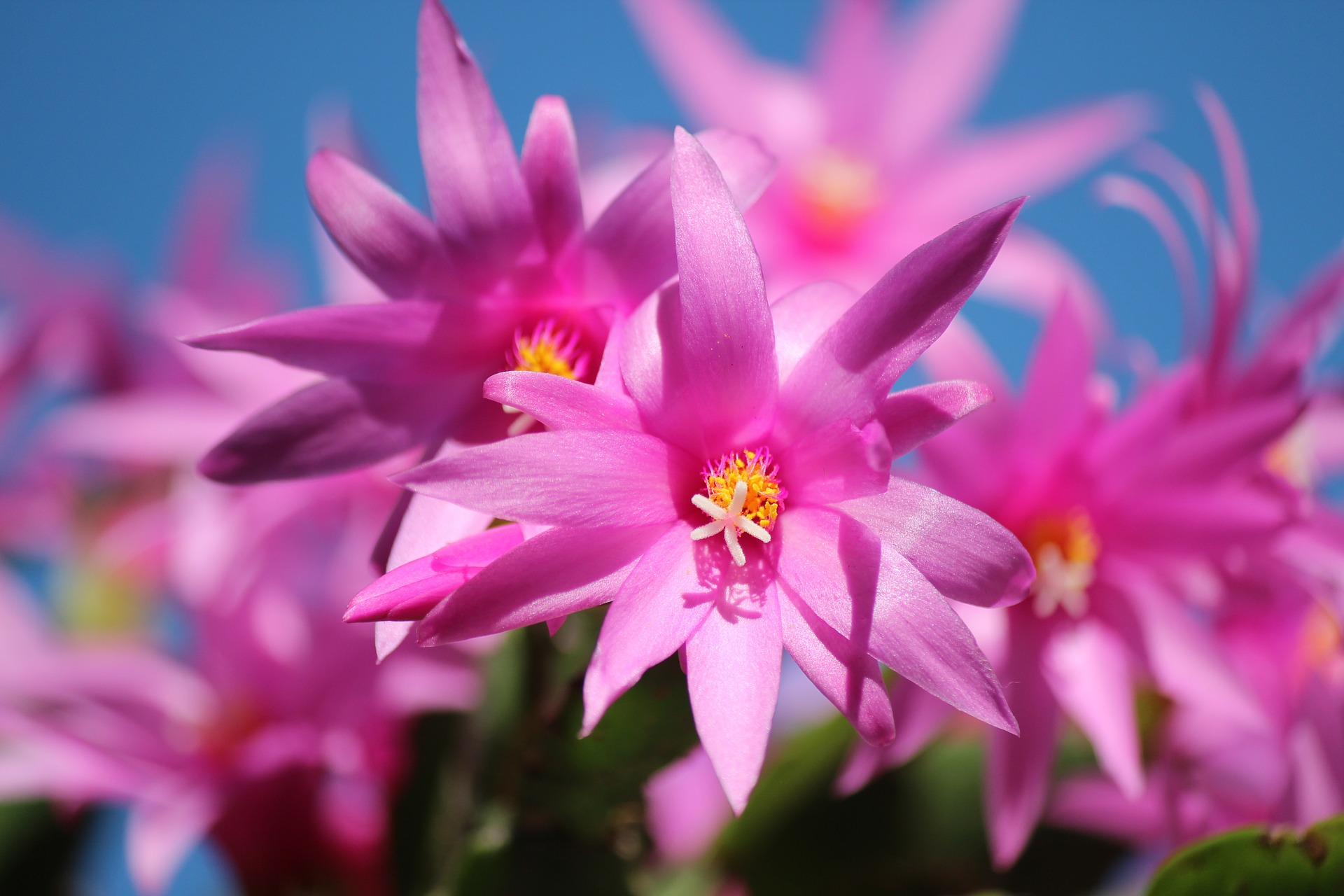
    Easter cacti, species and hybrids of the genus  Hatiora , are other epiphytic cacti with the same cultivation requirements as the Christmas cactus. They bloom in spring in shades of pink, orange or purple. Keep them cool (15 ° C) in winter to stimulate their flowering.

    When and how to water the Christmas cactus?

    One watering per week is sufficient for the Schlumbergera. It must be regular but avoid excess water at all costs. Unlike other cacti, the Christmas cactus appreciates a humid atmosphere, do not hesitate to spray its foliage.

    When and with what fertilizer to fertilize Schlumbergera

    Optional during flowering, a flower plant type fertilizer can be useful between April and September.

    How to bloom again and maintain a Christmas cactus?

    Repotting Schlumbergera

    After the first bloom, if this Schlumbergera seems very cramped in its pot (when the roots are visible around the potting soil), repot the Christmas cactus in a mixture of potting soil, river sand, and garden soil.

    In summer, take the plant out in a shady place, in a tree for example, where it would regain its natural epiphytic position.

    Winterizing the Christmas cactus

    Bring in the Christmas cactus before the first cold.
    To trigger flowering, install your houseplant for two months in a bright and cool room (around 15 ° C), unlit at night so that it enjoys darkness as long as in nature. Almost do not water.
    When the first flower buds appear, return the Schlumbergera to the same conditions as those in which it flowered the previous year. You will keep it that way for fifty years!

    Why do the buds of the Christmas cactus fall off?

    The Christmas cactus blooms again every year, provided it is left to rest for two months before flowering, in a place where it enjoys long nights without lighting.
    Suddenly falling flower buds can be the result of moving the pot or changing exposure during the Schlumbergera flowering period.

    When and how to cut Schlumbergera

    The Christmas cactus is cut at any time of the year, except during flowering.

    • Cut 2 to 4 segments from the ends of the stems.
    • For healing, let dry for a few hours.
    • Prick the cuttings in the same mixture as for repotting.

    The flowers appearing on the stems of the previous year, it is not advisable to take too much.

  • How to plant and maintain caladium

    How to plant and maintain caladium

    This pretty tuberous plant produces stunning, richly colored leaves that it sheds in October. The bulb is then kept in the cellar. The end of winter sees its revegetation.

    Materials needed for planting caladium

    • pot
    • leaf mold
    • blond peat
    • sprayer
    • rainwater

    Tip:
    Caladium is a plant whose colors stay vivid in soft light. So place your pot behind a curtain so that the leaves do not receive direct sunlight. The plant is also afraid of drafts.

    Good to know:
    Do not keep your tubers too long. Replace them every three or four years to keep plants with lively foliage.

    Check the tubers

    If you have kept tubers from the previous year, check their health status. They should be firm and free from all traces of the disease.
    Get rid of their dry or damaged envelopes. Only retain those with a bud.

    Prepare a pot

    • Take a pot at least 20 cm in diameter.
    • Place a shard over the water drain hole.
    • Fill with a mixture of equal parts of peat moss and sifted leaf soil.
    • Add a little crushed bark to lighten everything.

    Plant the tubers

    • Plant two or three tubers.
    • Cover them with a little potting soil.
    • Tamp lightly.
    • Sprinkle in fine rain, with non-calcareous water, previously stored at room temperature.

    Place the pot in the heat

    • Install the pot near a heat source. It needs a minimum of 22 to 24 ° C for the vegetation to start.

    The top of a radiator is ideal.

    • Make sure to keep the soil always moist, but without exaggeration, because fearing excess water, the tubers will rot quickly.

    Fertilization

    Add half a dose of liquid green plant fertilizer every two weeks, from May to September.

    Watering

    Adjust water to the development of the leaves: very little in spring, plentiful in summer, reduced in autumn, and none in winter. Place the pot in a saucer filled with wet clay balls. Maintain 2 cm of water, never spray the leaves.

    Gardener’s advice

    Appreciated for its large leaves tinged with green, pink, red, and cream,  caladium grows best exposed to the west in subdued light. It fears direct sunlight, but too much shade makes its colors fade. He does not like drafts. A veranda, less dry than an apartment, suits him well.
    The deciduous leaves fall in autumn, then it is time to put caladium to rest for the winter.

  • How to properly grow begonia maculata

    How to properly grow begonia maculata

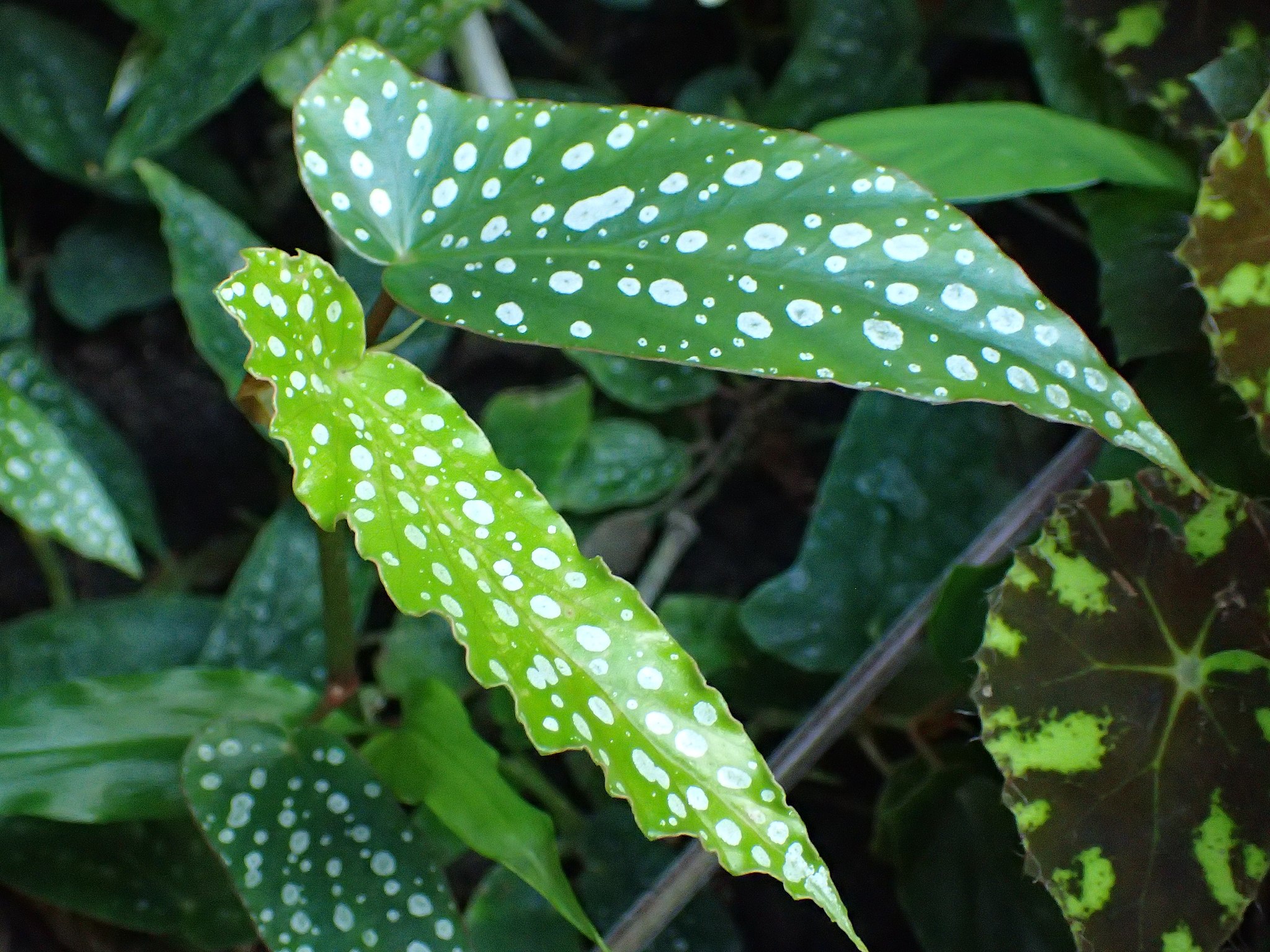
    With its smooth, dark green foliage speckled with white, Begonia maculata is a magnificent houseplant. When it blooms, it develops small, pale pink flowers. Native to South America, Begonia maculata thrives indoors or on a veranda. How to cultivate and maintain it?

    Technical sheet

    Latin name:  Bégonia maculata
    Family:  Begoniaceae
    Size:  60 cm to 1.50 m in height
    Planting:  Spring
    Exposure:  Part-shade space without direct sunlight
    Soil: Rich soil for indoor plants
    Watering :

    • Spring: once a week
    • Summer: once or twice a week
    • Fall / Winter: once every 10 to 14 days

    How to grow Begonia maculata?

    Begonia maculata, also known as bamboo begonia or tamaya, is an easy to grow houseplant. Coming from the tropics, it quickly adapts to living in an apartment or on a veranda. The tamaya is distinguished by its asymmetrical green foliage spotted with white and its thick stems.
    The plant easily develops a temperature between 15 and 25 ° C.

    The ideal season to repot Begonia maculata is spring. It thrives in a bright space, but avoid exposing it to direct sunlight. If bamboo begonia has poorly developed foliage, it is most likely due to a lack of light. It will then be necessary to bring it closer to a source of light.

    Easy to grow, Begonia maculata is not demanding in terms of planting. To grow successfully, just follow these few steps:

    1. Take a container as wide as it is deep, and pierced with holes to ensure drainage;
    2. Install a layer of clay balls at the bottom;
    3. Use a fertile soil for indoor plants;
    4. Handle the stumps delicately so as not to break the roots;
    5. Cover with substrate;
    6. Water copiously.

    After successful flowering, bamboo begonia rests and requires a cooler environment, a temperature of around 15 and 16 ° C to be able to flower again.

    How to water begonia maculata?

    Begonia maculata needs good humidity to develop. However, although it does need moisture, it does not appreciate spraying directly on its foliage and flowers.
    Watering should be done sparingly to prevent rotting of the roots or blackening of the leaves. The frequency of watering Begonia maculata depends on the seasons:

    – During the spring period, weekly watering is more than sufficient. Water at room temperature is recommended to avoid thermal shock at the roots.

    – During the summer period, the water needs of begonia maculata increase. It is advisable to water the plant copiously once or twice a week.

    – During the winter and autumn periods, its water needs decrease because its growth practically stops. The ideal is to water once every 10 to 14 days when its substrate is dry to several centimeters deep.

    – In dry weather, it is possible to install a saucer of clay balls bathed in water under the pot to bring a little humidity to the air.

    Bamboo begonia sometimes needs to be staked to prevent its stems from falling or breaking. It is advisable to prune its damaged or dry leaves and flowers.

    What fertilizer should begonia maculata be given?

    To ensure the good development of begonia maculata, a supply of fertilizer is essential.
    A special houseplant or flowering plant fertilizer is recommended. A contribution every 15 days is essential between the months of April and August for a successful culture. In winter, this contribution is unnecessary and risks exhausting the plant.

    How to cut Begonia maculata?

    The cuttings of Begonia maculata is as easy as planting. To do this, it is essential:

    – To wait for spring or the beginning of summer;

    – Collect a section with at least 3 leaves;

    – Let it soak in water ;

    – Wait for 2 to 3 weeks until the roots come to life;

    – Wait until the roots reach 2 to 3 cm before transplanting the cuttings.

    How to make Begonia maculata bloom again?

    A plant that thrives perfectly indoors, begonia maculata is beautiful when it blooms.
    Its small flowers grow like a cluster in the axils of its leaves. This cluster of flowers is usually pink or white. It enhances the decorative side of begonia maculata.
    To prolong this flowering, it is advisable to remove and prune faded flowers as much as possible. A regular supply of fertilizer is also required to feed Begonia maculata properly and facilitate its flowering.

  • Transplant the baobab

    Transplant the baobab

    This original plant is sown at the beginning of the year. When the young plants are sufficiently developed, transplant them. Then install them in a veranda or near a window.

     Material:
    pot
    shard
    potting
    soil garden soil
    sieve
    watering can

    Advice:
    The baobab does not require very much water. Do not let the growing medium dry out, however, watering often in summer, little in autumn and spring, and hardly any in winter.

    Good to know:
    As your baobab grows, repot successively, just when necessary, every two or three years. Use the same mixture and each time choose a pot with a diameter of 2 to 4 cm larger.

    Choose a pot

    When young plants are well developed, they should be given more space for their growth. Choose pots about 10 cm in diameter in the bottom of which you place a shard, above the water drainage hole.

    Prepare a potting mix

    Prepare a mixture of half potting soil and garden soil. If you are using self-made compost, make sure it is completely decomposed, and sift it to remove large particles. Fill your pot and tamp lightly.

    Collect the baobab plant

    In the seedling terrine, take your plant by pulling it out carefully so as not to damage its young rootlets. The best is still to lift it with your fingers to extract it from the soil.

    Transplant, pack and water

    Use your fingers to make a hole in the mixture and transplant the plant into it. Tamp lightly and water. Place in the heat and in full light. During growth, add a low phosphate liquid fertilizer, but just once a month.

  • Caring for dracaena: step by step for a healthy plant

    Caring for dracaena: step by step for a healthy plant

    Culture and maintenance sheet for Dracaena marginata

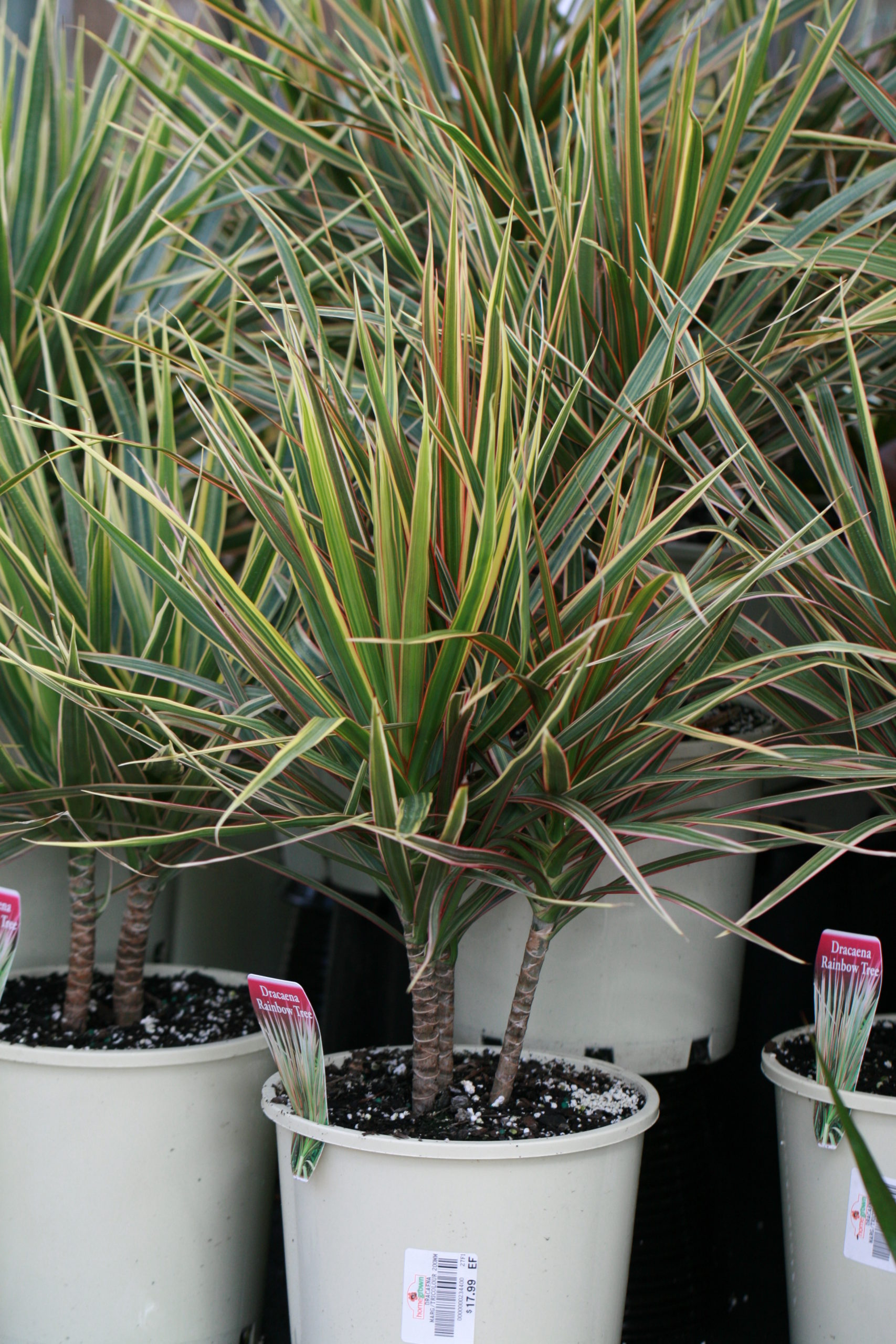
    Very aesthetic and easy to grow, dracaena marginata is one of the most popular varieties for indoor plant lovers. It looks like a palm tree, but is not. Its elegant and authentic foliage brings an exotic touch to the decor.

    Dracaena technical sheet

    French name: dragon tree of Madagascar
    Latin name: Dracaena marginata
    Family: agavaceae
    Dimension: 1 to 2 meter high indoors
    Planting: spring
    Exposure: bright Soil: fertile soil Watering:

    • spring / summer: every 4 to 5 days
    • autumn / winter: one to two waterings per month

    How is dracaena marginata cultivated?

    Dracaena marginata grows at temperatures of around 20 and 22 ° C under good light exposure .
    It should be placed near a window facing west or south, as good light is favorable for its growth. Note that this plant, like all green plants, does not survive the absence of light. A rather dark apartment will slow down its growth.

    To plant dracaena marginata in a pot, here are some essential steps to follow:

    – Use special potting soil for green plants.

    – Install a bed of gravel at the bottom of the pot to facilitate drainage and avoid water stagnation at the roots . Small pebbles or clay balls are possible for this task.

    – Bring a pot a little larger than the original one, a size just above.

    – Gently handle the young shoot of dracaena marginata then repot .

    – Water copiously .

    Every 2 to 3 years in the spring, it is a good idea to repot the dracaena marginata to ensure its growth and longevity . Regular surfacing is recommended to meet the plant’s nutrient needs if the pot is already large and repotting is no longer possible.
    In addition, to ensure better health of dracaena marginata indoors, it is recommended not to expose it to a temperature below 10 ° C for a long time.

    As for growing dracaena marginata outdoors, it is only possible in a hot climate . In winter, the dracaena marginata only survives a winter temperature of at least 15 and 16 ° C.

    How to water the dracaena marginata?

    The dracaena requires regular watering to develop fully. Throughout the year, a non-calcareous water spray is also required on its foliage because it requires a good level of humidity in the air. As for its watering, it depends on the season:

    -In spring and summer: the dracaena marginata is in full growth period , regular watering every 4 to 5 days may be necessary. In order not to suffocate or cause root rot, watering should be measured. It is advisable to leave the soil dry on the surface before repeating the operation.

    – In autumn and winter: the needs of the plant are reduced. Nevertheless, it is a good idea to moisten the potting soil if it starts to get dry for a few inches. One to two monthly waterings is sufficient.

    What fertilizer to give to dracaena marginata?

    The Madagascar dragon tree particularly appreciates humidity. As mentioned above, its planting requires the use of a bed of clay or gravel balls and special potting soil for indoor plants. However, to meet its nutritional needs, a supply of fertilizer is necessary to feed the soil.

    During its growth period, a contribution of liquid fertilizer is essential every 15 days. The pot should also be rotated regularly so that the plant grows evenly.
    If any leaves wilt, they should be pruned and the rest of the foliage cleaned with a rag. Note that the fertilizer application must stop between October and April.

    How to cut the dracaena marginata?

    To multiply the Madagascar dragon tree , it is possible to use a cuttings at the base of the mother plant. To do this, follow these steps:

    1. Make a hole at the foot of the dracaena marginata.
    2. Install a biodegradable pot filled with seedling potting soil in the hollow. Note that the transplanting substrate must be light.
    3. Cut a fairly long stem at the level of the first row of leaves.
    4. Remove the other layers of leaves which clutter in order to ensure a better recovery.
    5. Cut out the few remaining leaves (2 or 3).
    6. Plant the cutting in the pot.
    7. Cover the cutting with the substrate.
    8. Spray the leaves, the substrate and the rest of the pot with water.