Category: Gardening with the Moon

Discover the ancient practice of gardening according to the moon’s phases. Learn how lunar cycles influence planting, pruning, and harvesting to maximize growth and yield. Explore tips, calendars, and techniques to align your garden activities with nature’s rhythms for healthier, more productive plants.

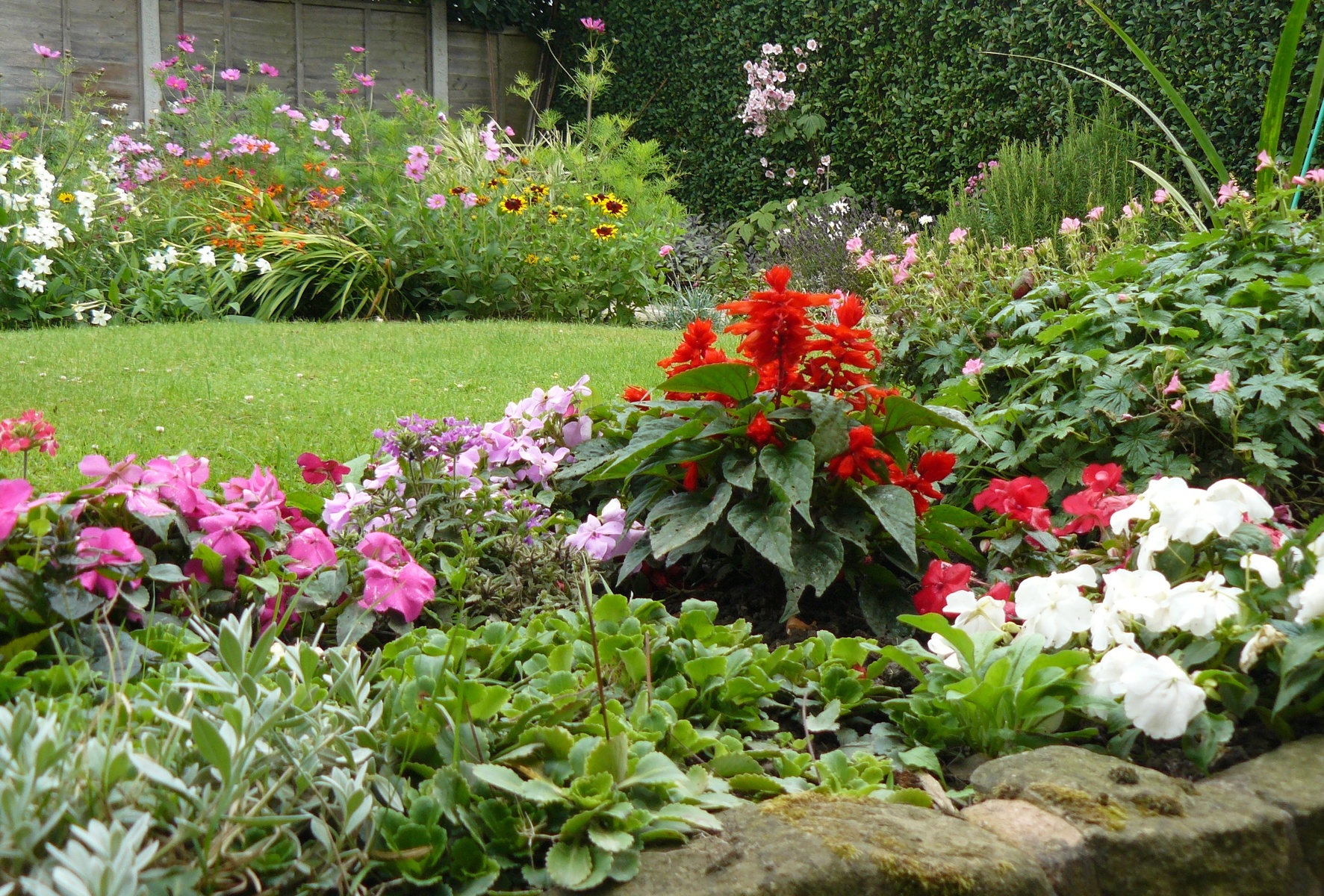
  • Gardening with the moon. Flower days

    Gardening with the moon. Flower days

    In the lunar calendar, locate the passages of the Moon in front of one of the three constellations in agreement with the element air. These relatively short periods are favorable for flowering plants and the gardening work that concerns them.

    As it travels around the Earth, the Moon describes an elliptical orbit of which the terrestrial globe is one of the focal points. During each lunation, it passes successively in front of the twelve regions of the zodiac, each being in affinity with one of the four fundamental elements: earth, water, air and fire.

    When the lunar star is more particularly in front of the constellations of Gemini, Libra or Aquarius (each being in affinity with the air element), the Moon reflects impulses and forces which act on plants and promote or stimulate their flowering and possible fragrance.

    When the Moon is rising (or ascending) and it passes in front of the constellation Aquarius, you can sow your flowers and flowering vegetables as well as picking or harvesting them. This period is favorable for the removal of scions and grafting operations of flowering shrubs.

    When the Moon is descending and it positions itself in front of the constellation Gemini or that of Libra, you can thin the seedlings of flowering plants, transplant them or plant them, pinch them or prune them. These periods are ideal for preparing and enriching the soil in which you will cultivate them. You can also cut your favorite flowers (geraniums, fuchsias, etc.).

    Plants concerned

    Vegetables Artichoke, broccoli, cauliflower.
    Edible flowers Acacia, cornflower, borage, nasturtium, chrysanthemum, zucchini, daylily, mallow, beetle, marigold, violet.
    Herbal teas Achillea millefolium, chamomile, meadowsweet, linden.
    Trees, shrubs and climbers Bignone, camellia, clematis, forsythia, wisteria, hydrangea, lilac, magnolia, rosebush, spirea, etc.
    Indoor plants Amaryllis, azalea, Christmas cactus, cyclamen, cymbidium, kalanchoe, phalaenopsis, saintpaulia, etc.
    The annual Begonia, clarkia, impatiens, geranium, marigold, petunia, sunflower, etc.
    Biennials Wallflower, forget-me-not, daisy, pansy.
    BulbsBegonia, canna, colchicum, crocosmia, cyclamen, dahlia, eucomis, fritillary, hyacinth, lily, muscari, narcissus, snowdrops, buttercup, tulip, etc.
    Perennials Aster, aubriète, bellflower, corbeille-d’or, iris, peony, phlox, rudbeckia, valerian and many others.

    Good to know

    Throughout the ecliptic, the zodiac constellations cover different surfaces. Those related to the earth element occupy the largest with 110 °, those of water 90 °, those of fire 89 ° and those of air the most restricted with only 71 °. From a practical point of view, you will always have less time to take care of your flowering vegetables and your roses than to carry out the cultivation of your radishes, potatoes or carrots.

    What is a flower day?

    A flower day is a day during which the gardener takes care of the plants… with flowers! While rotating around the terrestrial globe, the Moon describes an elliptical orbit of which the Earth is one of the focal points. During a lunation, it passes in front of the twelve regions of the zodiac, each being in affinity with one of the four fundamental elements: Earth, Water, Air and Fire.

    When the Moon passes in front of the constellations of Aquarius in the ascending moon, and in front of Libra and Gemini in the descending moon (these are constellations in affi nity with the element Air), the Moon influences the flowers and vegetables flowers, which flourish in the element Air. This determines the flower days. This is the time to sow, plant, hoe, weed, repot, cuttings and harvest flowers and flowering vegetables. All flowers, artichokes and cauliflowers included, will be more beautiful, healthier, more floriferous.

    Plants were sown during this period branch out better and are therefore more productive in bloom. Planted in the waning Moon, when the Moon passes in front of the constellations of Gemini and Libra, they grow faster. Bouquets picked on flowering days keep for a long time in a vase, edible vegetables and flowers are tastier and richer in vitamins. The properties of herbal tea flowers are more active.
  • Gardening with the moon: fruit and seed days

    Gardening with the moon: fruit and seed days

    Record, in the lunar calendar, the dates of the passages of the star in front of one of the three constellations in accordance with the element of fire. These are the ideal times to devote yourself to gardening work on plants grown for their fruits or seeds.

    During its journey around the earth, the moon scrolls past the twelve regions of the zodiac, each of which is in affinity with one of the four fundamental elements: earth, water, air, and fire.
    When the lunar star arrives in front of the constellation of Aries, Leo or Sagittarius, (each being in affinity with the element of fire), it sends back impulses and forces that act on the plants and stimulate their setting to fruit or to seeds.

    When the moon is rising (or ascending) and it passes in front of the constellations of Sagittarius or Aries, it is time to sow or reap the plants grown for their fruits or seeds. These periods are also favorable for taking grafts from fruit trees and for carrying out grafts.
    When the moon is descending and it arrives in front of the constellation Leo or Sagittarius, you can prepare and enrich the soil where the fruit or seed plants will be grown. It is also the right time to thin out the seedlings, but also to transplant, plant or prune this type of plant.

    The plants concerned

    These are in priority all fruit trees and shrubs (apricot, actinidia, citrus, almond, cherry, quince, fig, common and Japanese medlar, hazel, walnut, olive, peach, pear, apple, plum, vine) and small fruits (blackcurrant, raspberry, red currant and gooseberry, blueberry, bramble, and strawberry).

    In the kitchen gardenthe plants cultivated for their fruits are strawberries, tomatoes, peppers and peppers, eggplants, pickles, cucumbers, melons, watermelons, not to mention the many species and varieties of squash.
    Other plants are valued for their seeds, eaten fresh or well dried. This is the case of beans, beans, lentils, peas, and chickpeas.
    To this must be added cereals (wheat, barley, oats, corn, rice, and rye) as well as certain condiment plants such as green anise, dill, caraway, cumin, coriander, fennel, fenugreek, nigella.

    In the ornamental garden, it is all the decorative fruit shrubs such as cotoneaster, ornamental apple trees, pyracanthas, etc. The curious parakeet grass, the poppies to be dried and the papal money are also concerned plants.

    Indoor plants Ardisia, ornamental pepper, love apple treeclosevolume_off

    What are fruit plants or seeds?

    these are all fruit trees:

    • apricot, cherry, citrus … berries: currant, blueberry, strawberry …
    • Climbers: actinidia, blackberry bramble and vines …
    • Vegetables whose fruit or seeds are eaten: tomato, zucchini, eggplant, melon, peas, lentils, beans …
    • The aromatic plants whose seeds are eaten: coriander, fennel …
    • And finally the cereals that are classified in this category: oats, wheat, rye, barley …

    What is a seeds and fruit day?

    A fruit or seed day is a day during which the gardener takes care of the fruit trees, berries, fruit vegetables and plants from which the seeds are eaten and the seeds collected. While rotating around the terrestrial globe, the Moon describes an elliptical orbit of which the Earth is one of the focal points. During a lunation, it passes in front of the twelve regions of the zodiac, each being in affinity with one of the four fundamental elements: Earth, Water, Air and Fire.

    When the Moon passes in front of the constellations of Aries and Sagittarius on the ascending moon, and Leo on the descending moon (these are constellations in affinity with the element Fire), it influences fruits, berries, vegetables- fruits and seeds, which determines the days-fruits and seeds.

    These constellations provide the heat necessary for the ripening of the fruits: harvest them in fruit-days, when they are full of sun, they keep better. Collect the seeds of vegetables and flowers when they are ripe, on a fruit day, when the weather is dry: their germination power will be prolonged.

    Sow, plant, pluck, reap! Perform the planting of fruit trees in the descending moon and the sowing of fruit vegetables in the ascending moon. Process, prune and care for fruit trees, shrubs, and fruiting veg in fruit day, you will get healthier, sweeter fruit with increased flavor.

  • Gardening with the moon. Sow your tomatoes and collect the seeds

    Gardening with the moon. Sow your tomatoes and collect the seeds

    The best gestures in the vegetable garden to grow and then harvest garden tomatoes with the lunar calendar.

    Pick the tomatoes at full maturity and respect the lunar dates, they are then full of sun and vitamins.
    For which varieties?
    The old varieties because they reproduce faithfully by this method of multiplication: the sowing of the harvested seeds will give fruits similar to those of the parents. They are also more difficult to find in stores, you have to buy them by mail order from specialists.

    Harvesting the seeds – 1

    Find the most beautiful fruits on the best plants. Both should be vigorous, free from disease. The tomatoes have the characteristic shape of the variety and are very ripe. Pick them delicately by hand. Do not mix varieties. Use different or labeled containers.

    Harvesting the seeds – 2

    At home, cut the tomatoes into quarters and, with a spoon, drop the pulp and seeds into a glass container. You can add a trickle of water. Wait a few days (approximately 48 hours in hot weather), depending on the ambient temperature, until white mold appears on the surface. Watch carefully, because if you delay the seeds will germinate. Indeed, this fermentation has the effect of eliminating the gelatin which surrounds the seeds and it keeps them dormant.

    Harvesting the seeds – 3

    Pour the pulp into a fine mesh colander and run the tap water to clean the seeds. Remove pulp and small or poorly formed seeds. Let them drain then place them on a smooth surface, tiles or a plastic cover, but especially not on absorbent paper, they will stick to them when drying.

    Harvesting the seeds – 4

    Separate them from each other because the drying must be fast, otherwise, the seeds can get moldy. Choose a dry, well-ventilated place without direct sunlight. When they are completely dry, put them in paper bags or in small glass jars. Write down the name of the variety and the year of harvest. The germination period is at least four years or even ten years for some varieties.

    Sowing in pots

    Before the end of April, sow the tomatoes in peat cups if possible, in a special sowing soil. Put 3 seeds per jar, cover lightly, tamp and spray with water. Place in a greenhouse or a bright room, at 16-20 ° C. Keep the best looking plant in each pot and keep at 16-18 ° C and a little humid until planting. If the plant is getting too long, it is lacking in light.

    The plantation

    To avoid sowing, you can buy seedlings. Install them in the garden, in a sunny place, from mid-May. Plant in rows 70 cm apart, spacing the feet 50 cm apart. Open holes twice the size of the cups. Soak the plants, do not deposit those in peat cups. Bury the base 5 cm to strengthen the rooting. Prick a stake near the root ball, fill it up.

    Pruning and other care

    Tie the stem to the stake with raffia as it grows. Once a week, cut off the young shoots that form in the axils of the leaves with your fingernails. Head the main stem 1 or 2 leaves above the 5th bunch of fruits to promote their enlargement. Water without wetting the foliage.

    The harvest

    Every day, harvest the most colorful fruits by checking their maturity: take them in the palm of one hand and, with the thumb of the other hand, exert pressure on the bulge of the peduncle located above the tomato. If the stem does not break, do not insist, the fruit is not quite ready.