Category: Fruits and orchard

Discover the art of growing delicious fruits and maintaining a thriving orchard. Learn tips on planting, pruning, harvesting, and caring for fruit trees and bushes. From apples and pears to berries and exotic fruits, explore practical advice to help your orchard flourish and enjoy bountiful, healthy harvests.

  • The McIntosh apple

    The McIntosh apple

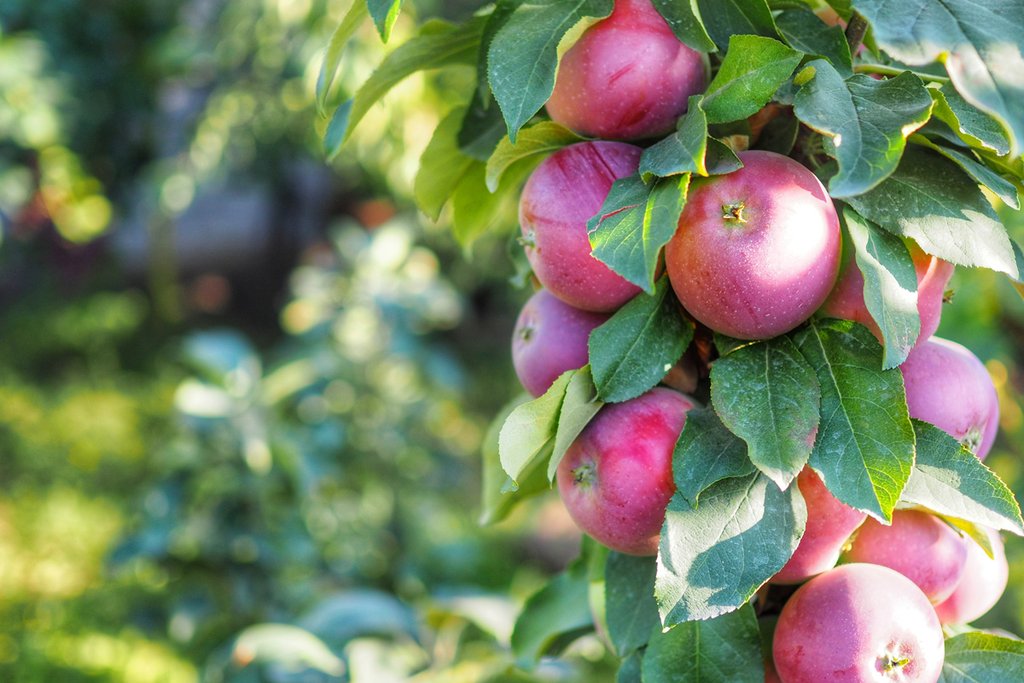
    Do you think you know her? But the McIntosh apple is scarce in our orchards. An ancient variety, mother of many modern apples.

    I am not talking about its namesake MacIntosh present on computers but rather about an apple in 3D. Besides, on closer inspection, the spelling is not the same. Of course, there is the famous legend regarding the Apple logo, where the creator bit into an apple. But what variety? History does not specify. So, as Jacques C. said, “Let’s bite some apples!”, And let’s get back to our fruit.

    It was discovered in Dundas County, Ontario, Canada, around 1796 by John McIntosh and imported to Europe in the 1930s.

    It is a fruit with red skin, quite thick and endowed with a white and juicy flesh, tangy and fragrant, ideal for compotes. Its flowering is precocious and it is harvested in early September. The fruits are round about 7cm in diameter. The vigor of the tree is medium. People are sensitive to canker and opinions differ as to its resistance to powdery mildew.
    This beautiful apple is the source of ‘Golden delicious’, ‘Cox’s Orange Pippin’, ‘Red delicious’ …

  • Harvest the fruits later in the season

    Harvest the fruits later in the season

    In the orchard, remove leaves, water well, feed, and fight against infections to extend the harvest period and have abundant pickings.

    Keep pests away

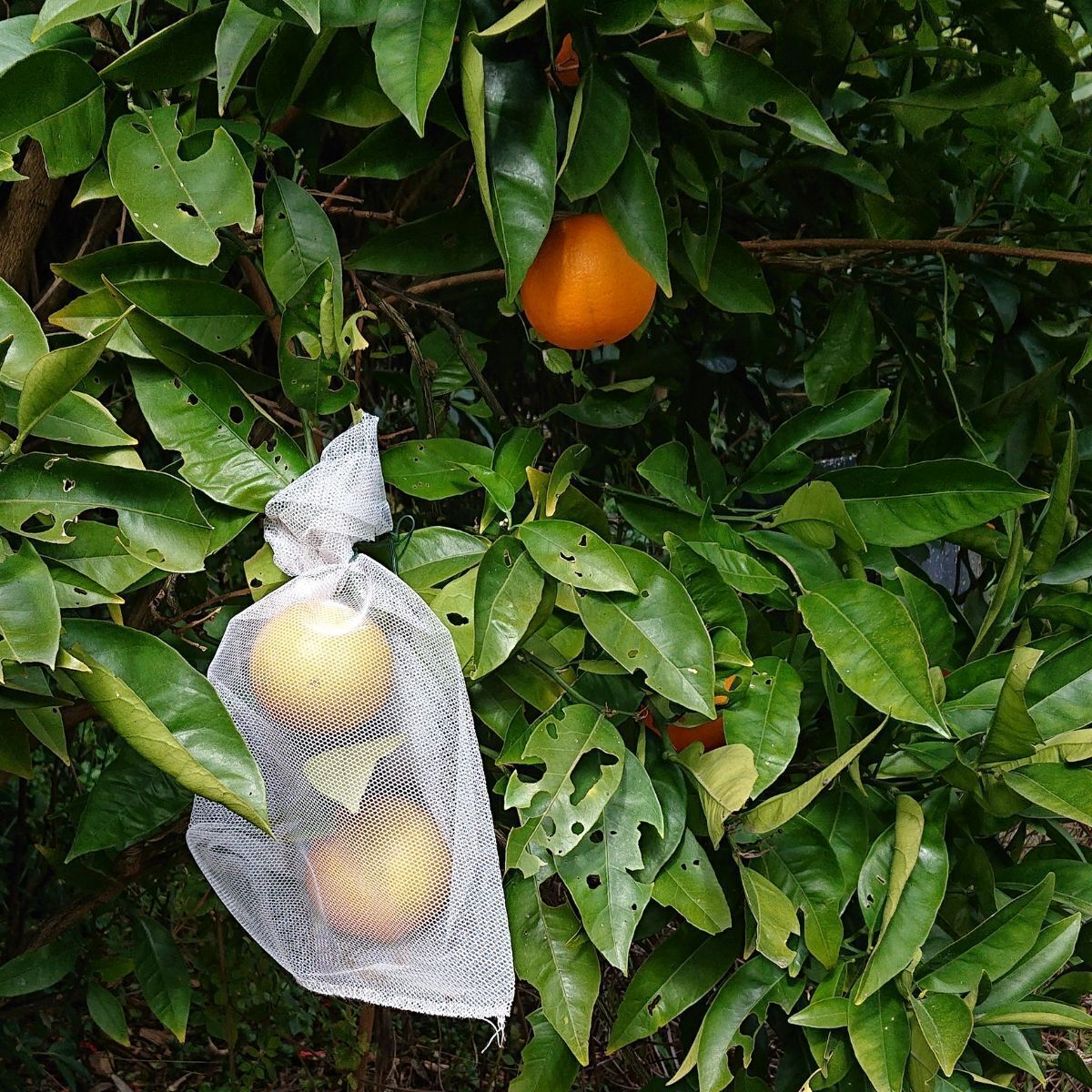
    Whether it’s pears, peaches, apples, or grapes, bagging is a tedious but natural method to protect them from wasps, carcasses, and other possible pests. When the fruits begin to ripen, remove the husks a few days before harvest so that they take advantage of the sun and light to perfect their ripening. They will be better after sunbathing.

    Trapping the wasps

    Wasps are greedy if the ripening fruit contains enough sugar. Fool them with pheromone traps or commercial models to fill with a sugar solution. You can craft your traps. Cut the neck of a plastic bottle to make a funnel. Fill the bottom of the bottle with water and syrup or honey, then lay the neck upside down on top so that the attracted wasps can enter, but are unable to exit.

    Adapt watering

    Outside of year-round planting, it is completely unnecessary to water your stone or pome trees, even at the end of the dry season: this would require too much water and the fruits would lose taste quality. . While this rule applies to trees with strong growth, it is quite different for small fruit berries. Indeed, strawberries or rising raspberries, although carefully mulched, may still need a water supply. Water copiously in one go at the time of flowering, ideally with a drip, so as to provide 15 mm, or 15 l of water / m².

    Nourish to stimulate

    There is no such thing as a boost in organic fertilizer. Indeed, this type of input must be mineralized by the microfauna and the microflora of the soil to be restored to the plants, a transformation that takes a few weeks. You can therefore provide occasional and measured organic fertilizer for demanding crops at the start or middle of the cycle. Spinach, for example, will benefit.

    Remove the leaves from the vines

    At the end of summer and at the beginning of autumn, the ripening of the grapes is completed. At this point, the bunches should receive maximum sunlight. Cut with secateurs the leaves covering the clusters for the trellis trellised on a wall, only those on the rising sun side when the vines are guided on a wire. This operation promotes the ripening of the grapes, but also ensures better ventilation in the heart of the vines, limiting the development of gray mold or botrytis type fungi.

    Reduce the spread of disease

    During this period of alternating heat and humidity, the spread of fungal diseases like moniliasis can be extremely rapid. So pick up the spoiled fruit that has fallen to the ground and carefully inspect those left on the tree. Also, remove damaged fruit to prevent contamination. Finally, evacuate the fallen leaves: this abnormally early fall often results in contamination by a fungus.
  • Five columns in the spotlight on apple trees

    Five columns in the spotlight on apple trees

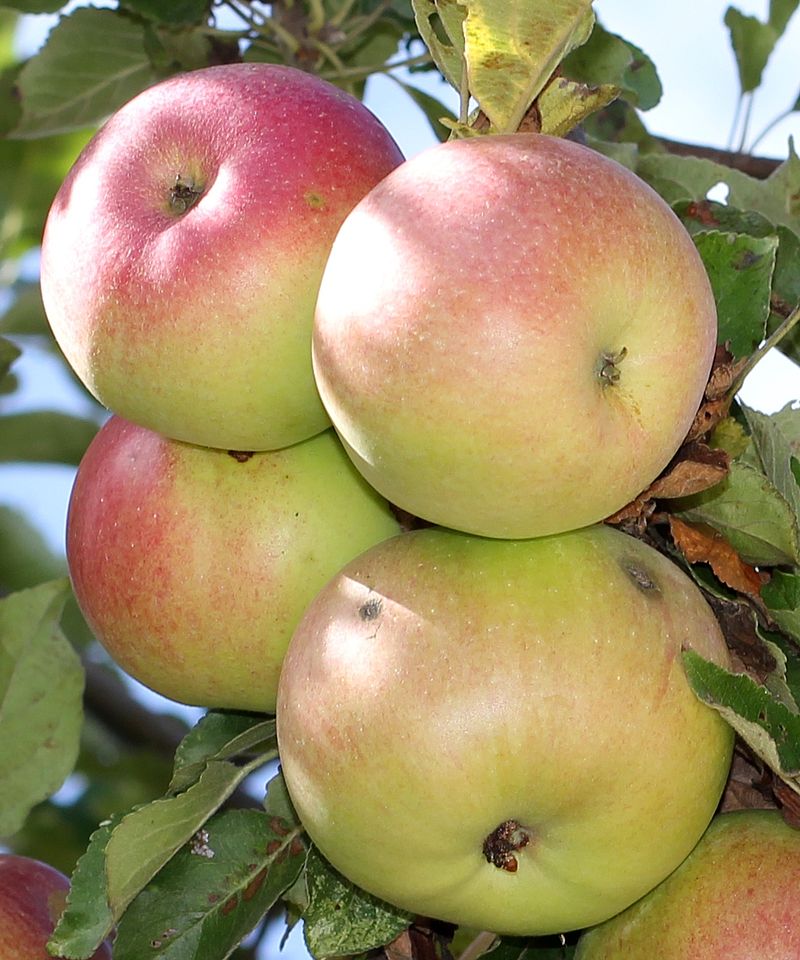
    Present in small gardens for several years, colonial apple trees are available in different varieties that are increasingly numerous. Small point of the day.

    At first glance, these apple trees are just trees that forgot to expand, but their real advantage is almost no pruning . Thanks to genetic work on chromosome 10, it does not develop side branches but a central axis. Result: the size is deleted.

    But a columnar remains an apple tree and its rootstock should match your soil. Look to producers for what is right for you. In addition to the soil, its vigor is essential in order to keep the characteristics viable for a culture in container or in a small garden. The rootstock must therefore be dwarfing, so that the tree does not exceed 3 meters in height.

    Maintain a distance of 1 meter between the apple trees. Remember to guard them for the time of a good rooting. Pollination is best with several compatible varieties. Fruit set takes one to two years , much faster than for standard apple trees. In addition, their resistance makes it possible to limit or even eliminate treatments. More accessible, they are also more easily treated when needed.