Category: Climbers

Explore the world of climbing plants that add beauty, greenery, and vertical interest to any garden or space. From flowering vines to leafy creepers, learn how to grow, train, and care for climbers, and discover tips for trellises, walls, fences, and pergolas. Perfect for gardeners looking to maximize space and create lush, vibrant surroundings.

  • FORTIS (Giant Star) clematis

    FORTIS (Giant Star) clematis

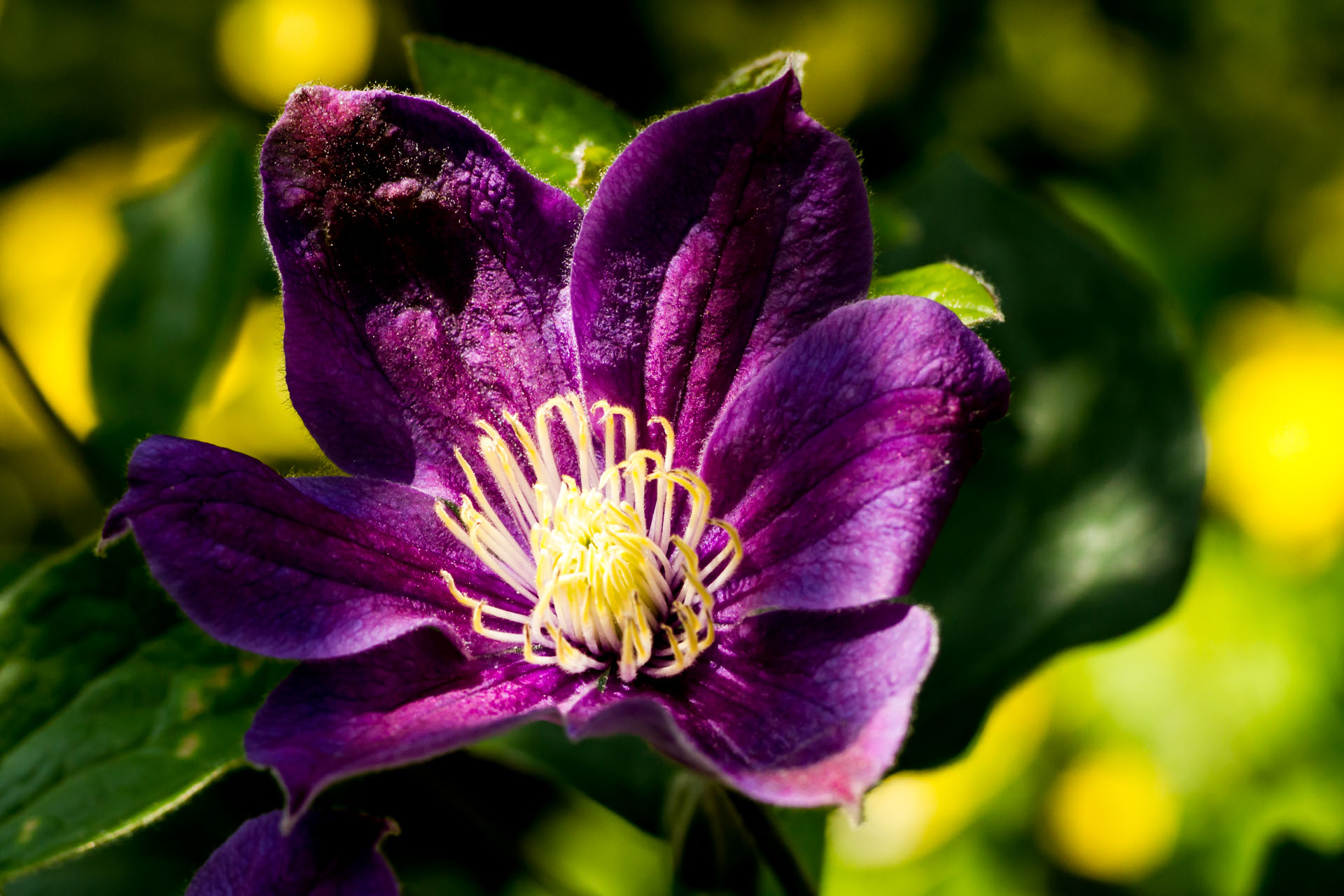
    Beautiful climber offering a spectacular and delicately scented bloom, the FORTIS ‘Giant Star’ clematis is the ideal plant to dress a fence, a trellis, or the trunk of an old tree. It literally covers itself with large, pale pink flowers to celebrate spring and its purple foliage further adds to its unmistakable charm.

    Technical sheet

    Type of plant: climbing plant
    Dimensions: 4 m high – 3 m spreading
    Flowering: from April to May
    Exposure: partial shade, sun
    Planting: autumn / spring
    Propagation: cuttings
    Watering: regular
    Hardiness: very good from -15 to -20 ° C.

    Cultivation conditions

    The FORTIS ‘Giant Star’ clematis is a very hardy plant that tolerates negative temperatures down to -20 ° C. This strain, created by Richard Mitchell, a famous New Zealand breeder, is part of the Montana group of clematis known for their vigor and opulent flowering. FORTIS ‘Giant Star’ clematis adapts to all types of soil provided they are well-drained. It does as well in full sun as in partial shade. 

    Planting

    Plant FORTIS ‘Giant Star’ clematis, in autumn or spring in soil previously loosened and amended with compost and a handful of the crushed horn. Choose a semi-shaded location in the south of the country or in full sun everywhere else.
    Dig a 40 cm planting hole in all directions. Install the plant, root ball slightly inclined, and fill the hole with the soil previously prepared.
    Form a small mound of earth around the crown of the plant to prevent wilting and promote the release of vigorous shoots from the base. Place a tile over the root ball, or a potted bush plant that will provide shade at the roots at the base of the plant. Clematis grows well with its feet in the shade and its head in the sun. Fold the stems 30 cm from the base above a bud and start leading them on the support to help them climb.

    Watering

    Water regularly at planting and the following weeks if it does not rain, to ensure a good recovery. In summer, water once or twice a week so that the soil only dries up a few centimeters between two waterings, especially in summer. Be careful, clematis does not tolerate excess water at the roots, always water at a distance of 40 cm from the foot, often but moderately, especially in heavy and clayey soil.

    Fertilizer

    Scrape compost at the base of the plant in fall and February.

    Diseases and pests

    Clematis is sometimes sensitive to wilting of foliage and stems in too heavy or too wet soil. Drain the soil well or plant on a mound and water 40 cm from the base moderately but regularly in summer.

    Cut

    FORTIS ‘Giant Star’ clematis blooms on the stems of the previous year. Prune immediately after flowering.
    Cut any stems that are dead, damaged, or too long to contain this exuberant plant. 

    Use

    The FORTIS ‘Giant Star’ clematis is an ideal plant to hide a fence, an old tree trunk, or to dress a facade with a trellis. It goes well with climbing roses but also with wisteria whose flowering it will prolong.
    It is also possible to cultivate this beautiful climber in a tray on a balcony or a terrace, trellised to a wall or a trellis, or even on the balcony railings.
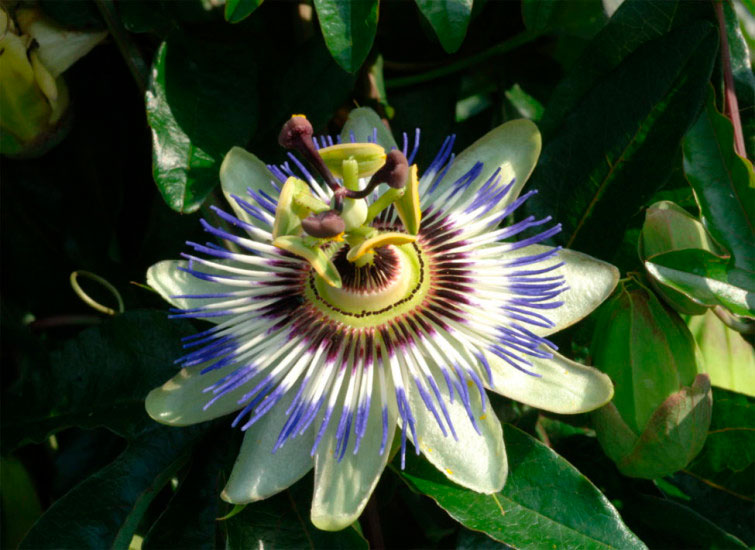
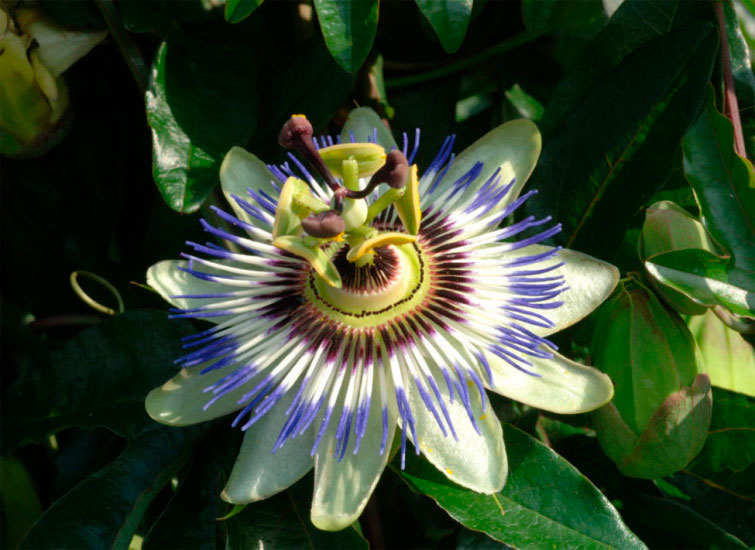
  • How to prune to maintain passionflower?

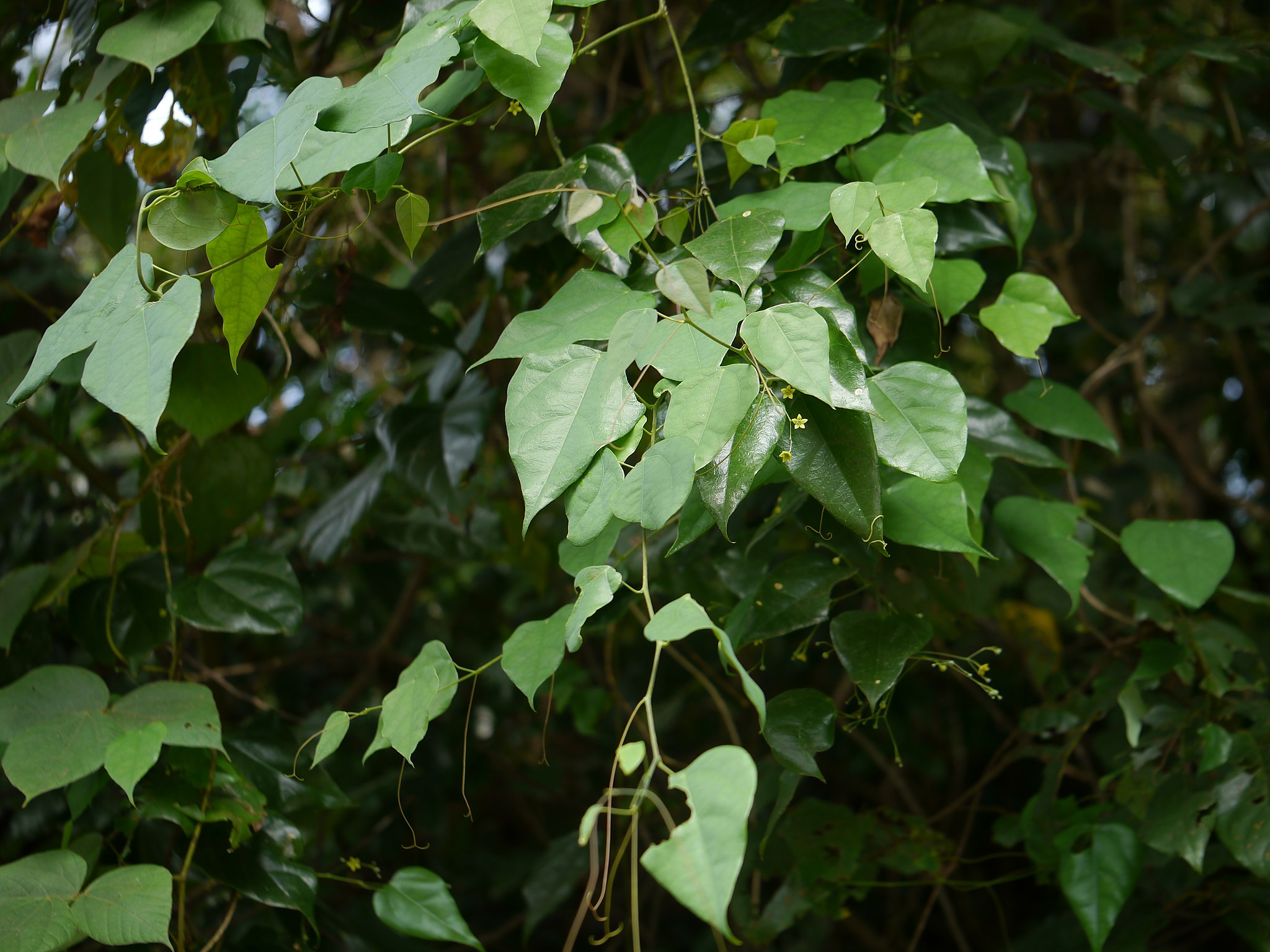
    How to prune to maintain passionflower?

    The maintenance pruning of passionflower, light, allows to discipline this very growing vine and to clean it from old wood. On the other hand, after a few years, the passionflower becomes important and confused. It must be folded down to refresh it. The operation is also necessary when it freezes.

    When to prune passionflower?

    Always prune the passionflower in spring (March). It flowers mainly on the twigs of the year: pruning allows them to be obtained in large numbers.
    There is no need to intervene during the first years of the plant. Start after about four to five years, then renew annually thereafter.

    How to prune passionflower?

    Tools needed:
    pruning
    shears
    hedge trimmers

    • To prevent the whole from becoming a muddled mass, shorten all the shoots from the previous year (unbranched) to about 20 cm with a secateurs.
    • Remove the weakest among them.
    • If in doubt, or if the plant has been neglected for a long time, “comb” it with a hedge trimmer.
    • Return to normal size the following spring. On very vigorous plants, summer pruning helps to avoid lawlessness. It is enough to cut back by two-thirds the unruly new shoots.
    • After a few years, we must resort to coppicing, as well as in case of frost. A good way is to shorten every three years a third of the carpenters (the diameter of the finger, approximately) to 50-60 cm from the ground.

    When to cut back passionflower?

    Work in the spring (March).

    Necessary material

    • Secateurs ,
    • Shears,
    • Force pruner (delimber).

    How to cut the passionflower?

    For a four-five-year-old plant:

    • Shear the whole plant, like a hedge. It should lose about two-thirds of its thickness and height.
    • With the secateurs, remove at the base the strong branches badly placed.
    • Repeat about every four years.

    For a neglected plant it is impossible to catch with the shears:

    • Cut the carpenters with secateurs at about 1 m from the ground.
    • Eliminate the rest.

    Following a frost:

    • Cut back the carpenters short, to the living wood. Frozen woods are easy to recognize (they turn black very quickly).
  • Choosing and installing a climbing plant under the roof

    Choosing and installing a climbing plant under the roof

    Garnish the space between the windows and the roof with a decorative climbing frame and fruit holder. Stretch two rows of wire so that the branches of the Actinidia (kiwi) are held there or brush them.

    The ideal plant

    The Actinidia needs room to elongate its twigs, which are 7-10 m in length. Choose the ‘Solo’ variety, it is self-fertile and will produce fruit without being associated with a male plant. In addition to the kilos of fruit to harvest before the first frosts, you will enjoy the white flowers in June and the large, velvety leaves. Out of date, they will clear the windows in winter.

    Planting

    In winter or early spring, if it does not freeze. Add compost, horn, and fruit fertilizer. Moisten the root ball and tilt it towards the wall. First, guide the branches vertically to the top of the wall, then horizontally.

    Maintenance

    At the end of winter, prune the branches that have fruited, two eyes after the last fruit is harvested, and leave the peduncles to help you. In July, shorten the stems, keeping four leaves after the last fruits. Cut off the long, sterile twigs at their base.

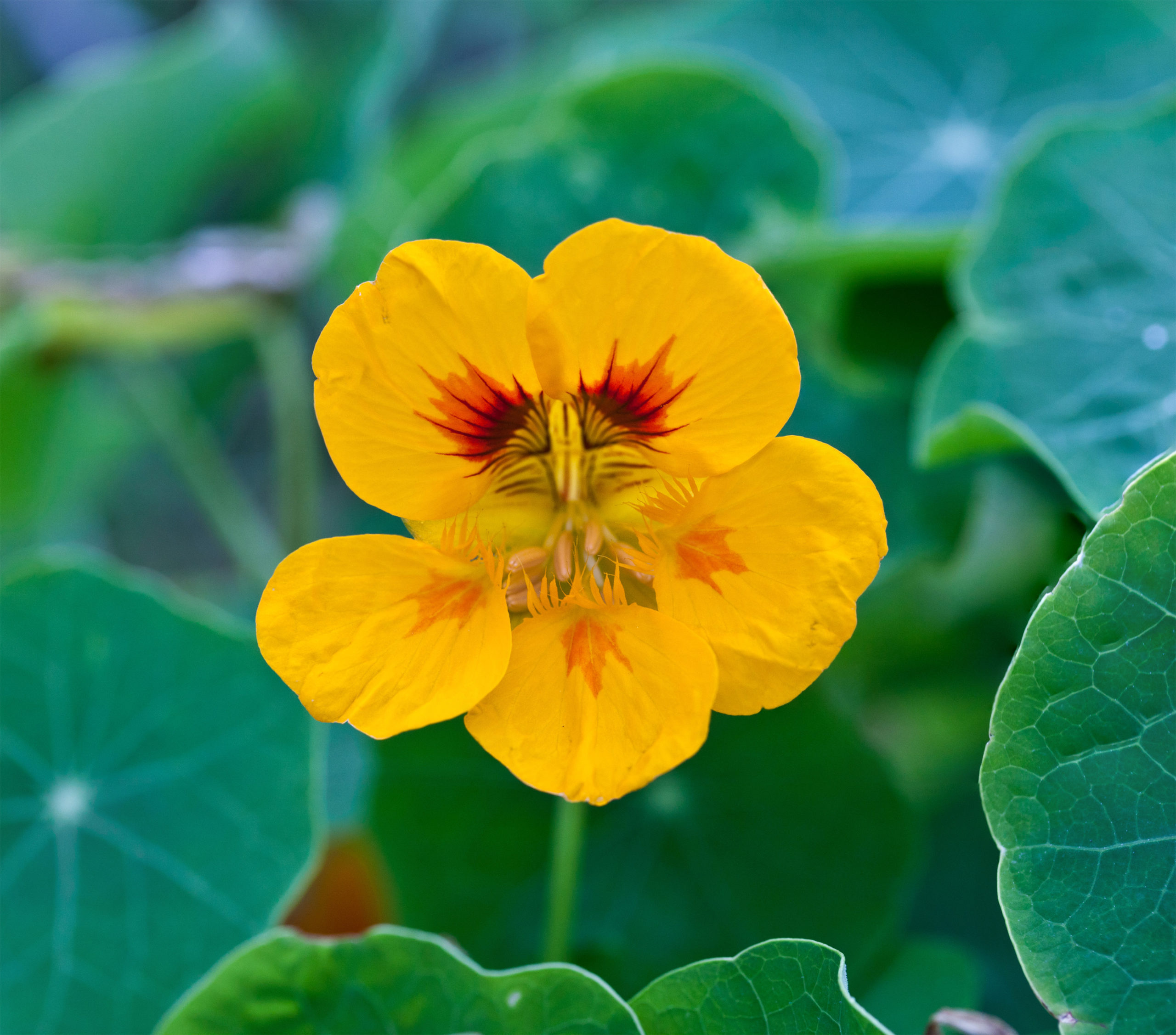
  • Butter the nasturtium

    Butter the nasturtium

    Just as floriferous as climbing or dwarf annuals, the tuberous nasturtium likes to have the roots covered with a good thickness of soil. Butcher it and don’t forget to train its twining stems.

    Material:
    hoe
    watering can
    support or stake
    ties
    secateurs
    special liquid fertilizer for flowers

    Advice:
    Nasturtiums like cool, but well-drained soils. Install a mulch of crushed pine bark or cocoa shells at their base to keep the soil water. This mulching also allows you to have always clean ground by hindering the emergence of weeds.

    Good to know:
    Remove the flowers as they wilt to make room for new buds. Also, cut off any broken or withered stems.

    Bring earth to the base of the foot

    The tuberous nasturtium exhibits little difference in vegetation from its classic root cousins, except that its tubers must be planted deep. With a hoe, bring a little earth to the base of the foot.

    Form a mound

    Form a hill 10 to 20 cm high which contributes to the full development of the plant. Be careful, however, not to uncover the roots around the tuber. If necessary bring soil from another place in the garden.

    Monitor stem growth

    Water regularly, being careful not to destroy the mound. Also, watch the growth of climbing stems and help them hang on their support, either by wrapping them around the stake or trellis or by securing them with ties.

    Water and fertilize

    Do not over-tighten your ties. Distribute all the branches evenly so that the coverage is complete. Two or three times a week, water abundantly and add special liquid flower fertilizer every week.

  • Install a climber on stakes

    Install a climber on stakes

    To separate the vegetable garden or along an alley, install bundles of stakes in a row without tightening them too much. Push them in 40 cm and allow a height of 1.80 m above the ground. They will soon serve as an anchor for the tendrils of the sweet peas.

    The ideal plant

    S according to the length of the separation, buy sweet pea bags mixture. Prefer fragrant flowers like ‘Antique Fantasy’, ‘Ripple Mix’ or ‘Bicolor Mix’ .

    Sowing

    From February to April, open holes every 30 cm at the foot of the stakes when the soil is dry. Place 5 or 6 pea seeds 4 cm deep. Recap, tamp and water.

    Maintenance

    Guide the stems away from the stakes so that they do not bend. Collect seeds to start over next year, as these sweet peas are annual. Remove plants and stakes in the fall and throw them all out.

  • Choosing and installing a climbing plant at an angle

    Choosing and installing a climbing plant at an angle

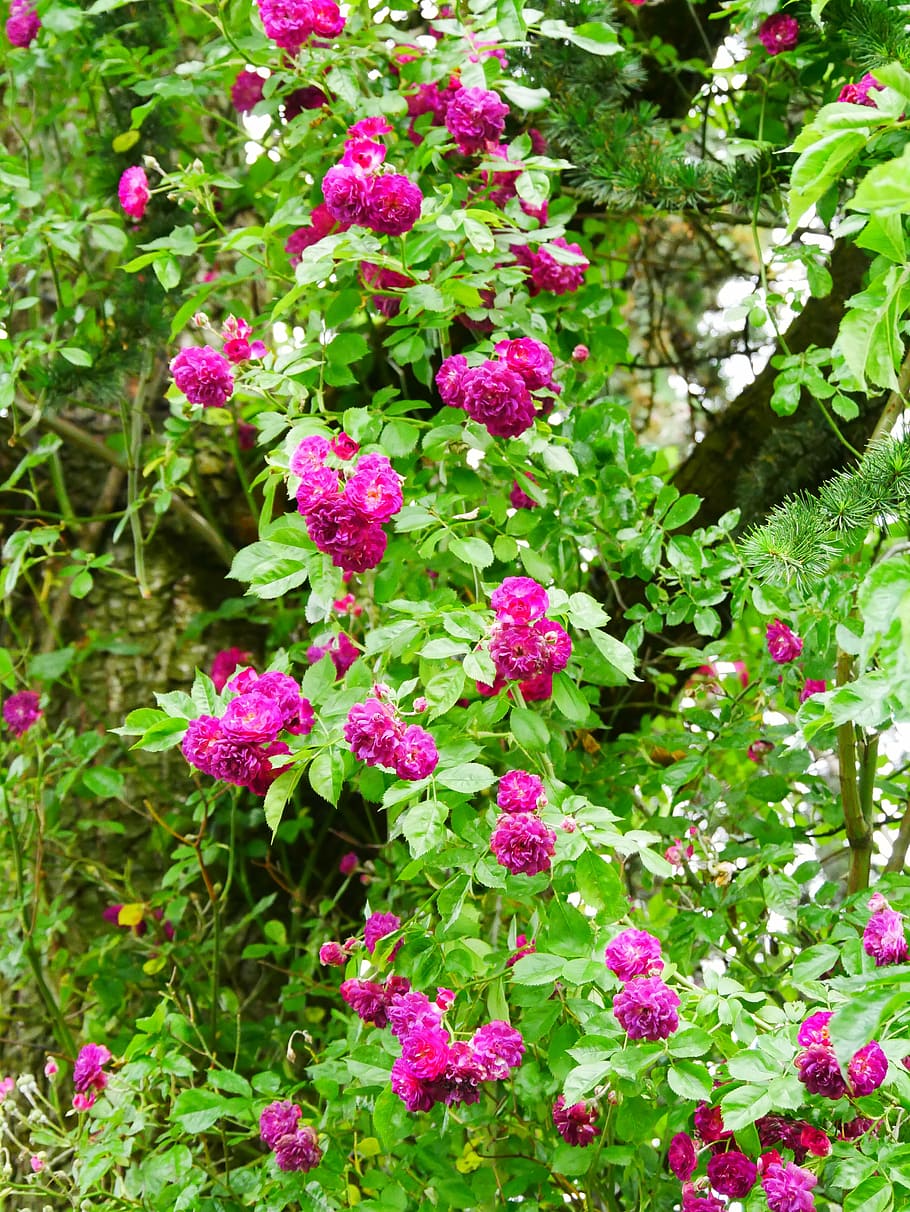
    The long branches of the rosebush ‘Cécile Brünner’ fall in a flower garland on the facade and dress the too brutal angle. Pearly pink pompoms prefer partial shade, so avoid south exposure.

    The ideal plant

    Vigorous, this rose can reach between 6 and 8 m in height, and grows almost as much in width. Its beautiful little flowers bloom in abundance in early summer, before reappearing more moderately in autumn. Another advantage: its foliage remains disease-free.

    Planting

    from November to the end of March for bare root roses.
    Offer them rich land to promote their development. Do not hesitate to change the soil near the house, it is often of poor quality, or add compost and crushed horn. Praline the roots, leave the graft point out of the ground, and tilt the twigs towards the wall. Track them on wire.

    Maintenance

    At the end of winter, prune a few old stems at their base and remove them to limit their entanglement and renew the twigs. In the summer, orient the new stems and cut those that obstruct the openings.

  • Install a climbing frame on a decorative stake

    Install a climbing frame on a decorative stake

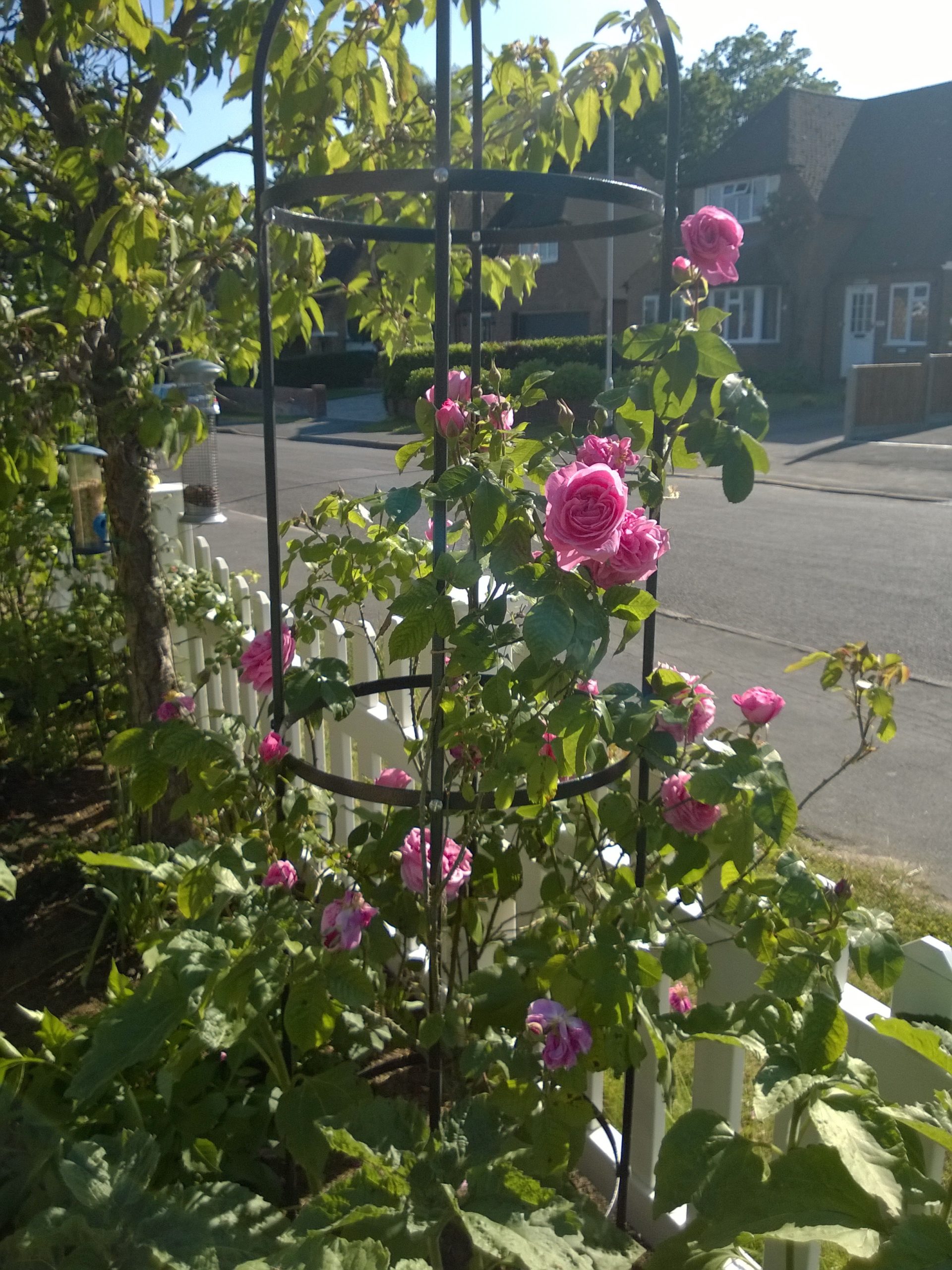
    Placed in a corner of the lawn, this metal stake accommodates a climbing rose which lets see the top of the structure for a very decorative effect.

    The ideal plant

    Of medium size for a climber, 2.50 to 3 m in height and 2 m in sprawl, ‘Pink Cloud’ is content with a narrow support of about 3 m in height. Its large, fragrant bright pink flowers are generous in spring and fall, and more dispersed in summer. Its healthy foliage enhances them.

    Planting

    From November to the end of March for a bare root rose . Open a hole and install the rose bush, leaving the graft point out of the ground. Stitch the uprights of the column on both sides so that the branches are in the middle. Bring them out above the first circle and always brush them on the outside.

    Maintenance

    In February-March, prune the secondary branches with three eyes and one or two old branches at their base. Regularly cut faded flowers, water if necessary.

  • Climbers for a continental climate

    Climbers for a continental climate

    Plant plants adapted to the climate and the nature of the soil in your garden: climbers to install in a continental climate. 

    Sandy or loamy soil

    • Large-flowered clematis
    • Officinal jasmine
    • Honeysuckle

    Heavy and clayey soil

    • Winter jasmine

    Lean and stony soil

    • Ivy
    • Virginia creeper ( Ampelopsis , Parthenocissus )

    Acidic soil

    • Climbing hydrangea
    • Schizophragma
    • Japanese wisteria (later flowering)

    Limestone soil

    • Ivy
    • Clematis
  • Pinch the wisteria to promote new blooms

    Pinch the wisteria to promote new blooms

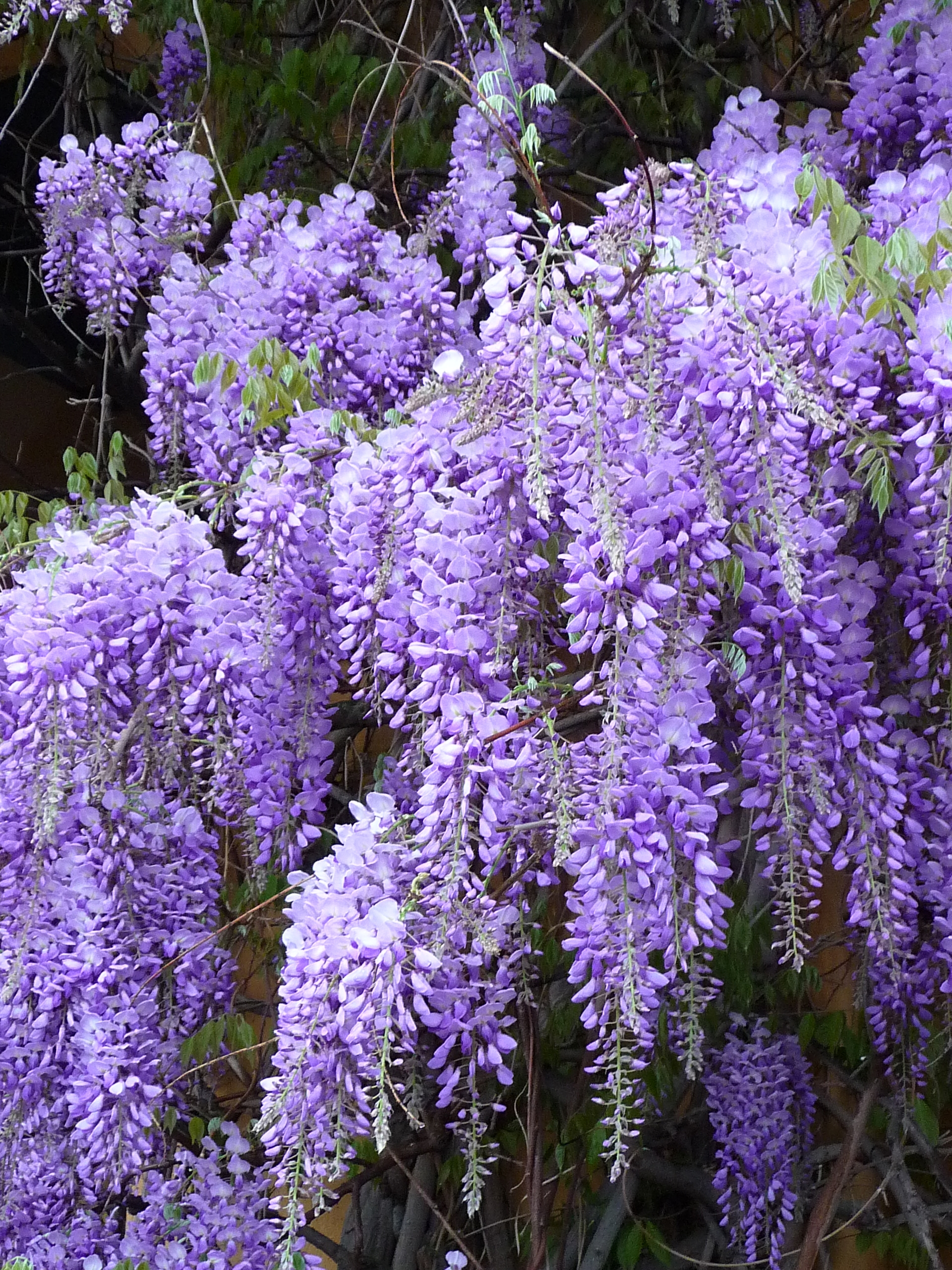
    Wisteria produces very twirling young stems immediately after flowering. Pinching them helps to discipline the plant and promote flowering by concentrating the sap.

    When to pinch wisteria?

    The well-placed branches of the young plants are not pinched, to let the wisteria form its framework.
    On the formed subjects , pinch the long tender shoots. Act during the summer. It may be necessary to repeat the operation a second or third time.

    Necessary material

    • Shears

    How to pinch wisteria?

    Leave only two leaves on each new branch, still green.
    On tree wisteria, leave only one leaf per shoot.
    On important matters, a shear size, although approximate, is more than enough.

    After the pinch

    Wisteria in trees tend, to compensate for the loss of their shoots, to emit creeping stems at the base. Cut them flush.

  • Cultivation sheet: Curly Ivy ‘Parsley Crested’

    Cultivation sheet: Curly Ivy ‘Parsley Crested’

    Among the infinite world of ivies, Hedera helix ‘Parsley Crested’, all curly, still manages to amaze us. To plant without delay …

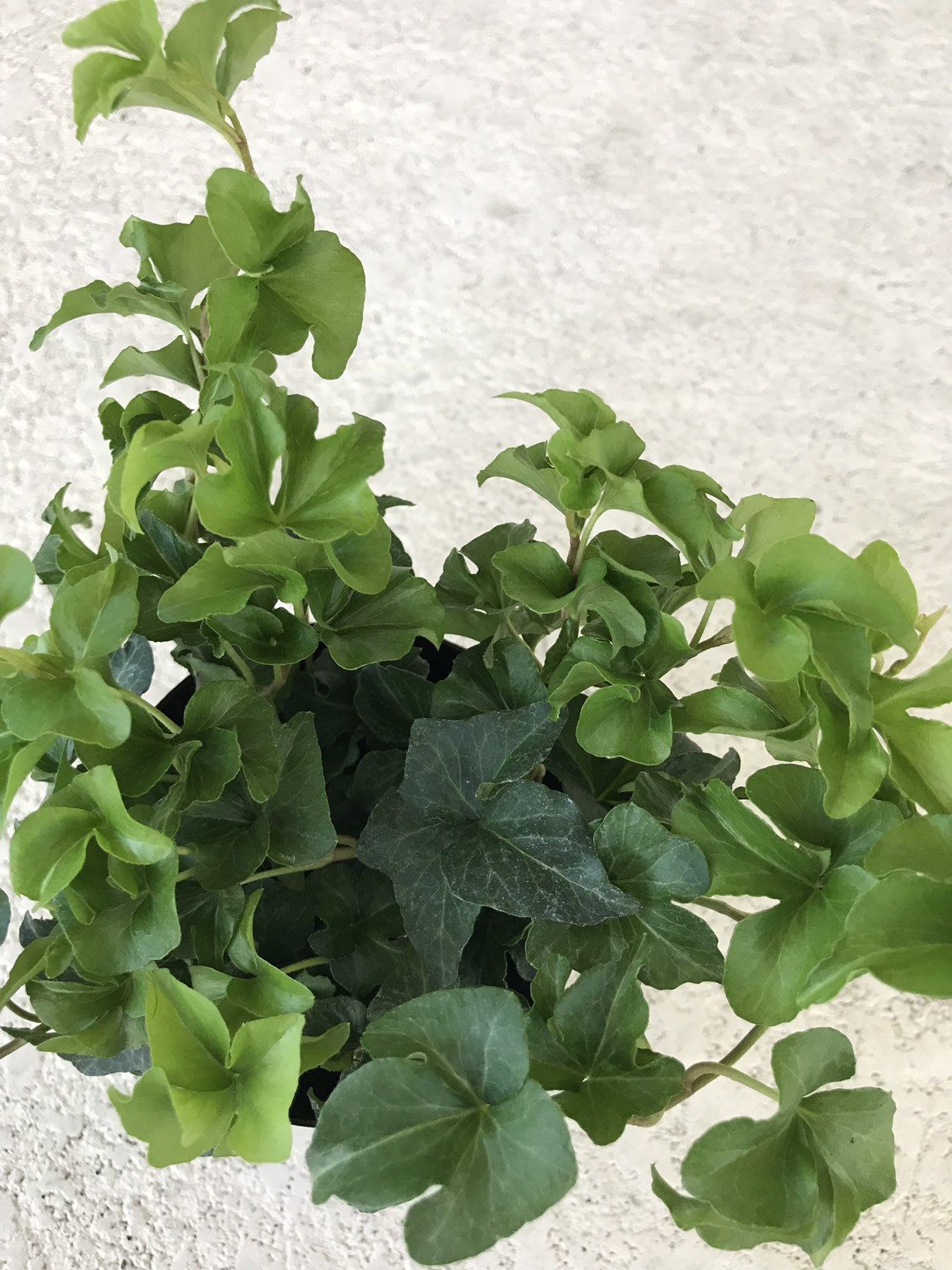
    With its quirky, curly, crumpled, bright green foliage, ‘Parsley Crested’ Curly Ivy is very decorative. The medium-sized leaves consist of three rounded lobes. The stems, green with purple reflections, take on red tones in winter. Easy to place because it hardly exceeds 2 m in height, it is delightful as a ground cover as well as a small climber. Wire mesh, wall, fence, pillar or shrub without much ornamental interest can serve as a support.

    • To install it in a pot, choose a jar, so that it falls elegantly to the ground.
    • In association, it is married to simple flowers that he is the most charming.
    • In a pot, mix it with impatiens or petunias .
    • In the ground, let the ivy climb in the company of a clematis , or let it run on a bed strewn with daffodils and periwinkles .

    So easy going …

    Ivy ‘Parsley Crested’ has the same requirements as other ivy, that is to say they are minimal: all exposures are suitable for it, it does not fear pollution, spray or wind, and has the ability to live both outdoors and indoors.
    In the garden, if it is able to grow in the most remote and dark corner of the garden, it would be a shame to confine it there, so much is its special beauty to be highlighted.
    When planting, do not skimp on the addition of compost if the conditions are difficult, such as when installing on a slope.