Category: Organic garden

Discover the principles and practices of organic gardening to grow healthy, chemical-free plants. Learn tips on natural fertilizers, pest control, soil enrichment, and sustainable gardening techniques. Create a thriving garden that’s safe for your family, the environment, and promotes biodiversity.

  • How To Treat Flowers Naturally!

    How To Treat Flowers Naturally!

    If the removal of chemistry seems obvious in the vegetable garden, this rule is often forgotten for flowers. However, the consequences for flora and fauna are identical.

    Opt for organic seeds or plants. The seed suppliers have good ranges and the nurserymen offer healthy plants whose recovery is guaranteed .
    In fertilizer, marine bone powder (phosphorus) acts on the roots gradually and makes the plant more resistant. Offer roasted horn which releases nitrogen slowly, and basalt for calcium, magnesium and trace elements. 

    Nettle or comfrey in the form of liquid manure, or herbal tea stimulate growth. For the latter, heat 200 g of nettle in a liter of water and bring to the boil. Leave to infuse for a quarter of an hour, filter and dilute one for nine. Spray on the foliage. For the comfrey manure, macerate with 1 kg of chopped fresh leaves in 10L of water. When the mixture foams on the surface, filter and store in small closed cans. Dilute this extract when cold, at a rate of 3% in water, it makes flowering plants, or your cuttings, more resistant to drought. An interesting finding for pots.

  • Why do green manures turn white? Explanations

    Why do green manures turn white? Explanations

    Sown in the summer, green manures suffer in winter, but for a good cause, the onslaught of frost. More than a ground cover, some help in the work with their powerful roots.

    Frost on green manures

    Similar, at best to the state of a cooked salad or at worst of a frozen bean, the green manures of the moment are very useful.
    Installed in summer and fall, they will be ready to be buried as soon as the thaw occurs. The plots enriched and structured thanks to the powerful roots of certain fertilizers, can receive after this work, the spring crops.

    Prune green manure

    • You have to chop the fertilizers. Opposite in the photo, in a greenhouse, the green manures which improve the soil are pruned at the end of winter.
    • After a harsh winter, they will be soft, it’s easy, they will decompose.

    Phacelia

    •  In summer and when they are in full vegetation, they can be mowed or pulled up and left as mulch on the ground.
    • In March, spotlight on the phacelia , a beautiful honey flower . If it occupies the land for more than two months, it is always possible to pull part of it to cultivate its vegetables in May. Leave the rest in place.

    Sow green manures as soon as a square empties

    Alfalfa should be sown sparingly as it is very difficult to remove. It should be installed in plots left to rest for at least three years and mown to feed rabbits for example.

    The smartest will have benefited from the benefits of winter spinach at a rate of 50 g / 10 m2, it enriches the soil with nitrogen. Start between two crops, and let the earthworms bury the cut leaves. It will always be possible to take some leaves for personal consumption.

    For late gardeners, settled in October, rye has a fasciculate root system(without main root), but with multiple rootlets which improve the structure of the soil. In addition, its intense vegetation suffocates weeds. Associated with the vetch (150 g / 10 m2), with the rapid growth, it cleans the ground of the weeds. Vetch is, moreover, a Fabaceae which fixes nitrogen from the air in the soil and which thrives in clay soil.

    In season, you can play with mixtures of crimson clover, mustard, buckwheat, wheat. 
    If the ideal is to cut these fertilizers just before flowering, but it is so pretty that sometimes you can let
  • Fight against chestnut leaf miner

    Fight against chestnut leaf miner

    Long before the arrival of autumn, the chestnut trees began to defoliate and continue to lose their leaves parasitized by the leafminer. Now is the time to act to limit its action next year.

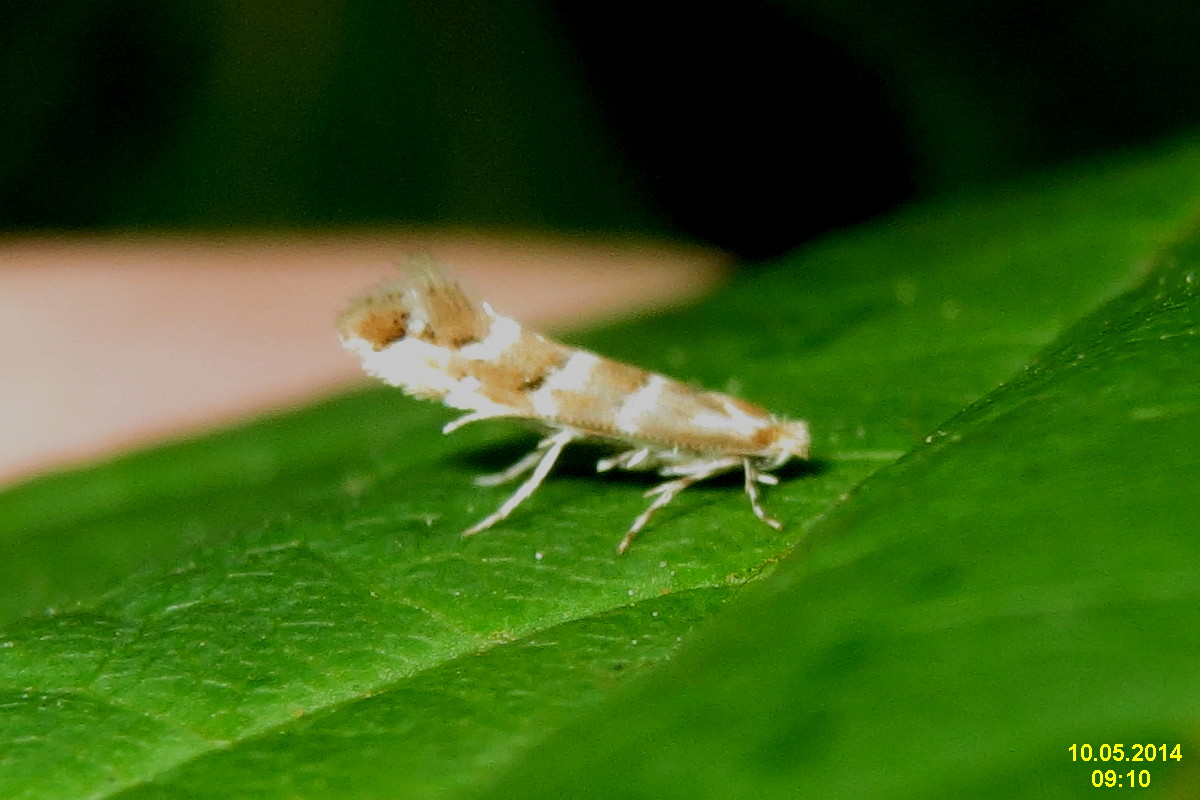
    In Europe, white chestnut or horse chestnut ( Aesculus hippocastanum ) have been severely attacked by the leafminer ( Cameraria ohridella ) since the end of the 1980s. This parasitic butterfly of uncertain origin and observed in the east of the France in 2000 quickly progressed to the point of invading practically the whole country from 2004.

    The great availability of chestnut trees on French territory, the rapid increase in the populations of this pest (it is estimated that the leafminer has three generations per year in France and that the population is multiplied by ten with each generation) and the absence of predators specific make the struggle more difficult. Synthetic pheromone trapping only removes part of the leafminer moths. Today, the cheapest method of reducing populations remains the careful collection of dead leaves and their disposal.

    The insect overwinters in the leaf blades that have fallen to the ground. Without this protection, he cannot survive. It is therefore important to systematically collect the leaves from under the tree and nearby as soon as the fall begins. And they must be destroyed, the best being incineration. Composting is not a solution to eliminate them.

    To your rakes and vacuum blowers!