
There is no specific treatment for lawns against chiggers, which does not stop you from looking for ways to scratch less! Chiggers are not insects but mites, spiders. Moreover, the problem is generally poorly understood and has nothing to do with mosquito control! Chigger larvae behave somewhat like ticks. In the hot hours of summer, they are confined to tall grass, or the upper parts of vegetable garden crops, and they drop onto the first warm-blooded animal that passes by. The gardener, his family, his children, his descendants…and their guests so happy to roll around in the grass. Not to do ! To limit the inconvenience, start – if possible – by watering the lawn either more often or more generously. Mow close and take advantage of autumn to sow mint and lemon balm, broadcast, in the grass. It smells very good and the chiggers don’t like it!
Category: Lawn
Learn how to create and maintain a healthy, lush lawn that enhances any garden or outdoor space. Discover tips on grass selection, seeding, watering, fertilizing, mowing, and pest control. Explore practical advice for keeping your lawn green, vibrant, and beautiful year-round.
-
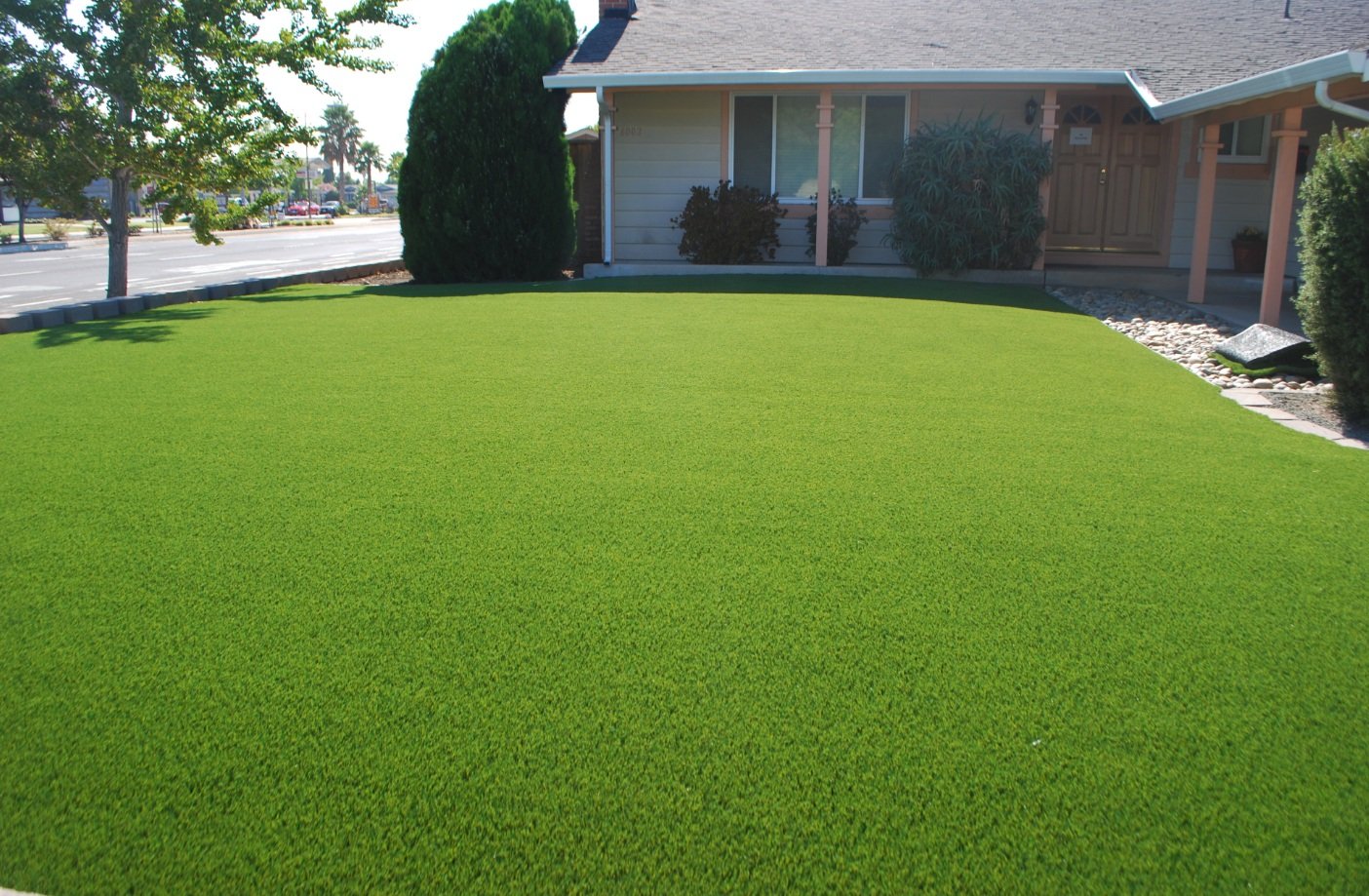
Synthetic turf: the keys to choosing well
Practical, quick to implement and strikingly realistic, synthetic turfs are increasingly being used in our exteriors. Even if the artificial lawn does not require watering, mowing or special care, it is not chosen at random! Follow the leader…
A beautiful, non-messy lawn
Unlike artificial grass, a natural lawn needs a lot of attention: regular mowing, abundant watering, weeding… tasks that take a lot of time for results that are not always there… On the other hand, a simple brush enough to keep an artificial lawn green and beautiful all year round. Much less restrictive maintenance which leaves time for leisure. Another advantage of synthetic turf: installation that does not require soil. It can therefore be installed on the beach of a swimming pool without risking polluting the water, on a terrace or on a playground where children will not get dirty.
A lawn for each use
Before you get started, define what you will use your new lawn for.If you want to transform your concrete terrace or balcony into a delicate and welcoming space, choose thick, soft lawns that cushion your steps and invite you to relax.For a busy passage, choose a shorter section and a less dense grass which will not lie down under repeated trampling.In a pleasure garden, favor matte shades. For a more natural result, prefer lawns that mix shades of dark green and brown strands.And if it is a playground, choose a product that is very resistant to wear and tearing. A soft and dense fiber provides better cushioning in the event of a fall and prevents many injuries.
Four selection criteria
Use: before choosing, make the difference between the “green carpet” which barely allows you to install an inflatable swimming pool for children one summer and the
high-end Exelgreen synthetic turf which offers a very realistic rendering and which is installed for many years.
Aesthetics: favor matte lawns. This is the first detail that will give credibility to the imitation.
Density : the greater the number of strands per m², the more pleasant it is under your feet. A dense lawn is also more compact and absorbs footsteps better. Heavier, it is also more stable.
Flexibility: a flexible weave allows your lawn to better adapt to the shape of the ground. The feeling of touch and the sound of friction is also more pleasant.
One pose for a guaranteed result
For a better result of your future lawn, it is advisable to first test the lawn in situ by obtaining one or more samples (available from the manufacturer for only a few euros). To cover a large surface, opt for large width rolls in order to have a minimum of connections. Finally, know that to obtain a lawn the installation of the rollers is carried out in the same direction, knowing that the most beautiful effect is obtained by looking at the lawn “against the grain”. So remember to orient it intelligently to benefit from the best possible results. To make the effect even more realistic, don’t hesitate to include some plantings or flowerbeds to break up the space. Finally, if several rollers are necessary, check that they come from the same “bath” to avoid differences in color.
-
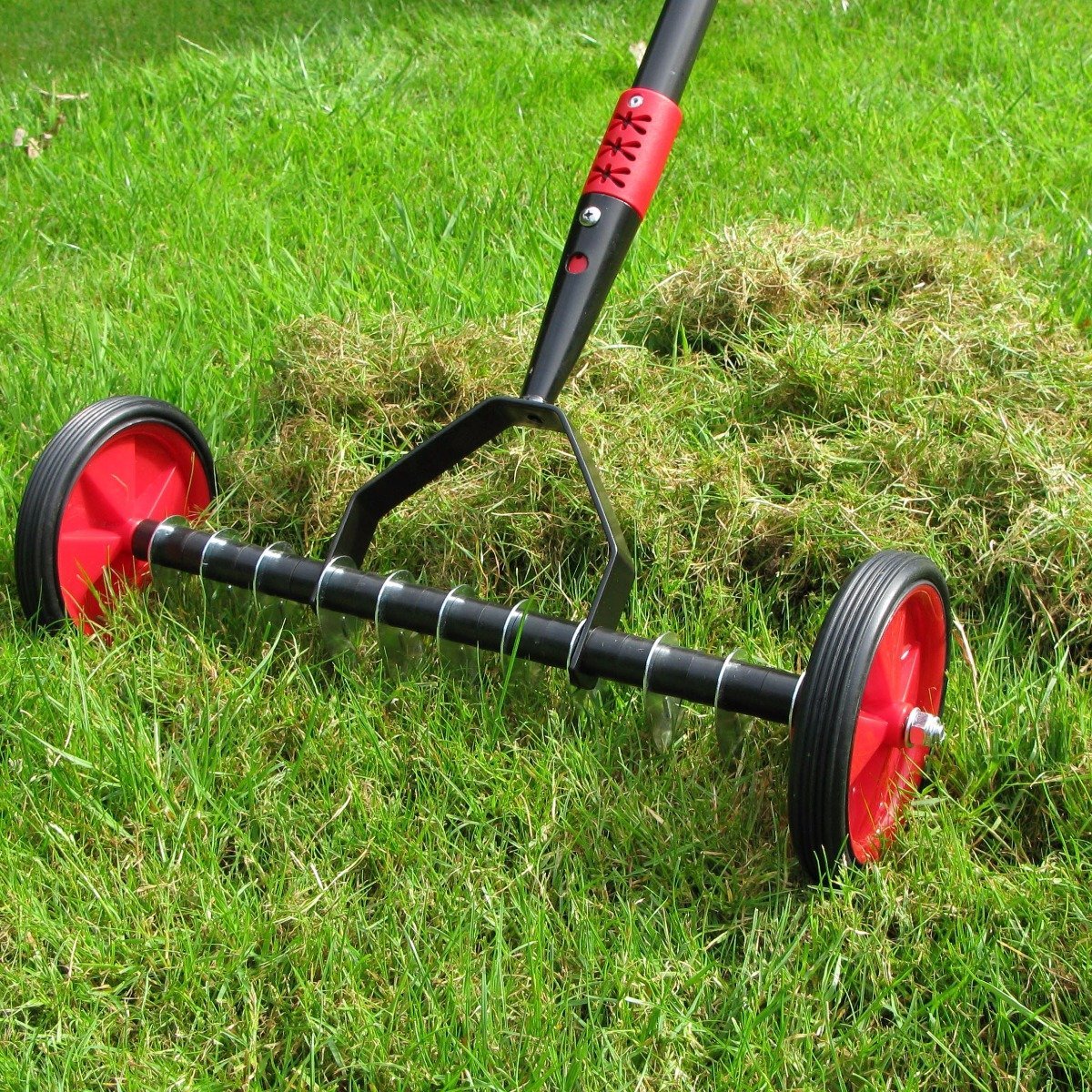
Scarifying the lawn: eliminating moss
Scarification consists of cutting out the tangle of surface roots and blades of grass, blocking air and water exchange with the subsoil. It allows you to regenerate an old lawn.
When and how to scarify your lawn?
A single pass of the
scarifier per year is enough to maintain a
lawn in good condition. This operation should be carried out in dry weather
at the end of winter .You must start by
mowing the lawn and collecting dead leaves. Adjust the working depth according to the nature of the soil and the degree of degradation of the lawn. As it penetrates the ground, the scarifier blades cut the thatch, slice the
moss and cut the weeds.
What to do after scarification?
Choose a replenishment turf whose composition is the same or very close to the mixture in place so as not to have any difference in vegetation.
Should you mow your lawn before scarifying?
To be effective, scarification must be carried out on slightly damp soil. Water the lawn one or two days before your intervention during periods of drought. Mow fairly close and collect the cuts .
Scarify with a lawn scarifier
Scarify the entire surface of the lawn, crossing the paths when the lawn is very damaged . This operation also eliminates some of the moss and weeds. Don’t be surprised if the grass appears completely turned over!
Remove moss from the lawn: sweep the lawn
When the job is finished, sweep the lawn. Scrape the soil vigorously to remove all grass debris and extracted roots. Take these wastes to the compost pile and water with an activator to speed up their decomposition .
Should you sow after scarification?
Carry out a re-sow with a mixture of coated grass seeds, which protects them from the appetite of birds. Roll with a roller and water in fine rain . The traces of scarification disappear after a month.
-

Robot mowers. Which model and how to install it
The dream becomes reality: without any effort, here is a perfectly mowed lawn! This little miracle is possible thanks to the robotic lawnmower. To try it is to adopt it !
What is a robotic lawnmower?
Intelligent mower, the robot mower is a device that mows the lawn by itself, in any weather, whatever the time and despite the irregularities of the ground. Very discreet, it hardly makes any noise and does not give off exhaust gases. Who says better !
The result is impeccable: the lawn is dense and always well maintained.
If it discharges, the robot places itself on its charging station before resuming work independently and according to your programming.Advantages of the robotic lawnmower?
- The grass is always greener:
With its exclusive cutting system, Automower® will cut a few millimeters of grass daily which will decompose quickly. Your lawn creates its own compost, strengthens and beautifies itself. And you don’t have any more grass to clear out… everything becomes so simple.
- Even for complex terrains:
The robotic lawnmower circumvents obstacles, overcomes rough terrain for a perfect result. The adaptive timer function automatically adapts the mowing time according to the growth of the lawn.
- The robotic lawnmower is not afraid of the dark:
No disturbance for the neighborhood, the sound level of a robot is between 58 and 61 DB (A), which is very appreciable for you and your neighborhood.
- Even in the rain:
The robotic lawnmower is not afraid of the rain and leaves no mark in its path, thanks to its random movement. The most sensitive parts are protected from the elements, dust and grass clippings.
The robotic lawnmower is the ideal solution to face increasingly important and restrictive ecological and environmental constraints (reduction of CO2 emissions, reduction of noise pollution, reduction of the use of phytosanitary products, etc.). requires a low level of maintenance compared to a traditional mower.How to choose a robot lawn mower?
- Choose your robot according to the lawn area to be cut. The robots can mow on small fields as well as on large fields of 5000 m² with more complex shapes.
- Choose your robot according to the area of your lawn (a robot can mow between 43 m² / h and 208 m² / h depending on the area for which it is programmed).
- If the terrain is rough or steep, buy a suitable robot. Some models can mow on slopes of up to 45%.
- Another selection criterion is its programming, which can be done manually or via a smartphone and various features offered.
Install a robotic lawnmower
- Installation of the robot may require specialist assistance to ensure robot performance.
- If you want to install it yourself, below are some tips:
- On a map, determine the areas to be mowed and the obstacles to be delimited.
- Place the charging station flat in the center and near an electrical outlet.
- Place the robot’s peripheral wire all along the area to be delimited and the obstacles to be cut out.
- Secure the wire to the ground with jumpers or dig a small trench to bury it (no more than 20 cm).
-
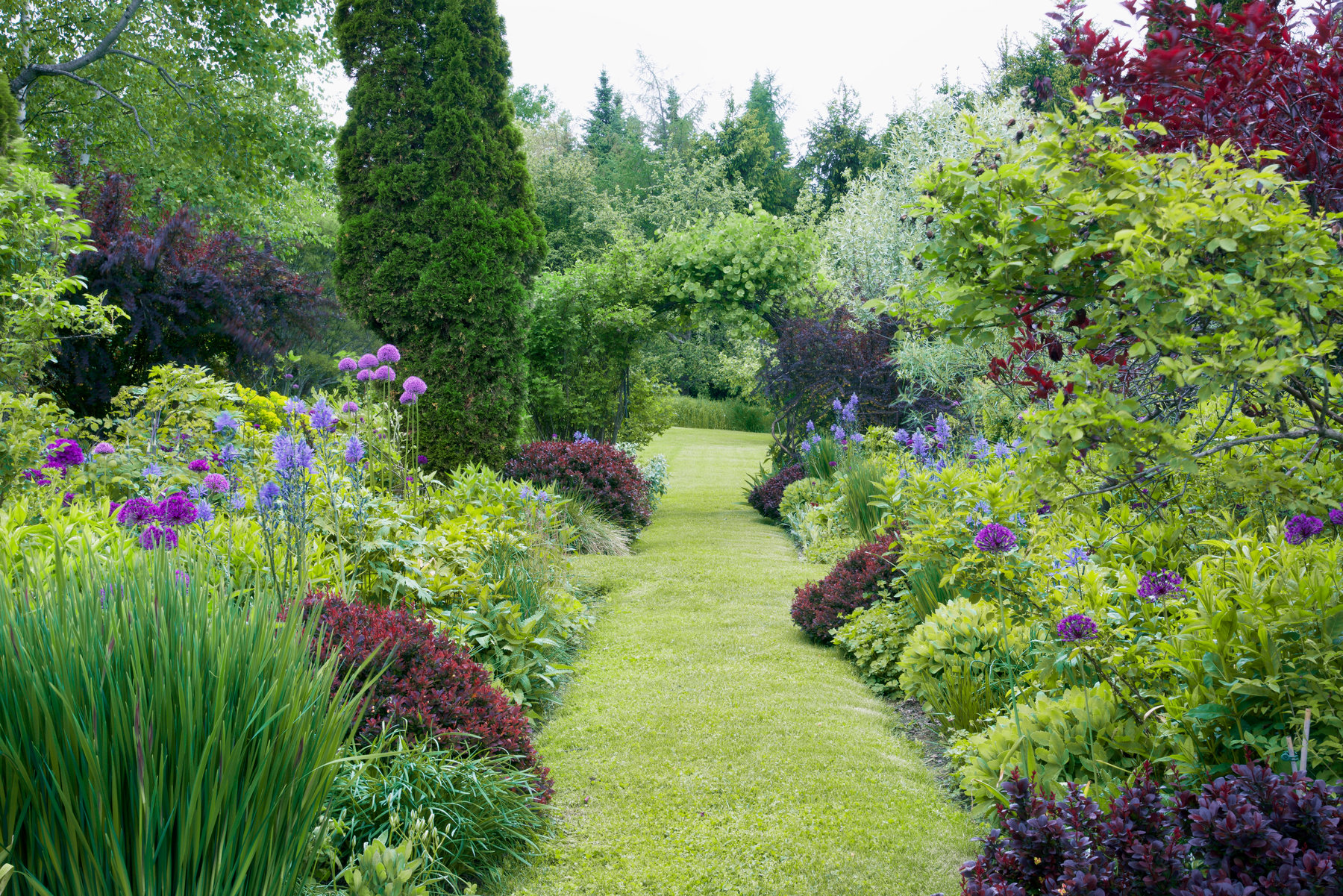
Limit the area devoted to grass
The lawn is fragile and consumes water, fertilizers, and treatment products. Partly replace it with other less demanding plants or turn it into a meadow.
It’s a great classic! More than 84% of French gardens have at least one small lawn, which still represents an estimated area of almost 640,000 ha! It symbolizes nature for many. But the lawn is one of the most water-intensive areas; it often requires inputs of nitrogenous fertilizers and pesticides and encourages the use of a motorized machine emitting CO2 … the mower.
The gardener must rather take care to reduce this lawned space, reserved for places of games and idleness. Elsewhere, it will replace it with ground cover plants ( ivy, periwinkle, and helxine in the shade; dwarf sedum, perennial geranium, and dwarf bamboo in the sun), which do not require any maintenance. In the most remote parts of his house, he can even change the grass into a meadow by mowing the grass only once a year, at the end of summer.
-
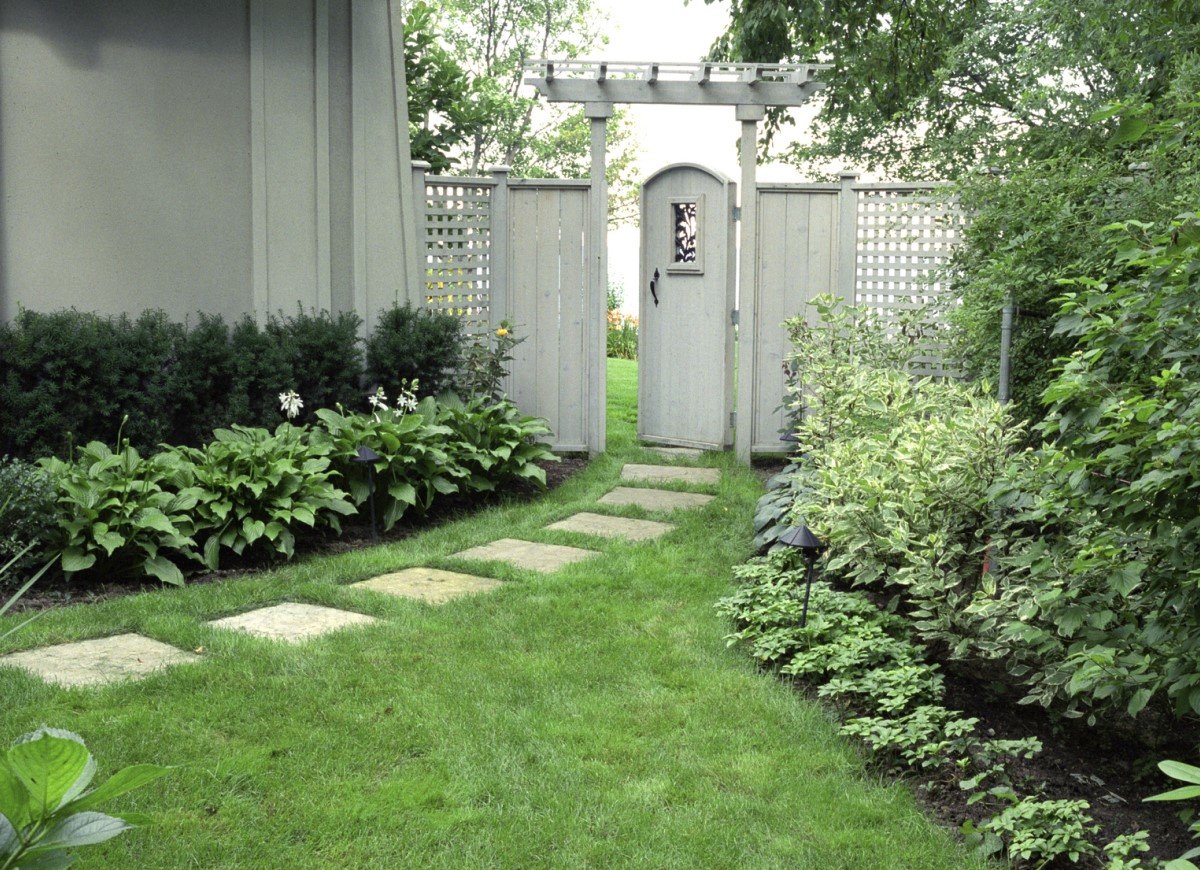
Maintain lawn edges at the end of summer
Mow the lawn and cut perennials along the edges for a clean grass path.
The perennials that line the paths will also have benefited greatly from their vacations. Depending on the variety, it will be necessary to cut the deflowered stems or support the inflorescences that are too heavy . The passage of the mower in alleys narrowed by the overweight of the beds becomes a real headache. At the same time, you will have to respect the perennials at the edge while cutting the relatively tall grass.
The right gesture
Support taller plants with a line before the machine passes. The installation of small paving stones at the height of the grass constitutes a solution to limit the progression of the grass in the massif, but also to mow more easily, without risk of cutting your flowering plants.