Category: Flowers

Explore the beauty and diversity of flowers for your garden, balcony, or indoor spaces. Learn how to grow, care for, and arrange flowering plants, from vibrant annuals to perennial favorites. Discover tips on planting, seasonal care, and creating stunning floral displays that bring color and life to any environment.

  • How is Gomphrena ‘Truffula Pink’ grown?

    How is Gomphrena ‘Truffula Pink’ grown?

    Foliage forming very branched and downy tufts covering all summer long with fuchsia pink flowers attracting pollinating insects, the gomphrena ‘Truffula Pink’ is a novelty not to be missed! Easy to grow, resistant to heat and drought, this easy-care plant will delight all gardeners.

    Characteristics

    Soil: drained and light
    Spacing: 30 cm between 2 plants
    Planting: in May
    Flowering: from June to October
    Exposure: sun
    Use: full ground and pot
    Height: 40 to 60 cm

    Culture

    Easy to grow, this plant from a species that grows spontaneously in the sunny meadows of South America requires only limited maintenance to abundantly flower the garden or a pot on a balcony.

    Plant the gomphrena ‘Truffula Pink’ in May in the ground. This plant appreciates a well-drained, infertile soil with a neutral to acidic pH. It appreciates full sun where it will flower spectacularly.

    1. Dig a hole equal to twice the volume of the root ball in all directions.
    2.  Install the plant in the hole by adjusting its height so that the collar is flush with the ground.
    3. Recap then water.

    regular watering is necessary time to ensure recovery, then the gomphrena will only little watering and will even tolerate a drought event. No need to add fertilizer for this greedy plant.

    Pot :

    1. Choose a container pierced at the bottom and line it with gravel to ensure good drainage;
    2. Compose a mixture of potting soil, garden soil and river sand;
    3. Plant the gomphrena ‘Truffula Pink’ in the center of the pot;
    4. Pack around the collar then water.

    In pots, water as soon as the substrate dries on 3 cm on the surface. Add a ‘special flower plant’ fertilizer once a month.

    Use

    The gomphrena ‘Truffula Pink’ is as remarkable on the edge of flower beds and paths as it is in a very wild-looking flower meadow where it attracts many butterflies and other pollinating insects . It also finds its place in mixed-border in the company of perennials and annuals or even in rockeries and on an embankment that it will cover with pink throughout the summer.

    In a large pot, it brings its soft hue to a terrace or balcony promoting biodiversity in urban areas.

    Cut flowers make beautiful, long-lasting bouquets. Once dried, they adorn the interior during the long winter months.

    Associations

    A sloping flower bed 

    To make an embankment flower in the long term, it is possible to embark on the creation of a colored bed that will amaze guests. The gomphrena ‘Truffula Pink’ will take center stage here to take advantage of its wild aspect. At the edge of the embankment, place 5 plants of ‘Rozanne’ geranium for its softness and bright color. We then install 10 plants of gomphrena ‘Truffula’ then we have 10 plants of Carex EverColor® on its left and 10 plants of Mirage sage on its right. The Carex will highlight the stunning fuchsia pink of the gomphrena. 

    A flowery path for insects 

    Pathways are generally used as transitional spaces between different parts of the garden. To flower them, you can opt for easy-care plants like those from the Facil’été® range! Some varieties attract pollinating insects which play a crucial role in biodiversity. You might as well kill two birds with one stone! For a flowery and attractive path for the bees, we install several plants of gomphrena ‘Truffula’ in staggered rows between which we interpose plants of sage ‘Mirage’ and sage ‘Mystic Spiers Blue ‘. Something to please all the insects passing through the garden! 

  • May in the garden: planting and maintenance

    May in the garden: planting and maintenance

    May is an important month for the gardener. With the return of sunny days and the first heat, it’s time to plant your vegetables and prepare your beds. Today, Sems le Jardinier explains to us how to properly prepare his vegetable patch and ornamental garden for the summer. Let’s go!

    May in the garden: how to prepare for summer?

    Between the last cold and the first heat, May is a month of transition in the garden. 

    The end of the Ice Saints

    The Ice Saints designate three days of May during which late frosts can occur overnight. The Ice Saints take place on May 11, 12, and 13, 2021. These drops in temperature can cause significant damage to crops. This is why it is advisable to wait until mid-May to plant cold-sensitive varieties outdoors. 

    Take care of your soil in May

    Last month, in April, Sems took care of his soil by cleaning and nourishing it. At the beginning of May, our favorite gardener finishes the soil cleaning operation by eliminating the last weeds in a natural way.

    Whether in the vegetable patch or the ornamental garden, the simplest and most respectful technique for the soil is still to remove weeds manually using a hoe, a rake, or … with a gouge asparagus! The herbicides, too aggressive, be avoided. 

    Use of the greenhouse in May 

    If the weather is still cool and a greenhouse is available, some vegetable plants can be installed there. This is a good tip for vegetables that are sensitive to the cold, like: 

    • The ‘Rocky ‘ cucumber or 
    • the ‘Sebring ‘ zucchini for example.

    However, remember to ventilate the greenhouse well: temperatures can rise quickly! In addition to lowering the temperature, aeration reduces the risk of fungal diseases.

    What to do in May in the vegetable garden?

    Planting vegetables and aromatics in May ensures abundant and delicious harvests in summer!

    Plant the vegetables for the summer

    May is the ideal month to plant fruit vegetables in the ground. You can opt for vegetables from the sun, such as: 

    • tomatoes ‘ Fleurette ‘, ‘ Orange Fizz ‘ or cherry tomatoes ‘ Dolly ‘,
    • ‘Poxigo’ or ‘ Bellania ‘ peppers ,
    • the eggplant ‘Clara ‘. 

    If you live in a cool area, installing a tunnel or a bell above the plants is a good way to protect your vegetables. This technique also makes it possible to speed up production. 

    Sems is also taking advantage of the return of sunny days to transplant his salads, such as ‘Serpico ‘ lettuce or ‘Frantic ‘ batavia . Be careful, however: in case of rain, the snails and slugs are out and can come and nibble the leaves. Depositing sawdust, ash or coffee grounds helps protect salad crops. We can also distribute saucers of beers in the vegetable garden to trap these unwanted people.  

    From mid-May, when all risk of frost has been ruled out, Sems will also plant more chilly vegetables, such as ‘Cyrano’ melon, ‘Divine’ pumpkin, or ‘Betty Blue ‘ pumpkin.

    Caring for aromatic plants 

    Aromatic plants do not all have the same resistance to cold. The more vigorous ones like the mint ‘Mojito Cocktail ‘ can be taken out from the beginning of May. This variety appreciates partial shade and requires frequent watering. 

    Other more fragile plants should be kept indoors while waiting for warmer temperatures. This is the case with the ‘Grand Vert Compacto ‘ basil: Sems will install it outdoors from mid-May.

    When to water your vegetable garden in May? 

    Once all these beautiful vegetables are planted, Sems does not forget to take care of his vegetable garden by watering abundantly

    However, the hottest hours of the day are avoided and watering is preferred in the early morning or early evening so that the plants can make the most of the water supply.

    What to do in the ornamental garden in May?

    Sems is already preparing his ornamental garden for the summer period. 

    Prepare your flower beds

    In early May, we can start to imagine colorful and original scenes for this summer. Now is the time to organize your beds and buy your plants to be ready to fill the beds when the time comes. 

    From mid-May, it’s time to plant the annuals. To ensure continuous flowering from spring to autumn, we can count colorful and very productive varieties such as:

    • the ‘Easy Wave ‘ petunia , 
    • the begonia ‘Megawatt ‘
    • or the impatiens ‘SunPatiens ‘.

    Note that these plants require regular watering and an organic amendment every two weeks to flower abundantly. 

    In May, it’s time for Sems to plant the annuals and perennials that will decorate his new embankment. After having defined the location of each variety, he goes to his usual point of sale to buy his plants from the Facil’été® range. From May 20, he will begin to set up his massif. Gerberas ‘Garvinea Sweet ‘, dipladenias ‘Bella ‘ or calibrachoa ‘Cabaret ‘ … You will soon discover this superb combination of plants! 

  • How to divide the tufts of sedum spectabile?

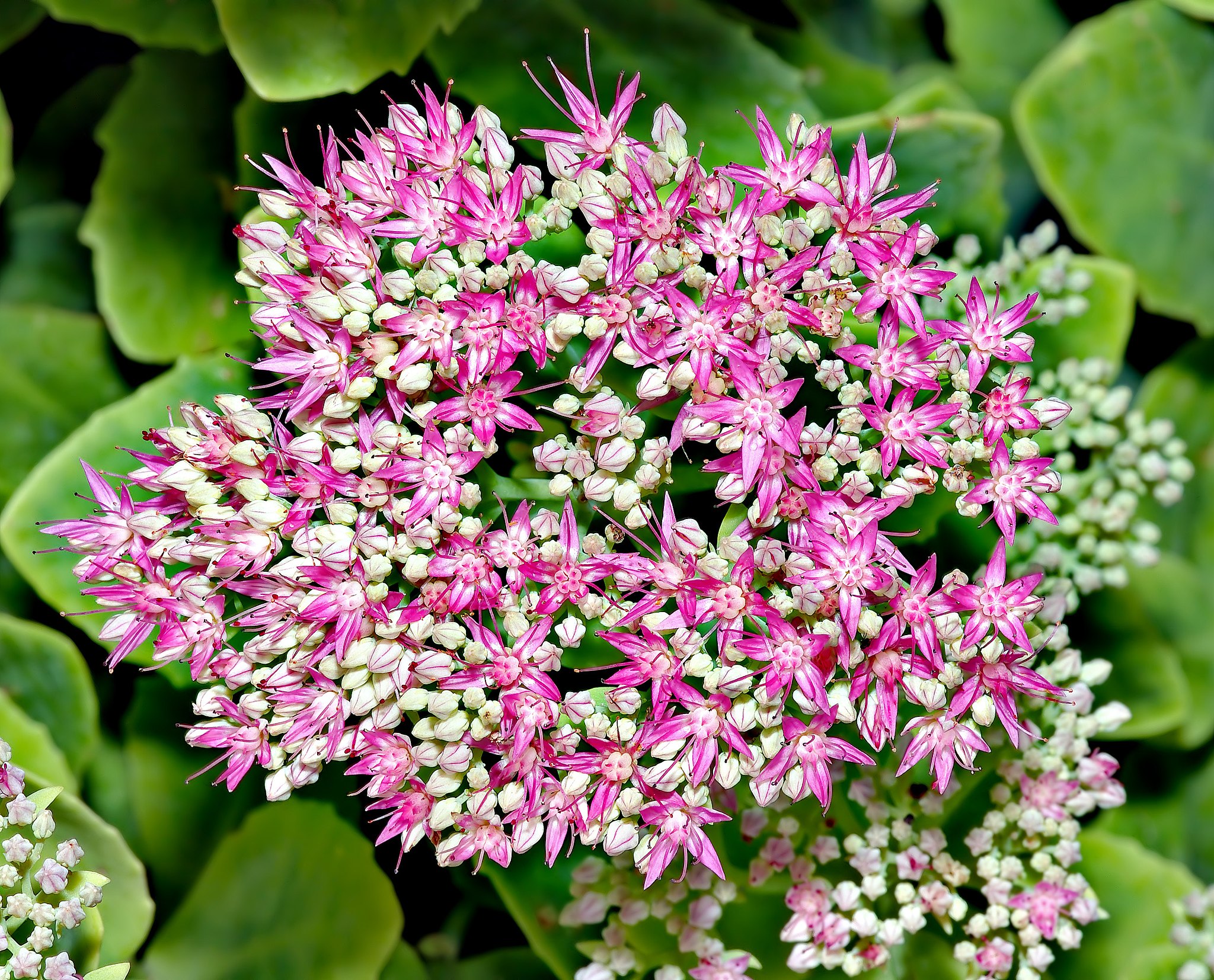
    How to divide the tufts of sedum spectabile?

    Stonecrop or sedum spectabile is a perennial plant that is easily propagated by stem cutting or leaf transplanting in summer. However, the quickest method to ensure flowering in the first year is undoubtedly tuft division.

    Like most succulents, stonecrop sedum is particularly suited to arid life. It grows in poor soil, drained and preferably exposed to the sun to benefit from a flowering that extends from August to October depending on the variety.
    Interesting for its decorative aspect but also for its ability to attract many insects and more particularly butterflies. It is the easy-care waterless plant for all sunny gardens, balconies, terraces, and south-facing windowsills.

    Divide the sedum for rapid flowering

    It multiplies very easily by stem or leaf cuttings as well as by seed. However, tuft division allows many plants to flower in the first year.

    When to divide the sedum?

    The stonecrop divides in autumn after flowering or very early in spring in March, April. It could also divide later, as it gives off roots most of the year except in winter.
    spring division ensures a nice flowering in the late season to attract butterflies.

    How to divide the sedum?

    If the stonecrop is in the ground in a bed, it is possible to cut part of the stump or to extract it, take a part, and put it back in place.
    Another technique is to get a sedum in a very well-developed container to then peel it. From a purchased plant, several dozen new plants can be made.

    1. Deposit the sedum.
    2. Slide a long blade between each rod start. At this stage the sedum has barely started.
    3. Remove the soil around the roots.  
    4. Prepare a planter with a granular potting soil at the bottom of the container (rest of the sieve).
    5. Add a universal potting soil or geranium (it doesn’t matter, the stonecrop is not difficult).
    6. Place the sedums in the planter in staggered rows, packing around the foot.
    7. Water.

    And after

    Sedum is a decorative succulent plant for its foliage, it can remain alone in the planter which will prevent watering errors. It is the plant that we can forget for several days without being mad at us.

    From August we can expect a nice show on its flowers with the butterflies fluttering near the sunny windows. Sedum spectabile is aptly named!

  • Choosing and planting the ornamental sweet potato

    Choosing and planting the ornamental sweet potato

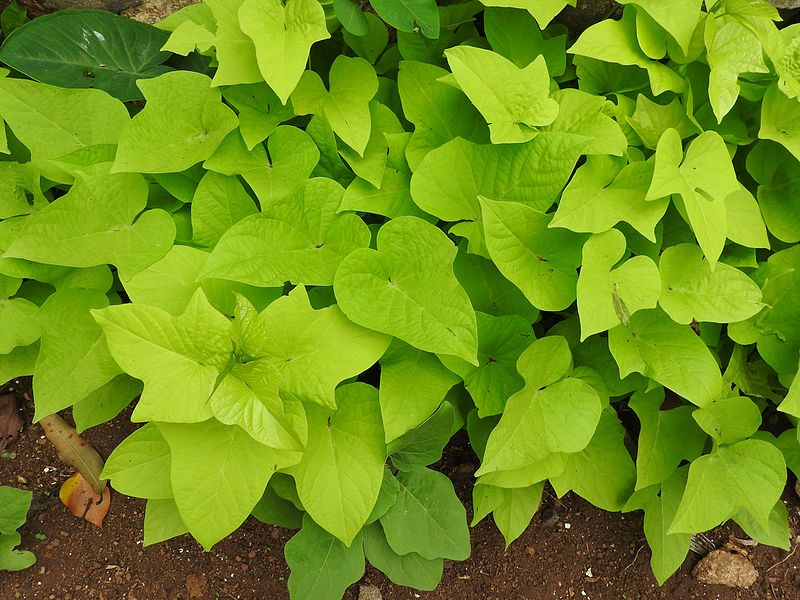
    How to choose and plant ornamental sweet potatoes, not to be confused with the table sweet potato. The answer is in this video with Hubert the gardener.

    Ornamental sweet potatoes are decorative for their tricolor or plain foliage . They cannot be consumed! They are often used in flower arrangements in towns and villages.
    They don’t need a lot of water.
    They will do well in large vats with rich soil. They easily fill empty spaces in flower beds. They go well with ornamental cabbages or maritime cineraria . Very beautiful on the edge, they are cultivated like an annual flower . They disappear with the first frosts. The rhizomes are then removed from the ground and stored like potatoes.

  • Flora and flowers threatened in France

    Flora and flowers threatened in France

    The 5,000 species that make up the plant diversity of our regions suffer from many ills. Let us learn to recognize them and make our gardens into sanctuaries.

    It is impossible not to notice it: the French flora is becoming impoverished. Even species that were once commonplace, such as corn niello, are starting to become scarce. The exploitation of natural environments, global warming , the intensification or abandonment of certain agricultural practices and uncontrolled concreting are the main causes of this decline.
    Thus, it is now 15% of our flora , or about 750 species, which are threatened or almost threatened. The situation varies from region to region. Because the disappearance of the flora is an insidious phenomenon: less habitats, there are fewer populations and therefore a reduced genetic diversity, starting an inevitable decline …

    On a walk, good reflexes

    Let’s say it again: picking a bunch of wildflowers on a nature walk is a bad idea. Not only does this deprive the plant of seeds and reduce the amount of pollen available, but it penalizes foragers, sometimes very specialized, themselves dependent on rare plants.
    The smallest actions during a hike can have negative consequences , such as flipping rocks or going off trails. Avoid trampling natural environments, stay on the paths, do not cut switchbacks in the mountains …
    Even “wild swimming” has negative effects caused by disturbance and bodily products that pollute the water. Learning to identify the flora in its natural environment and gleaning large bouquets of photos remain the surest way to enjoy the spectacle of wild nature.

    The danger of the expansion of cultivated plants

    This is a facet of human activity that is still little known: the spontaneous contamination of wild plants by cultivated varieties, sometimes hybridized, always selected. However, these horticultural forms are not very varied genetically and often more sensitive to diseases and pests.
    Locally, certain plants can be cultivated in such large numbers that the pollen, once transported from gardens to natural environments, creates a mixture of wild and cultivated plants. The marsh hibiscus, prized in the South-West, is thus threatened.
    In other regions, the risk is the same: lavender, wild apple trees, rosehips, junipers, etc., are some of the plants that can undergo this recurring process.successive hybridization and backcrossing , which scientists call introgression .

    Unusual species here but invasive elsewhere

    The false water lily ( Nymphoides peltata ) illustrates the difficulties of preserving plant biodiversity . This small aquatic plant, lovely in a pond, is classified in danger of extinction in the South-East. She disappeared from Brittany, Hauts-de-France, Normandy and Auvergne. And yet: in North America, it has become so established that it aggressively colonizes many bodies of water.
    It behaves there like the North American aquatic plants introduced in France, like the jussie ( Ludwigia), which slows down the circulation of water and plunges aquatic environments into the shadow of its covering foliage, or Nuttall’s water lily, which threatens aquatic flora. In America, the presence of the false water lily can sometimes depreciate the price of real estate on the edge of a body of water! With us, however, there is no contraindication.

    Northwest: fragile species

    In the north-western quarter of France, many plants naturally present in southern and western Europe are reaching the limit of their development area.
    Despite climate change, these species do not benefit from temperature changes because their seeds are not very mobile. If their habitat disappears, they also decline and are therefore locally vulnerable. As for the very jagged coastline, it is also home to several rare species, vestiges of a population that used to be much larger, and which are today sometimes very small: these endemic plants , which cannot be found anywhere else, are numerous in that part of the territory.

    North-West: Endangered horticultural heritage

    The horticultural diversity of northwestern France is also threatened with oblivion. There are varieties well adapted to the local soil such as the pear tree ‘Figue d’Alençon’, characterized by its stocky and rounded fruits, which appreciates light and cool soils. Other varieties of pears and, of course, apples, such as ‘Bondon’, yellow striped with red and sweet, belong to this endangered plant heritage.
    But we must not neglect other less emblematic crops, such as ‘De Trémont’ lettuce or ‘Grison de Loire’ bean.
    Rather cool summers and heavy rainfallat the start of the season suit them well. All these varieties are still kept by local horticultural companies or even nurserymen specializing in old varieties, because they are no longer distributed in the traditional commercial circuit.

    The culture of colchicum

    name Colchicum autumnale , or killer dog, saffron-mongrel, meadowsweet …Typebulb plant.Distribution and natural habitatThe crocus is found throughout Europe, but in regions where summers are hot.Threatmore or less frequent in France, this plant is considered to be absent in Brittany and remains vulnerable in Normandy, in particular because of the mechanization of pasture maintenance.Cultivate itcolchicum likes lawns mowed in July. In a massif, it is better to offer it a bright location in fresh earth. This species is easily naturalized, but its bulky foliage, which only appears in spring, must be allowed to develop and complete its cycle. The horticultural forms are more floriferous, but sometimes sterile.

    Growing Italian gladiolus

    name Gladiolus italicus .Typebulb plant.Distribution and natural habitatthis gladiolus grows in the harvests and cultivated places of the Midi, the Rhône, Puy-de-Dôme, Charente-Maritime and Vendée.Threatextinct in Brittany, it is critically endangered in other regions (Auvergne and Pays de la Loire), due to the disappearance of its habitat.Cultivate itoffer it a sunny slope, even scorching in summer, in well-drained soil. It supports limestone well, if the soil is rich and even ends up forming a nice clump.

    Growing the Glénan narcissus

    name Narcissus triandrus subsp. capax.Type bulb plant.Distribution and natural habitat this large-flowered form is endemic to the Glénan archipelago, in Finistère.Threat the picking for the bouquets, the uprooting of the bulbs and the arrangement of the old pastures in cultivated fields almost made disappear this plant.Cultivate it the typical form is not commercially available, but ‘Thalia’, a horticultural selection, requires only draining soil and an open location. It should be planted en masse for a natural effect .

    North-East: a flora under tension

    The vulnerable plants of the flora are especially dependent on wetlands. There are also those whose distribution reaches the northern limit of the region.

    Drainage of wetlands, urbanization and modernization of agriculture have had negative effects on some of the flora in these regions. Botanical conservatories are thus reporting a drop in the number of endemic species .
    The Paris region has very rare species in the plains, such as variegated horsetail ( Equisetum variegatum ) or large-flowered sabline ( Arenaria grandiflora ), both on the verge of extinction.
    Small orchid of the wet meadows, the summer spiranthus ( Spiranthes aestivali) has not been seen since 1985 in the North, but remains present everywhere else in France. The St. Michael’s daisy ( Aster amellus ) is threatened, and the common pulicaria ( Pulicaria vulgaris ) is protected. Likewise, it is only in Herbsheim, in Alsace, that we can see the doubtful selin ( Kadenia dubia ), and in Ohnenheim, the fragrant garlic ( Allium suaveolens ).
    In Lorraine, the pubescent stonecrop ( Sedum villosum ) is now absent. However, a few actions would suffice to protect these plants, such as stopping mowing the edges of the roads. Gardeners can also create a small body of water at home, because wetlands are a welcome refuge for these magnificent ornamental plants.

    Treasures in the garden in the Northeast

    The gardens of north-eastern France traditionally host a great diversity of cultivated varieties, due in particular to the influence of neighboring countries, with whom exchanges have always been fruitful.
    There are marvels there, such as the ‘De Lunéville’ melon. This 2 kg Cucurbitaceae resists cold and humidity and offers a tender flesh and not hard like some modern melons. Only downside: it requires regular pruning in order to obtain well-formed fruits.
    The region is also proud of a tradition of beans, some of which have been pulled from oblivion at the last minute such as the flageolet ‘Blanc des Flandres’, the butter bean ‘Du Cambrésis’, the coconut bean ‘De Chéhu’, etc. And we must add the carrots,

    Growing the wood anemone

    nameAnemone sylvestris.Typeperennial.Distribution and natural habitatit is present over a large north-eastern quarter, extending to central France. Elsewhere, it is found from Sweden to West Asia. It occupies limestone lawns and light woods, despite its name.Threat the landscaping of lawns made it disappear from the places where it was present.Cultivate itthis Ranunculacea slowly settles in clumps, with other low plants, in not too dry soil and in drained soil. She doesn’t like competition.

    Growing summer adonid

    nameAdonis aestivalis or drop-of-blood.Typeannual.Distribution and natural habitatthis native plant was used to harvests and limestone wastelands, from Central Asia to Western Europe.Threatwith the herbicides used in cereal crops, this plant is in critical danger in the northern half, in particular in Lorraine and Picardy.Cultivate itsow it at the end of winter, on bare ground and very sunny in summer, covering the seeds with 5 mm of potting soil. Let it reseed. Remember to remove faded flowers .

    Growing lysimachus in thyrsis

    nameLysimachia thyrsiflora .Typeperennial.Distribution and natural habitatthis plant grows naturally in humid lowland areas, over a vast geographic area stretching from North America to part of Asia.Threatits particular habitat, in low-altitude peat bogs, being itself in sharp decline , the plant is considered to be in critical danger of extinction in Picardy. It is classified as vulnerable in many French departments.Cultivate itplant it with bank plants, around a pond, where it quickly finds its place. She only needs 2 inches of open water and, once settled, she lives a very long time. It spreads by vigorous underground rhizomes.

    Growing German fern

    nameMatteuccia struthiopteris or ostrich feather fern.Typeperennial.Distribution and natural habitatconfined to Alsace, this vegetal gem inhabits marshy places on the edge. It is found throughout the Northern Hemisphere, including Japan, Canada, and Russia.Threatthe drainage of wetlands and their transformation into afforestation have reduced the natural habitat of this fern.Cultivate itinstall it in the shade or in the partial shade, at the foot of a wall, in a very humus soil. It reproduces by spontaneous sowing .

    Growing corn niello

    nameAgrostemma githago .Typeannual.Distribution and natural habitatnative to Europe and North Africa to Asia, niello has been introduced everywhere.Threatit has become so rare, because of the weedkillers used in cereal cultivation, that it is in critical danger of extinction in the Hauts-de-France. She disappeared in the Somme, Oise and Aisne.Cultivate itsow it in winter, until February, on bare ground , after tillage. The plant, if it is inconspicuous at the beginning, then develops without care.

    Emergency in the South-West

    Between ocean, mountains and Mediterranean influences, the flora of the territory shows real richness. This vegetable “melting pot” is however in danger.

    Wedged between the Mediterranean Sea, the Atlantic Ocean and two mountain ranges (the Massif Central and the Pyrenees), the South-West is home to a diverse flora that results from these different constraints. Despite the relatively unspoiled character of the Pyrenean mountains, the erosion of biodiversity is real.
    Global warming is one of the main threats there, because the high-altitude flora cannot climb forever, as in the Alps, and has no escape route. However, there are astonishing endemic plants, such as the Pyrenean dioscorea, a cousin of the yam, attached to mountain scree.
    If the flora of the territory is enriched with plants of Mediterranean origin, which migrate north, it also loses some of its plants dependent on dry and hot summers, due in particular to the exploitation of land , so far subject to low-intensity grazing. Elsewhere, the thicket following agricultural abandonment has on the contrary plunged these plants into a shadow which prevents them from flowering and therefore from reproducing. The flora of the Southwest therefore faces complicated challenges, which will require various measures to ensure that these plants have a viable future.

    Rarities in the South West

    The South-West is known for its stone fruits, some varieties of which were saved from oblivion at the last minute: the plum tree ‘Datil’, with its small sweet fruits, is one of the most beautiful examples, and this variety is more and more in the catalogs of specialized producers.
    Vegetables are not to be outdone, with the diversity of beans , some of which are very confidential, such as the ‘A taste of Échenans chestnut’, with brown grains, and the many cousins ​​of the ‘Tarbais’ bean.
    The other ambassador of the region is, of course, the onion, of which each canton had its own variety (there was thus a variety of Moissac, Saint-Turjan, etc.), like the onion ‘ From Trebons’. Thanks to the work of a few producers,

    Growing the Hairy Soldanelle

    nameSoldanella villosa or large soldanelle.Typeperennial.Distribution and natural habitatthis cousin of the primroses is confined to the Pyrenees, in their Basque part to the Cantabrian mountains, in Spain.Threatits populations are far from each other and global warming limits the possibilities of refuge.Cultivate itif this Soldanelle is not commercially available, other, easier species will find their place in a rather cool and shaded corner of the garden, sheltered from the hot weather.

    Growing golden garlic

    nameAllium moly or garlic from Spain.Typebulb plant.Distribution and natural habitatof European origin, this bulb is only found in the south of France. It is present in Spain, Italy and North Africa.Threatmodification of hay meadows restricts this species. Golden garlic tolerates late cutting in summer, but it cannot withstand competition from fertilizer-boosted grass.Cultivate itthis bulb is easily naturalized in the garden, in light soil and in the sun. Eventually, it can form bright colonies .

    Cultivating the Pyrenean aster

    nameAster pyrenaeus .Typeperennial.Distribution and natural habitatthis aster is endemic to the Cantabrian mountains and the Pyrenees. Several sites in the eastern part of its range have disappeared.Threatrare from the 19th century in the Pyrenees, this plant is not very prolific in nature. Global warming, which leads to the thickening of its habitat, limits its prospects.Cultivate itfairly easy to keep in cultivation, this perennial plant only needs fresh soil in the sun, for example in a massif made up of perennials of average size: about 50 cm in height. The Pyrenean aster deserves its place in the flower beds, but a rock garden suits it. Nurserymen sometimes offer the variety ‘Lutetia’, with larger flowers.

    Growing water clover

    nameMarsilea quadrifolia .Typeaquatic perennial.Distribution and natural habitatthis plant with acid green foliage is native to the humid zones of the southern regions.Threatwetland drainage and agricultural irrigation have caused it to lose many of its habitats.Cultivate itplace it around a body of water, making sure that it does not invade everything, as it is prolific . It can also be kept in a pot, in a saucer always containing a background of water. It fears the cold below – 12 ° C.

    Cultivate slimy columbine

    name Aquilegia viscosa or columbine of the causses.Type perennial.Distribution and natural habitat this columbine with indigo-colored flowers is endemic to the causses (ie low-altitude plateaus) in the south.Threat the disappearance of the old-fashioned pasture makes it vulnerable.Cultivate it this species is not commercially available, but others, such as Pyrenean columbine ( A. pyrenaica ), are also slender and easy in rockery. A light and cool soil , in partial shade, offers them good conditions to naturalize.

    South-East: greenhouse effect

    Bringing together both the Alpine massif and the Mediterranean coast, this territory is home to one of the richest flora, but also the most fragile with warming.

    Urbanization and global warming are the two evils that hit the flora of the Southeast the hardest. Urban sprawl, with the transformation of wild spaces into residential or activity areas, takes a heavy toll on fragile environments such as scrubland.
    But it is global warming that is proving the most pressing threat. Wasn’t it in Vérargues (34) that the maximum temperature record ever recorded in France was broken?
    Climate change condemns mountain plants to migrate highto find more favorable conditions, but all of them are far from being able to do so. Species originating from the north are regressing because the climate has become too hot for them. The beech grove of Sainte-Baume, near Marseille (13), is condemned, and seeds were taken there to be replanted… in Rouen (76), in order to safeguard the genetics of this sacred forest.
    On the coast, invasive plants crowd out plants that are not very vigorous and subject to a very particular environment. Despite these constraints, the local flora still offers a tremendous diversity and a number of species can undoubtedly be preserved.

    Conservation of species in conservatory gardens

    The modernization of market gardening practices has almost caused the disappearance of many vegetables … But if the local and old selections are sometimes better adapted to our environment , they are sometimes disappointing, because their qualities vary from one terroir to another.
    In the gardens of the South-East, alongside crops for the sun, such as melons, from which we have been able to save a number of strains, there are also vegetables from less “southern” regions. The kohlrabi ‘Blanc de Vienne’ or the turnip ‘De Crévoux’ bring real diversity, because they are better suited to the gardens of the South than the varieties of the north, sometimes tested by dry and too hot seasons.

    A word of advice: call on the elders, who often have these plant treasures in their gardens!

    Growing dwarf birch

    nameBetula nana .Typeshrub.Distribution and natural habitatrelic of the Ice Age, this birch is fond of the very northern regions. In France, it reaches its southern limit. It is present in peatlands, where its small size (it does not exceed 50 cm) makes it suitable for an environment particularly poor in nutrients.Threatglobal warming threatens its populations in the south of the Massif Central.Cultivate itdwarf birch thrives in light, but moist soil. It can be planted at the edge of a pond, in fibrous soil.

    Cultivate Matthioli’s cortuse

    namePrimula matthioli syn. Cortusa matthioli .Typeperennial.Distribution and natural habitatthis primrose is found in the mountains of central Europe, such as the Carpathians. In France, it reaches its western limit.Threatglobal warming and mountain developments make this plant increasingly rare. It is now protected in Rhône-Alpes.Cultivate itlike many alpines, it likes rock gardens , composed of gravel, well watered in summer. It is perfect when grown in a trough, on a bed of pebbles.

    Cultivating the panicaut des Alpes

    nameEryngium alpinum or Alpine blue thistle, queen of the AlpsTypeperennial.Distribution and natural habitatit grows naturally in all the Alps, at medium altitude (1,500 m). It rubs shoulders with other even rarer panicauts, such as the white thorn panicaut ( Eryngium spinalba ).Threatharvesting is the main danger. Only certified collectors can still, under conditions, take some. But the ease of cultivation of the plant removes interest from this sector.Cultivate itit is especially the variety ‘Blue Star’, more colorful, that we find. A fresh soil suits it, in mass as in rockery, and the plant can be reseeded. Leave the flower heads in place until March of the following year.

    Growing the faux cork oak tree

    name Quercus crenata or Lucombe oak.Type tree.Distribution and natural habitat it is confined to the dry forests of southern Europe. Only a thousand remain in Italy and only a few in the Var and the Alpes-Maritimes.Threatin France, the false cork oak tree is considered endangered. It is the subject of an interministerial protection order. Cultivate it if this oak is not marketed, it is easy to cultivate the hairy oak ( Quercus cerris ), a closely related species which could be one of its relatives. Install it in dry , limestone soil , in full sun.

    Growing officinal sage

    nameSalvia officinalis .Typeshrubby perennial.Distribution and natural habitatthis aromatic plant is present throughout southern Europe. It comes in several subspecies, such as those with lavender leaves or French sage, rarer and more localized than the typical form.Threatthe afforestation of previously open spaces and genetic pollution limit the possibilities of maintaining these sage.Cultivate itfor officinal sage as for its subspecies, it is necessary to offer a very sunny spot, even torrid during all summer.

  • Divide the Eremurus

    Divide the Eremurus

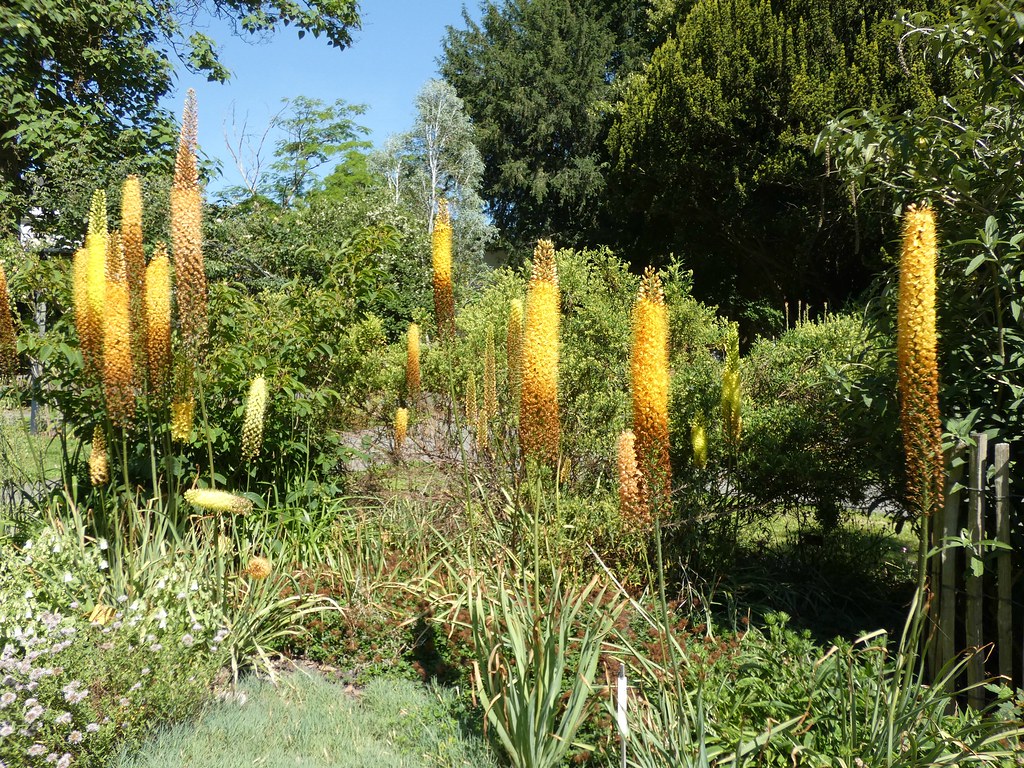
    The long spring spikes of this perennial are held together by fleshy, claw-like roots. When the feet become too old, it is necessary to carry out their division.

    Material:
    fork-spade
    prong
    hook
    watering can with apple

    Advice:
    Avoid overwatering the soil before division, so as not to have a clod of earth too sticky around the roots.

    Good to know:
    The division of the claws of the Eremurus is the best way to multiply this plant, the sowing being very difficult to achieve.

    Cut the stems and dig up

    After flowering, when the foliage of ermurus wilts, cut the stems low to the ground. With a fork-spade lift the plant and lift it completely out of the ground. Place the tool far enough from the clump so as not to damage the roots.

    Cut the damaged roots

    Then shake the clod to drop the soil that adheres to it. You must clearly distinguish all the roots to be able to divide them easily. If there are portions of damaged roots, cut them cleanly with a knife.

    Separating the claws of the eremurus

    Then proceed to the separation of the claws forming the roots, making sure to keep, on each portion, one or more buds that will produce the new leaves and flowers. If the separation is difficult, cut with the billhook.

    Replant the young claws

    Immediately replant the young claws, in a soil well prepared with a hook and free of weed roots. Just make the bud flush. Tamp all around with your hand and sprinkle in a fine rain so as not to uncover the claw.

  • Cultivation and maintenance sheet for tulipa clusiana

    Cultivation and maintenance sheet for tulipa clusiana

    Or Lady Tulip, as the Anglo-Saxons call it, is undoubtedly the most refined and delicate tulip there is! It is also one of the tulips whose historical aspect proves to be the most fascinating, and it is undoubtedly one of the tulips of the flora of France among the most precious. But which tulip can I refer to you are probably asking? Look no further, it is Tulipa clusiana !

    A trip to the past

    The beginnings of the history of our plant go back to a very distant time! Indeed, it was at the beginning of the 17th century that Charles de l’Ecluse (1526-1609), alias Carolus Clusius, received the first few bulbs from Persia. He succeeded in making them bloom in April 1607. Note that this first flowering in cultivation enabled him to carry out the first detailed description of our tulip! 

    Taking into account the region of origin of the bulbs in his possession, he naturally chooses to baptize it Tulipa persica, which explains why it appears under this name in the herbaria created at this time. We will have to wait until 1803 for Augustin Pyramus de Candolle (1778-1841) to provide a new description, definitive because it is much more convincing. He took the opportunity to name the species in memory of his predecessor, Charles de l’Ecluse.

    The natural range of Tulipa clusianais so vast, it includes Iran, Iraq, Afghanistan, Kashmir, but also the Himalayas and Tibet, that there spontaneously exist several different forms. These are distinguished in particular by colors, but also by slightly different dimensions. Subspontaneous, the species is also present in many regions of the south of France. Greatly threatened, it also benefits from total protection throughout the territory!

    In the garden

    Although medium in size and slender in appearance, Tulipa clusiana is particularly hardy. The success of its culture meets the same requirements as those required for Tulipa batalinii : a sunny location and a well-drained soil, dry in summer.
    Because it is a very stoloniferous species, it is wise to offer it a quiet (unworked) and permanent location, so that it can colonize as it pleases all the available space. At best, it will end up building up a relatively large population there, which will further increase its appeal. 

    I can guarantee you that I will never forget the spectacle of a population of several hundred flowering individuals that I was given to admire a few years ago. In short, this is the ideal species for those who wish to cultivate a natural garden…

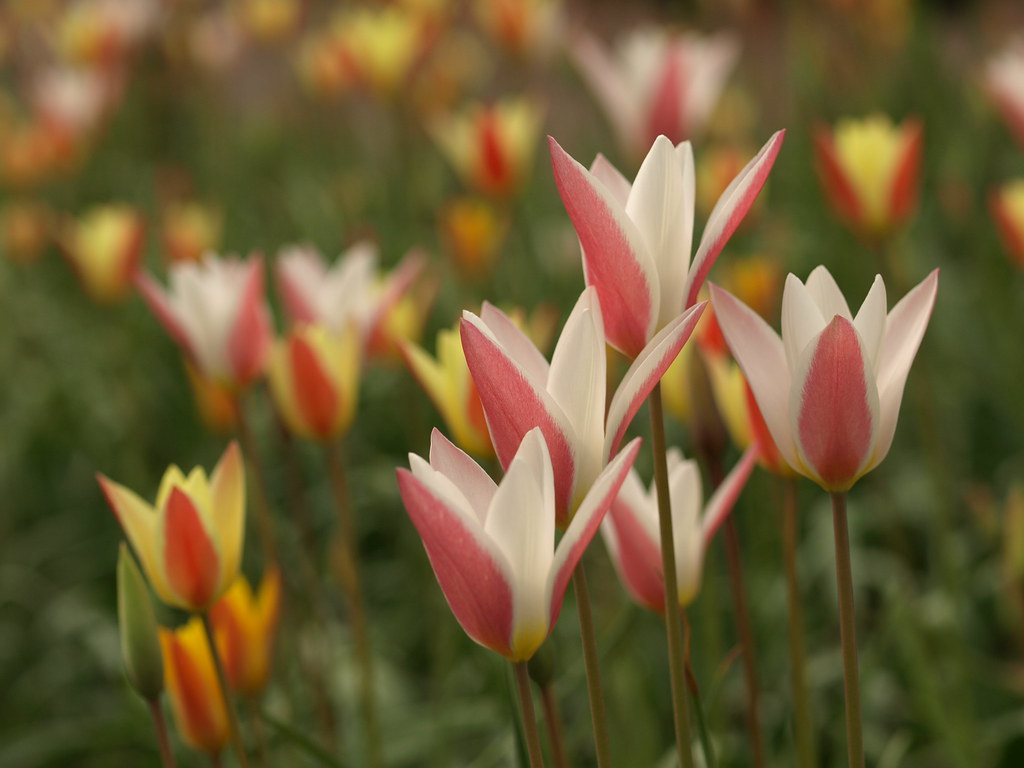
    Despite its status as a protected plant, the typical form of Tulipa clusiana, with the remarkable white and red flower housing an unexpected purple heart, has been in cultivation for decades, which allows it to be sometimes offered for sale. It is important to remember that the simple fact of introducing a few of these bulbs into a garden is a significant act, allowing everyone to make a concrete contribution to safeguarding biodiversity!

    Of course, this does not mean to deprive oneself of other natural forms of the species and even less of the superb horticultural varieties obtained over the past few decades …

    Other natural forms

    • Tulipa clusiana var. chrysantha has a dark yellow flower touched on the outside with red. It is a very common plant, frequently offered in the traditional horticultural trade.
    • Tulipa clusiana var. stellata . Identical to the typical shape. However, she does not have a purple heart. It is frequently biflorated, a true collector’s plant that should not be confused with ‘Lady Jane’ (see below).

    Varieties obtained in cultivation

    • Tulipa clusiana ‘Tinka’. We have here a variety with yellow and red flowers with a very clear design. To grow in a large group. Ideal for constituting original bouquets.
    • Tulipa clusiana ‘Tubergen’s Gem’. With its remarkable dark yellow and red flower, here we have the variety whose flower displays the most intense colors. A must !
    • Tulipa clusiana ‘Lady Jane’. Unparalleled elegance, it wears a white and pink flower, and deserves to be kept in isolated groups, even in clumps if these are composed of flowering plants of soft tones. In any way, his extreme delicacy could not rub shoulders with vulgarity.
    • Tulipa clusiana ‘Peppermint’ looks very similar to the type form. However, its colors appear a little more contrasted, the plant stronger. As such, I would like to point out that the horticultural varieties are generally a little larger than the natural forms!

    To finish, I strongly advise you to install Tulipa clusian a and its varieties in groups rather than in rows (this method of in-line planting, if it is ideal for leeks, is on the other hand unflattering for tulips. ). To do this, when planting, simply arrange them in a circular fashion in the bottom of the hole. In addition, the tuft thus obtained will grow larger each year.

  • How to grow Hydrophyllum canadense: tips

    How to grow Hydrophyllum canadense: tips

    The hydrophyll of Canada ( Hydrophyllum canadense ) is a perennial plant almost unknown to most professionals, even specialized in the production of perennials and therefore, of course, to amateur gardeners.

    Having cultivated it for over 15 years, I can attest to the robustness of Hydrophyllum canadense . This perennial plant is native to Canada mainly, although it is sometimes found in the state of Massachusetts in the United States, it is in New England that it is most frequent. 

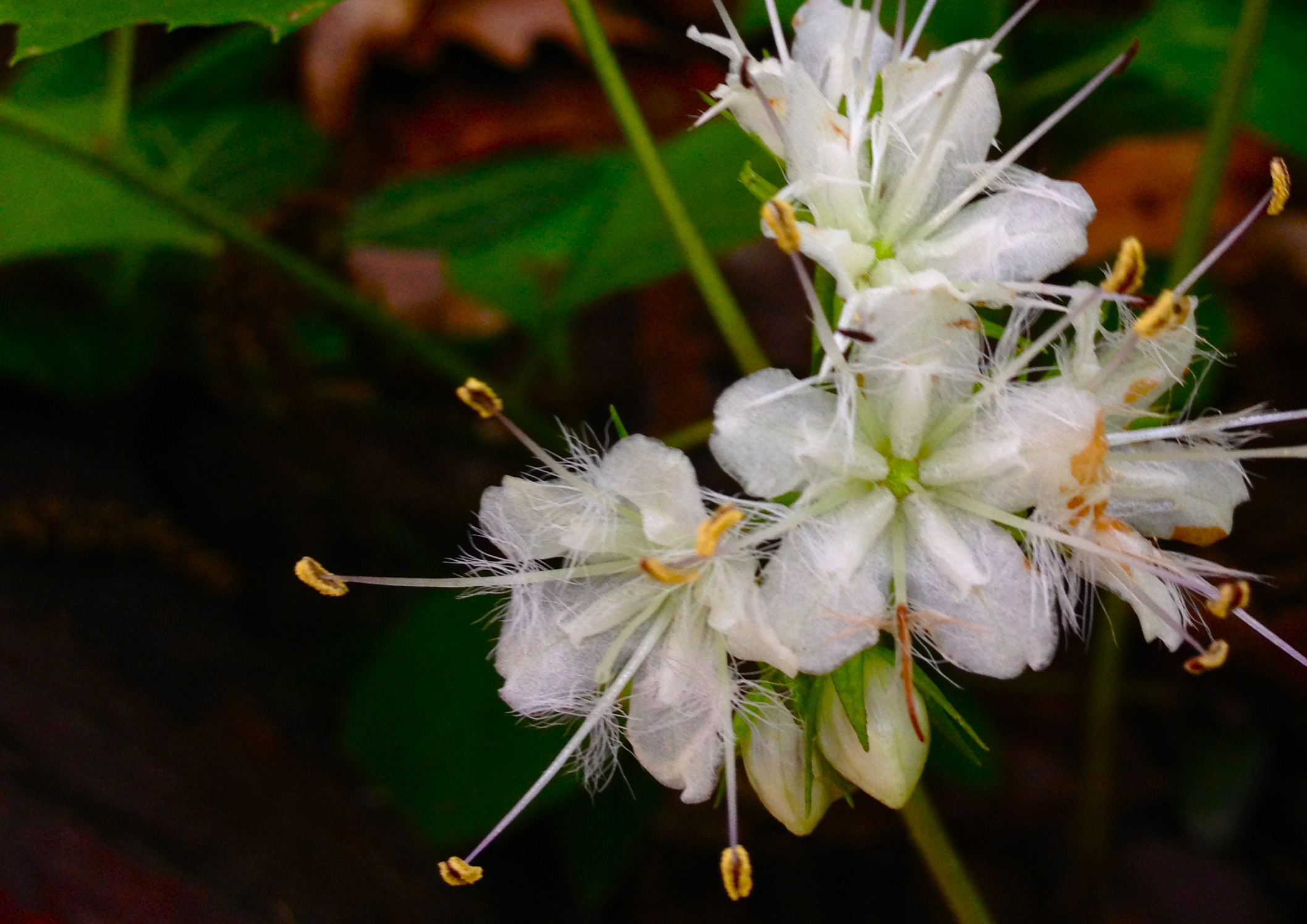
    It grows spontaneously in forests of deciduous trees established on limestone, in slightly shaded undergrowth, in fertile soil, rich in humus and constantly humid. It forms sometimes large colonies, spreading quite slowly, covering the ground well with its large lobed leaves, which resemble maple leaves, of a beautiful bright green.

    Insensitive to diseases and pests

    In our white garden, she keeps company with the Hosta ‘Royal Standard’ , the Hesperis matronalis var. albiflora and the pretty Pachyphragma macrophyllumto early flowering. It grows as a small, rounded bush, very dense rather than a loose ground cover. 

    This is due, I think, to the strong presence of clay in our soil, which makes it more fertile than its original soil. It takes quite a while to establish, but when it does, it lives decades in place. The white flowers appear in tight cymes in the heart of the foliage. 

    They are sometimes light purple and are followed by strange fruits, a sort of big round and thorny capsules. The foliage disappears in winter and its resistance to cold is remarkable. I don’t know of any predators or diseases. Of course, she is not a “garden diva” like the hellebore, but in our park she participates in this biodiversity which is essential to any garden.

  • Successful cultivation of sternbergias

    Successful cultivation of sternbergias

    Sternbergias are rather easy to maintain once in place, provided you follow the rules of its planting.

    Exposure: the sun in full face

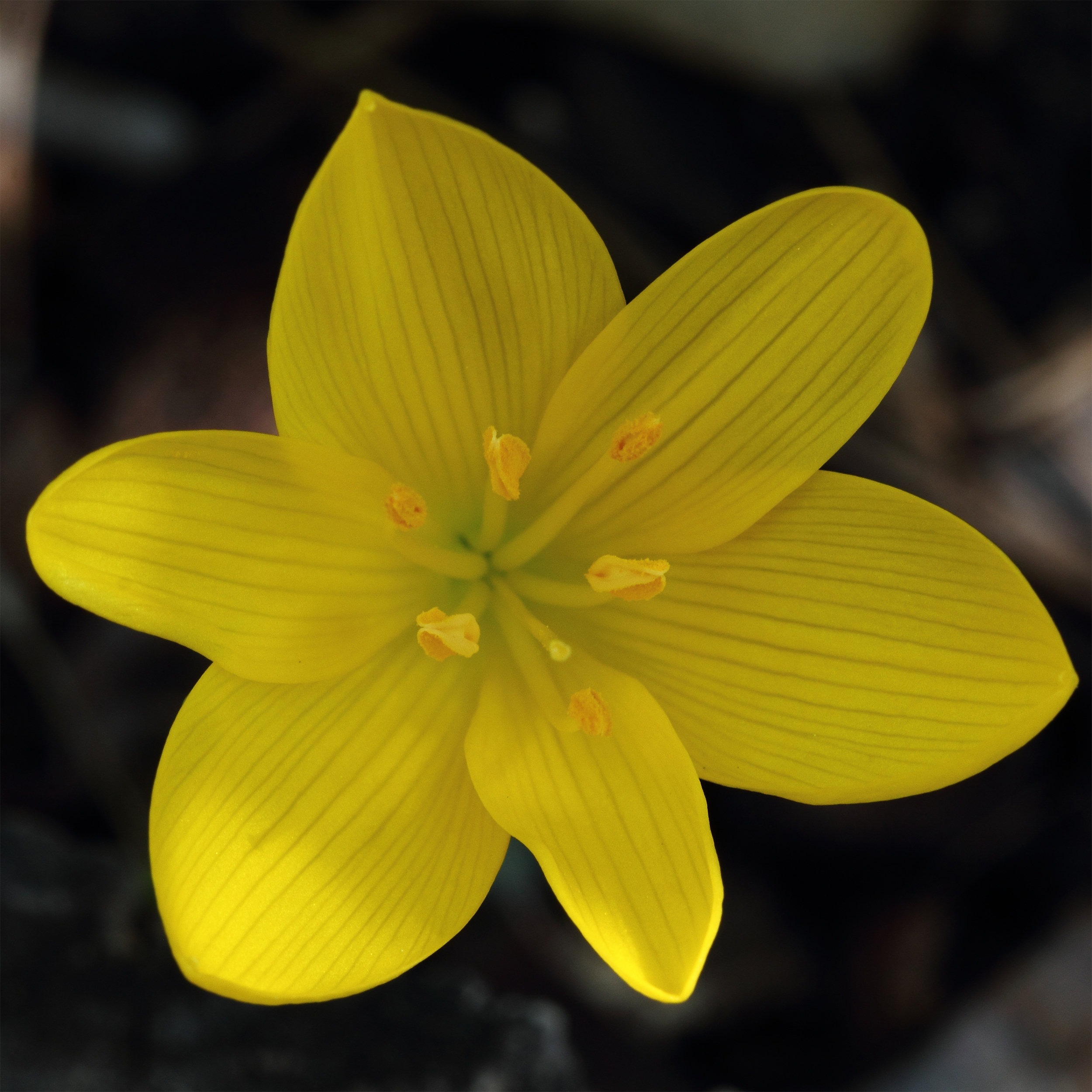
    These bulbous plants are in the nature of plants of full light which fear neither heat nor drought in summer. Unlike crocuses which like the coolness, sternbergias, on the other hand, need a very sunny exposure .
    In winter, their foliage must therefore be well lit away from the shade cast by other plants.

    The rule of 5

    The natural growth of tufts, after many years, leads to the multiplication of bulbs, which are more numerous, but smaller and therefore less flowering.
    Every 5 years, in summer, dig up the sternbergias, divide the root ball, immediately replant the chips in groups of 5, every 10 cm, at the same depth.

    The earth passed by worms

    Sternbergias appreciate rich, somewhat humus-bearing soil, but hate manure, even partially decomposed, or compost that is not ripe enough.
    To encourage them, add 250 g / m² of vermicompost or a composted amendment of the Brown Gold type.

    The decimeter

    Determine the planting depth of the sternbergias based on the soil texture. The base of the bulb should be 7 or 8 cm underground in clay soil (even stony) and between 10 and 12 cm in sandy soil. Too buried, the plant flowers poorly.
    Also avoid mulching it .

    Trust

    Once they have found their place, sternbergias are easy-going plants, but they need time to take hold. Not seeing them flower for 2 years after planting is not abnormal, as long as the foliage remains healthy and abundant. 

  • Cutting the eucomis

    Cutting the eucomis

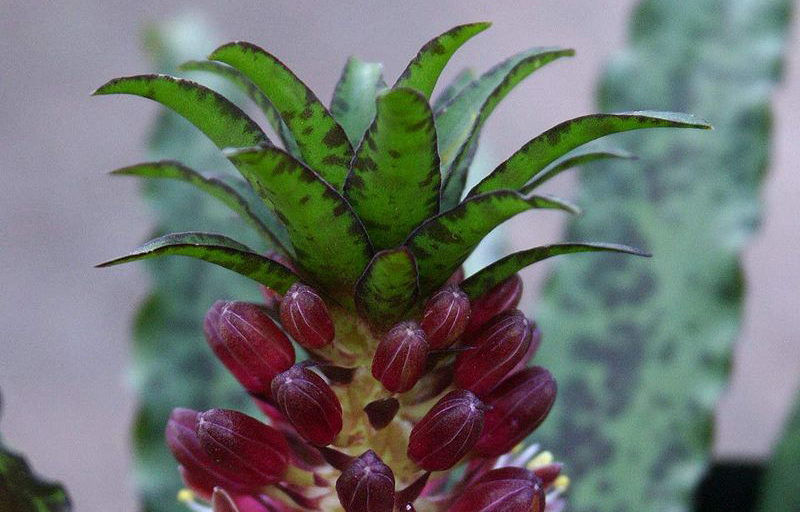
    Called pineapple lily because of the peculiar shape of the inflorescence which looks a bit like this fruit, eucomis is a bulbous plant that can be propagated easily by cuttings from the large lanceolate leaves.

    Material:
    grafting
    box
    gravel
    sand
    potting soil
    sieve
    wooden plank
    watering can

    Advice:
    To speed up the recovery of the cuttings, add a little heat and humidity by covering the box with a transparent plastic cover (mini-greenhouse) or placing it outside, under a frame.

    Good to know:
    The cuttings of the leaves make it possible to multiply a plant in greater number than by simple separation of the bulbils, often few.

    Choosing the right plant

    The eucomis usually multiplies by separating the bulbils that arise around the main bulb. But leaf cuttings also give excellent results. Choose a healthy plant with no visible signs of disease or insect attack.

    Select and cut leaves

    With a grafter, select the best formed leaves. You can prepare your cuttings in two ways either by cutting pieces of leaf of about ten centimeters, or by cutting the leaf along the vein in the longitudinal direction.

    Prepare the box

    In a box, pierced for the flow of the overflow of irrigation water, place a layer of gravel for drainage. Cover with a mixture of finely sifted potting soil and sand, in equal parts. Tamp with a wooden board.

    Wait for the bulbils

    Then, gently, push in your cuttings about 1 cm, pressing down with your fingers to hold them. Water in fine rain. After a few weeks, bulbils will appear at the cut part of the leaf buried in the ground.