Hoe or hoe in hand, roam the garden in search of these invasive plants.
Creeping buttercup
Latin name: Ranunculus repens
In the buttercup family, it is the most difficult to eliminate . It multiplies by seeds and especially by powerful runners which go in all directions, especially in heavy, clayey, compacted soil.
How to eliminate creeping buttercup
Digging the soil to unpack and make furniture. Take advantage of the digging to eliminate the whole plant with its runners.
Shepherd’s purse
Latin name: Capsella bursa-pastoris
This annual, 5 to 40 cm high, reproduces by seed, is very widespread, especially in loose , sandy and rich soil . In the vegetable garden, it can transmit cabbage hernia .
How to eliminate the shepherd’s purse
It must be rooted out by performing a methodical weeding . Weed as soon as possible because the shepherd’s purse forms and spreads seeds several times a year. It is eaten! It’s a delicious salad : a cousin of the arugula, with a less spicy taste , which the Chinese cultivate.closevolume_off
Cirse des champs
Latin name: Cirsium arvense Its leaves are prickly and its flowers – very beautiful in summer – deliver thousands of seeds to the wind. It should therefore not be allowed to reach the flowering stage ! This undesirable is also spread thanks to strong sucker roots …
How to eliminate field cyst
Cover the ground or cut the aerial parts as often as possible using a weeding gouge to weaken the roots .
Quackgrass
Latin name: Elytrigia repens
This grass – of sad reputation – extends over large areas thanks to long rhizomes tracing to 20 cm deep, the slightest fragment of which gives a new plant .
How to eliminate quackgrass
Cover the soil in open spaces or dig out the roots 2 to 3 times, one month apart. In a bed, exhaust the quackgrass by pulling out any shoots as soon as they have a few leaves.
Ciliated galinsoga
Latin name: Galinsoga ciliata
Little known, yet it spreads vigorously, each plant being able to produce from its eighth week up to 7,500 seeds which germinate immediately! This plague, moreover, can harbor insect pests , nematodes and viruses.
How to eliminate ciliated galinsoga
By hoeing very early before flowering to avoid propagation and by applying the technique of false sowing.
Field bindweed
Latin name: Convolvulus arvensis
This weed plant greatly appreciates calcareous and warm soils , rather loose, in which it propagates by a main root carrying numerous ramifications which can sink to more than 2 m. Proliferative, it goes as far as colonizing 25 m2 in one season …
How to get rid of bindweed
Regularly cut the aerial parts to weaken the roots . Cover the ground in open ground.
Chickweed
Latin name: Stellaria media
This edible annual reproduces by seed (2,000 per plant) several times a year and spreads by creeping stems that take root. It appreciates moist and rich soils in partial shade. It may indicate too much nitrogen .
How to get rid of chickweed
Pull up young plants by hand or with a hedgehog before they flower and do not leave them on the ground .
Field mustard
Latin name: Sinapis arvensis
This annual, which flowers from June to October and reproduces by seed, serves as a host for pests (flea beetle) and a vector for cabbage diseases (hernia, mildew). Mustard appreciates calcareous, rich, clayey soils .
How to eliminate field mustard
Cut the stems at the start of flowering to prevent seed build-up and pull out the stems or weed. The roots of debris do not regenerate.
Oxalis
Latin name: Oxalis corniculata This small annual, often perennial in a mild climate, develops creeping stems which take root at the level of the leaves (green or red) and flowers from May to October. Its seeds are projected by capsules which burst suddenly and ensure wide dissemination.
How to get rid of oxalis
Pull up the plant as soon as possible and completely to avoid regrowth.
White clover
Latin name: Trifolium repens This perennial multiplies by seeds and spreads by means of creeping stems which take root at the level of the nodes. Its white flowers, rich in nectar, are abundantly pollinated.
How to eliminate clover
Weed on bare soil to eliminate the entire plant. In the lawn, mow short to limit the formation of seeds. Remember that clover fixes nitrogen , attracts auxiliaries and stays green in dry weather …
What are the most common weeds in the garden?
Annual and shallow weeds:
Purple dead nettle, harsh sow thistle, spurge alarm clock, oxalis, lamb’s quarters, chickweed, persicaria knotweed. Cardamine, shepherd’s purse, chickweed and common groundsel produce 2 or 3 generations per year.
Perennial and deep weeds:
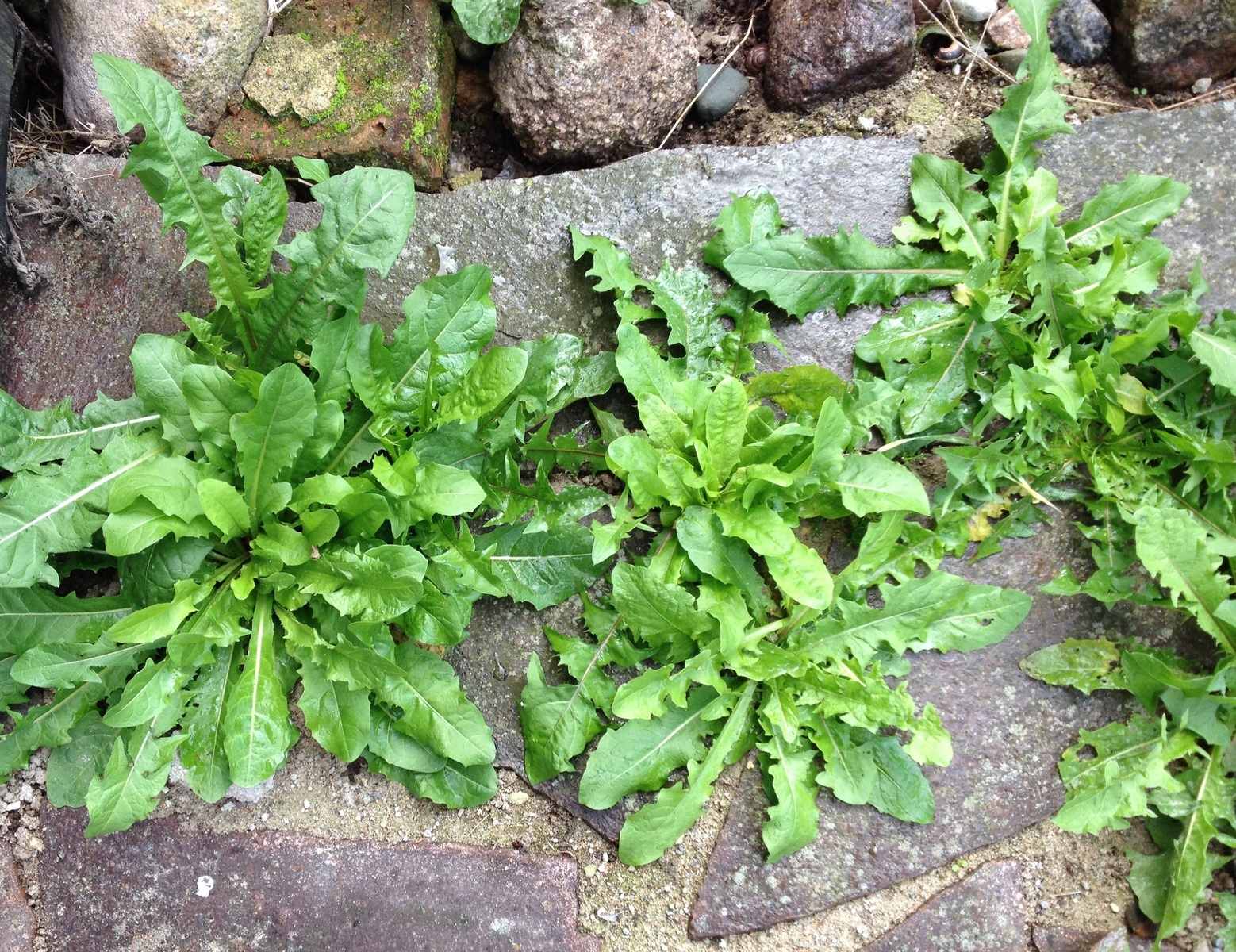
Dandelion, rumex, comfrey, wild chervil.
Perennial and creeping weeds:
Quackgrass, nettle, goutweed, bindweed, horsetail, polygonum, eagle fern.
Perennial runner weeds:
Creeping cinquefoil, bramble, bluegrass. The creeping buttercup can thus cover 3 m2 in a season and the brunelle, 10!
How do you prevent “weeds” from growing?
The fight against weeds is one of the essential concerns. In a natural garden, the task requires thought and astuteness since the use of herbicides is not an option.
Luckily, there are many tricks that allow, in the form of passive resistance , if not to get rid of, at least to effectively limit the colonization of these wild plants: the cover of the ground to prevent it from being sown, their hoeing before they go up to seeds, raising hens that will delight in seeds and other snails.