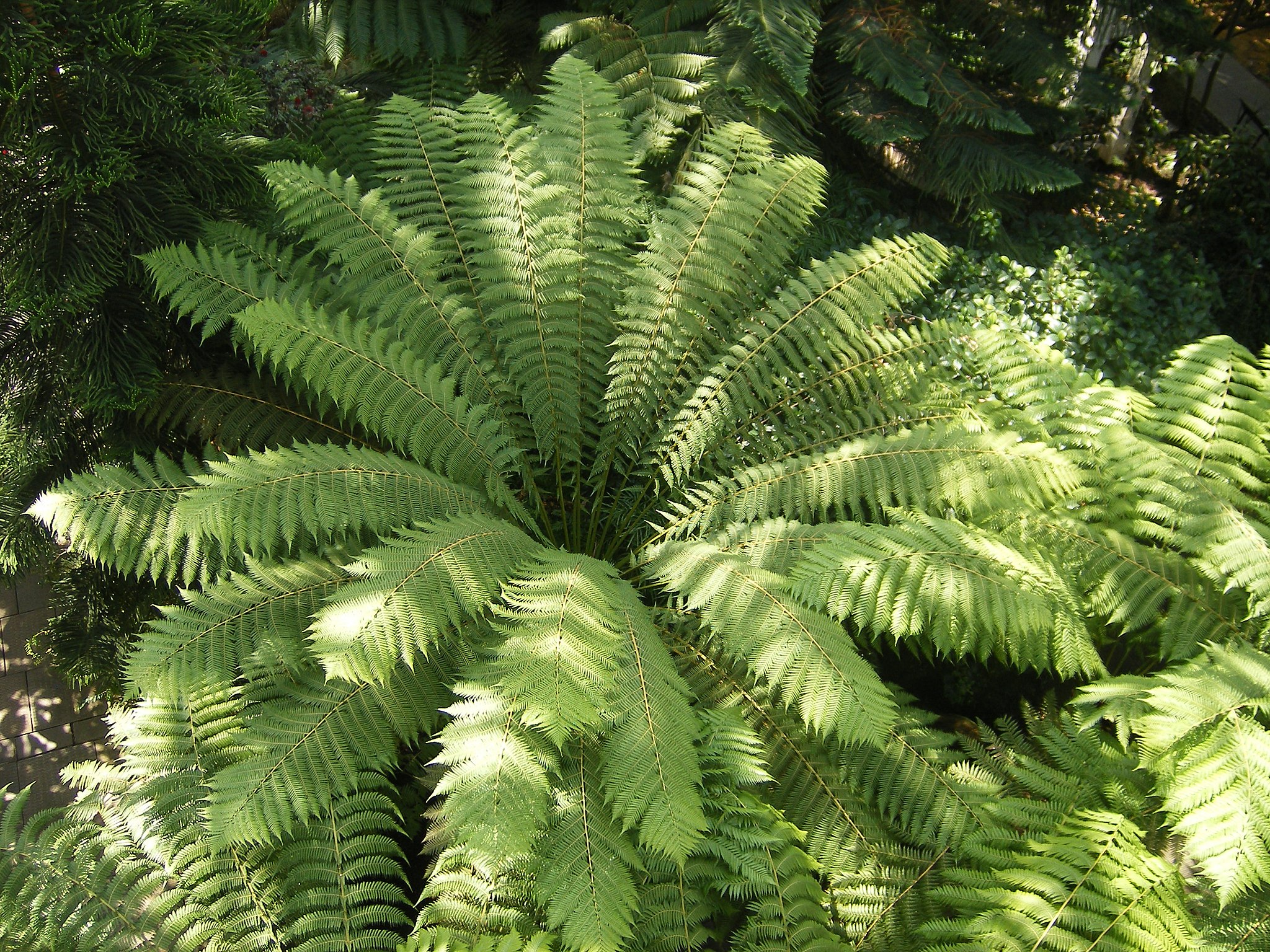
Category: Grasses and ferns

Explore the beauty and versatility of grasses and ferns in gardens, landscapes, and indoor spaces. Learn how to grow, care for, and incorporate these plants to add texture, greenery, and natural elegance. Discover tips on planting, maintenance, and design ideas to create lush, serene environments.

  • Everything you need to know about bamboo in the garden

    Everything you need to know about bamboo in the garden

    Explanation on the maintenance of a bamboo hedge and the control of the invasive progression of bamboo in the garden. 

    How to prune bamboo to have a very dense hedge?

    It is imperative to prune a tall bamboo hedge only once a year. But for that, it is necessary to wait for the end of the growth of the new canes (leaves appear at the top), otherwise, the operation would have to be started again a few weeks later.

    When the canes are too tight, new bamboo canes grow tall and only leave leaves at the top. This prevents densification of the hedge in its lower part.

    At the end of winter, carry out a thinning pruning :

    • Clear the inside of the clumps, cutting off at ground level the oldest stems that have dried out or those which are more than 4 to 5 years old, but which still bear leaves.
    • This last intervention leaves room for new rods which develop and expand where they have enough light.
    • Complete this cleaning by adding organic nitrogen fertilizer or a layer of ripe compost.

    How to stop the progression of bamboos which threaten the pipes in the garden?

    Removing the bamboo rhizomes is very difficult, especially if it is a Phyllostachys bamboo, very tracing and sinking into the ground. 
    The only solution is to surround the bamboo with an anti-rhizome barrier to protect the pipes from bamboo rhizomes.

    To circle the bamboos: 

    • Dig a 70 cm deep trench to slide in a  non-woven geotextile anti-rhizome barrier, made of 100% polypropylene.
    • Position the canvas along the wall. For information, the bamboo roots turn clockwise: at the junction of the circle, cover one piece of tarpaulin with the other so that the roots do not slip through.
    • It is also possible to bury corrugated sheets vertically.

    To stop the progression of bamboo in the garden, you must: 

    • Break the spears as they come out of the ground. Exhausted, they end up getting discouraged.
    • In addition, repeated passages with the mower slow down their progress.

    For information, beware of voles or mole rats, which feed on the rhizomes. They cut them up and transport the pieces over several meters. Bamboos are then cuttings everywhere. 

  • Culture sheet: miscanthus giganteus, a giant grass

    Culture sheet: miscanthus giganteus, a giant grass

    As imposing as bamboo, but without the inconvenience of sucking, Miscanthus giganteus is a giant grass, ideal for hiding an unsightly place.

    If I knew the existence of this plant, I had never looked into its qualities, before having a wall to hide. A neighboring wall is in the process of being mounted on the edge of the garden. A wall that I was not allowed to invest with a climber, since it did not belong to me. During a stroll in the garden of Lepage Bord de mer (22), in the middle of winter, I took a secret path, a corridor rustling with a thousand thin and gigantic leaves. I took myself to Alice in Wonderland, in the middle of these golden rods reaching up to the sky, almost four meters from the ground.
    When the wall in my garden was finished, I remembered this plant which, after three years, takes its place, without exceeding one square meter on the ground.
     I planted a few shrubs, persistent and deciduous, to brighten up this partition with the seasons, even in winter, and, between each, I installed a base of miscanthus giganteus. Its ears and dry leaves persist throughout the winter. In March or April, I cut back the old stems when the new ones arrive. This tuft is very moving, flexible, and I forget the party wall. The dark green leaves, 25 mm wide, curl, giving the impression of a waterfall when it is windy. In May, I sow volubilis at their feet which cling to them, climb and flower them. I even installed a passion flower which clings to it, flowers and fruits in the middle of these canes. And, in the fall, when the flower spikes form, silvery and pinkish, dancing in the sky.

    Simple to grow

    Very hardy, miscanthus giganteus grows everywhere, in all good soil, where there is sun. Make a 40cm hole in all directions, bring compost to the original soil and plant it after soaking the root ball for a few minutes in a bucket of water. If it can compose a compact hedge to structure the garden – to be spaced every meter in this case -, it nicely dresses a background of massive. I also like it installed in a large pot, on the terrace, where it plays with the wind all the time. We gladly forgive him the two months when the tuft is bare, in March and April, between the time when we cut the old canes and the arrival of new ones.

    Salvage: stakes and mulch

    When you cut the stems in early spring, use them as stakes to hold tall perennials. As for the leaves, they make an excellent mulch in the beds, preventing unwanted grasses from settling.

    Farmers and industry are interested …

    The composition of the fiber makes it possible to manufacture biofuels and biofuels, paper, cardboard, animal litter, composite panels, insulation panels, among others …

  • What are the benefits of reeds in the garden?

    What are the benefits of reeds in the garden?

    Common reed ( Phragmites australis ) also called broom reed, broomstick or marsh reed is a perennial plant that inhabits the shallow waters of ditches, lakes, or ponds. It is found everywhere in humid areas.

    reed culture sheet

    The common reed is part of the Poaceae family formerly called the grass family. Although it is considered an invasive plant, it disappears with the drying up of wetlands.
    According to La Fontaine’s fable The Oak and the Reed, the reed bends but does not break.
    The broom reed is a large plant, 2 to 4 meters in height, with a single upright stem. Its flexible gray-green leaves form a sheath around the stem at the base.
    Its flowers are long panicles of 20 to 30 cm first erect and then tilted after flowering. The purplish-brown ear or spikelet is covered with long silky white hairs.

    How to multiply the reeds?

    Like bamboo, the reed has a root system with rhizomes which is sometimes very invasive. Multiplication is therefore done by division of rhizomes in spring until early summer.
    Choose a sunny and humid location, preferably clayey soil, but the reed can grow anywhere as long as it keeps its feet in the water.

    How to create a reed bed in a water point?

    The creation of a reed bed requires a water rise of 10 cm to 80 cm is necessary for winter.
    In spring, the feet are submerged up to 30 cm in height which stimulates their development. Dry soil during the summer is fine for it as long as the soil remains moist.

    How to maintain a reed bed?

    The stubble is mown flush every other year, from October to January. The extraction of crushed stubble makes it possible to mulch trees and shrubs which then turns into humus.

    Why plant reeds?

    • Reed beds are home to dragonflies, amphibians, fish, birds, and mammals from predators, and more particularly during reproduction.
    • The reeds fight against water pollution in aquatic areas.
    • The roots filter the surface water by self-purification.
    • Some municipalities use reed beds for wastewater treatment.
    • The reed beds serve as spawning grounds for fish and amphibians.  
    • Reeds are used for thatched roofs and serve as thermal insulation and soundproofing.

    What does the law say about reed beds?

    It is forbidden to fill the reed beds with rubble, burn the stubble, or clear them.

  • When and how to plant bamboo: tips and method

    When and how to plant bamboo: tips and method

    Belonging to the Poaceae family, like grass species, bamboo is common in southern regions and hardy as far as Ile-de-France on condition that it offers it a sheltered location.

    • Material:
    • spade
    • potting soil
    • sand
    • lawn fertilizer
    • watering can
    • claw
    • mulching

    Advice:
    To be sure of the recovery of your bamboo , choose a subject raised in a container. Also wait until the frost has passed. There is nothing wrong with intervening in April, or even in May, to put it in place.

    Good to know:
    It is not necessary to stake the bamboo; it takes root quickly. Few new stems develop during the first two or three years, with all activity occurring underground during this time.

    Dig a planting hole

    Bamboo is a very easy plant to grow, sometimes even invasive when it finds a good location.
    Start by digging a planting hole whose volume is twice that of the root ball.
    Decompress the bottom with the spade.

    Fertilize

    If the extracted soil is a little too heavy and clayey, add sand or potting soil to lighten it.
    In the bottom of the hole, throw a few handfuls of lawn fertilizer. Cover with a little soil.
    Take the bamboo out of its container without breaking the root ball.

    Place the bamboo in the ground

    If the roots adhere to the container, do not hesitate to cut it to avoid damaging them.
    Place the bamboo in the middle of the hole, the top of the root ball should be a few inches below ground level so that it is covered.

    Cover, pack and water

    Slide the earth around the root ball, tamping down regularly to eliminate any risk of an air pocket, which is detrimental to recovery. Cover the root ball and continue to tamp with your foot.
    Water abundantly, even if it is raining or the soil is wet. Regularly renew this watering.

    Scratch and mulch

    In order for the soil to retain all its moisture and also to hamper the emergence of weeds, cover the soil with mulch after taking care to scratch it to decompact it. A thickness of 5 to 10 cm is necessary, depending on the material used.

    Contain bamboo

    When planting the bamboo, install an anti-rhizome barrier around the perimeter of the planting hole.
    Slightly tilt this obstacle outwards: the rhizomes will butt against the barrier and rise again. It will then be easier to eliminate them.
    If this precaution was not taken when planting the bamboo, it is still possible to dig a trench around the massif of this grass to install this anti-bamboo barrier.

  • Successful cultivation of ornamental grasses

    Successful cultivation of ornamental grasses

    There is at least one grass to beautify every corner of the garden and every corner of the garden is suitable for growing grasses. Adopt these plants with multiple attractions to give life and structure to your environment.

    Technical sheet

    Their pollination is carried out by the wind. You will meet annual or perennial decorative species, not to mention bamboos which produce woody stems (hard as wood) and are intermediate with shrubs. However, all grasses regrow from their stump, at least the perennial species.

    Dimensions: variable: from a few centimeters, for grassy forms, to more than two meters for miscanthus, Provence cane, pampas grasses.

    Flowering: grasses do not, strictly speaking, form flowers, but spikelets that are not very colorful, greenish, which last for a long time, taking on pretty beige to golden colors. The first blooms appear from March-April and the last, autumnal, often last until the heart of winter.

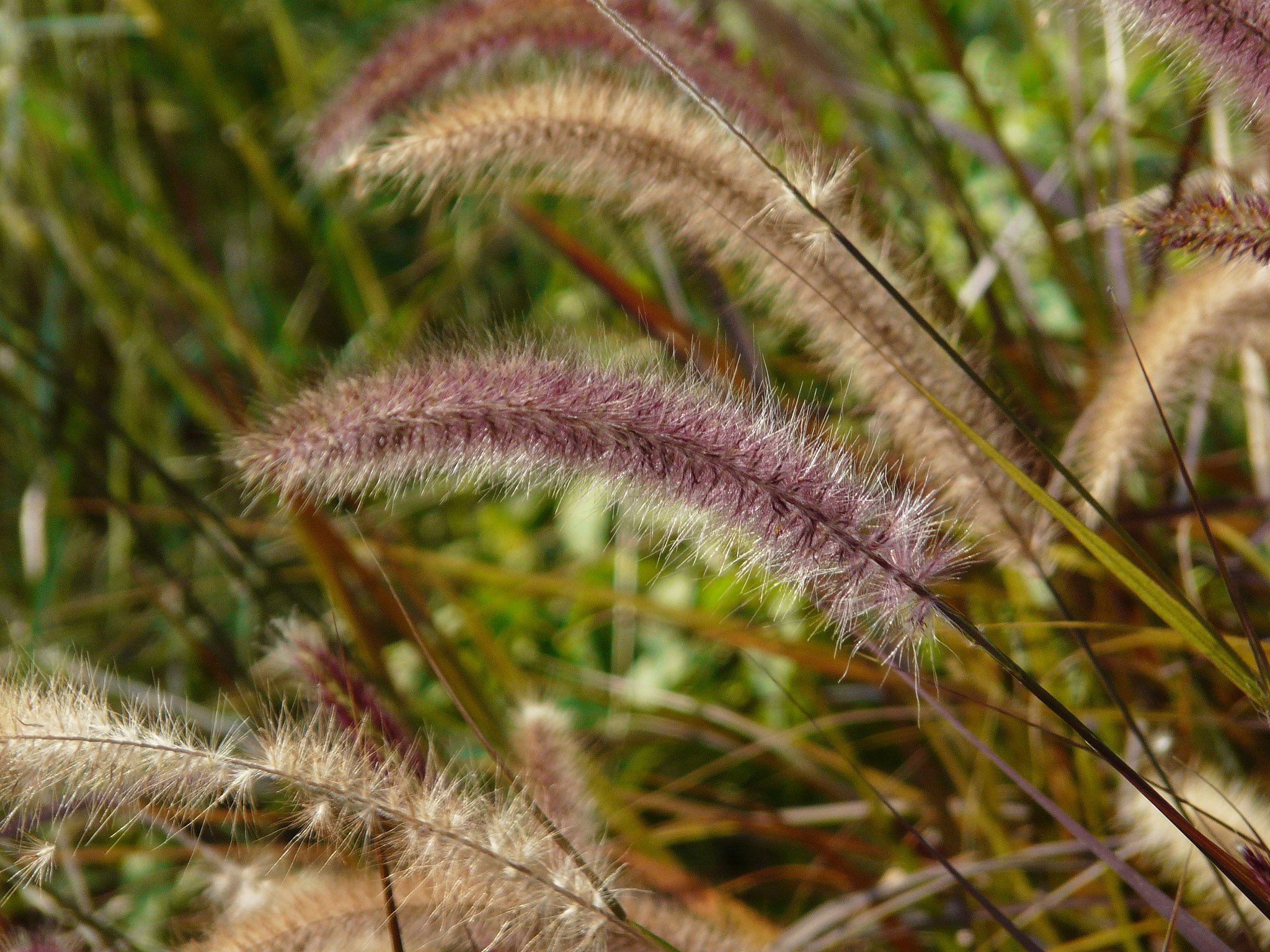
    Hardiness: most varieties are hardy. However, splendid exotic species and varieties deserve to be cultivated as annual plants for summer settings or acclimatized in mild regions. This is the case with Pennisetum setaceum such as ‘Rubrum’ or ‘Fireworks’ with leaves variegated with purple or highlighted with pink, canes from Provence (Arundo donax), the large Erianthus ravennaeor sugar cane ( Saccharum officinarum ) including the superb purple variety.

    Invasive or not : 
    There are three categories of grasses.

    • The creeping grasses , that is to say extending through rhizomes and rapidly invade a space. Their culture should only be thought of by considering a culture surrounding them with an insurmountable barrier.
    • The  bunch grasses , that is to say, that grow in clumps. This is the case with the majority of grasses encountered in our gardens. They gradually enlarge over time, like any perennial, but without ever producing a sucker other than at the foot of the mother plant. Like many perennials, their multiplication is done by division of tufts.
    • The grasses short rhizomes . They widen a little, but do not go very far, forming less dense clumps than the bunchgrass grasses. A simple spade at their foot is enough to limit their modest invasion. It is the second largest group of ornamental grasses in number

    When to sow

    • To be practiced in spring for pure species, whether annual or perennial.
    • For varieties obtained by crossing, sowing is not recommended.

    When to plant

    • The planting grasses is done preferably in the spring, ideally from natural regrowth of plants.
    • September is also recommended, the plants then having plenty of time to take root before winter (a period not recommended for less hardy species).
    • In the South, it is preferable to install them in autumn, because the risk of rot by stagnant humidity is less.

    Maintenance and other care

    • Organic mulches will be spread at the foot of shade grasses such as luzules, hakonechloas or deschampsias or damp earth.
    • On the other hand, a mineral mulch (gravel) will be more appropriate for steppe species such as stipas , fescues, calamagrostis.

    Fertilizers and fertilization

    No need to add fertilizers for the good health of the grasses. They are generally satisfied with the reserves of the soil to thrive. Shade or damp earth species will however appreciate a contribution of organic matter when planting: potting soil, compost, dehydrated manure.

    Diseases and pests

    Grown in healthy soil and a well-ventilated atmosphere, grasses are rarely diseased. With excess humidity, rust can settle on blue oats or fescues. Drain the land to compensate for it.

    Cut

    For evergreen grasses such as Stipa tenuifolia, the Deschampsia, or blue oat, content yourself, in late winter, combing tufts of manually using a glove to remove dead leaves. The tufts of deciduous grasses will be cut back as late as possible (in winter) in order to benefit from their decorative culms for a long time in winter. Clean the clumps as soon as the stems weaken. Wait March-April to cut back the semi-hardy and acclimatized grasses.

    Harvest

    Many grasses have inflorescences which keep wonderfully in dry clumps. Do not hesitate to experiment with compositions taking advantage of the great diversity of their golden or silver inflorescences.

    Multiplication

    Strain division is widely used to propagate interesting species and varieties. It is best practiced in spring, when the plants start to grow again, failing which in September. So they are able to form new roots quickly and in abundance in hot soil. Grass species are innumerable and difficult to differentiate in nature. In the garden, we recognize them because they are monocots (recognizable by their parallel veins) and their flowers are primary and not very colorful.

    Grasses (of the Poaceae family) are ubiquitous on all continents. These plants are popular in contemporary gardens where they instill a natural, wild and lively note. They are appreciated there for their silhouette, their sometimes colored foliage, their flowering, and their fall colors.
    Thus, their graceful vegetation marks the rhythm of the seasons.
    The flexibility of their culms (stems), their foliage, and their inflorescences is magnified by the wind, then by the frost. They also lighten the massifs by finding their place, according to the species and varieties, either in the shade or in the sun, in dry as in damp earth, in the South or the North of the country.

    Grasses for light in dry ground

    • Anemanthele lessoniana . Hardiness: – 6 ° C. H 80 cm. Reddish orange color for its fine leaves and soft tufted habit.
    • Bouteloua gracilis or “mosquito grass”. H 50 cm. Compact tufts, swarm of horizontal spikelets.
    • Calamagrostis x acutiflora ‘Karl Foerster’. H 1.80 m. With an upright, narrow habit, like an exclamation point in the flower beds. Spikes erected in June, beige then golden until winter.
    • Calamagrostis brachytricha or “diamond grass”. 1.20 m in all directions. With supple habit and feathery ears, catching dew.
    • Cortaderia selloana or pampas grass . H up to 3 m. Foliage in dense sheaf and large silvery or golden beige feathers until winter. 
    • Elymus magellanicus. H 45 cm. It is azure wheat with steel-blue erect leaves and grainy blond ears.
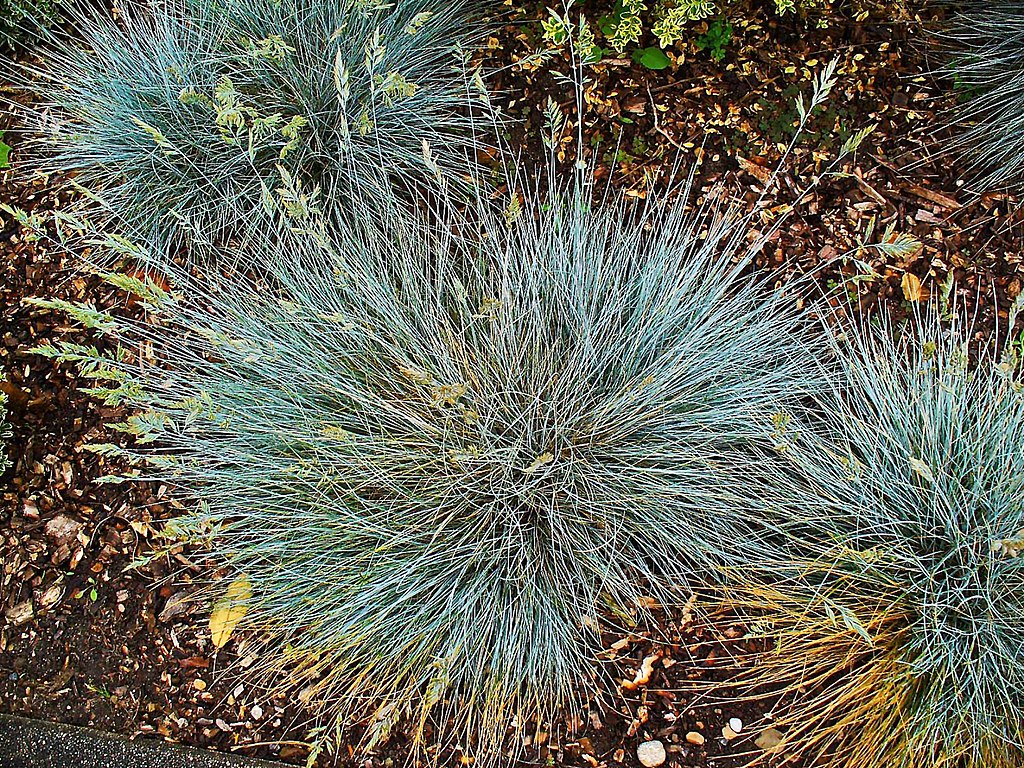
    • Blue or green fescues in compact tufts for original mottling. H 25 to 40 cm. Thin, erect ears of golden spikelets. ‘Elijah Blue’ a bright silvery blue; Festuca gautieri, emerald green in flattened cushions or F. valesiaca var. glaucantha with fine leaves, silvery bluish gray and purplish spikes.
    • Melica ciliata or “ciliated melica”. H 60 cm. with whitish cylindrical ears to be planted against the light.
    • Pennisetum alopecuroides . Port in broad sheaf and ears in swabs. Fall splendor! H 90 cm for‘Cassian’s Choice’with orange autumnal foliage, H 45 cm for‘Little Bunny’, dwarf.
    • Oriental pennisetum ‘Karley Rose’   and ‘Tall Tails’ with a more erect silhouette and supple, pink spikes, carried over a meter.
    • Sporolobus heterolepis . H 70 cm. Fine foliage, in a compact and supple tuft. Broad, thin, blond spikes with a scent of popcorn in autumn.
    • Stipa tenuifolia or “angel hair”. H 50 cm. Thin and golden ears, feathery, attracting caresses and supple in the wind.
    • Stipa gigantea rises to 2.50 m with its ethereal allure of irresistible golden wild oats.

    Grasses for light in cool soil

    • Imperata cylindrica ‘Red Baron’ or Japanese Blood Grass. H 35 cm. In sucking tufts of erect leaves, tinged with red from the end of summer.
    • Miscanthus sinensis or eulalie offers a plethora of varieties. Robust, erect plants with broad, supple leaves and digitate, feathery, silvery or golden inflorescences. Choose‘Malepartus’, with burgundy then silver panicles, H 2 m; ‘Morning Light’, with very fine foliage, highlighted with silver, H 1.40 m; ‘Cosmopolitan’with broad leaves highlighted in white, H 2.40 m or‘Graziella’with leaves streaked with yellow; ‘Floridulus’is the giant of the genus with almost 3 m. Superb in privacy screen.
    • Panicum virgatum ‘Praire Sky’ . H 1.20 m. Combines upright, metallic blue foliage and thin pink spikes.
    • Phalaris arundinacea ‘Picta’ or Shepherdess’s Ribbon. H 60 cm. Sucker roots, cream variegated leaves and erect spikes, pink in summer.

    Grasses for dry shade

    Among plants assimilated to grasses.

    • Luzula nivea . H 60 cm. Spiky, green, evergreen foliage and flowers in spring white umbels.
    • Luzula sylvatica ‘Marginata’. H 40 cm. Large leaves in tight rosettes, persistent, green edged with cream.
    • Carex morowii ‘Evergold’. H 35 cm. Compact rosette of fine, supple, persistent leaves highlighted with golden yellow.

    Grasses for cool shade

    • Chasmanthium latifolium . H 1.20 m. American grass, deciduous emerald green foliage and supple panicles with large, flat spikelets. ‘River Mist’ is a superb novelty with cream variegated leaves.
    • Deschampsia cespitosa ‘Goldschleier’ or “canche cespiteuse”. Dense tufts of thin, green leaves, surmounted in summer-autumn by a cloud of slender and golden spikelets. H 1.20 m.
    • Hakonechloa macra ‘Aureola ‘. H 35 x 45 cm. Japanese grass with broad leaves, variegated with golden yellow. Spectacular cascading harbor. Slow growth.
  • How to cultivate bamboos according to their varieties?

    How to cultivate bamboos according to their varieties?

    These exotic, half-perennial, half-shrub plants fascinate gardeners with their robustness and the beauty of their erect stubble, bearing beautiful evergreen leaves. However, planting them in the garden should not be decided lightly, as many bamboos turn out to be formidable invaders. Good knowledge and a judicious choice are therefore strongly recommended.

    Technical sheet

    Type of plant: Perennial/shrub plant
    Dimensions: from 0.30 to 20 m.
    Flowering: rare, but it contributes to decimate populations and occurs at the same time all over the world for the same variety.
    Harvest: stubble in winter.
    Exposure: sun to partial shade
    Soil: rich, supple, and cool
    Hardiness: Mostly hardy, -18 ° C

    Cultivation conditions

    Bamboos develop particularly well when three factors are combined: summer heat, rich and flexible soil, and good freshness (soil and atmosphere). If the species turn out to be more or less adaptable, the results are all the more spectacular in a mild or even hot climate and in alluvial soil. Indeed, cool soil in summer, rich in humus and of flexible texture, well-drained in winter is ideal.

    When and how to plant bamboo

    Choose plants grown in large containers, not in pots or pots. First and foremost, it is important to know whether you are planting a sucker or cespitose species. In the first case, and if you lack space, you will have to contain its ardor. The planting can take place all year round thanks to the proposed plants in containers. However, avoid the middle of winter to prefer spring, when the ground becomes hot, to install the bamboos, ideally during the period when the stumps start again. Bring a lot of organic matter well decomposed in-depth and a basic organic fertilizer.
    If your bamboo is a sucker variety, provide a physical barrier to contain its powerful rhizomes. To do this, dig a pit and line its edges with an effective anti-rhizome barrier in polypropylene (delivered in a roll) commercially installed, vertically and at a height of 70 cm. Lightly bury (3 cm) the clods by backfilling the pit. Draw a large watering bowl. Firm the earth and proceed to a copious watering. Protect young plants from drying winds.

    How to water the bamboo?

    Bring plenty of water (but not excess) until the stumps have completely recovered. In insufficiently cool soil in summer, watering/irrigations will be necessary to maintain good growth. Check that the leaves do not roll up during the heat wave, which indicates a lack of water.

    Should bamboo be fertilized?

    Bamboos are very sensitive to inputs of well decomposed manure and fertilizer. It is also important not to abuse it. Plan to add humus in September and possibly in February, then organic nitrogen fertilizer (type 10-5-5) or lawn fertilizer at the end of winter.

    How to maintain bamboo?

    Keep the soil weed-free after planting by being careful not to damage the rhizomes that run on the surface. Better to spread a mineral or organic mulch. With age, shady groves require little care.

    Diseases and pests

    They are rare. Sometimes aphids invade the foliage. An organic insecticide based on pyrethrum will be right. Mealybugs are more difficult to eradicate, as the insects are sometimes out of reach. Focus on biological control by releasing specific predators.

    When and how to prune bamboo?

    Remove the oldest stubble in winter to ventilate the whole and better appreciate the spectacle. Also collect the larger canes, aged 3 to 4 years, for decorative or utility use.
    Cut the dwarf bamboos used as ground cover at the end of winter.

    When and how to multiply bamboo?

    The multiplication is carried out by division of the stumps, carried out in autumn or in spring for the compact forms, by sections of rhizome at the end of winter for the tracing species, by stubble cuttings in May or by layering with incision for the growing forms. in a tuft.

    Species and varieties

    Bamboos are divided into two categories. Forms with trailing rhizomes are generally invasive and intended to adorn large parks and forms in compact tuft called “cespitose” more suitable for cultivation in small gardens or even in containers.

    Dwarf bamboo, ground cover

    These tracing species quickly provide good coverage as well as the retention of unstable land and slopes. You can mow them every year (not too short) at the end of winter. Grind the stubble on site for a natural and ecological mulch.

    • Pleioblastus pygmaeus and ‘Distichus’ with fine, matt green foliage, can be mowed before spring regrowth or else pruned in mottling during vegetation; height from 30 to 60 cm.
    • Sasaella masamuneana , very sucker, with green foliage, it shows a steeper port and rises up to 1m.

    Which varieties of bamboo to install in a hedge

    Low hedges

    • Indocalamus latifolius , sucker with large shiny leaves to form wide hedges; height 2 m.
    • Indocalamus tesselatus with a weeping habit with a very tropical look; height 1.20 m.
    • Fargesia murielae ‘Simba’ grows in a compact clump with fine, yellow culms and diffuse foliage; height 2 m.

    High hurdles

    • Semiarundinaria fastuosa , impressive, fast-growing plant with green culms and decorative sheaths; height 7 m.
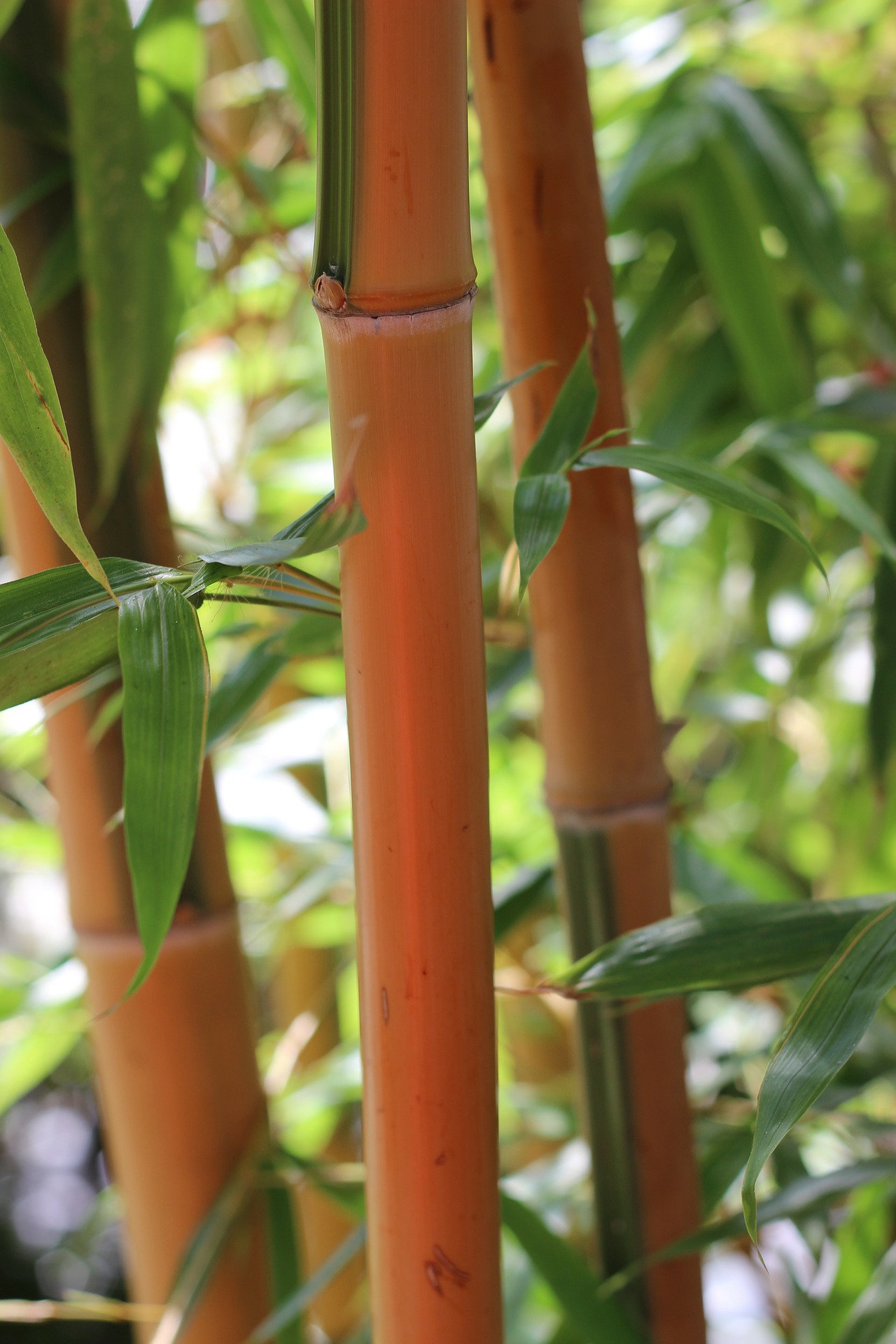
    • Phyllostachys aurea ‘Holochrysa’, it is the golden bamboo which grows in tight tuft, presenting golden culms; height 4.50 m.

    Bamboos for use in isolation or in beds

    • Fargesia nitida ‘Nymphenburg’, a variety with a very graceful habit and young shoots tinged with blue. For partial shade; height 4 m.
    • Phyllostachys vivax aureocaulis , superb vigorous selection with golden yellow culms striped in green barcode style; height 8 m.
    • Semiarundinaria fastuosa var. viridis , vigorous and impressive species with dark green culms, united and large pearly sheaths; height 7 m.
    • Thamnocalamus crassinodus ‘Kew Beauty’. With its yellow stems of steel blue then green, this plant is remarkable for its light habit; height4 m.

    Bamboos for gardener, pan or pot

    • Chimonobambusa marmorea ‘Variegata’ or marbled bamboo is stocky, with large narrow variegated leaves, tiger stubble; height 1.50 m.
    • Indocalamus tesselatus
    • Phyllostachys nigra  or black bamboo with elegant stubble, inky black; height 6 m.
    • Phyllostachys aureosulcata , exhibits green culms, growing in a zigzag fashion; height 6 m.

    The genus Pleioblastus  offers many low varieties with elegant, variegated foliage, such as

    • P. chino ‘Elegantissimus’ with thin leaves, highlighted with cream; height 1.50 m
    • P. viridistriatus is distinguished by its stocky habit and its leaves broadly streaked with golden yellow; height 1.40 m.
    • Semiarundinaria yashadake ‘Kimmei’ with golden culms lined with green is of exemplary grace; height 3 m.

    Dwarf varieties are also grown in planters or pots.

    Bamboo potted indoors

    Some species adapt very well to our interiors, being too sensitive to the cold. This is the case with the famous stocky Bambusa ventricosa with swollen nodes or the graceful Bambusa multiplex ‘Alphonse Karr’ with yellow stubble highlighted in green.
    Full light and a humid atmosphere thanks to a humidifier placed nearby will contribute to the growth and good health of your plant.

    Edible bamboos

    If you have optimal growing conditions (summer heat, rich soil, draining, but cool in summer) you can cultivate for example Arundinartia hindsii or Phyllostachys heterocycla , ‘Henonis’. Take the spears in the manner of asparagus, during spring regrowth, burrowing to their base.

  • Plant blue fescue

    Plant blue fescue

    Very trendy, easy to grow and ideal for dressing arid areas of the garden, the Blue Fescue is gaining more and more followers. Its very graphic blue-gray foliage forms tufts of the most beautiful effect in rockeries and borders. For a contemporary garden, plant this grass on a bed of white gravel: effect guaranteed!

    Difficulty of planting blue fescue

    Very easy.

    When to plant blue fescue?

    Spring or fall.

    Preparing to plant the blue fescue

    Fescues are not susceptible to any disease which facilitates the choice of plants. Just make sure that the roots do not get “bun” in the pot and that the foliage is a beautiful blue.
    Preparation of the soil:
    Beaker to a depth of 30 cm. Take advantage of the operation to remove the roots of weeds and to incorporate a draining amendment such as coarse river sand into the soil.

    Exposure

    Sun.

    Ground

    Poor, drained, dry.

    Distance between 2 blue fescue plants

    30 cm.

    How to plant blue fescue?

    Blue fescue is a very easy to grow perennial grass. It thrives in dry, well-drained ordinary soil. It tolerates drought and poor soils and can be planted in seaside gardens.

    • Choose a location in full sun to dig the planting hole, which should be a size slightly larger than that of the root ball.
    • For better drainage in heavy soil, dig deeper and add a bed of chippings to the bottom of the hole.
    • Install the plant and fill in the spaces with a mixture of soil and river sand.
    • Space the plants at a distance of 30 cm.

    After planting the blue fescue

    Water after planting. Continue watering, letting the soil dry out between two waterings until the first signs of re-vegetation. Then the Blue Fescue will not need any more care, except cleaning the leaves and faded flowers from time to time to keep it looking beautiful.

  • Bamboos: the methods to not let yourself be invaded

    Bamboos: the methods to not let yourself be invaded

    They grow quickly, keep their foliage, but some are invasive. How to avoid their proliferation: follow our advice!

    Bamboos have seduced individuals who have chosen them to quickly create a screen of greenery. Unfortunately, installed in the ground without precaution, they are likely to leave their beds in search of new spaces to conquer. If the bamboo likes it, the rhizomes can spread several meters further. The scenarios below should make everyone aware of the importance of properly planting a bamboo.

    1. “A bamboo is for life”

    “I tried everything, says Nicolas G; I tore it up, slaughtered it with a spade; but the smallest piece of root left in the ground makes it start again! It has even started to colonize my neighbor’s garden … I am desperately looking for a solution. “

    2. Elbow grease!

    If the precautions have not been taken from the start, the gardener will have no other solution than to use the pickaxe with relative success. Unfortunately, there is no effective natural method.

    What precautions?

    Don’t wait until it’s too late. Once established, the most creeping bamboos can produce rhizomes of several meters each year. Nothing stops them: they will pass under your lawn, will invite themselves into your beds. The best weapon is prevention rather than cure.
     

    1.  There are tufted bamboos which remain in a tuft. They don’t colonize the land. Choose in particular the Fargesia species.
    2.  For the others, it is essential to install a (real) anti-rhizome tarpaulin before planting, in a trench 50 cm deep to prevent them from spreading. The rhizomes are powerful; do not use an imitation tarp that would let them slip away! Forget the tiles, slate, geotextile and pond cover.
    3. Beware in particular of phyllostachys , very common in garden centers, with creeping rhizomes. Keep them in the pots (making sure that the rhizomes do not escape through the drain hole).
    4. Make a trench (of a width equivalent to a good spade iron) all around the massif to prevent the propagation of rhizomes. Monitor this trench every year and remove any excess.

    Conclusion

    Rarely sick, maintenance-free, aesthetic with their canes of color, bamboos have advantages provided they are well chosen and contained.

  • How to grow fern according to the variety

    How to grow fern according to the variety

    Fans of shade, ferns seduce with their refreshing greenery, especially in summer. They gracefully populate deprived corners without requiring special care. Some so-called “arborescent” are mistaken for shrubs and exhibit an exotic-looking trunk or stipe. Others will do well in pots or containers.

    Cultivation conditions

    Ferns are plants without flowers whose reproduction is very particular (see “seedlings”). Their leaves, deciduous or persistent, are called fronds, their seeds spores. Most of them offer the spectacle of their young slingshots unfolding in a stick. They have in common to appreciate the shade and the freshness. They are of great use to dress the foot of trees or shrubs, undergrowth or gardens embedded between buildings.

    How to sow ferns

    The reproduction of these primary plants is very particular. Indeed, the seeds are distributed on the obverse of the fronds or on specific fronds, arranged in the center of the tufts. Brown to golden, they require high humidity and hygrometry to germinate.
    Sprinkle on the surface of a terrine, on a bed of river sand. Do not pack or cover. Put a glass on the whole. Then a prothallus is formed, a sort of undifferentiated green mass. Only after some time do real seedlings appear on its surface. Individualize them by transplanting them separately.closevolume_off

    When and how to plant ferns

    In the South or in very drained soil, prefer an autumn planting. Preferably operate in spring elsewhere. If necessary, incorporate a lot of potting soil or compost to enrich the soil and improve its texture and structure.

    How to water ferns

    Water copiously until complete recovery, then periodically in the event of summer drought or very draining soil.

    How to fertilize ferns

    Add compost and / or half a handful of organic lawn fertilizer per plant in the fall .

    How to successfully maintain ferns

    Weed the surrounding area and spread an organic mulch in the fall, on soft, cool soil. Renew it every year.

    Diseases and pests

    No.

    How to prune ferns

    Remove dry deciduous fronds in winter, evergreen leaves from last year at the end of winter.

    How to multiply ferns

    Divide the stumps. Collect bulbils for some proliferating varieties.

    The classic varieties of ferns

    • Asplenium scolopendrium Phyllitis scolopendrium or “stag’s tongue fern” is satisfied with little. Entire fronds leathery, rather erect, persistent, pointed, of a solid green. ‘Undulatum’, with wavy edges, ‘Crispum’, with crisp edges, ‘Furcatum’, with split ends. From 30 to 50 cm.
    • Athyrium filix-femina or “female fern” is common in the woods and has given rise to many attractive forms for light shade location. The fronds, very green and divided twice, have the appearance of feathers and are deciduous, withering in early autumn. It grows in ordinary soil, rather humus, on slopes or near bodies of water; in ‘Frizelliae’ the fronds are composed of short rounded and curly pinnae, aligned on either side of the frail main vein, 35 cm; ‘Victoriae’ is original with its fronds with leaflets that intersect in pairs, 80 cm. 
    • Athyrium nipponicum is prized for its painted double-divided leaves. ‘Pictum’ is the most common, variegated with silvery gray and veined with purple brown, 45 cm; ‘Ghost’ , more uniform gray in color, 60 cm; on ‘Ursula’s Red’ the center of the silver fronds is marked with burgundy; ‘Ocean’s Flurry’ combines silvery foliage and curly fronds.
    • Blechnum spicant has tough, evergreen foliage. The tufts are compact with sterile, dark green, glossy, rather flattened fronds. The new fertile summer fronds are erect. Nice effect all year round. For rather acidic soil, 45 cm. 
    • Dryopteris affinis ‘Cristata’ or ‘The King’   exhibits semi-evergreen fronds, doubly divided and curled at the tip. The spring stocks are golden, 1.20 m. ‘Pinderi’ with a divergent habit and narrow fronds, with golden reflections, 1.10 m.
    • Dryopteris dilatata ‘Crispa Whiteside’, deciduous fronds, light green then dark green, curly like parsley. Superb in a pot, 50 cm; ‘Lepidota Crispa Cristata’ is a dwarf version with delicately divided fronds and twitched in a single plane. Any soil, for rock garden or pot, 40 cm. 
    • Dryopteris erythrosora is splendid with its young orange or salmon colored fronds. Evergreen foliage, sheltered location and very humus soil, 70 cm.
    • Dryopteris filix-mas or male fern is native and very accommodating, it tolerates dryness, limestone, clay and even the sun in wet soil. Large elegant green-yellow fronds. ‘Cristata’ offers fronds ending in a ruffled crest, 50 cm; ‘Linearis Polydactylon’, with the fronds, aerial, almost devoid of blade and the tips of the pinnae are curly. Grayish appearance, 90 cm. 
    • Dryopteris wallichiana is distinguished by a short, black trunk. The young fronds, in spring, are enhanced by a rachis furnished with very dark scales. Vigorous, semi-persistent, spectacular plant, with an erect habit, 1 m.
    • Polystichum aculeatum . Rustic and vigorous native fern with leathery fronds, yellowish in spring then dark green, shiny and persistent, arranged in a cone, 80 cm. 
    • Polystichum braunii . Species with leathery, hairy, deciduous fronds, erect and sometimes exposing buds at the end of the fronds. Silver gray reflections at the lacrosse stage in spring then to the rough feel in season, 60 cm.
    • Polystichum polyblepharum . Supple, elegant habit with its broad, brilliant green fronds, with tight leaflets, 60 cm in all directions: superb ground-covering effect. Supports clay soil, but not soggy. 
    • Polystichum setiferum. Accommodating and of great beauty. It grows in a compact tuft. Its persistent fronds deploy in spring butts garnished with golden scales. The fronds are broad and very indented, yellowish-green. For shade and freshness, but good drought tolerance. Great longevity of the tufts. ‘Herrenhausen’, with long, erect fronds, 90 cm; ‘Plumosum Densum’, fronds several times cut and entangled, for a muslin effect; ‘Proliferum’ exhibits fronds carrying proliferation (small fronds in formation), 1 m.

    Ferns enduring heat and drought

    • Asplenium trichomanes . The “false capillary” is a reviviscent plant. It is able to dry out during the summer and then turn green again as soon as the rains in the fall. This small persistent fern is a follower of walls and cracks in our countryside and cities. Compact tufts of fronds divided into round pinnae, petioles black, 20 cm.
    • Ceterach officinarum , another native, shows the same ability to regrow. Even more compact, its fronds are tight, divided and more leathery, with beige reverse, 10 cm. 
    • Cheilanthes lanosa is very suitable for sun and drought. Its narrow foliage is hairy and silvery to bluish, with a woolly appearance. In earth, even limestone, but humus, 25 cm in all directions.
    • Polypodium vulgare or “liquorice of the woods” is able to survive hanging on the fork of trees in oceanic climate or between rocks. Rather calcareous soils. Rhizomatous strain, spreading out as a perfect ground cover. Late bud break in spring. Persistent fronds cut into deep lobes, leathery, dark green, 30 cm. ‘Cambricum’ and ‘Cornubiense’ with deeply divided leaflets. 

    Exotic-looking ferns

    • Adiantum pedatum or capillary. Thin and elegant leaves, like palmate and plurifoliolate arranged on a plane, horizontally, like “bird’s foot”. Stems slender, black, robust, 25 cm.
    • Adiantum capilus-veneris or “hair of Venus” shows a more compact form, the fronds spreading out one above the other for a green waterfall effect. They are elongated and not palmate, with irregular leaflets, 25 cm. Less hardy than the previous species. The adiantum scarcely tolerate windy situations and appreciate good atmospheric hygrometry. Install them near a waterfall, for example, or even in a shaded wall or the wall of a cavity.
    • Cyrtomium falcatum has attractive evergreen foliage, green and glossy, spreading and sparsely divided. Scythe-shaped leaflets. Quite rustic, it will find its place in pots or in the garden, in cool dry soil. Protect the stump with a mattress of dead leaves, 60 cm. 
    • Cyrtomium fortunei is similar to the previous one with less thick, leathery and rather dull, light green and wavy foliage. On the other hand, it is more vigorous, 70 cm .
    • C. f. clivicola , flexible port, ideal for filling an embankment.
    • Dicksonia antarctica is the species most commonly used as a “tree fern”. It produces a spongy trunk (stipe) at the top of which develops a crown of large and broad evergreen leaves, very indented, green and shiny, sometimes 2.50 m long. Install in a container or on a patio, in a place protected from cold winds and late frosts. During the growth, high humidity recommended thanks to frequent bathing or misting. If necessary, installdrip irrigationin the crown. Withstands down to – 7 ° C. If necessary, protect by tying the crown and wrapping everything in a protective veil. Up to 3.50 m. NOT’ 
    • Dryopteris cycadina . Its fronds are persistent, tall and light, evoking the leaves of the cycad. Easy to grow in cool, rather acidic soil. Protect the stump in winter, 70 cm.
    • Lygodium japonicum is a rare climbing fern. Protected by a thick mattress of dead leaves, its stock is hardy in the Paris region. Slow growth, 2 m. 
    • Woodwardia unigemmata surprises with its vigor, robustness and the size of its fronds. It is however rustic in the Paris region, with a well protected place and a protective mulch against the stump and roots. Young reddish fronds and spreading by underground suckers. Spectacular effect, 80 cm, hardiness – 8 ° C.

    Ferns adapted to humid soils

    • Matteucia struthiopteris or “ostrich feather fern”. Early to grow in spring, its fronds are assembled in a narrow, light green cone. Grows in compact colonies in neutral soil, rich in humus and always moist. Avoid drying winds. Up to 1.50 m.
    • Onoclea Sensitis is a perennial with roots with creeping rhizomes that forms dense colonies. The fronds are short, split twice, renewing in summer, light green assuming splendid coppery colors in autumn. Ideal for bank retention, supports temporary or continuous immersion of less than 10 cm. Humus soil, rather acidic, 70 cm. 
    • Osmunda regalis , “royal osmonde”, is a protected plant in our country. It is the most imposing rustic fern in our region. Sterile fronds erect, broad and divided. Fertile fronds in summer, less spectacular. It can form “turrets” and thus rise above the water level. Beautiful spring crosses and fall colors. Spores borne at the tips of fertile fronds. Slow growth, up to 2.50 m. ‘Purpurascens’, with young shoots and bronze petioles.

    Indoor ferns to grow in pots

    There are varieties of ferns that are grown in pots like houseplants. To learn more about caring for indoor ferns, repotting and growing them:

    • Indoor ferns
    • The crocodile fern
    • Nephrolepsis
    • Caring for the Boston fern
    • 30 indoor plants with depolluting properties

    Where to plant a tree fern and which soil to use?

    A semi-shaded situation will be perfect. Choose a place protected from the winds by walls or hedges because the very long fronds break easily. The quality of the soil is of little importance because the tree fern has few underground roots .

  • Zoom on bamboo

    Zoom on bamboo

    The bamboo has many advantages, the first of which is to push faster and therefore actually be a renewable raw material. In the garden, you can use it as a living plant or as a craft material.

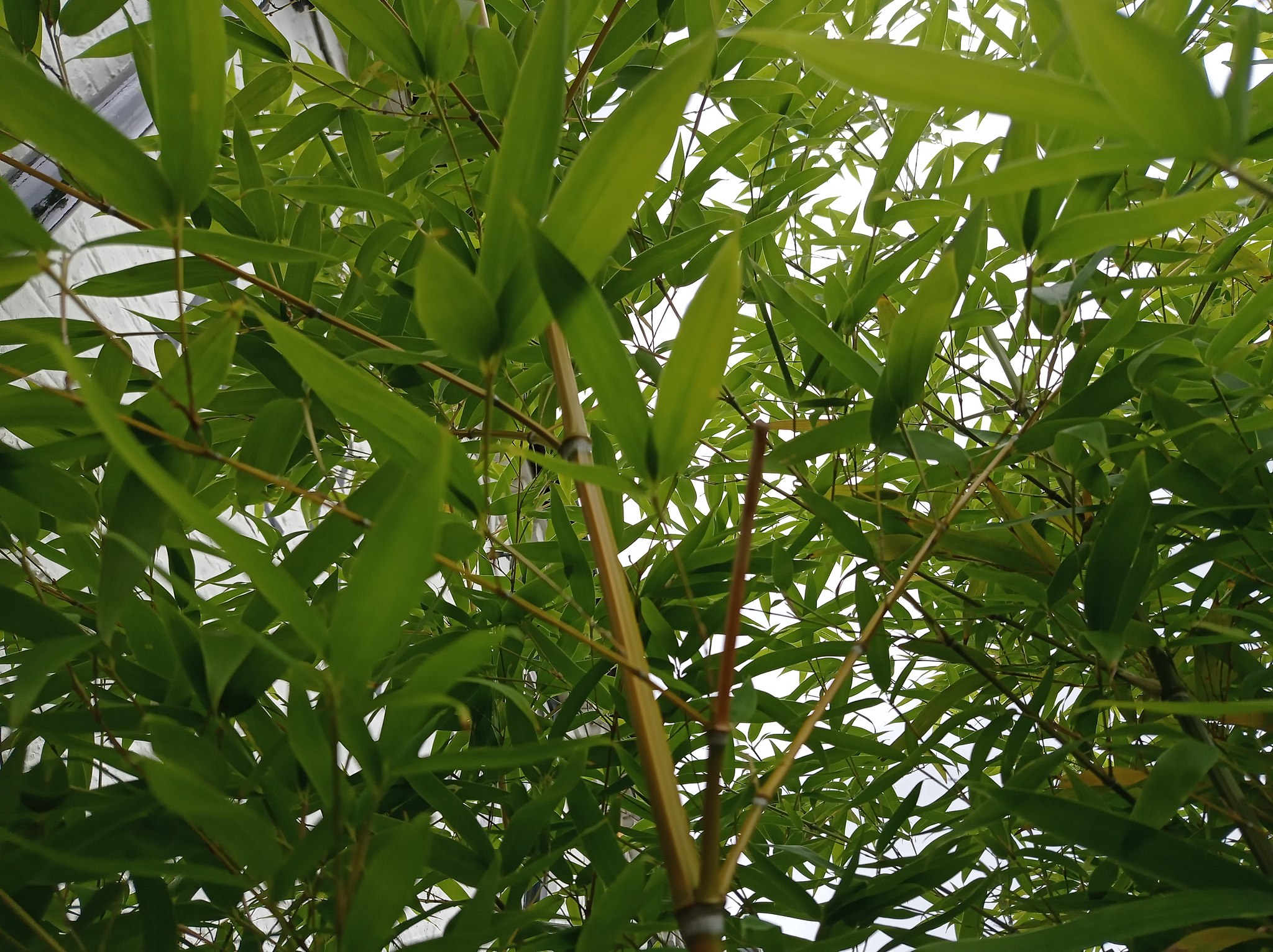
    Bamboo is a universal grass , spread over much of the globe. It is easily cultivated and can even become invasive when the conditions are particularly pleasing to it. In addition to its decorative appearance, you can make braided hedges, leading its shoots like a trellis .
    Bamboo is also used after harvest and drying. When purchasing, the rods must have a regular appearance, without gray areas or pitted black. Solid, they resonate if you knock them against each other, at least the bigger ones. For thinner tips, just check that they are not crushed or broken.

    Thousand and one uses

    Bamboo is used for everything. In the garden, in addition to its use for the creation of the screen and the fence (see related articles), it is used to make plant pots, flower boxes, furniture with an exotic design (bar, sunbathing) , armchair…). In the form of canisses, it protects well from the sun. For the interior, it is available in parquet. Its fibers are used in making textiles and its shoots are consumed. In Asia it is used for scaffolding and to build entire houses.