Category: Grasses and ferns

Explore the beauty and versatility of grasses and ferns in gardens, landscapes, and indoor spaces. Learn how to grow, care for, and incorporate these plants to add texture, greenery, and natural elegance. Discover tips on planting, maintenance, and design ideas to create lush, serene environments.

  • Tree fern (Dicksonia antartica)

    Tree fern (Dicksonia antartica)

    An ancestral plant in the garden.

    Culture sheet: when and how to plant a tree fern?

    Family: Dicksoniaceae.
    Dimensions : in nature, the plant can reach 15 m in height. In our climates, it will reach 5 to 8 m, after many years.
    Distance and depth of planting: in the ground, the plants must be separated by about 3 to 4 m so that the fronds spread out well without being hampered. Plant the fern in the spring when the earth has started to warm up. Planting is possible in the fall in mild climates.
    Growth: it is very slow, the trunk, called the stipe, growing every year by only 3 to 5 cm.
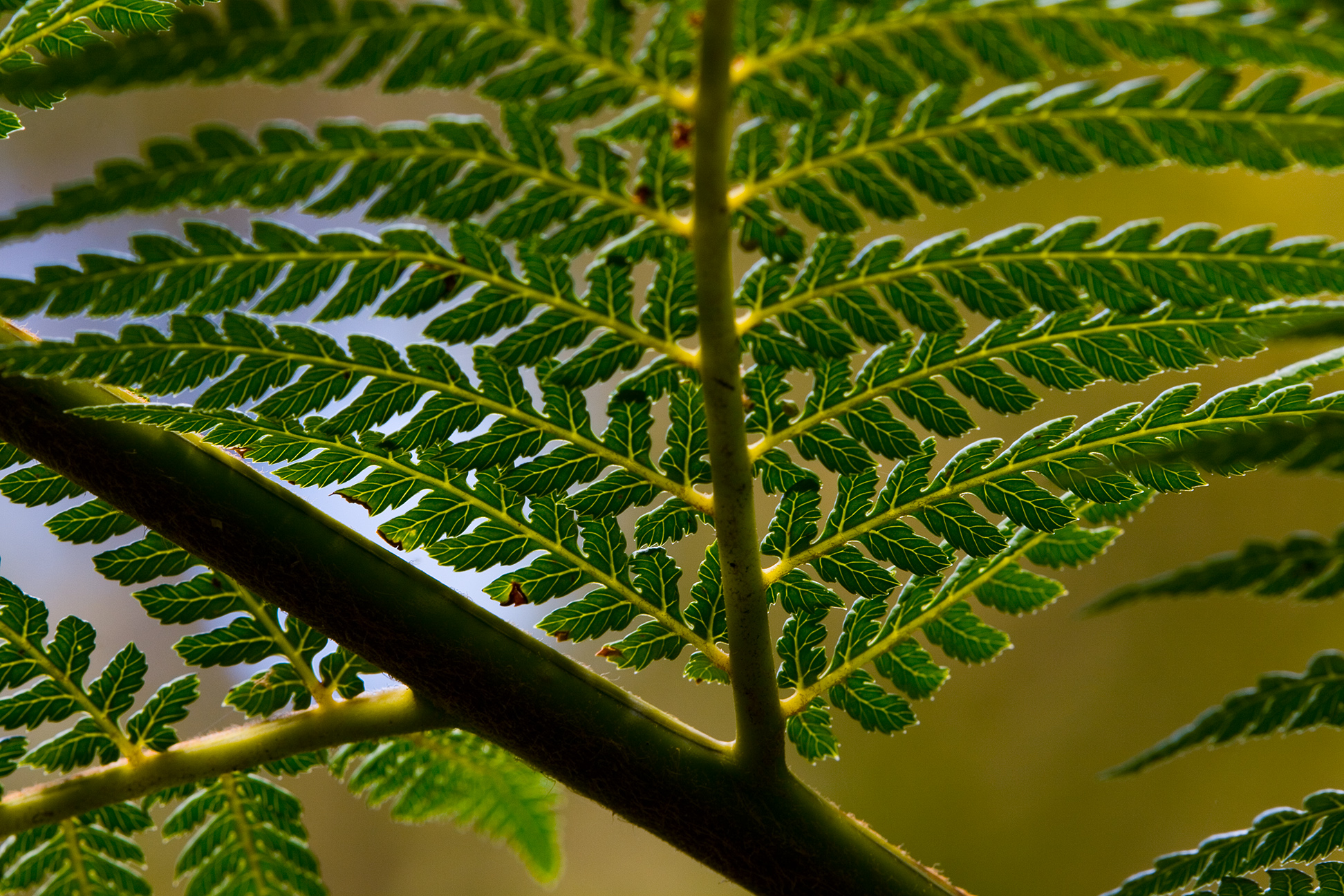
    Appearance: this fern is a sight on its own. Its massive and upright trunk is formed by the successive layering of the fronds (leaves of the ferns). Its root system is aerial, surrounding the trunk with a brown felting. It is he who captures the humidity and mineral salts necessary for the growth of the plant. In May-June, the fronds appear at the top of the trunk. Rolled up in butts inside, they unfold in erect fronds which then take on a spreading habit, then falling. They are a beautiful shiny green and their petioles bear red hairs. At the end of summer, they reach a length of 1.50 to 2 m.
    Soil : The quality of the soil is of little importance because the tree fern has few underground roots.
    Exposure: a semi-shaded situation will be perfect. Choose a place protected from the winds by walls or hedges because the very long fronds break easily.
    Climate : placed outdoors, the tree fern supports colds of around – 15 ° C provided it is well protected.

    Origin: where does the fern come from?

    The genus Dicksonia comprises about thirty species distributed in the mountains of Malaysia, Australia, New Caledonia, New Zealand. D. antartica appeared on Earth about 350 million years ago, as can be seen from fossils dating from the Carboniferous period. The genus is dedicated to James Dickson (1738-1822), an English botanist, author of several works including one on ferns .

    What are the different species and varieties of fern?

    Only D. antartica can be grown in open ground in some areas. There are superb specimens on the west coast of Scotland and in English Cornwall, humid areas protected from the cold by the Gulf Stream. Other tree ferns, smaller, adapt to container culture, which allows them to be sheltered in winter. This is the case of D. fibrosa and D. squarrosa which reach about 6 m in nature, but hardly exceed 1.50 to 2 m in our climates.

    How to use and associate ferns in the garden?

    In the ground, a single copy of tree fern is enough to give an exotic atmosphere to the garden. accompany it with plants with remarkable foliage such as hostas, astilboides tabularis, ornamental rhubarb, chestnut leaf rodgersia.

    Culture: where to plant a tree fern?

    In the ground or in a pot, it is very simple. You have to push the base of the stipe more or less deeply (it depends on the size of the plant) so that it is quite stable. The earth serves only as an anchor point .

    How to maintain a tree fern?

    The element that the tree fern needs the most is humidity in the air , which must be very important. On the coasts of the Breton or Atlantic coast, in Normandy, she is at her ease.

    How to water the fern?

    Elsewhere, it should be regularly given water by sprinkling it in the heart of the fronds and by wetting the fibers of the trunk well. As winter approaches, it will be necessary to protect it if it stays outside.

    How to prune a tree fern?

    Start by cutting the fronds, then surround the trunk with a coarse mesh netting, all the way up to the stem. Close this “tube” with strong ties, then slide handfuls of dead leaves between the trunk and the wire frame. Firm enough to obtain good insulation. Finish by attaching a piece of transparent plastic to the head of the plant with a string. Remove this protection in April.

    How to multiply a fern?

    It is possible by sowing, but this technique is reserved for very patient gardeners! Like all ferns, D. antartica produces seeds (spores) which develop under the fronds. When they’re brown, it’s time to seed them. To do this, spread a piece of frond on the surface of a box containing potting soil. Hold the slingshot with the help of small jumpers. Place everything in a warm and especially humid greenhouse.

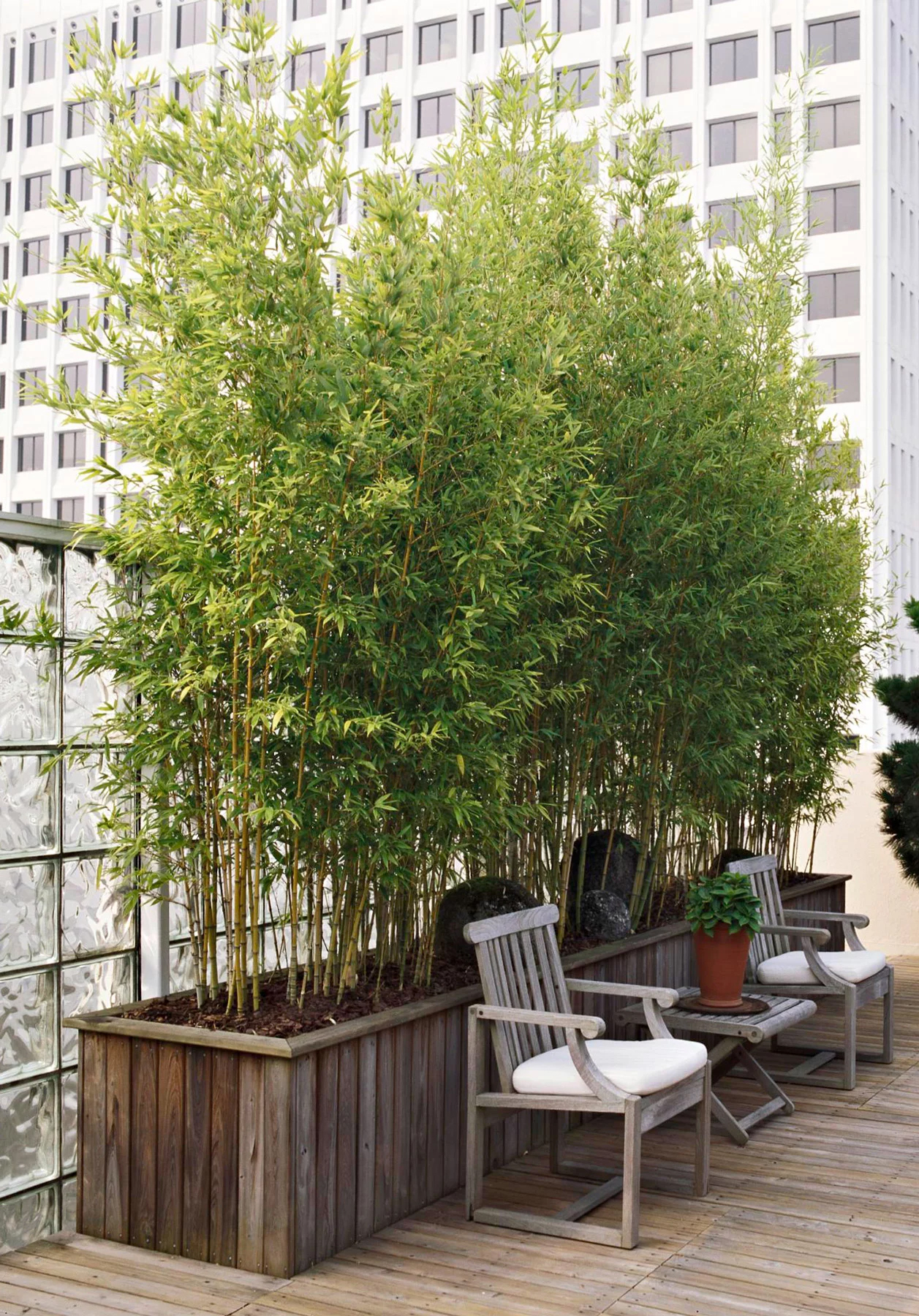
  • Plant bamboo in a large handmade container

    Plant bamboo in a large handmade container

    How to plant bamboo in a custom-made container on your patio.

    Material needed for the construction of the tank

    Bamboos need a lot of soil. To make a custom-made container you will need:

    • 3 joists 18 cm wide for the length of the boxes.
    • 2 identical joists to form the width. They will be cut to divide the tank in its length.
    1. Drill holes at the base to drain the water.
    2. Lay a geotextile canvas at the bottom and on the walls.
    3. Place clay balls at the bottom of the tank.
    4. Mix universal potting soil and loam and incorporate compost into it . Bamboos are greedy plants. Also combine a special grass fertilizer.
    5. An anti-rhizome barrier will be necessary to prevent the rhizomes, most of them creeping, from passing under the tubs and spinning elsewhere.

    Planting bamboo in tubs

    Then move on to setting up the bamboos. They will appreciate exposure to the sun or partial shade:

    • Plant the phyllostachys nigra  (black bamboo) after having soaked them well. The clods can be difficult to remove. In this case use a saw.
    • Place the clods on the bed of earth.
    • Fill the container with soil up to the stubble.
    • It is then possible to add a mulch with pine bark to decorate the tank and maintain the humidity on the surface.
    • Water copiously. Bamboos are greedy in water and if their needs are met their growth is rapid. 

    10 varieties of bamboo to choose from, from large to small

    • Phyllostachys aurea: pale green culms turning yellow

    Height: 6 to 9 m

    • Phyllostachys nigra: green culms when young and turning black with time and sunny exposure.

    Height: 6 to 8 m

    • Semiarundinaria fastuosa: dark green culms tinting red in autumn for older plants.

    Height: 5 to 9 m

    • Hibanobambusa tranquillans: bamboo with broad foliage.

    Height: 3 to 5 m

    • Semiarundinaria yashadake ‘Kimmei’: elegant yellow culms streaked with green. The color turns purple in the fall.

    Height: 3 to 4 m

    • Fargesia jiuzhaigou: bamboo with a drooping port. The culms are yellow on older plants and turn red in the sun. 

    Height: 2 to 4 m

    • Fargesia rufa: bushy and drooping habit. The young culms are slightly pink. 

    Height: 1.50 to 3 m

    • Hibanobambousa tranquillans ‘Shiroshima’: beautiful foliage with large variegated leaves of cream bench. 

    Height 2 to 3 m

    • Pleioblastus pumilus: a compact habit from top to bottom with very dense dark green leaves. 

    Height: 0.30 to 0.80 m

    • Pleioblastus viridistriatu ‘Auricoma’: a ray of sunshine with its bright yellow variegated foliage. It loses its foliage in winter. 

    Height: 0.30 to 1.50 m

  • How to maintain and care for a potted bamboo

    How to maintain and care for a potted bamboo

    Keep a green bamboo all year round and help it through the winter. 

    Tips for planting a potted bamboo

    To install bamboo on your terrace, prefer compact shapes to hide the opposite: squat bamboos with dense foliage such as fargesia rufa. Planting bamboo in pots allows you to take advantage of its evergreen foliage and very decorative stubble for some varieties. This is the case of phyllostachys nigra with black culms or of phyllostachys aureosulcata ‘Aureocaulis’ with very original culms of bright yellow color in zigzag. 

    How to plant a bamboo in a pot:

    • Choose a pot according to the size of the bamboo, large enough for the root ball to fit in without forcing. 
    • Rehydrate the root ball by immersing it in water. 
    • Place a geotextile felt in the bottom of the pot and its edges, then pour a layer of clay balls over a few centimeters.
    • Partially fill with horticultural soil and place the root ball on this bed of soil.
    • Fill in the spaces with soil and tamp as you go. 

    Care tips for potted bamboo

    Maintain a bamboo in summer
    Water the bamboo copiously. They need water, and the rhizomes will be more easily contained if they are watered properly. In pierced tubs, it is important to regularly check to see if the rhizomes are coming out of the holes. Placed on a terrace fitted out on slabs, they can cause damage by slipping into open spaces. 
    Regularly move the tubs and cut the rhizomes that protrude. 

    Maintaining a bamboo in winter
    When it freezes heavily, the bamboo can no longer draw water and therefore feed its foliage. Observe the leaves carefully: if they are closed, the plant lacks water.
    To protect bamboo against cold and frost on the surface,wintering veil (or dead leaves ).
    Place the protection at the foot of the bamboos to prevent the frost from penetrating to the roots.
    Water out of periods that are too dry. 

  • How to clean and protect from pampas grass

    How to clean and protect from pampas grass

    The long silvery white plumes of this giant grass give it all its charm. They can reach more than 3 m in height. When winter comes, we must clean the base of the stems and the withered leaves.

    What tools to prune the pampas grass?

    Material:

    pruning shears
    gloves
    string or solid tie
    protective veil or perforated plastic film

    Advice :

    Depending on the geographical location of the garden, remove the winter protection from February so as not to interfere with the departure of the vegetation.

    Decorative pampas grass:

    Before the plumes are fully ripe, they can be cut and dried upside down. They will make sumptuous dry bouquets. Spray a little hairspray to keep them whole as long as possible.

    Maintenance: how to cut flowers from pampas grass?

    Before the first frosts, cut the floral stems and plumes with a solid secateurs. Put on gloves, because the leaves of this grass are quite sharp. Prune as close to the stump as possible otherwise, there will end up being a mound in the middle.

    Size: clean the tuft

    Clean the clump by removing the dried leaves. You can also cut some of it when the pampas grass begins to become invasive. Shred all waste and bring it to the compost, spraying it with a decomposition activator.

    Pick up and tie stems and leaves

    Then pick up the remaining leaves to form a straight tuft. Tie them together with a string or a very strong tie. Attach at several heights when the foot is old. If the winter is very cold in the area, the center of the clump can be protected by garnishing it with dead, dry leaves.

    Cover to protect

    To prevent rainwater from rotting the plant, cover it with a winter protection veil or plastic film held in place by strong ties. Use a perforated plastic so that the foliage continues to breathe and that there is no condensation inside the envelope.

    When to prune pampas grass?

    Each fall, remove the faded leaves and cut the flower stalks. Then install winter protection.

    How to dry and maintain the “feathers” of the pampas?

    The flowers of the pampas grass dry easily and will not require any special treatment except to put them upside down, to prevent the stems from bending. However, you will have to remember to shake them regularly to prevent them from becoming dust nests!

    Where is pampas grass found?

    Originally from South America, pampas grass is now cultivated almost everywhere in our latitudes. When the climatic conditions are mild and temperate, it can even quickly become invasive .