Category: Gardening

Explore tips, guides, and ideas for all things gardening. From growing beautiful flowers and lush indoor plants to maintaining a thriving vegetable garden, discover practical advice for gardeners of every level. Learn techniques, seasonal care, and innovative gardening solutions to make your garden flourish.

  • How to recognize and eliminate 10 weeds in the garden

    How to recognize and eliminate 10 weeds in the garden

    Hoe or hoe in hand, roam the garden in search of these invasive plants.

    Creeping buttercup

    Latin name: Ranunculus repens
    In the buttercup family, it is the most difficult to eliminate . It multiplies by seeds and especially by powerful runners which go in all directions, especially in heavy, clayey, compacted soil.

    How to eliminate creeping buttercup

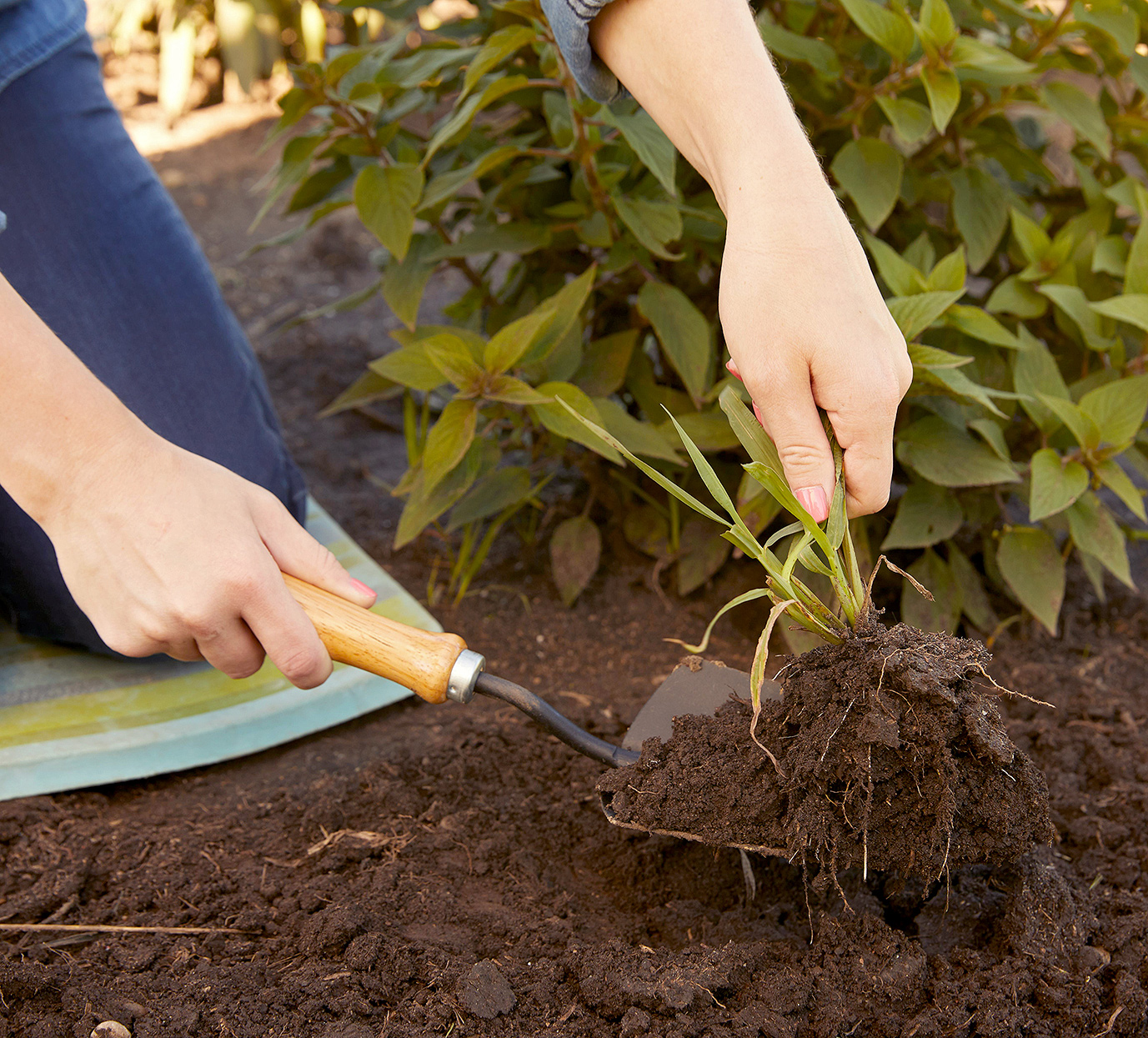
    Digging the soil to unpack and make furniture. Take advantage of the digging to eliminate the whole plant with its runners.

    Shepherd’s purse

    Latin name: Capsella bursa-pastoris

    This annual, 5 to 40 cm high, reproduces by seed, is very widespread, especially in loose , sandy and rich soil . In the vegetable garden, it can transmit cabbage hernia .

    How to eliminate the shepherd’s purse

    It must be rooted out by performing a methodical weeding . Weed as soon as possible because the shepherd’s purse forms and spreads seeds several times a year. It is eaten! It’s a delicious salad : a cousin of the arugula, with a less spicy taste , which the Chinese cultivate.closevolume_off

    Cirse des champs

    Latin name: Cirsium arvense Its leaves are prickly and its flowers – very beautiful in summer – deliver thousands of seeds to the wind. It should therefore not be allowed to reach the flowering stage ! This undesirable is also spread thanks to strong sucker roots …

    How to eliminate field cyst

    Cover the ground or cut the aerial parts as often as possible using a weeding gouge to weaken the roots .

    Quackgrass

    Latin name: Elytrigia repens

    This grass – of sad reputation – extends over large areas thanks to long rhizomes tracing to 20 cm deep, the slightest fragment of which gives a new plant .

    How to eliminate quackgrass

    Cover the soil in open spaces or dig out the roots 2 to 3 times, one month apart. In a bed, exhaust the quackgrass by pulling out any shoots as soon as they have a few leaves.

    Ciliated galinsoga

    Latin name: Galinsoga ciliata

    Little known, yet it spreads vigorously, each plant being able to produce from its eighth week up to 7,500 seeds which germinate immediately! This plague, moreover, can harbor insect pests , nematodes and viruses.

    How to eliminate ciliated galinsoga

    By hoeing very early before flowering to avoid propagation and by applying the technique of false sowing.

    Field bindweed

    Latin name: Convolvulus arvensis

    This weed plant greatly appreciates calcareous and warm soils , rather loose, in which it propagates by a main root carrying numerous ramifications which can sink to more than 2 m. Proliferative, it goes as far as colonizing 25 m2 in one season …

    How to get rid of bindweed

    Regularly cut the aerial parts to weaken the roots . Cover the ground in open ground.

    Chickweed

    Latin name: Stellaria media

    This edible annual reproduces by seed (2,000 per plant) several times a year and spreads by creeping stems that take root. It appreciates moist and rich soils in partial shade. It may indicate too much nitrogen .

    How to get rid of chickweed

    Pull up young plants by hand or with a hedgehog before they flower and do not leave them on the ground .

    Field mustard

    Latin name: Sinapis arvensis

    This annual, which flowers from June to October and reproduces by seed, serves as a host for pests (flea beetle) and a vector for cabbage diseases (hernia, mildew). Mustard appreciates calcareous, rich, clayey soils .

    How to eliminate field mustard

    Cut the stems at the start of flowering to prevent seed build-up and pull out the stems or weed. The roots of debris do not regenerate.

    Oxalis

    Latin name: Oxalis corniculata This small annual, often perennial in a mild climate, develops creeping stems which take root at the level of the leaves (green or red) and flowers from May to October. Its seeds are projected by capsules which burst suddenly and ensure wide dissemination.

    How to get rid of oxalis

    Pull up the plant as soon as possible and completely to avoid regrowth.

    White clover

    Latin name: Trifolium repens This perennial multiplies by seeds and spreads by means of creeping stems which take root at the level of the nodes. Its white flowers, rich in nectar, are abundantly pollinated.

    How to eliminate clover

    Weed on bare soil to eliminate the entire plant. In the lawn, mow short to limit the formation of seeds. Remember that clover fixes nitrogen , attracts auxiliaries and stays green in dry weather …

    What are the most common weeds in the garden?

    Annual and shallow weeds:

    Purple dead nettle, harsh sow thistle, spurge alarm clock, oxalis, lamb’s quarters, chickweed, persicaria knotweed. Cardamine, shepherd’s purse, chickweed and common groundsel produce 2 or 3 generations per year.

    Perennial and deep weeds:

    Dandelion, rumex, comfrey, wild chervil.

    Perennial and creeping weeds:

    Quackgrass, nettle, goutweed, bindweed, horsetail, polygonum, eagle fern.

    Perennial runner weeds:

    Creeping cinquefoil, bramble, bluegrass. The creeping buttercup can thus cover 3 m2 in a season and the brunelle, 10!

    How do you prevent “weeds” from growing?

    The fight against weeds is one of the essential concerns. In a natural garden, the task requires thought and astuteness since the use of herbicides is not an option.
    Luckily, there are many tricks that allow, in the form of passive resistance , if not to get rid of, at least to effectively limit the colonization of these wild plants: the cover of the ground to prevent it from being sown, their hoeing before they go up to seeds, raising hens that will delight in seeds and other snails.
  • A red pot like autumn

    A red pot like autumn

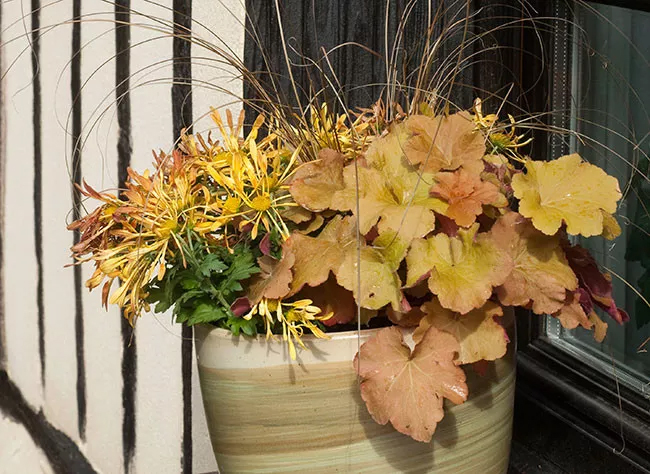
    Sporting the fiery colors that the dead leaves dress in this off-season, here is a pot both flowery and leafy, which catches the light still very present at the end of September.

    • Choose an earthenware pot about 30 cm in diameter, in a shade that matches the chosen plants.
    • After having favored drainage by placing a bed of clay balls at the bottom, fill it, up to 8 cm from the edge, with geranium soil, then add two handfuls of compost .
    • Plant side, opt for 4 buckets chrysanthemums starred in shades apricot, ocher or rust, plant beside a heuchère ‘Caramel.
    • Ruffle the composition with a sedge ( C. buchananii ), to be placed in the center, slightly behind.
    • Complete with potting soil and tamp down.
    • Place this hotpot in the soft sun, water.
    • Add water as soon as the earth dries up on the surface.
    • Cut the flowers as soon as they wilt.
    • When the feet are no longer presentable, replace them for the winter with a persistent fern , violas, primroses or white heather .
    • Perennials , heuches and sedges retain their interest.
    • In the spring, top up with compost.
  • Successful watering of parsnip: need and frequency

    Successful watering of parsnip: need and frequency

    Like most root vegetables, parsnips are capable, if well rooted, of obtaining water in most situations.

    Water requirement

    Low, except during prolonged drought.

    Signs of a lack of water

    Dehydration is seen by the yellowing and wilting of its outer parts.

    Water quality

    Rainwater , spring water or mains water are equally suitable. The water can be cold or lukewarm.

    Necessary material

    A watering can or a hose . Accurate watering is always preferable for good water use.

    Watering frequency

    It is important to keep the soil moist before and after the parsnip emerges, so that it settles properly and grows its roots deep into the soil. In this way, it is able, except in the event of prolonged drought , to fetch the water it needs.
    In all situations, it is best to water at night, late at night, or early in the morning.
    To limit the evaporation of water from sowing, hoeing , weeding and mulching are extremely useful.

  • Fight against chestnut leaf miner

    Fight against chestnut leaf miner

    Long before the arrival of autumn, the chestnut trees began to defoliate and continue to lose their leaves parasitized by the leafminer. Now is the time to act to limit its action next year.

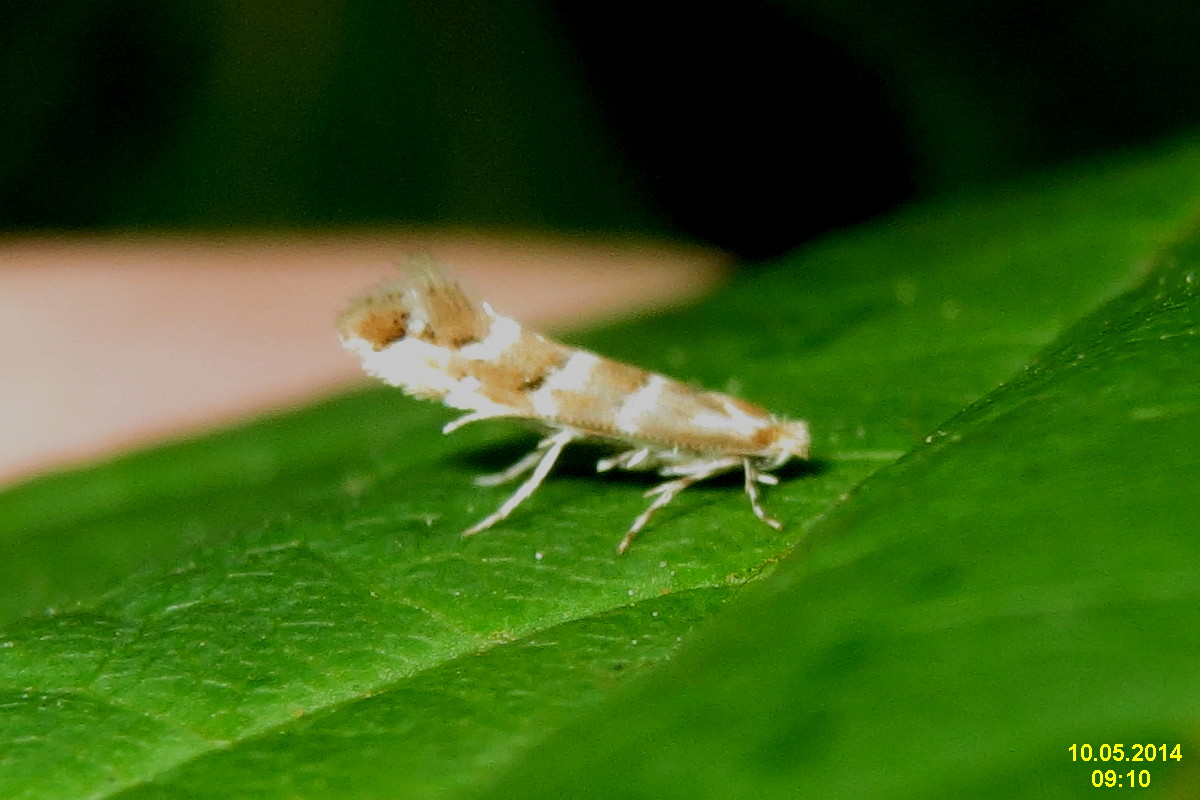
    In Europe, white chestnut or horse chestnut ( Aesculus hippocastanum ) have been severely attacked by the leafminer ( Cameraria ohridella ) since the end of the 1980s. This parasitic butterfly of uncertain origin and observed in the east of the France in 2000 quickly progressed to the point of invading practically the whole country from 2004.

    The great availability of chestnut trees on French territory, the rapid increase in the populations of this pest (it is estimated that the leafminer has three generations per year in France and that the population is multiplied by ten with each generation) and the absence of predators specific make the struggle more difficult. Synthetic pheromone trapping only removes part of the leafminer moths. Today, the cheapest method of reducing populations remains the careful collection of dead leaves and their disposal.

    The insect overwinters in the leaf blades that have fallen to the ground. Without this protection, he cannot survive. It is therefore important to systematically collect the leaves from under the tree and nearby as soon as the fall begins. And they must be destroyed, the best being incineration. Composting is not a solution to eliminate them.

    To your rakes and vacuum blowers!

  • Install a border of yellow perennials: step by step

    Install a border of yellow perennials: step by step

    Take inspiration from English gardens by creating this generous border of perennials, which will remain elegant for a long time and brighten up your summer.

    Preperation

    Install this bed preferably in spring, but you can proceed until the end of June, provided you ensure watering next summer. Start by carefully loosening the soil using a spade. Take the opportunity to add an organic fertilizer , such as compost or decomposed manure.

    Purchase guide

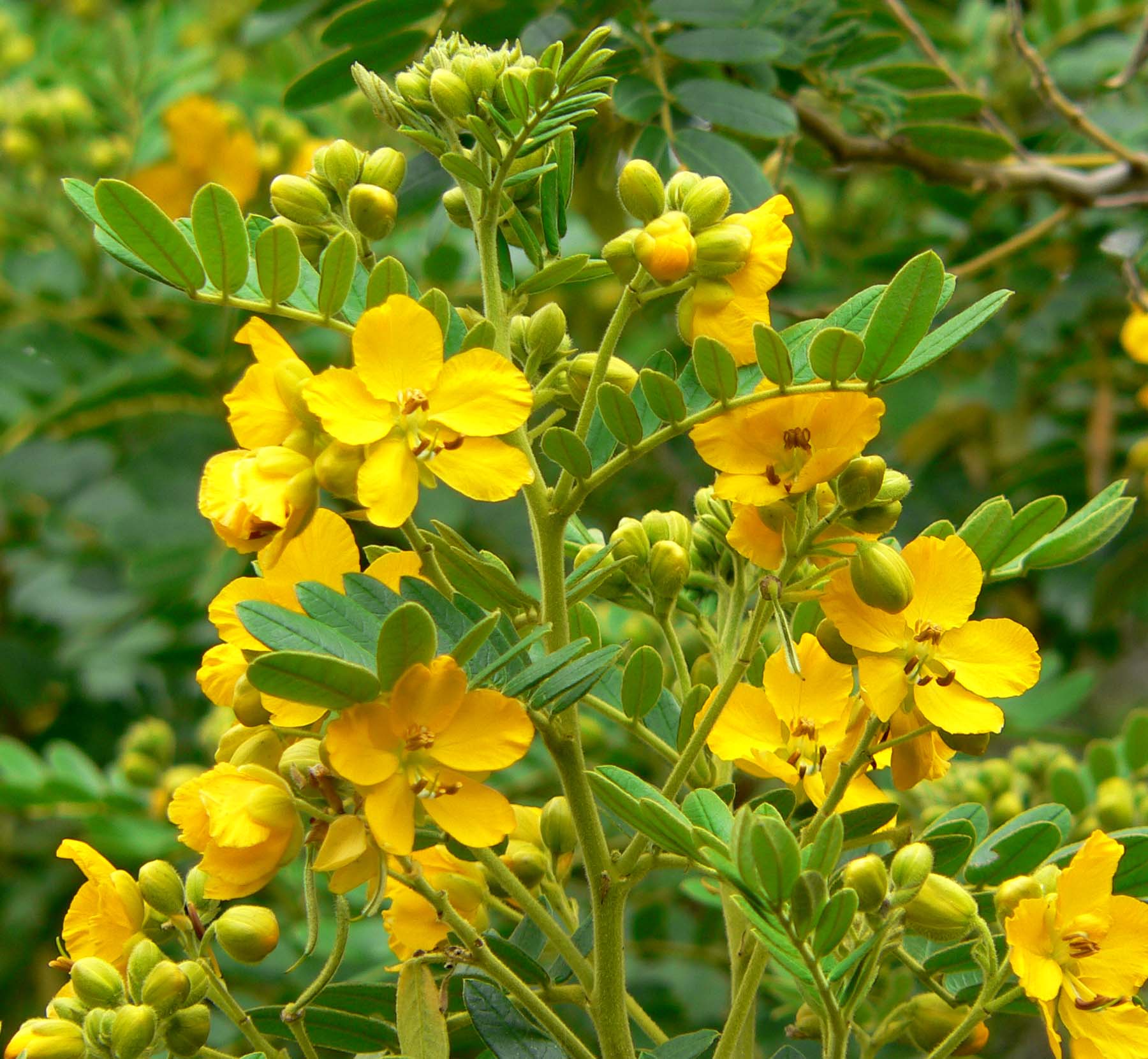
    Obtain grasses and perennials grown in pots. Opt for container-raised senna (cassia), which you’ll buy from a nurseryman specializing in exotic species.

    Planting

    Arrange the plants on the ground to judge the effect obtained. Moisturize the roots of senna well before planting it, then install grasses and perennials by digging holes with a dibble.

    Maintenance

    During the season, cut dead flowers and water as soon as the soil dries up. In the fall, protect senna and euryops or place them in a greenhouse for the winter . At the end of it, you will prune their twigs before taking them out in May, cut the dry stubble of the phalaris and the foliage of the lupine. In March, you will cut down the silver baskets and helichrysum and decompact the soil before spreading fertilizer and mulch.

    Practical advice

    Where to install it?

    In a sunny position to prolong flowering and obtain colorful foliage, and in drained soil , because these plants prefer dry soil, without excess.

    Completion time

    2 to 3 hours for tillage and planting.

    Cost

    200 € for a 5 m² massif

    Good to know

    In cold regions, you will protect the senna, frost, either by wrapping the stump and the branches in a thick wintering veil, or by repotting it in October, after having pulled it up, to winter it under cover.

    How to make this composition

    Delimit a rectangular border of 1.20 m wide by 2 m long.

    In the center and at the bottom of the massif, 60 cm from the edge, put the senna in place. Around it, 60 cm from its trunk, distribute the euryops. At the front of the massif, plant phalaris , lupine , helychrisum and silver baskets 25 cm from each other.

    This last step can be reproduced and put end to end to create a circular mass.

    Boss plan

    1. Senna (Senna corymbosa) 1 shrub
    2. Euryops (Euryops pectinatus) 3 plants
    3. Lupine ( Lupinus ‘Le chandelier’)  1 plant
    4. Phalaris ( Phalaris arundinacea var. Picta) 3 plants
    5. Silver basket ( Cerastium biebersteinii ) 3 plants
    6. Helichrysum ( Helichrysum italicum )  1 plant

  • Maintain lawn edges at the end of summer

    Maintain lawn edges at the end of summer

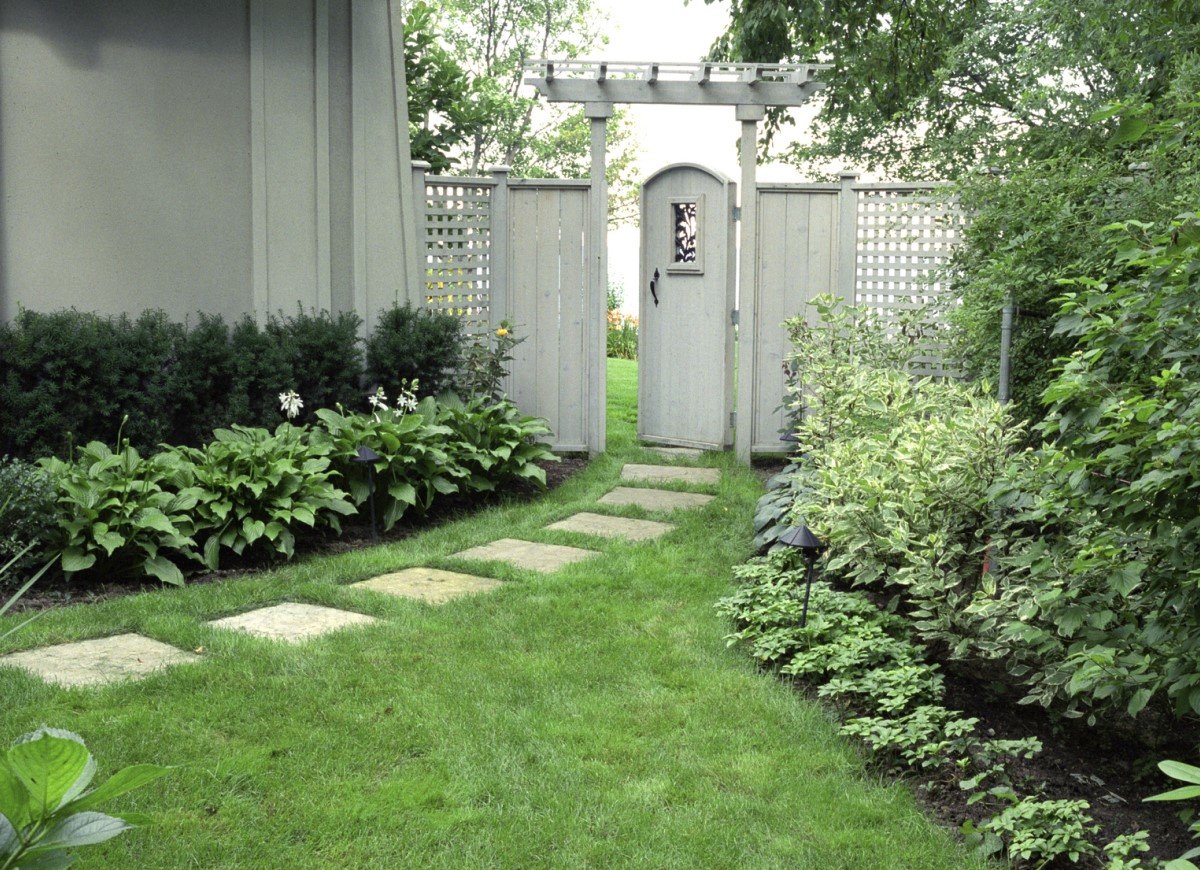
    Mow the lawn and cut perennials along the edges for a clean grass path.

    The perennials that line the paths will also have benefited greatly from their vacations. Depending on the variety, it will be necessary to cut the deflowered stems or support the inflorescences that are too heavy . The passage of the mower in alleys narrowed by the overweight of the beds becomes a real headache. At the same time, you will have to respect the perennials at the edge while cutting the relatively tall grass.

    The right gesture

    Support taller plants with a line before the machine passes. The installation of small paving stones at the height of the grass constitutes a solution to limit the progression of the grass in the massif, but also to mow more easily, without risk of cutting your flowering plants.

  • Gardening with the moon. Sow your tomatoes and collect the seeds

    Gardening with the moon. Sow your tomatoes and collect the seeds

    The best gestures in the vegetable garden to grow and then harvest garden tomatoes with the lunar calendar.

    Pick the tomatoes at full maturity and respect the lunar dates, they are then full of sun and vitamins.
    For which varieties?
    The old varieties because they reproduce faithfully by this method of multiplication: the sowing of the harvested seeds will give fruits similar to those of the parents. They are also more difficult to find in stores, you have to buy them by mail order from specialists.

    Harvesting the seeds – 1

    Find the most beautiful fruits on the best plants. Both should be vigorous, free from disease. The tomatoes have the characteristic shape of the variety and are very ripe. Pick them delicately by hand. Do not mix varieties. Use different or labeled containers.

    Harvesting the seeds – 2

    At home, cut the tomatoes into quarters and, with a spoon, drop the pulp and seeds into a glass container. You can add a trickle of water. Wait a few days (approximately 48 hours in hot weather), depending on the ambient temperature, until white mold appears on the surface. Watch carefully, because if you delay the seeds will germinate. Indeed, this fermentation has the effect of eliminating the gelatin which surrounds the seeds and it keeps them dormant.

    Harvesting the seeds – 3

    Pour the pulp into a fine mesh colander and run the tap water to clean the seeds. Remove pulp and small or poorly formed seeds. Let them drain then place them on a smooth surface, tiles or a plastic cover, but especially not on absorbent paper, they will stick to them when drying.

    Harvesting the seeds – 4

    Separate them from each other because the drying must be fast, otherwise, the seeds can get moldy. Choose a dry, well-ventilated place without direct sunlight. When they are completely dry, put them in paper bags or in small glass jars. Write down the name of the variety and the year of harvest. The germination period is at least four years or even ten years for some varieties.

    Sowing in pots

    Before the end of April, sow the tomatoes in peat cups if possible, in a special sowing soil. Put 3 seeds per jar, cover lightly, tamp and spray with water. Place in a greenhouse or a bright room, at 16-20 ° C. Keep the best looking plant in each pot and keep at 16-18 ° C and a little humid until planting. If the plant is getting too long, it is lacking in light.

    The plantation

    To avoid sowing, you can buy seedlings. Install them in the garden, in a sunny place, from mid-May. Plant in rows 70 cm apart, spacing the feet 50 cm apart. Open holes twice the size of the cups. Soak the plants, do not deposit those in peat cups. Bury the base 5 cm to strengthen the rooting. Prick a stake near the root ball, fill it up.

    Pruning and other care

    Tie the stem to the stake with raffia as it grows. Once a week, cut off the young shoots that form in the axils of the leaves with your fingernails. Head the main stem 1 or 2 leaves above the 5th bunch of fruits to promote their enlargement. Water without wetting the foliage.

    The harvest

    Every day, harvest the most colorful fruits by checking their maturity: take them in the palm of one hand and, with the thumb of the other hand, exert pressure on the bulge of the peduncle located above the tomato. If the stem does not break, do not insist, the fruit is not quite ready.

  • Treat trees and shrubs naturally in winter

    Treat trees and shrubs naturally in winter

    With the cold season, trees, ornamental shrubs and roses on one side, but also fruit trees on the other, seem spared from summer diseases and pests. Do not be fooled by appearances because, well hidden and sheltered, they are waiting for the warm weather to strike again. Flush them out with natural products.

    Winter is a good time to treat, if the weather is good.
    The gardener has a little time, the interventions are carried out at a distance from the harvests and limit those to be done during the growing season. The operation involves first removing the eggs, parasite larvae and disease spores. To do this, before spraying the products on the trunks and large branches of fruit trees, ornamental shrubs and large trees, get rid of the lichens and moss that cling to them (Example: cleaning the bark of the pear tree). They are not directly dangerous, but shelter the overwintering forms of parasites or diseases, and hinder the good penetration of the treatments in the cracks of the bark.
    Treat roses and conifers as well.

    The different natural treatments

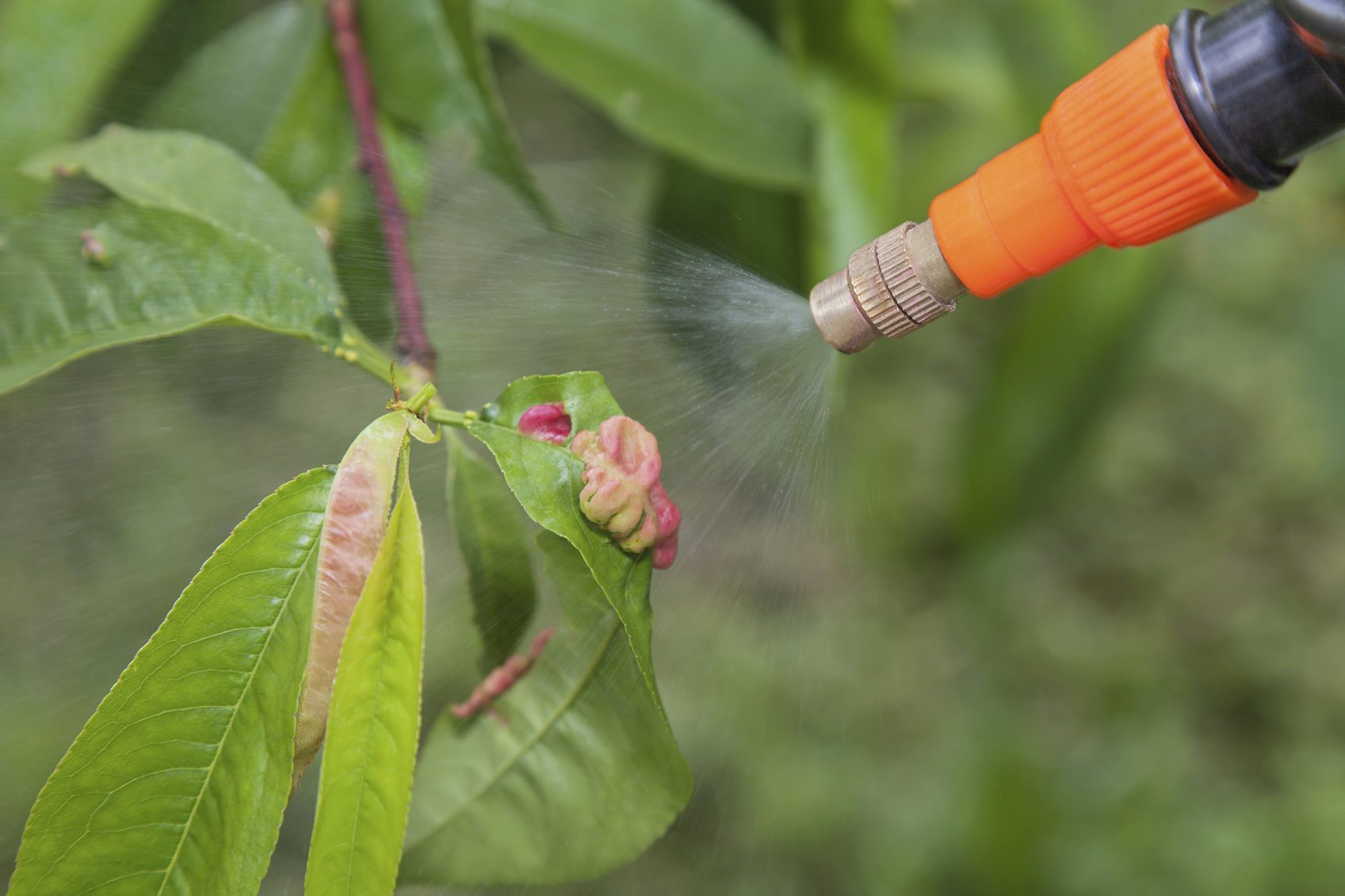
    In winter and until bud break, use organic products such as lime- based solutions to fight against fungi and white oils (rapeseed, with insecticidal properties) .
    They get rid of the eggs and larvae of many parasites (aphid, codling moth, psyllid) or disease spores (powdery mildew, scab).
    It will also be necessary to provide specific care for certain tree species depending on the diseases to which they are particularly prone.
    Also think about horsetail or nettle decoctions , real natural fortifiers to make yourself. 

    Take the weather into account

    To be effective, winter treatments are carried out during a mild period, without the risk of rain in the days to come. This would run off the treatment before it had time to act; it needs to stay in contact with pests and diseases present on trees and shrubs. Likewise, store the products if the wind is raging: during the application, they would be deflected, including in your direction. Do not treat, either, during severe frosts, as liquid treatments will make the buds and bark more sensitive to cold.

    Shelter the auxiliaries

    Some of the pests are eliminated by animals that are easily attracted to your garden.
    Insectivorous birds (chickadees, nuthatches, creepers) devour the eggs and larvae of parasites (aphids, carpocapses, flies, mites) which overwinter in bark crevices. In summer, they take care of adults and caterpillars.
    Bats catch many insects in flight.
    Ladybugs, lacewings and earwigs appreciate aphids, while hedgehogs delight in slugs and snails.

    To welcome these precious allies, provide them with natural shelters such as: country hedges , piles of wood, bundles of twigs with hollow wood or pith , evergreen shrubs… Install nesting boxes, bird feeders , shelters suitable for ladybugs, lacewings and hedgehogs in the garden .

  • Five columns in the spotlight on apple trees

    Five columns in the spotlight on apple trees

    Present in small gardens for several years, colonial apple trees are available in different varieties that are increasingly numerous. Small point of the day.

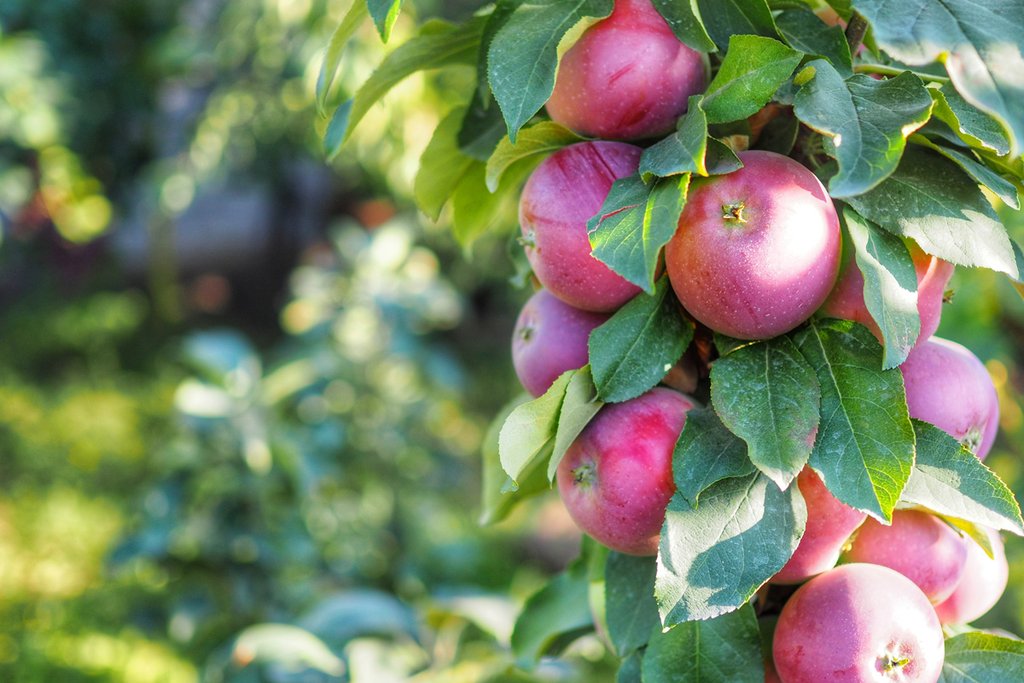
    At first glance, these apple trees are just trees that forgot to expand, but their real advantage is almost no pruning . Thanks to genetic work on chromosome 10, it does not develop side branches but a central axis. Result: the size is deleted.

    But a columnar remains an apple tree and its rootstock should match your soil. Look to producers for what is right for you. In addition to the soil, its vigor is essential in order to keep the characteristics viable for a culture in container or in a small garden. The rootstock must therefore be dwarfing, so that the tree does not exceed 3 meters in height.

    Maintain a distance of 1 meter between the apple trees. Remember to guard them for the time of a good rooting. Pollination is best with several compatible varieties. Fruit set takes one to two years , much faster than for standard apple trees. In addition, their resistance makes it possible to limit or even eliminate treatments. More accessible, they are also more easily treated when needed.

  • The little animals will spend the winter

    The little animals will spend the winter

    In nature, all animals know how to adapt to winter conditions. But in the garden, some of them might need a little help.

    Hedgehogs, snails, frogs … all warm!

    Several animal species, including hedgehogs , prepare for winter by building up fruit reserves. In order to survive, they adjust their metabolism to the climate of the region. Other mammals hibernate with a body temperature that is higher than that of their environment. On the other hand, the body temperature of cold-blooded animals (amphibians, fish or even mollusks) varies according to that of the environment. Thus, in very cold weather, they go into lethargy, after having manufactured organic substances or partitions preventing them from freezing.

    Earthworms

    Although slower, earthworm activity continues into the winter. They feed on organic matter which they transform into humus. To do this, they descend lower, under the layer of frozen earth.

    To help them: spread manure, plant debris or compost on the ground on your flowerbeds. It will freeze less quickly and the auxiliaries appreciate this food.

    Goldfish in the basin

    Snuggled up in algae or aquatic plants, goldfish reduce their activity and feed little. In a pool at least 80 cm deep, they fear neither low temperatures nor surface ice.

    To help them: let a bundle of wood float; oxygen will pass through if ice forms. If the basin is shallow, put them in a sheltered basin, without feeding them.

    Frog

    The cold causes a decline in the vitality of the frog. Almost asleep, she buried herself in the mud to spend the winter there without expending energy and without eating. If ice forms, it will survive thanks to the glucose in its organs acting as antifreeze, but it will take several hours to come out of its torpor.

    To help it: remember to leave mud on the edges of the water point.

    Hedgehog

    It is under a pile of branches or leaves that the hedgehog arranges its shelter by padding it with moss. During hibernation, its temperature drops and its vital functions slow down. He wakes up periodically to feed on his reserves and stretch his muscles a little.

    To help him: set up a nest filled with dead leaves . Don’t wake him up for any reason.

    Snail

    The snail overwinters in a hole which it closes with slime which, as it hardens, will protect it from the cold. In addition, it obstructs its shell with an operculum. It no longer feeds and decreases its vital functions. His oxygen consumption drops by half, and his heartbeat slows considerably. In case of momentary softening, it can then regain its activity.