Category: Gardening

Explore tips, guides, and ideas for all things gardening. From growing beautiful flowers and lush indoor plants to maintaining a thriving vegetable garden, discover practical advice for gardeners of every level. Learn techniques, seasonal care, and innovative gardening solutions to make your garden flourish.

  • The successful layering of an olive tree grown in pots

    The successful layering of an olive tree grown in pots

    Marking a tree is more delicate than a shrub, but it is achievable with species like the olive tree which tend to produce suckers. Two precautions nevertheless: the operation is delicate because it is necessary to dig the sucker to the sapwood (living part of the wood); if the tree is grafted, then the marcotte will reproduce the characteristics of the rootstock and not of the variety producing the olives.

    An olive tree mounted on a stem sometimes emits one or more twigs (greedy) on the trunk. Without intervention, the olive tree would divide in the lower part and lose its initial appearance. Hence the interest in cutting the branches positioned on the barrel, under the crown, as you go. However, this pseudo-gourmand can be used to reproduce a new olive tree thanks to air layering. This multiplication method is applied to plants with erect stems which cannot be pinned to the ground, under penalty of breakage.
    The best time to lay an olive tree is in spring, but this can also be done almost all year round except in cold weather.

    Air layering of an olive tree: step by step

    In principle, air layering is carried out with a sleeve. Here, the layering branch is low enough to take root in a pot.

    1. Pour a drainage bed at the bottom of the pot.
    2. Thread an iron wire into the water drain hole which will then be used to hold the layer pressed against the substrate.
    3. Fill the pot 2/3 full with a mixture of half garden soil and the other half of universal soil.
    4. Dress the future marcotte by removing the leaves positioned along the stem in the lower part. No leaf should be buried.
    5. Incise the stem with a sharp blade lengthwise at the level of the future buried part.
    6. Hold the layered layer with the wire so that it cannot go up.
    7. Cover the marcotte with soil and potting soil.
    8. Straighten the layer with a tutor.
    9. Water copiously.
    10. Mulch over to avoid drying out.
  • What facilities to fit out a home

    What facilities to fit out a home

    Short-term rentals, last-minute moves, unforeseen equipment needs: many situations require quick solutions. If acquiring equipment requires time and thought, renting it limits the investment and therefore facilitates the procedures.

    Meet all the needs

    All interiors have different size and organization constraints. Modular supplies for small spaces, large format in large residences, the rental of furniture makes it possible to adapt to each situation. 

    Arrange your exterior

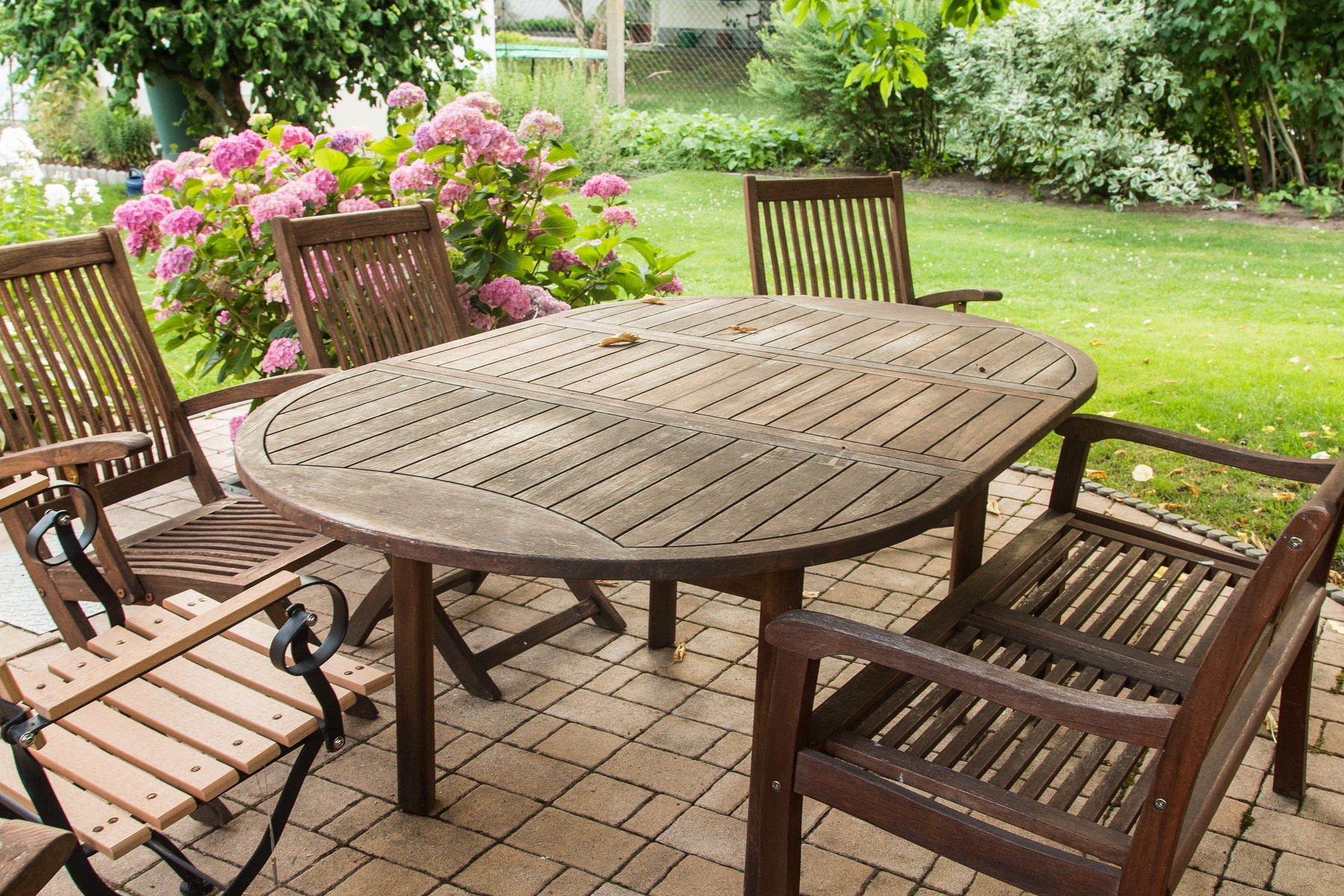
    Terraces and gardens are an integral part of the house. Yet their arrangement is often postponed for reasons of time or budget. Garden furniture, table for outdoor lunches, barbecue: arrange your outdoor space with the rental of garden furniture from the semeubler.com site. Moderate prices and a wide range of furniture and accessories, enough to enjoy your green area in all seasons.

    Promote mobility

    Whether it is for a job, to pursue studies or to join a loved one, there are all good reasons to move. Things get complicated when it comes to taking action. Boxes, trucks, friends to lend a hand… organizing a move is no easy task. How about avoiding the drudgery? Semeubler.com offers a home delivery service. Furniture, household appliances or multimedia: everything arrives directly at your home and, bonus, is installed and assembled by professionals. In addition, by renting your equipment, you will no longer have to move it from one accommodation to another. At the end of the contract, the semeubler.com teams are responsible for bringing back the equipment.

    Limit waste

    If the slightest breakdown plunges you into anxiety, that you are more a fan of new than repair, semeubler.com could well save you from going back and forth to the recycling center. Furniture, appliances and multimedia are guaranteed. If in doubt about the use, advisers will tell you what to do. Equipment with a proven problem, failure or malfunction, is replaced within 72 hours. Peace of mind guaranteed.

  • How To Treat Flowers Naturally!

    How To Treat Flowers Naturally!

    If the removal of chemistry seems obvious in the vegetable garden, this rule is often forgotten for flowers. However, the consequences for flora and fauna are identical.

    Opt for organic seeds or plants. The seed suppliers have good ranges and the nurserymen offer healthy plants whose recovery is guaranteed .
    In fertilizer, marine bone powder (phosphorus) acts on the roots gradually and makes the plant more resistant. Offer roasted horn which releases nitrogen slowly, and basalt for calcium, magnesium and trace elements. 

    Nettle or comfrey in the form of liquid manure, or herbal tea stimulate growth. For the latter, heat 200 g of nettle in a liter of water and bring to the boil. Leave to infuse for a quarter of an hour, filter and dilute one for nine. Spray on the foliage. For the comfrey manure, macerate with 1 kg of chopped fresh leaves in 10L of water. When the mixture foams on the surface, filter and store in small closed cans. Dilute this extract when cold, at a rate of 3% in water, it makes flowering plants, or your cuttings, more resistant to drought. An interesting finding for pots.

  • Colorful pots for fall

    Colorful pots for fall

    Cheerful, cheerful! Autumn on the balcony… As long as you start making a few pots and planters to color it.

    A visit to his usual point of sale will stock up on plants to make planters or pots or to hang on his balcony.
    Harmonize the colors between them, and think about extending the periods of interest until spring. The evergreen foliage will complement the fall blooms.

    Pansies and violas

    Classics, pansies and violas tire when they are installed alone, even if their colors can be varied.
    In the sun, install these violas in the company of dwarf asters, chrysanthemums, heather.
    In light shade, marry them with cyclamen .

    Ornamental grasses

    The linear leaves with the drooping shape of small sedges bring lightness.
    For a hotpot exposed to soft sun or light shade, install a bronze to orange sedge (Carex testacea) or variegated cream (C. oshimensis ‘Evergold’).

    The colorful foliage of heucheres

    The leaves of the heuches are superb all winter.
    Bright purple colors ( Heuchera ‘Beaujolais’, H. ‘Chocolate Ruffles’, H. ‘Obsidian’) appreciate the sun.
    For a partial shade exposure, prefer paler leaves ( Heuchera ‘Caramel’, H. ‘Cinnabar Silver’) or tangy ( Heuchera ‘Citronelle’).

    Silvery foliage

    Also think of the silvery gray foliage of the golden baskets, the helianthemums, the bear ears which will form beautiful contrasts.

    Antifreeze containers

    Choose pots that will not burst with freezing and thawing: non-freezing terracotta, plastic or wood.
    Glazed pottery, which does not evacuate moisture, is more fragile.

    Install the plants

    Buy the plants in pots or small pots.
    Moisturize the clods before planting them until the air bubbles disappear.
    Deposit and install the plants tightly enough.
    Slide potting soil into the voids up to 2 cm from the edges.
    Firm by hand and water.

  • Robot mowers. Which model and how to install it

    Robot mowers. Which model and how to install it

    The dream becomes reality: without any effort, here is a perfectly mowed lawn! This little miracle is possible thanks to the robotic lawnmower. To try it is to adopt it !

    What is a robotic lawnmower?

    Intelligent mower, the robot mower is a device that mows the lawn by itself, in any weather, whatever the time and despite the irregularities of the ground. Very discreet, it hardly makes any noise and does not give off exhaust gases. Who says better !
    The result is impeccable: the lawn is dense and always well maintained.
    If it discharges, the robot places itself on its charging station before resuming work independently and according to your programming.

    Advantages of the robotic lawnmower?

    • The grass is always greener:

    With its exclusive cutting system, Automower® will cut a few millimeters of grass daily which will decompose quickly. Your lawn creates its own compost, strengthens and beautifies itself. And you don’t have any more grass to clear out… everything becomes so simple.

    • Even for complex terrains:

    The robotic lawnmower circumvents obstacles, overcomes rough terrain for a perfect result. The adaptive timer function automatically adapts the mowing time according to the growth of the lawn.

    • The robotic lawnmower is not afraid of the dark:

    No disturbance for the neighborhood, the sound level of a robot is between 58 and 61 DB (A), which is very appreciable for you and your neighborhood.

    • Even in the rain:

    The robotic lawnmower is not afraid of the rain and leaves no mark in its path, thanks to its random movement. The most sensitive parts are protected from the elements, dust and grass clippings.

    The robotic lawnmower is the ideal solution to face increasingly important and restrictive ecological and environmental constraints (reduction of CO2 emissions, reduction of noise pollution, reduction of the use of phytosanitary products, etc.). requires a low level of maintenance compared to a traditional mower.

    How to choose a robot lawn mower?

    • Choose your robot according to the lawn area to be cut. The robots can mow on small fields as well as on large fields of 5000 m² with more complex shapes.
    • Choose your robot according to the area of ​​your lawn (a robot can mow between 43 m² / h and 208 m² / h depending on the area for which it is programmed).
    • If the terrain is rough or steep, buy a suitable robot. Some models can mow on slopes of up to 45%.
    • Another selection criterion is its programming, which can be done manually or via a smartphone and various features offered. 

    Install a robotic lawnmower

    1. Installation of the robot may require specialist assistance to ensure robot performance.
    2. If you want to install it yourself, below are some tips:
    • On a map, determine the areas to be mowed and the obstacles to be delimited.
    • Place the charging station flat in the center and near an electrical outlet.  
    • Place the robot’s peripheral wire all along the area to be delimited and the obstacles to be cut out.
    • Secure the wire to the ground with jumpers or dig a small trench to bury it (no more than 20 cm).
  • Bamboos: the methods to not let yourself be invaded

    Bamboos: the methods to not let yourself be invaded

    They grow quickly, keep their foliage, but some are invasive. How to avoid their proliferation: follow our advice!

    Bamboos have seduced individuals who have chosen them to quickly create a screen of greenery. Unfortunately, installed in the ground without precaution, they are likely to leave their beds in search of new spaces to conquer. If the bamboo likes it, the rhizomes can spread several meters further. The scenarios below should make everyone aware of the importance of properly planting a bamboo.

    1. “A bamboo is for life”

    “I tried everything, says Nicolas G; I tore it up, slaughtered it with a spade; but the smallest piece of root left in the ground makes it start again! It has even started to colonize my neighbor’s garden … I am desperately looking for a solution. “

    2. Elbow grease!

    If the precautions have not been taken from the start, the gardener will have no other solution than to use the pickaxe with relative success. Unfortunately, there is no effective natural method.

    What precautions?

    Don’t wait until it’s too late. Once established, the most creeping bamboos can produce rhizomes of several meters each year. Nothing stops them: they will pass under your lawn, will invite themselves into your beds. The best weapon is prevention rather than cure.
     

    1.  There are tufted bamboos which remain in a tuft. They don’t colonize the land. Choose in particular the Fargesia species.
    2.  For the others, it is essential to install a (real) anti-rhizome tarpaulin before planting, in a trench 50 cm deep to prevent them from spreading. The rhizomes are powerful; do not use an imitation tarp that would let them slip away! Forget the tiles, slate, geotextile and pond cover.
    3. Beware in particular of phyllostachys , very common in garden centers, with creeping rhizomes. Keep them in the pots (making sure that the rhizomes do not escape through the drain hole).
    4. Make a trench (of a width equivalent to a good spade iron) all around the massif to prevent the propagation of rhizomes. Monitor this trench every year and remove any excess.

    Conclusion

    Rarely sick, maintenance-free, aesthetic with their canes of color, bamboos have advantages provided they are well chosen and contained.

  • Gardening with the moon. Flower days

    Gardening with the moon. Flower days

    In the lunar calendar, locate the passages of the Moon in front of one of the three constellations in agreement with the element air. These relatively short periods are favorable for flowering plants and the gardening work that concerns them.

    As it travels around the Earth, the Moon describes an elliptical orbit of which the terrestrial globe is one of the focal points. During each lunation, it passes successively in front of the twelve regions of the zodiac, each being in affinity with one of the four fundamental elements: earth, water, air and fire.

    When the lunar star is more particularly in front of the constellations of Gemini, Libra or Aquarius (each being in affinity with the air element), the Moon reflects impulses and forces which act on plants and promote or stimulate their flowering and possible fragrance.

    When the Moon is rising (or ascending) and it passes in front of the constellation Aquarius, you can sow your flowers and flowering vegetables as well as picking or harvesting them. This period is favorable for the removal of scions and grafting operations of flowering shrubs.

    When the Moon is descending and it positions itself in front of the constellation Gemini or that of Libra, you can thin the seedlings of flowering plants, transplant them or plant them, pinch them or prune them. These periods are ideal for preparing and enriching the soil in which you will cultivate them. You can also cut your favorite flowers (geraniums, fuchsias, etc.).

    Plants concerned

    Vegetables Artichoke, broccoli, cauliflower.
    Edible flowers Acacia, cornflower, borage, nasturtium, chrysanthemum, zucchini, daylily, mallow, beetle, marigold, violet.
    Herbal teas Achillea millefolium, chamomile, meadowsweet, linden.
    Trees, shrubs and climbers Bignone, camellia, clematis, forsythia, wisteria, hydrangea, lilac, magnolia, rosebush, spirea, etc.
    Indoor plants Amaryllis, azalea, Christmas cactus, cyclamen, cymbidium, kalanchoe, phalaenopsis, saintpaulia, etc.
    The annual Begonia, clarkia, impatiens, geranium, marigold, petunia, sunflower, etc.
    Biennials Wallflower, forget-me-not, daisy, pansy.
    BulbsBegonia, canna, colchicum, crocosmia, cyclamen, dahlia, eucomis, fritillary, hyacinth, lily, muscari, narcissus, snowdrops, buttercup, tulip, etc.
    Perennials Aster, aubriète, bellflower, corbeille-d’or, iris, peony, phlox, rudbeckia, valerian and many others.

    Good to know

    Throughout the ecliptic, the zodiac constellations cover different surfaces. Those related to the earth element occupy the largest with 110 °, those of water 90 °, those of fire 89 ° and those of air the most restricted with only 71 °. From a practical point of view, you will always have less time to take care of your flowering vegetables and your roses than to carry out the cultivation of your radishes, potatoes or carrots.

    What is a flower day?

    A flower day is a day during which the gardener takes care of the plants… with flowers! While rotating around the terrestrial globe, the Moon describes an elliptical orbit of which the Earth is one of the focal points. During a lunation, it passes in front of the twelve regions of the zodiac, each being in affinity with one of the four fundamental elements: Earth, Water, Air and Fire.

    When the Moon passes in front of the constellations of Aquarius in the ascending moon, and in front of Libra and Gemini in the descending moon (these are constellations in affi nity with the element Air), the Moon influences the flowers and vegetables flowers, which flourish in the element Air. This determines the flower days. This is the time to sow, plant, hoe, weed, repot, cuttings and harvest flowers and flowering vegetables. All flowers, artichokes and cauliflowers included, will be more beautiful, healthier, more floriferous.

    Plants were sown during this period branch out better and are therefore more productive in bloom. Planted in the waning Moon, when the Moon passes in front of the constellations of Gemini and Libra, they grow faster. Bouquets picked on flowering days keep for a long time in a vase, edible vegetables and flowers are tastier and richer in vitamins. The properties of herbal tea flowers are more active.

  • The McIntosh apple

    The McIntosh apple

    Do you think you know her? But the McIntosh apple is scarce in our orchards. An ancient variety, mother of many modern apples.

    I am not talking about its namesake MacIntosh present on computers but rather about an apple in 3D. Besides, on closer inspection, the spelling is not the same. Of course, there is the famous legend regarding the Apple logo, where the creator bit into an apple. But what variety? History does not specify. So, as Jacques C. said, “Let’s bite some apples!”, And let’s get back to our fruit.

    It was discovered in Dundas County, Ontario, Canada, around 1796 by John McIntosh and imported to Europe in the 1930s.

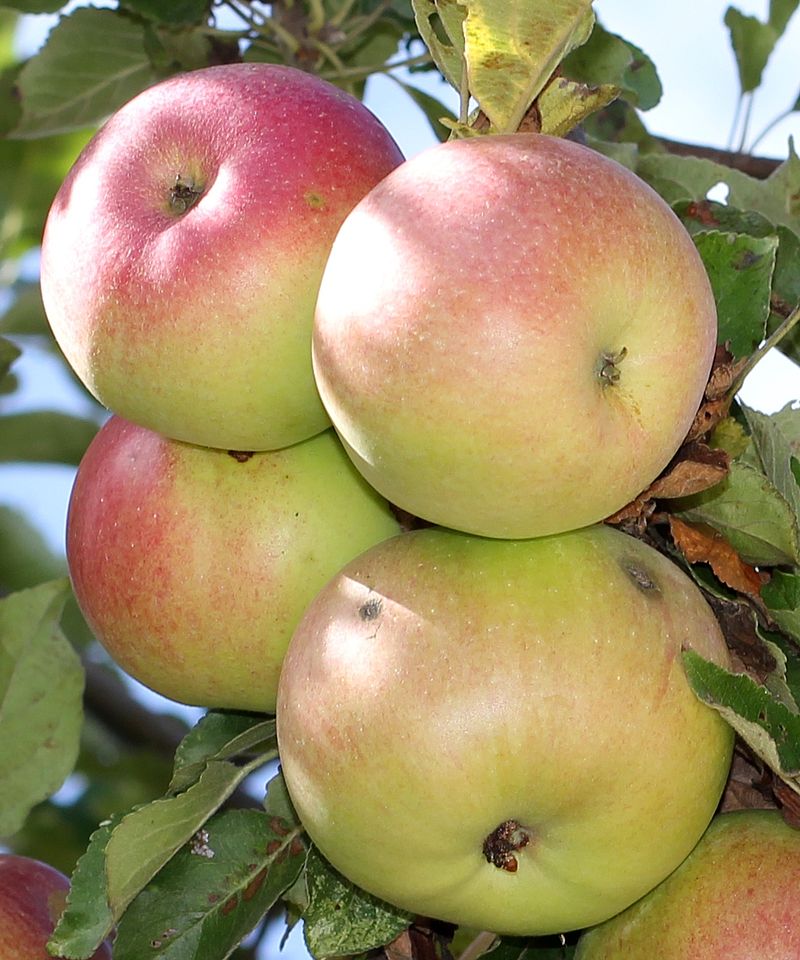
    It is a fruit with red skin, quite thick and endowed with a white and juicy flesh, tangy and fragrant, ideal for compotes. Its flowering is precocious and it is harvested in early September. The fruits are round about 7cm in diameter. The vigor of the tree is medium. People are sensitive to canker and opinions differ as to its resistance to powdery mildew.
    This beautiful apple is the source of ‘Golden delicious’, ‘Cox’s Orange Pippin’, ‘Red delicious’ …

  • Orchard: prevention against winter pests and diseases

    Orchard: prevention against winter pests and diseases

    When the insectivorous birds are numerous (tit, nuthatch, flycatchers, redstarts), we rarely hear about certain parasites with barbaric names such as cheimatobia and hyponomeute! So think about hanging nesting boxes in fruit trees. And then, if you have chickens, the orchard remains the ideal place to release them because they scratch the ground in search of larvae and worms that try to bury themselves to spend the winter.
    But above all, in the orchard, once the leaves have fallen, the trunks and branches are open to you. You have plenty of room to clean: be careful, enemies are hiding everywhere !

    Burn the dead leaves

    To watch out for: after the fruits, it is the turn of the leaves to gradually fall. A normal phenomenon, which sometimes hides funny surprises.

    The danger: the carpet they form is the favorite refuge for the spores of multiple fungi. They find it convenient to winter with impunity at the feet of their hosts before multiplying and colonizing them again in the spring! The list is long: pear and apple scab , riddled disease of cherry or peach, apple beetle, plum rust, walnut marssonina …

    Prevention actions: to give you courage, consider efficiency of the purge that constitutes the collection, then the incineration of all these leaves …

    Brush the bark

    Watch out for: on the trunk and main branches, the aged bark is rarely smooth. Mosses and lichens cling to it.

    The danger: the cracks in the bark and the hanging plants constitute so many refuges for the eggs or larvae of insects seeking to overwinter and they are numerous (codling moth of apple and plum, aphid, pear psyllid, canker, gall gall. plum tree…). In spring, after hatching or metamorphosis, nymphs and insects feed on the fruit or tree sap.

    Prevention measures: before considering a treatment, it is essential to rub the bark with a quackgrass brush to remove mosses and lichens, which eliminates a number of potential shelters.

    Remove mummified fruits

    Watch out for: rotten and shriveled fruit sticks fiercely to the branches as well as dried up floral bouquets.

    The danger: this is the sign of a widespread disease, moniliosis, which affects all fruit trees. The fungus overwinters on mummified fruits before attacking the flowers in the spring.

    Prevention measures: start by removing all the mummified subjects before cremating them. Next year, remember that thinning out too many fruits is beneficial. When harvesting, only collect very dry fruits because, if they are wet, disease can develop during storage.

    Pick up fallen fruit

    To watch out for: damaged fruits, which have fallen to the ground well before harvesting, due to attacks by parasites which cause them to ripen prematurely.

    The danger: codling moth caterpillars fall with the attacked fruits ( apple , pear , quince) before returning to the trees. Following the same path, the larvae of the cherry fly and the plum hoplocampus prefer to bury themselves to spend the cold season in the shelter of the ground.

    Prevention measures : collect and incinerate suspicious fruits as quickly as possible. In the fruit tree, store only the healthiest: the codling moth caterpillar, for example, readily overwinters in the cracks in the shelves!

  • Climbers for a continental climate

    Climbers for a continental climate

    Plant plants adapted to the climate and the nature of the soil in your garden: climbers to install in a continental climate. 

    Sandy or loamy soil

    • Large-flowered clematis
    • Officinal jasmine
    • Honeysuckle

    Heavy and clayey soil

    • Winter jasmine

    Lean and stony soil

    • Ivy
    • Virginia creeper ( Ampelopsis , Parthenocissus )

    Acidic soil

    • Climbing hydrangea
    • Schizophragma
    • Japanese wisteria (later flowering)

    Limestone soil

    • Ivy
    • Clematis